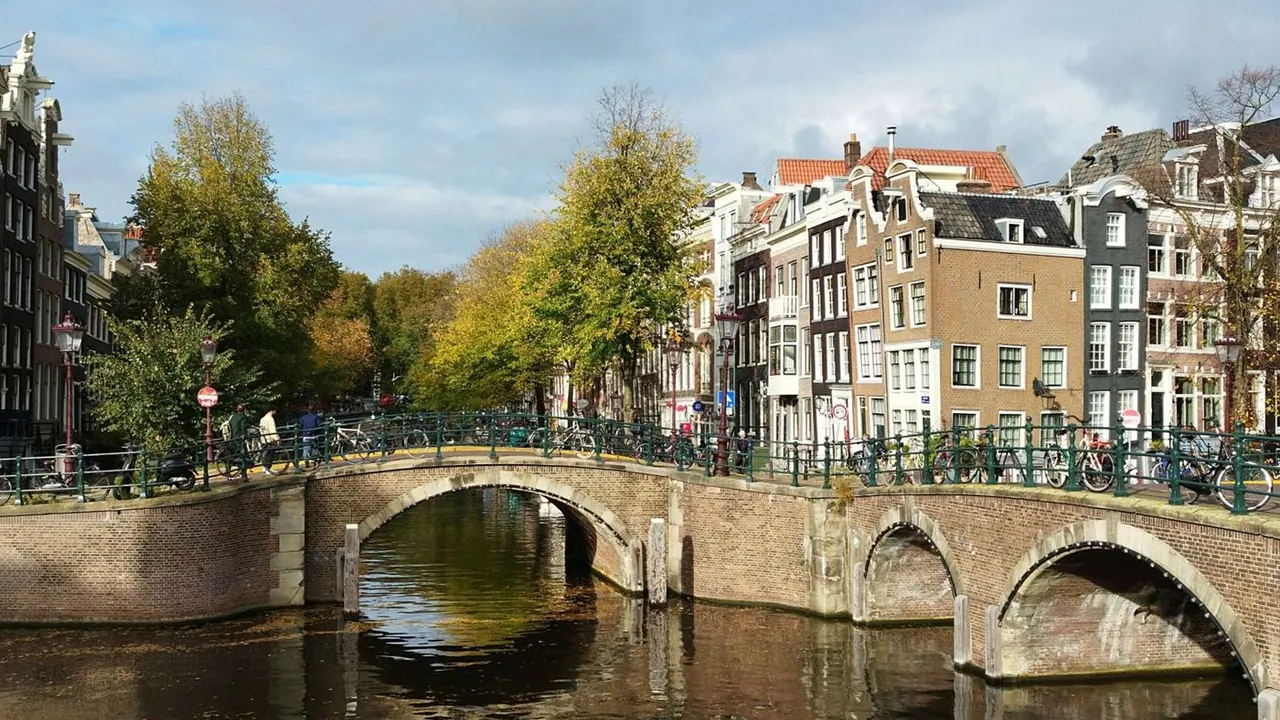
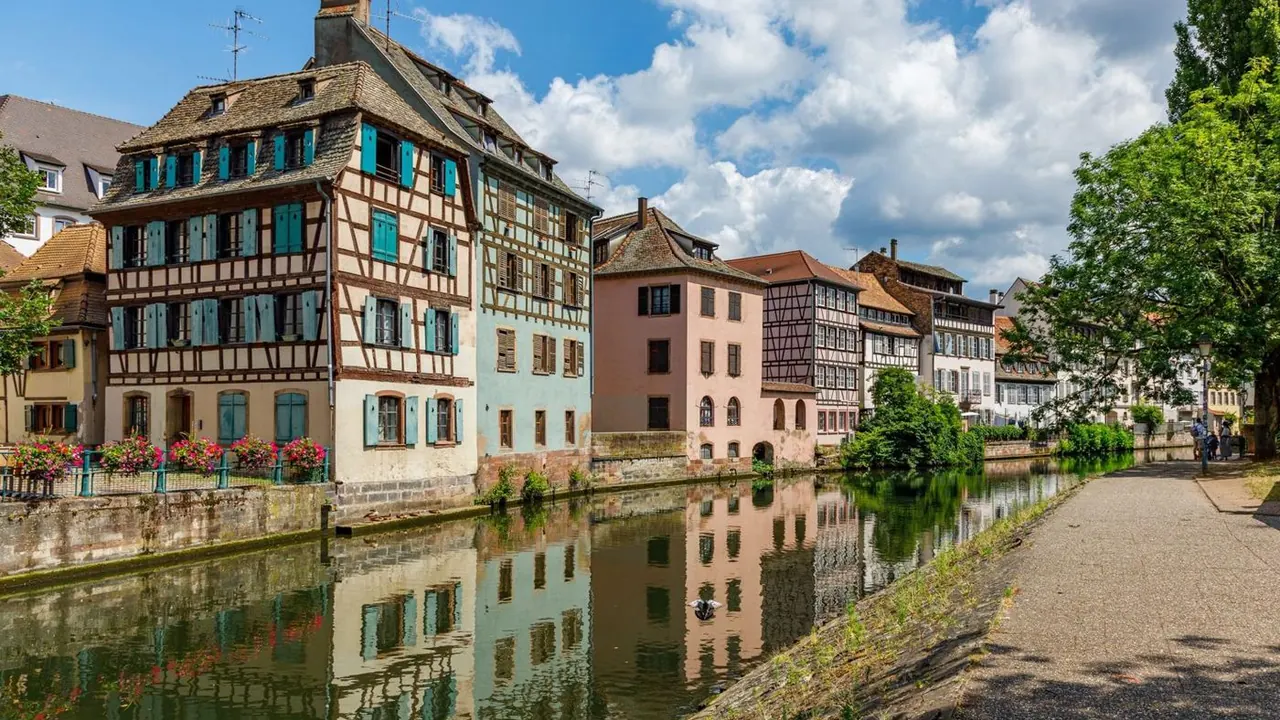
Photos: Amsterdam by Hans, Pexels License; Strasbourg by Edoardo Colombo, Pexels License.
Amsterdam or Strasbourg?
Our verdict in twelve categories, each scored against the same fixed benchmark cities, and the climate month by month, so you can choose for your trip.
Choose Amsterdam for
- nightlife
- live music and the arts
- shopping
Amsterdam suits travellers who want a lot of city in a few days: museums of world rank, a canal ring to wander, serious clubs and concerts in the evening, and a string of Dutch towns an easy train ride away. It is also the better pick for shoppers and for families who want plenty to do without leaving town. The catch is the cost, especially of a room.
Choose Strasbourg for
- prices
- nature and the outdoors
- wellness
Strasbourg is the calmer, cheaper choice, and the one for people who travel to eat and to get outdoors. Winstub cooking and Alsace wine are on the doorstep, the Vosges and the Black Forest lie within an hour, and Baden-Baden's baths are close enough for an afternoon. Evenings end early, so it fits a slower trip better than a lively one.
Scoreboard
Twelve categories on one fixed scale from 0 to 100. The shaded stretch is the gap between the two.
Your match
Pick a travel style or drag the sliders, and both match scores follow your weighting.
Wins on nightlife and live music and the arts with your weighting.
Wins on prices and nature and the outdoors with your weighting.
What matters to you?
Category by category
What the scores mean for a trip.
Beaches & swimming
Amsterdam at least has a real beach within reach. The wide dune-backed sand at Zandvoort and Bloemendaal is about half an hour away by train, with beach pavilions in summer, although the cold, windy North Sea means most people walk rather than swim. In town there are the man-made beaches at IJburg and lakes such as the Sloterplas.
Strasbourg has no coast at all. Its summer swimming is in old gravel-pit lakes such as the Baggersee, which the tram reaches, with lifeguards in high summer and calm, fresh water. On a hot day that may be pleasanter swimming than the North Sea, but it is a lakeside afternoon, not a beach trip.
Food & drink
Strasbourg is the better city to eat in. Alsatian cooking is a cuisine in its own right, with choucroute, baeckeoffe and tarte flambée served in wood-panelled winstubs alongside Riesling from vineyards just to the south, and the restaurants in the city and the surrounding villages reach a high level. The food is rich, and there is not much choice beyond the regional kitchen.
Amsterdam's own cooking is plainer, and its best meals come from abroad: Indonesian rijsttafel and Surinamese roti, plus herring and stroopwafels from the stalls. Its strength is drinking, in brown cafés and old jenever tasting rooms. In both cities, the restaurants in the busiest tourist streets are best avoided.
Culture & sights
Amsterdam has the deeper sightseeing. Rembrandt's Night Watch at the Rijksmuseum, the largest Van Gogh collection anywhere and the Anne Frank House are visits people cross Europe for, and the UNESCO canal ring of merchant houses makes the whole centre worth walking.
Strasbourg's appeal is more architectural than collection-based. The pink sandstone cathedral with its astronomical clock, the half-timbered lanes of Petite France and the German-built Neustadt form a fine UNESCO ensemble, and the Palais Rohan museums and the European institutions add depth. It takes two or three unhurried days, a little less than Amsterdam needs.
Nightlife
The gap is wide here. Amsterdam is a serious clubbing city, with all-night venues in old industrial buildings and across the IJ in Noord, and the Amsterdam Dance Event every October. The Jordaan and De Pijp have relaxed canal-side bars for anyone who wants a gentler evening.
Strasbourg's nights revolve around student bars and beer cellars in the Krutenau and around Place Saint-Étienne, plus riverside terraces in summer. There are only a few clubs and much of the city is asleep by midnight on weeknights, so it suits a drink after dinner rather than a night out.
Nature & outdoors
Strasbourg has far more to offer outdoors. Its Rhine forests have storks and beavers, and within an hour lie the forested Vosges, with castle ruins and the Mont Sainte-Odile ridge, and the higher trails of the Black Forest across the border. A car makes these easier to reach, though trains and buses get to the main trailheads.
Amsterdam's countryside is flat and gentle: polders, windmills and cows in Waterland, a short ferry and bike ride away, the Amsterdamse Bos, and the dunes of Zuid-Kennemerland with their bison. It is lovely by bike but there are no hills at all.
Day trips
Both are excellent bases, with Amsterdam slightly ahead because everything is so close and every trip works by train. Haarlem is a quarter of an hour away, and Leiden, Delft, Utrecht, The Hague and Rotterdam are all near, as are windmills at Zaanse Schans and Kinderdijk and the Keukenhof bulb fields in spring.
Strasbourg's trips are more varied, spread over two countries. Colmar and the Alsace wine villages such as Riquewihr and Eguisheim lie to the south, with Baden-Baden, Freiburg and Heidelberg across the Rhine. The cities are easy by train, but the wine route really needs a car or a bike.
Good for families
Amsterdam has more for children inside the city itself: the old Artis zoo, the hands-on NEMO science museum, city farms, pancake houses and canal boats. Parents have to keep a close eye near the unfenced canals and the fast bike traffic.
Strasbourg is easy and largely car-free, with storks and rowing boats at the Orangerie, the Le Vaisseau science centre and the astronomical clock's moving figures, but most of its museums are aimed at adults. Its trump card is Europa-Park, about an hour away, which is nearer than Amsterdam's Efteling.
Getting around
Amsterdam's network is a little fuller. Trams, a north-south metro and free ferries across the IJ cover the city, and Schiphol is a short direct train ride away, though the crowded bike lanes take nerve for first-timers.
Strasbourg is simpler. Its island centre can be crossed on foot in twenty minutes and is largely pedestrianised, trams run as far as Kehl in Germany, and the separated cycle lanes are more relaxed for visitors. Neither city needs a car, except for Strasbourg's wine villages and hills.
Shopping & style
Amsterdam is the better shopping city. The Nine Streets and the Jordaan are full of independent boutiques and vintage shops, PC Hooftstraat has the luxury labels, and markets such as the Albert Cuyp, Waterlooplein and the floating Bloemenmarkt add to the fun.
Strasbourg is more about regional goods than fashion: Alsace wine, Soufflenheim pottery, printed linens and foie gras, with chain stores around Place Kléber. December's Christmas market is the highlight, though plenty of what is sold there is mass-produced.
Affordability
Strasbourg is clearly the cheaper stay. Hotel rooms around Amsterdam's canal ring are among the most expensive in Europe, and a tourist tax and Northern European restaurant prices come on top. Staying in Haarlem or Utrecht helps.
In Strasbourg, tarte flambée, wine by the pichet and the trams are fair value, and the cathedral and old town are free. The one thing to watch is rooms during the Christmas market and the European Parliament sessions, when prices jump.
Live music & performing arts
Amsterdam is in another league for music. The Concertgebouw is one of the world's great concert halls, the national opera and ballet perform on the Amstel, the Bimhuis covers jazz, and Paradiso and the Melkweg bring in international bands. Most theatre is in Dutch.
Strasbourg has a strong programme for a regional city, with the Opéra national du Rhin, a full philharmonic season and the Théâtre National de Strasbourg, though its plays are in French. The Musica festival makes autumn the time for contemporary music.
Wellness & relaxation
Amsterdam's version of unwinding is the sauna, and you'll find it in modern wellness complexes out on the edge of the city. There's no historic bathing culture behind them. The centre works against rest, with crowds and streams of bikes for much of the year, so a calm hour usually means slipping off early to the Vondelpark or a quiet stretch of canal.
Strasbourg makes it easier to slow down. Its early twentieth-century municipal baths, with tiled pools and a hammam, are right in town and feel like part of local life rather than a treat, and the Black Forest spa towns are close by if you want more. The city's gentler pace does the rest for most of the year, though the December market crowds spoil the calm.
When should you go?
Pick your month. The climate figures are measured averages, not a forecast.
Amsterdam in July
Strasbourg in July
Daytime high, °C
Rainfall in the month, mm
Where the figures come from
Amsterdam has no rain gauge within 25 km of the centre, so its rainfall comes from a gridded climate dataset read at the city rather than from a gauge further away.
Amsterdam's sunshine is measured 35 km from the centre, at De Bilt.
Temperature and rainfall are climate normals, averaged over the years shown. Amsterdam: 1991-2020 normals, Amsterdam Airport Schiphol (12 km from centre). Strasbourg: 1991-2020 normals, Strasbourg (9.1 km from centre).
Neither city is a beach destination, so the question is mostly when the streets are pleasant. Amsterdam has mild, damp weather all year. Summer peaks at about 23°C and the North Sea warms only to about 19°C by August, which is bracing at best. Rain comes in every month and is heaviest from July to December, so late spring, when the sunshine is longest and the showers lightest, is the best time for walking and cycling.
Strasbourg's inland climate swings further. Summers are clearly warmer, around 26°C in July and August, and sunnier than Amsterdam's, good for terraces and lake swimming, though a hot afternoon on the old town's stone streets can feel heavy. May is the wettest month at about 77mm, while winter is much drier, near 35mm in January, but colder too. Spring and early autumn suit both cities best for sightseeing.
Which traveller are you?
On a culture and arts trip, Amsterdam is the stronger pick. The Rijksmuseum, the Van Gogh Museum and the Anne Frank House fill several days, and the Concertgebouw, the Bimhuis and Paradiso mean the evenings are as rich as the days.
For an outdoors trip, Strasbourg wins easily. Within an hour you can be on forest trails and castle ridges in the Vosges or hiking the higher fir woods of the Black Forest, while Amsterdam offers flat polders, dykes and coastal dunes.
On a trip with a tight budget, Strasbourg goes much further. Rooms cost far less than around Amsterdam's canal ring, winstub meals and wine by the pichet are fair value, and the cathedral and old town cost nothing to enjoy.
Before you go
| Measure | Amsterdam | Strasbourg |
|---|---|---|
| Official language | Dutch | French |
| Currency | Euro (EUR) | Euro (EUR) |
| Sockets | CF230 V, 50 Hz | CE230 V, 50 Hz |
| Driving side | Right | Right |
| Time zone | UTC+1, UTC+2 in summer | UTC+1, UTC+2 in summer |
| Emergency number | 112 | 112 |
| Elevation | -2 m | 132 m |
| Main airport | Amsterdam Airport Schiphol (AMS)12 km from centre287 non-stop destinations | Strasbourg Airport (SXB)10 km from centre43 non-stop destinations |
| Public holidays this year | 11 days | 11 days |
By the numbers
| Measure | Amsterdam | Strasbourg |
|---|---|---|
| City population | 921,468 | 293,771 |
| People per km² | 4,208 | 3,752 |
| Museums within 10 km | 101 | 21 |
| UNESCO World Heritage sites within 50 km | 5 | 1 |
| Swim season, months above 21 °C | None | - |
Where else could you go?
Every comparison below shares a destination with this one, so you can follow Amsterdam or Strasbourg somewhere new.