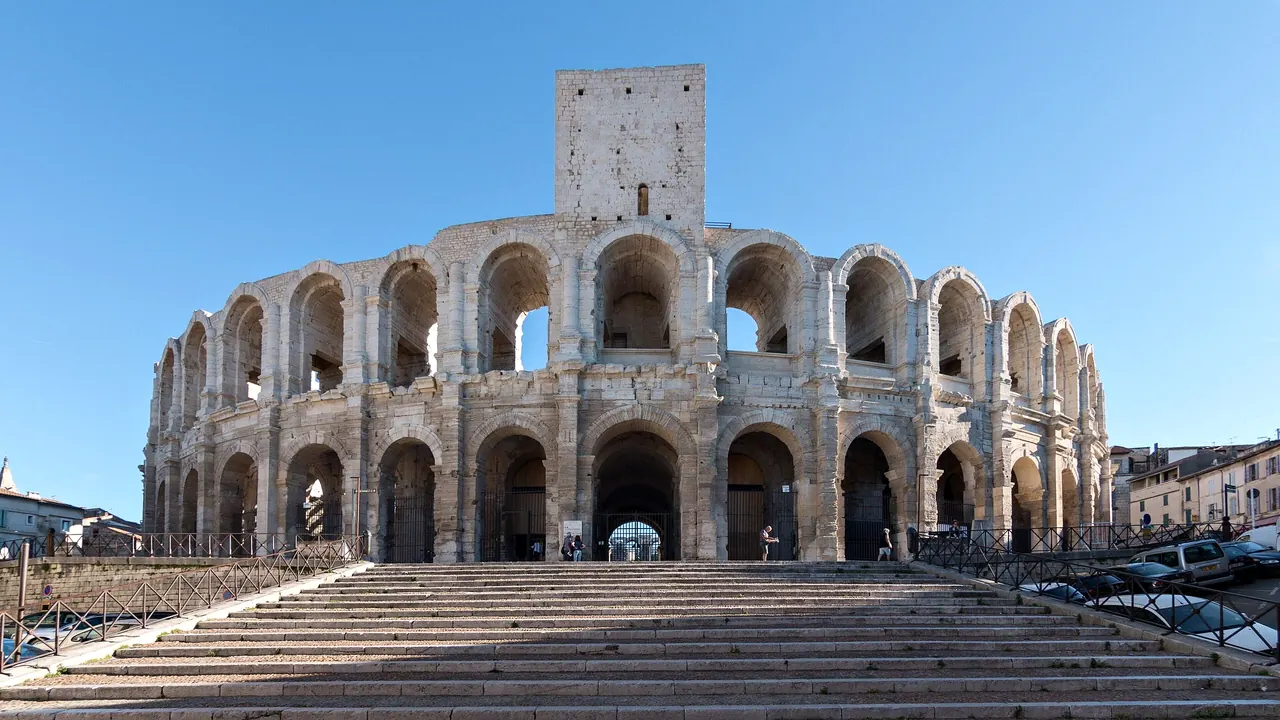
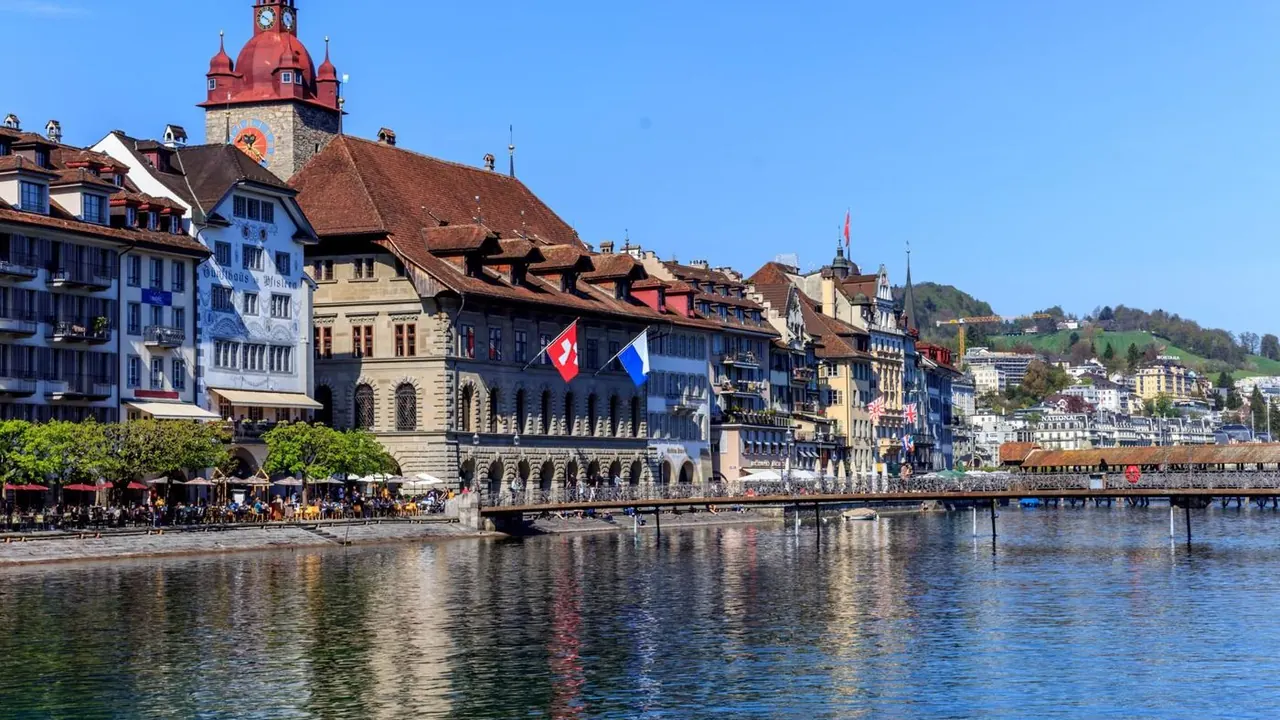
Photos: Arles by Martin Kraft, CC BY-SA 3.0, cropped; Lucerne by ILOVESwitzerland, Pexels License.
Arles or Lucerne?
Our verdict in twelve categories, each scored against the same fixed benchmark cities, and the climate month by month, so you can choose for your trip.
Choose Arles for
- prices
- beaches
- food and drink
Arles suits travellers who want Roman history, market food and a base for exploring Provence, at a cost that stays reasonable. The arena, the antique theatre and the cloister of Saint-Trophime are a short walk apart, the Saturday market is the event of the week, and Avignon, Nîmes, Les Baux and the Camargue are all close by, though a hire car makes the villages much easier.
Choose Lucerne for
- live music and the arts
- getting around
- families
Choose Lucerne for lake and mountain scenery and a trip that runs smoothly without a car. Steamers, cogwheel railways and cable cars leave from beside the station for Pilatus and Rigi, families have more to do, and the late-summer festival brings leading orchestras to the lakefront concert hall. The catch is the price, which is high at every turn.
Scoreboard
Twelve categories on one fixed scale from 0 to 100. The shaded stretch is the gap between the two.
Your match
Pick a travel style or drag the sliders, and both match scores follow your weighting.
Wins on prices and beaches with your weighting.
Wins on live music and the arts and getting around with your weighting.
What matters to you?
Category by category
What the scores mean for a trip.
Beaches & swimming
Arles has the real seaside, though it is a drive away. The Camargue shore at Saintes-Maries-de-la-Mer, and the wide, empty strands of Piémanson and Beauduc beyond Salin-de-Giraud, give you sand, dunes and shallow Mediterranean water, with little shade and the occasional mosquito.
Lucerne's swimming is in the lake, from the Lido, the old wooden lake baths and the lawns at Ufschötti. The water is clean and calm and the mountains make a fine backdrop, but there is no sand and the season is short. In both places a swim is a day out rather than the purpose of the trip.
Food & drink
Arles eats better and more distinctively. Gardiane bull stew, Camargue rice, tellines and Alpilles olive oil give it a clear regional identity, and the long Saturday market on the Boulevard des Lices, with lunches on the Place du Forum, is reason enough for a visit.
Lucerne's tables are hearty but predictable: Chügelipastete, fondue, rösti and lake perch in panelled guild houses. Too many places near the Chapel Bridge cater to coach tours, and the bill is steep for what arrives.
Culture & sights
Arles has more to see. Its UNESCO-listed Roman ensemble of arena, theatre, cryptoporticus and Alyscamps, plus the carved portal of Saint-Trophime, the Roman barge in the archaeology museum and Gehry's Luma tower, makes for two very full days. The summer photography festival adds a modern side.
Lucerne's sights are fewer but iconic: the Chapel Bridge and Water Tower, the Musegg Wall towers and the Lion Monument. The Rosengart Collection's Picasso and Klee are a highlight. Both towns can be covered in a day or two, and Arles is the richer of the two.
Nightlife
Neither is a place for a big night out, but Lucerne has slightly more going on. Cocktail bars and a small club scene in the Neustadt, kept busy by students at weekends, give you somewhere to go after dinner, and Fasnacht turns the whole town into a costumed party until dawn.
In Arles the evening usually ends with a drink at the café tables on the Place du Forum. It only comes alive late during the Easter and September ferias, when bodegas take over the streets.
Nature & outdoors
Lucerne is in another league for scenery. Pilatus, Rigi, the Stanserhorn and glaciated Titlis are all reachable by rail, cable car or steamer, so a single day can combine a boat trip, a summit and a ridge walk. In winter the same mountains offer skiing and sledging.
Arles offers flat, wide-open wetland instead. The Camargue starts at the edge of town, with flamingos, white horses and black bulls, best seen on horseback or by bike along the dykes. The Alpilles add gentle hill walking among olive groves.
Day trips
Arles has the denser set of outings. Avignon and Nîmes are short train rides away, and the Pont du Gard, Les Baux, Saint-Rémy, Aigues-Mortes and Saintes-Maries are close, so you could fill a week without repeating yourself, though a car is needed for the villages.
Lucerne's trips are fewer but very easy. Zurich, Bern and Basel are each under an hour by train, and the lake steamer to the Rütli meadow and Altdorf is a day out in itself.
Good for families
Lucerne works better for children. The Swiss Museum of Transport is a full day of trains, planes and a planetarium, the Glacier Garden's mirror maze is close to the Lion Monument, and paddle steamers, cogwheel trains and the Pilatus toboggan run make each journey part of the fun. The centre is flat and the lakeside lawns are ideal for picnics.
Arles appeals most to older children who like history and animals. They can climb the arena towers, explore the dark cryptoporticus and ride ponies on Camargue ranches. Summer heat, mosquitoes, cobbles and the need for a car make it harder work with small children.
Getting around
Lucerne is far easier. Station, boat piers and Old Town sit together on the lakefront, and integrated tickets carry you onto steamers, mountain railways and cable cars, so a car is never needed.
Arles is easy to walk around and has good trains to Avignon, Nîmes and Marseille. However, the Camargue and the Alpilles villages are served by infrequent buses, and most visitors staying several days end up hiring a car.
Shopping & style
Shopping is modest in both, with Lucerne a little ahead because of its trade in Swiss watches, army knives and chocolate around Schwanenplatz. Arles offers Provençal printed cottons, santons, gardian shirts, Camargue salt and good bookshops full of photography titles. Neither town has much fashion, so serious shoppers head to Aix, Marseille or Zurich.
Affordability
Arles costs far less. Meals and rooms are priced like any French provincial town and noticeably cheaper than the Luberon. A combined pass covers the sights, though car hire and the festival weeks push up the total.
Lucerne is expensive whatever you do. Central hotels, ordinary restaurant meals and especially the mountain railways eat into any budget, and supermarket picnics by the lake can only soften the cost.
Live music & performing arts
Lucerne is the place for music lovers. The Lucerne Festival brings leading orchestras and soloists to Jean Nouvel's acoustically celebrated concert hall, which keeps a year-round programme with the Lucerne Symphony Orchestra, while the city theatre stages opera and dance.
Arles has seasonal, open-air performance instead. There are summer concerts in the Roman theatre and arena, world music at Les Suds in July and the course camarguaise in the warm months, but there is no opera, and the town is quiet outside summer.
Wellness & relaxation
Lucerne has more for a restful stay. The Mario Botta mineral bath high on the Rigi offers a soak with a mountain view, hotel and resort spas are easy to find, and an afternoon on a steamer is about as calm as travel gets.
Arles has no spa tradition. It slows you down in its own way, with siestas, shaded squares and quiet evenings by the Rhône, and some Camargue and Alpilles farmhouses are run as retreats with pools.
When should you go?
Pick your month. The climate figures are measured averages, not a forecast.
Arles in July
Lucerne in July
Daytime high, °C
Rainfall in the month, mm
Where the figures come from
Arles's temperatures are measured 28 km from the centre, at Nimes / Courbessac.
Arles has no rain gauge within 25 km of the centre, so its rainfall comes from a gridded climate dataset read at the city rather than from a gauge further away.
Lucerne has no rain gauge within 25 km of the centre, so its rainfall comes from a gridded climate dataset read at the city rather than from a gauge further away.
Lucerne's sunshine is measured 42 km from the centre, at Zurich Town / Ville..
Temperature and rainfall are climate normals, averaged over the years shown. Arles: 1991-2020 (sunshine 1981-2010) normals, Nimes / Courbessac (28 km from centre). Lucerne: 2005-2025 (sunshine 1991-2020, rainfall 1991-2020) normals, Emmen (4.2 km from centre).
Arles has a hot, sunny Mediterranean year. July and August reach about 31°C, too hot for long afternoons on the cobbles, but they are the months for the Camargue beaches, when the sea warms to about 22°C. May, June and September are the most comfortable for sightseeing. The rain arrives in autumn and peaks at about 105mm in October, while winters are mild and bright enough for the Roman sites.
Lucerne is cooler and wetter, and most of its rain falls in summer, about 141mm a month in July and August, so a clear day for the peaks is never guaranteed. Summer highs of around 24°C are pleasant for walking and just warm enough for a lake swim. Winters are cold and grey, with very little December sun, and that season suits skiing better than city walks. Plan Lucerne for June to September and Arles for spring or early autumn.
Which traveller are you?
On a tight budget, Arles is the clear choice. Lunch menus, market food and mid-range rooms cost what they do in any provincial French town, while in Lucerne even simple meals and the mountain railways that make the stay worthwhile quickly add up.
For an outdoors trip, Lucerne wins. Pilatus, Rigi and the Stanserhorn rise straight from the lake and are reached by cogwheel railway and cable car, with ridge walks in summer and skiing in winter. Arles offers flat Camargue birdwatching and Alpilles cycling instead.
On a family trip with children, Lucerne is easier. The Transport Museum fills a day, the steamers and mountain trains are outings in their own right, and you never need a car. Arles mainly suits older children who are keen on Roman ruins, horses and flamingos.
Before you go
| Measure | Arles | Lucerne |
|---|---|---|
| Official language | French | French, German, Italian, Romansh |
| Currency | Euro (EUR) | Swiss Franc (CHF) |
| Sockets | CE230 V, 50 Hz | CJ230 V, 50 Hz |
| Driving side | Right | Right |
| Time zone | UTC+1, UTC+2 in summer | UTC+1, UTC+2 in summer |
| Emergency number | 112 | 112 |
| Elevation | 0 m | 436 m |
| Main airport | Marseille Provence Airport (MRS)54 km from centre126 non-stop destinations | Zürich Airport (ZRH)49 km from centre226 non-stop destinations |
| Public holidays this year | 11 days | 12 days |
By the numbers
| Measure | Arles | Lucerne |
|---|---|---|
| City population | 51,811 | 86,234 |
| People per km² | 68 | 2,963 |
| Museums within 10 km | 3 | 14 |
| UNESCO World Heritage sites within 50 km | 5 | 1 |
| Swim season, months above 21 °C | 2 months | - |
Where else could you go?
Every comparison below shares a destination with this one, so you can follow Arles or Lucerne somewhere new.
- Avignonvs Arles
- Zurichvs Lucerne
- Interlakenvs Lucerne
- Montpelliervs Arles
- Bernvs Lucerne
- Aix-en-Provencevs Arles