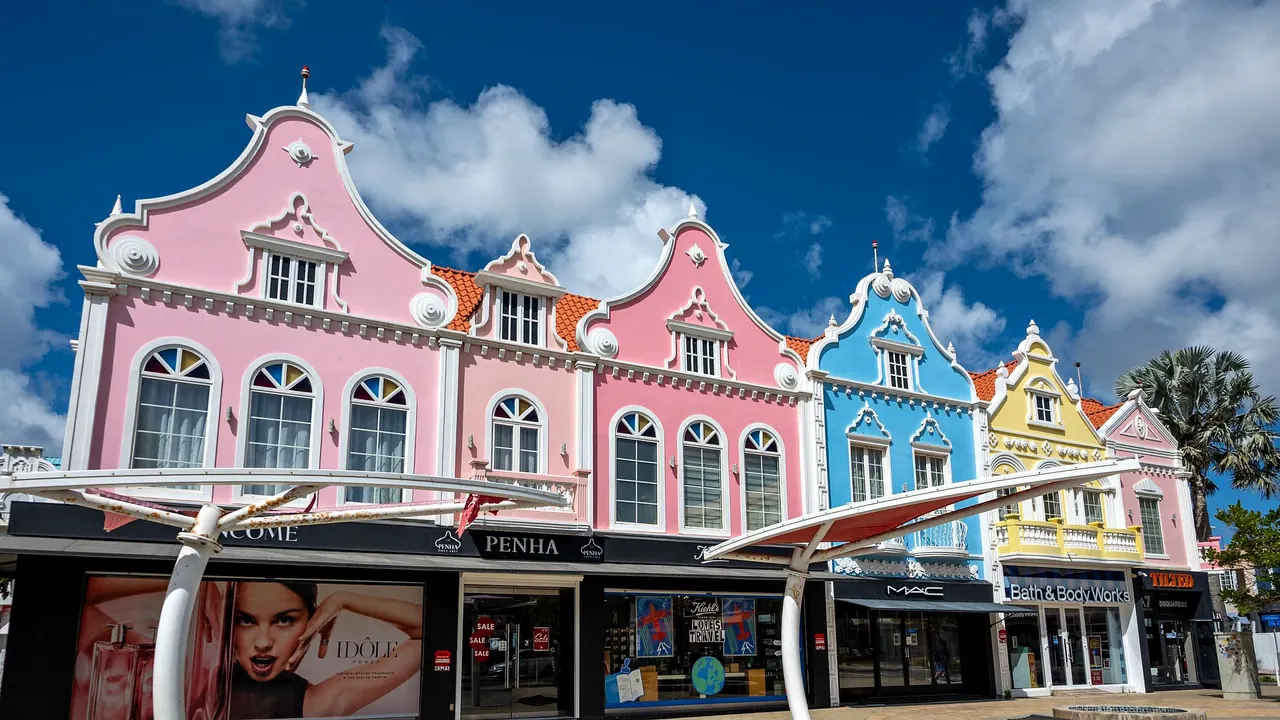
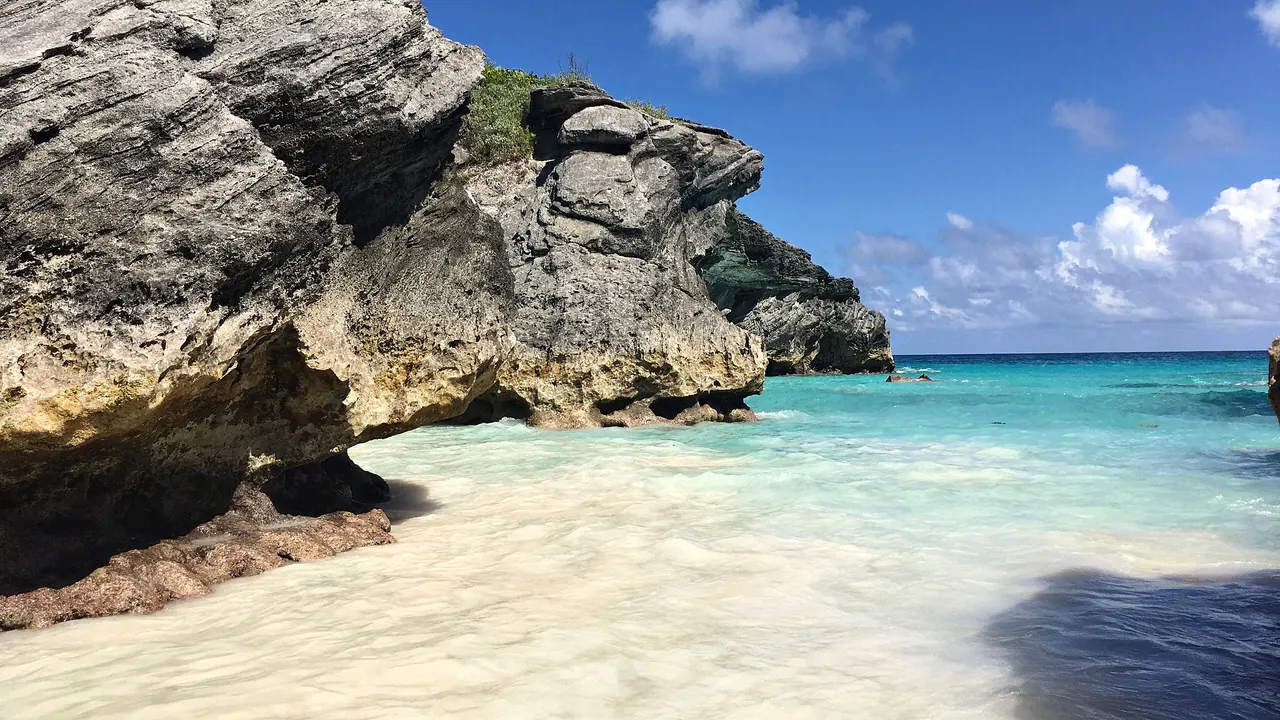
Photos: Aruba by xiquinhosilva, CC BY 4.0, cropped; Bermuda by Learosetheriault, CC BY-SA 4.0, cropped.
Aruba or Bermuda?
Our verdict in twelve categories, each scored against the same fixed benchmark cities, and the climate month by month, so you can choose for your trip.
Choose Aruba for
- nightlife
- families
- prices
Aruba is the pick for travellers who want sun and calm, warm water in any month. Its sheltered west and south coasts, from Eagle Beach to the lagoon at Baby Beach, suit families and anyone happy to spend most days on the sand. A night on the Palm Beach strip, a kitesurfing session at Fisherman's Huts or a jeep run into Arikok breaks up the beach days. It is an expensive island, but it costs a little less than Bermuda.
Choose Bermuda for
- culture and sights
- nature and the outdoors
- live music and the arts
Choose Bermuda if you want some history with your beach. St George's, with its seventeenth-century lanes and UNESCO-listed forts, and the National Museum at the Dockyard give it far more to see, and the pink-sand coves of the South Shore are lovely in summer. It suits couples and slower travellers who don't mind quiet evenings, getting about by bus and ferry, and paying a great deal for the privilege.
Scoreboard
Twelve categories on one fixed scale from 0 to 100. The shaded stretch is the gap between the two.
Your match
Pick a travel style or drag the sliders, and both match scores follow your weighting.
Wins on nightlife and families with your weighting.
Wins on culture and sights and nature and the outdoors with your weighting.
What matters to you?
Category by category
What the scores mean for a trip.
Beaches & swimming
Both islands are built around their beaches, but Aruba has the edge because its sheltered coast works in every month. The water is around 27°C, the sea is calm, and you can choose between the long, wide sand of Eagle Beach and the busier, resort-lined Palm Beach. Arashi and Mangel Halto add snorkelling and shallow mangrove water, though the windward north coast is for looking at, not swimming.
Bermuda's South Shore is more varied and very pretty, with pink-tinged coves such as Horseshoe Bay and tiny Jobson's Cove framed by limestone, and Tobacco Bay for snorkelling. The catch is the season: swimming is comfortable from May to October, and in winter the sea cools and the beaches empty.
Food & drink
Neither island is a food destination, and both rely on imported ingredients and competent resort menus. Where they differ is the local food. Aruba's is Dutch Caribbean: keshi yena and pastechi in the small eateries of Oranjestad, Savaneta and San Nicolas, fish grills on jetties along the south coast, and food trucks late at night.
Bermuda has fewer cheap places to eat and no street food, but its own dishes are more distinctive. There is fish chowder finished with black rum and sherry pepper sauce, the fish sandwich on raisin bread and codfish and potatoes on Sunday, with a rum swizzle or a dark 'n' stormy to drink.
Culture & sights
Bermuda has much more to see. St George's, settled in 1612, is a UNESCO-listed town of whitewashed roofs and old churches with a ring of forts around it. The National Museum in the Dockyard's stone keep tells the story of the island's shipwrecks, slavery and naval power in depth.
Aruba's heritage fits into a day or two. There is the pastel waterfront of Oranjestad, the small museum in Fort Zoutman, the archaeological museum, the gold-mill ruins and the murals of San Nicolas. They make good breaks from a beach stay, but they are not a reason to choose the island.
Nightlife
Aruba is the livelier of the two after dark. The Palm Beach strip has beach bars, casinos in the big hotels that stay open late and a few clubs that run into the small hours. The party buses are fun for groups, and Oranjestad has bars where local people go at weekends.
Bermuda's evenings are quieter: pubs and waterfront bars along Front Street in Hamilton, busiest on summer weekends, and sunset drinks at resort bars elsewhere. There is no club scene, and outside summer most nights end early.
Nature & outdoors
The two are evenly matched outdoors, but their landscapes could hardly be more different. Aruba is dry and rugged, with cactus, wind-bent divi-divi trees and the boulder fields of Ayo and Casibari. Arikok National Park has caves, dunes and the Natural Pool, and the steady wind makes the Fisherman's Huts area a kitesurfing and windsurfing spot.
Bermuda is low, green and gentle, with no wild interior. Its strength is under the water, where the reef and centuries of shipwrecks make for fine diving in the warmer months. On land, the Railway Trail and the cliff paths at Spittal Pond make easy walks, and humpback whales pass offshore in spring.
Day trips
Aruba has neighbours, but Curaçao and Bonaire are a short flight away, so they make a separate trip rather than a day out. That leaves the island itself: Oranjestad is a short ride from the hotels, and San Nicolas, with its fishing-village feel, and quiet Savaneta fill an easy half day, but they belong to any stay rather than standing as outings of their own.
Bermuda is far more isolated, alone in the Atlantic with the nearest mainland a couple of hours away by air, so there is no neighbour to visit at all. Its outings are short hops within the island, though they are enjoyable in themselves: the ferry across the Great Sound to the Dockyard, the bus to St George's, or a boat out to the islets of Castle Harbour. Travellers who like to collect new places will run short on both.
Good for families
Aruba is the easier island with young children. The sheltered coast has calm, shallow water, Baby Beach is an almost enclosed lagoon, and many resorts on Palm Beach and Eagle Beach have pools and kids' clubs. Outings are small-scale, such as a butterfly farm, a donkey sanctuary or a submarine trip, and there is no zoo or aquarium, so it suits families who want beach time above all.
Bermuda has more to visit for its size. The aquarium, museum and zoo at Flatts make a good half day, the Crystal Caves, the forts and the ferry to the Dockyard keep older children busy, and Shelly Bay and John Smith's Bay have shallow water for little ones. Once those are done, though, little else is built for children, a longer stay can run out of ideas within a week, and the winter sea is too cool for most young swimmers.
Getting around
Both islands are small and have buses along their main stretches, so the difference is how you cover everything else. On Aruba you can hire a car for a day or two. The roads are easy, nothing is far, and only the tracks in Arikok need a four-wheel drive or a tour.
Bermuda doesn't let visitors rent ordinary cars, so you rely on buses, ferries, taxis, mopeds or small electric two-seaters. The roads are narrow, walled and driven on the left. The ferries across the Great Sound are a pleasure in themselves, and Hamilton and St George's are easy to walk.
Shopping & style
Aruba offers more, mostly duty-free. Oranjestad's pedestrian main street and harbour malls are full of jewellery, watches, perfume and designer labels for cruise and resort visitors, Palm Beach has open-air malls, and aloe products are the local buy. Bermuda's Front Street is a shorter row of long-established stores selling British woollens, linen and Bermuda shorts, and the Dockyard sells cedarwood carvings and rum cakes.
Affordability
Both islands are expensive, but Aruba is a little easier on the wallet. Supermarkets, food trucks, local eateries and apartment rentals with a kitchen are real ways to cut costs, and the public buses help.
Bermuda is among the costliest places anywhere for a vacation, with few budget beds and taxis that add up fast. Free beaches, the Railway Trail, the buses and the ferries help, but careful planning can only limit the cost.
Live music & performing arts
Timing matters more than place here, because each island's big occasion falls in a different season. Aruba's is Carnival, which builds over weeks before Lent with parades, tumba music competitions and road marches. The rest of the year there are folk music and dance evenings around Fort Zoutman and the odd local production at the Cas di Cultura.
Bermuda's comes in winter, when the Bermuda Festival of the Performing Arts brings visiting musicians, dancers and theatre companies to Hamilton. The masked gombey dancers, with their drums and bright costumes, turn out on Boxing Day and at parades. Outside these dates, live music on both islands means a band or steel drums at a resort.
Wellness & relaxation
Aruba is the better choice for switching off completely. Resort spas on Palm Beach and Eagle Beach, adults-only hotels, beach massages and aloe treatments are easy to find, and the dependable sun and trade wind do the rest.
Bermuda's quiet roads and small towns make it calm too, and some South Shore resort spas have treatment rooms with sea views. Its spa offer is thinner, though, and winter is cool. Neither island has thermal baths or a bathing tradition.
When should you go?
Pick your month. The climate figures are measured averages, not a forecast.
Aruba in July
Bermuda in July
Daytime high, °C
Rainfall in the month, mm
Where the figures come from
Aruba has no rain gauge within 25 km of the centre, so its rainfall comes from a gridded climate dataset read at the destination rather than from a gauge further away.
Temperature and rainfall are climate normals, averaged over the years shown. Aruba: 2005-2025 (rainfall 1991-2020) normals, Queen Beatrix Airport (8.5 km from centre). Bermuda: 1991-2020 normals, Bermuda (12.4 km from centre).
Aruba barely has seasons. Daytime highs stay above 30°C all year, the sea is warm enough to swim every month and there is little rain. Even the wettest stretch, October to December, is dry by most standards. The steady heat makes walking around Oranjestad at midday tiring, so sightseeing is best early or late, with the trade wind helping.
Bermuda is a summer island. July to September is about as hot as Aruba, and the sea peaks around 28°C in August, so May to October is the beach season. In winter, highs settle around 21°C and the sea cools to about 19°C. That is too cool for most swimmers but pleasant for walking St George's or the Railway Trail. Rain falls in every month and is heaviest from August to October, so Bermuda is always the wetter of the two.
Which traveller are you?
On a beach and sun trip, Aruba is the safer bet. Its calm west-coast water stays warm in every month, rain is scarce and Eagle Beach gives you room to spread out. Bermuda's pink-sand coves are at their best only from May to October.
For a culture and arts trip, Bermuda has far more to offer. The UNESCO-listed old town and forts of St George's and the National Museum at the Dockyard fill two good days. Aruba's sights amount to a small fort museum, gold-mill ruins and murals.
On a family trip with young children, Aruba is easier. Shallow, sheltered beaches such as Baby Beach, resort kids' clubs, reliable sunshine and the option of hiring a car outweigh Bermuda's aquarium and caves. Bermuda also bans visitors from renting ordinary cars, and many of its roads have no pavements.
Before you go
| Measure | Aruba | Bermuda |
|---|---|---|
| Official language | Dutch, Papiamento | English |
| Currency | Aruban Florin (AWG) | Bermudian Dollar (BMD) |
| Sockets | ABF127 V, 60 Hz | AB120 V, 60 Hz |
| Driving side | Right | Left |
| Time zone | UTC-4 | UTC-4, UTC-3 in summer |
| Emergency number | 911 | 911 |
| Main airport | Queen Beatrix International Airport (AUA)35 non-stop destinations | L.F. Wade International Airport (BDA)15 non-stop destinations |
| Public holidays this year | 12 days | 10 days |
By the numbers
| Measure | Aruba | Bermuda |
|---|---|---|
| Population | 106,739 | 63,179 |
| People per km² | 553 | 1,192 |
| Swim season, months above 21 °C | 12 months | 8 months |
Where else could you go?
Every comparison below shares a destination with this one, so you can follow Aruba or Bermuda somewhere new.
- Curaçaovs Aruba
- Bonairevs Aruba
- Punta Canavs Aruba
- Puerto Ricovs Aruba
- St Thomasvs Aruba
- Saint-Martinvs Aruba