Photos: Ashgabat by IGaragin, Pexels License; Baku by Zulfugar Karimov, Pexels License.
Ashgabat or Baku?
Our verdict in twelve categories, each scored against the same fixed benchmark cities, and the climate month by month, so you can choose for your trip.
Choose Ashgabat for
- nature and the outdoors
Ashgabat suits the curious traveller who wants to see somewhere unlike anywhere else and doesn't mind a guided, fairly formal trip. The white marble capital, its carpet and Parthian collections, Old Nisa on the edge of town and the bare Kopet Dag ridges make for an absorbing two or three days, especially in spring. Don't come expecting good food, evenings out or much freedom to wander on your own.
Choose Baku for
- beaches
- nightlife
- live music and the arts
Baku is the easier and broader choice for most people. A walled Old City and the oil-boom streets around it, a cuisine worth travelling for, mugham and opera, a seafront where people stroll in the evenings and summer beaches within reach all fit into a compact centre. It also costs far less to do on your own terms.
Scoreboard
Twelve categories on one fixed scale from 0 to 100. The shaded stretch is the gap between the two.
Your match
Pick a travel style or drag the sliders, and both match scores follow your weighting.
Wins on nature and the outdoors with your weighting.
Wins on beaches and nightlife with your weighting.
What matters to you?
Category by category
What the scores mean for a trip.
Beaches & swimming
Ashgabat sits in the desert, with the Caspian on the far side of Turkmenistan, so a swim means the hotel pool. The nearest thing to an outing is the warm underground lake at Kow Ata, and that is more of a soak than a swim.
Baku has the sea, though not in the city centre. The long sandy beaches at Bilgah, Novkhani and Mardakan are under an hour away and warm enough in high summer. The water is shallow and often cloudy, so treat it as a pleasant half-day rather than a beach vacation.
Food & drink
The two cuisines are related, both built around plov and grilled meat, but Baku makes far more of its own. In Ashgabat the best eating is at the bazaars, with mutton plov, manty, gutap and fresh chorek bread. Restaurants mostly serve Turkish, Russian or hotel menus.
In Baku, saffron plov, sturgeon kebabs and qutab arrive with piles of fresh herbs and sour plum sauce, and meals end with tea and jam. Courtyard restaurants around the Old City, the Taza Bazaar and local wine from the Shamakhi hills make eating one of the reasons to go.
Culture & sights
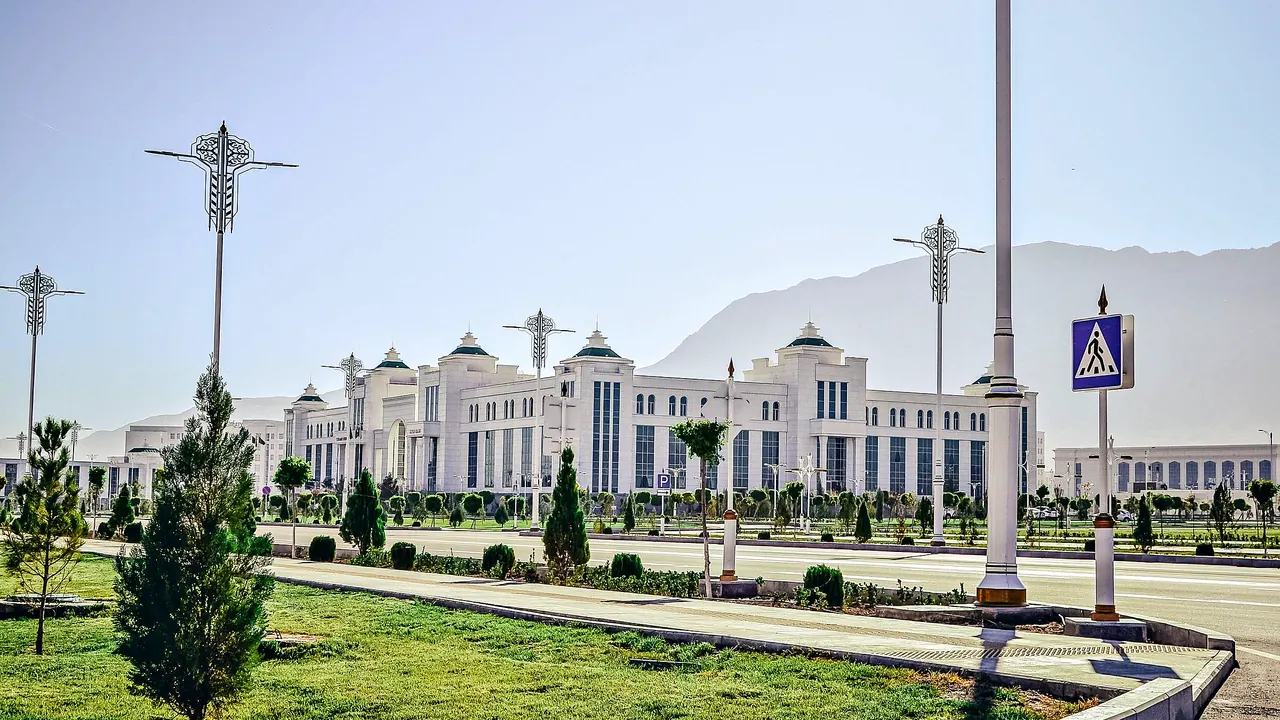
Ashgabat's main sight is the city itself: a capital rebuilt in white marble after the 1948 earthquake, with monuments lit up at night. The depth is in its museums, especially the carpets and the Parthian ivories from Nisa, because almost nothing older survives on its streets.
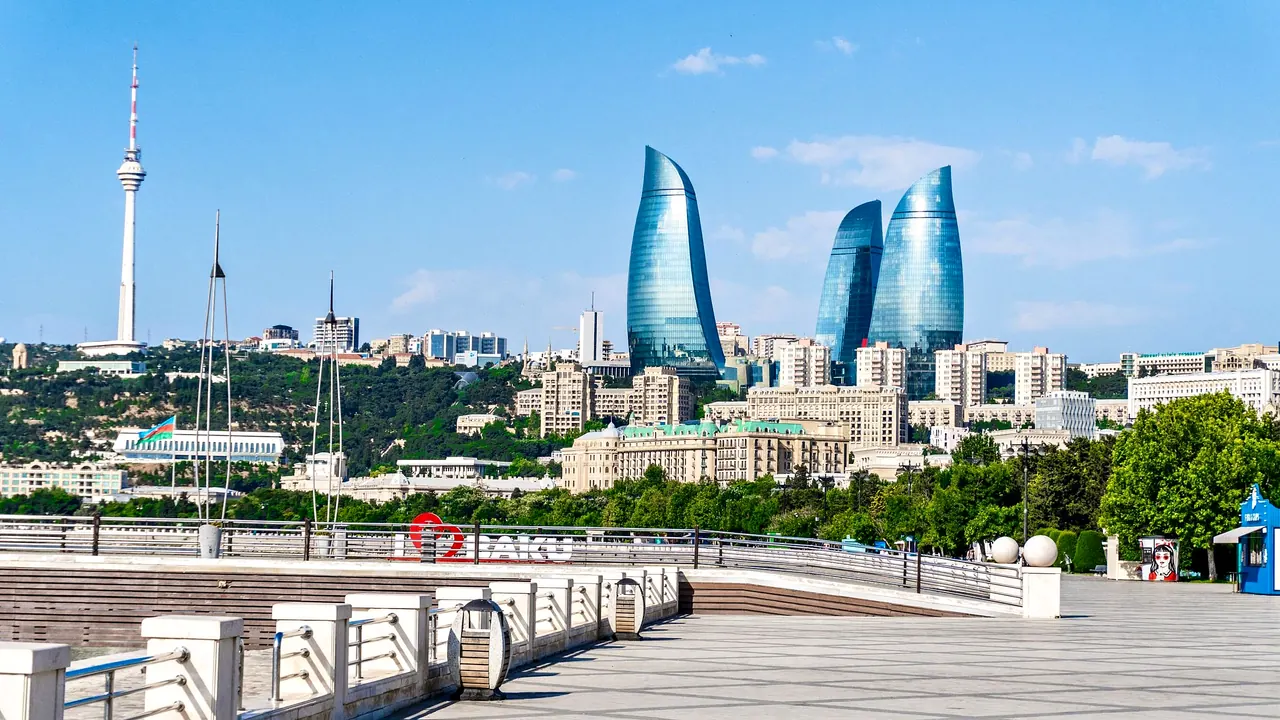
Baku has history you can walk through. The walled Icherisheher, with the Maiden Tower and the Palace of the Shirvanshahs, gives way to sandstone mansions from the oil boom and then to the curves of the Heydar Aliyev Center. Both cities have a fine Carpet Museum, but Baku's is set within much more.
Nightlife
After dark in Ashgabat the floodlit boulevards are close to empty. A hotel bar or a beer restaurant is about as lively as it gets, and most places close well before midnight.
Baku is no party city, but its evenings have life. People fill the seafront Boulevard and Nizami Street late into summer nights, and pubs, wine bars and rooftop terraces lead on to a few smart weekend clubs.
Nature & outdoors
Ashgabat has the better landscape on its doorstep. The folded ridges of the Kopet Dag rise straight from the southern suburbs, with short walks, picnic spots in valleys such as Gökdere, and the gorges of Nokhur further along the range. Marked trails are few and some border areas need permits.
Around Baku the land is flat semi-desert. What it offers is odd rather than beautiful: mud volcanoes, the ever-burning hillside of Yanar Dag and the windswept Gobustan plateau. Green mountains are a long way north.
Day trips
From Baku you can fill several easy days. Gobustan's rock carvings and the nearby mud volcanoes make a classic outing, the Ateshgah fire temple and the Mardakan towers take half a day each, and Shamakhi adds a cliffside mausoleum and vineyards.
From Ashgabat the standout is Old Nisa, the Parthian fortress just west of town. The Anau mosque ruins and Geok Depe complete the list, while Merv and Kunya-Urgench need flights or long drives.
Good for families
Neither city is built around children, but Baku is easier with them. On summer evenings the Boulevard is full of families, and there are boat rides, playgrounds and the funicular up to Highland Park. Busy roads and stairs down to underpasses make it hard work with a pushchair.
Ashgabat is calm and orderly, with fountain squares, a fairy-tale amusement park and a circus. The long distances and summer heat above 40°C limit it to spring or autumn.
Getting around
Baku's Old City, Fountain Square and seafront are close enough to walk between. A single card covers the metro and buses, and cheap app taxis handle the rest.
Ashgabat was laid out for motorcades, with kilometres of avenue between its monuments. Buses are hard to use without Russian or Turkmen, so most visitors rely on taxis or a guide with a car, which means giving up some independence.
Shopping & style
In both cities carpets are the serious buy, and both regulate exports, so ask for the paperwork. Ashgabat has the more memorable market in Tolkuchka on the desert edge of town, at its best at weekends, where hand-knotted rugs are sold next to camel-wool shawls and sheepskin telpek hats.
Baku has more range. Old City dealers sell carpets, kelaghayi silk scarves and Lahij copper, Nizami Street has the high-street chains, and the Taza Bazaar is the place for saffron and sweets.
Affordability
Baku is the cheaper city to visit on your own. The metro, taxis, tea-house meals and Old City guesthouses all cost little, and only the smart hotels and imported drinks push the bill up.
In Ashgabat, everyday local life is cheap, but visitors rarely live that way. Expensive hotels and the guide-and-driver arrangements most trips depend on make a budget trip hard to put together.
Live music & performing arts
Baku has a living music scene. Mugham, the city's classical tradition of improvised song, is performed regularly at the International Mugham Centre. There is also opera at the State Opera and Ballet Theatre, concerts in the oil-boom Philharmonic hall, and a jazz tradition that borrows from mugham.
Ashgabat's stages are state theatres such as the Magtymguly and the Pushkin, and their programmes are hard to find in advance. Its bagshy singers, who perform epics to the dutar, are distinctive but mostly heard at folk events rather than regular venues.
Wellness & relaxation
Neither city is a place to relax and recharge, and both rely mainly on hotel spas. Ashgabat's best option is a trip out to the warm sulphur lake in the Kow Ata cave, and its quiet streets are restful in their own way.
Baku has a bathhouse heritage, mostly restored medieval baths seen as monuments, though a few still work. Its slow moments come from long tea-house sessions and evenings on the seafront, but the wind and traffic rarely let you switch off.
When should you go?
Pick your month. The climate figures are measured averages, not a forecast.
Ashgabat in July
Baku in July
Daytime high, °C
Rainfall in the month, mm
Temperature and rainfall are climate normals, averaged over the years shown. Ashgabat: 1991-2020 normals, Ashgabat Keshi (4.8 km from centre). Baku: 1991-2020 (rainfall 1981-2010) normals, Mashtaga (23.2 km from centre).
Ashgabat has the more extreme climate of the two. April and October, at around 24°C, are the comfortable months for walking between its spread-out monuments, and spring brings most of the year's modest rain, along with the brief green on the hills. From June to August the heat climbs to about 39°C under near-constant sun, which is far too hot for sightseeing on foot. Winters are cool and grey, with little sunshine and highs of around 10°C.
Baku is the milder city in summer. July and August reach about 30°C and the Caspian warms to around 26°C, so swimming runs from July into September, while in June the water is still a little fresh. September is Baku's best month, good for the beach and for the city streets alike: the sea is still warm and the air is cooler for walking. May is pleasant for sightseeing but too early to swim. The rain comes mostly in autumn and peaks in November. Baku's winters are a touch colder than Ashgabat's, chilly and often windy.
Which traveller are you?
On a beach and sun trip, Baku is the only real option. Sandy Caspian beaches on the Absheron north shore are a short taxi ride away in summer, while landlocked Ashgabat offers nothing beyond a hotel pool.
For a food and nightlife trip, Baku wins clearly. You get herb-laden Azerbaijani tables, Shamakhi wine and tea houses, followed by late walks along the Boulevard and drinks around Fountain Square. Ashgabat's hotel restaurants and early nights can't compete.
On an outdoors trip, Ashgabat has more to offer. The Kopet Dag rises right behind the city, with picnic valleys, the walnut groves of Nokhur and spring poppies, and the Darvaza crater is an overnight trip away. Around Baku, real mountains are three hours off.
Before you go
| Measure | Ashgabat | Baku |
|---|---|---|
| Official language | Turkmen | Azerbaijani, Azerbaijani Sign Language |
| Currency | Turkmenistan New Manat (TMT) | Azerbaijan Manat (AZN) |
| Sockets | BCF220 V, 50 Hz | CF220 V, 50 Hz |
| Driving side | Right | Right |
| Time zone | UTC+5 | UTC+4 |
| Emergency number | 112 | 102 or 112 |
| Elevation | 219 m | -28 m |
| Main airport | Ashgabat International Airport (ASB)5 km from centre19 non-stop destinations | Heydar Aliyev International Airport (GYD)22 km from centre77 non-stop destinations |
By the numbers
| Measure | Ashgabat | Baku |
|---|---|---|
| Population | 1,030,063 | 2,300,500 |
| People per km² | 1,346 | 1,075 |
| Museums within 10 km | 3 | 50 |
| UNESCO World Heritage sites within 50 km | 1 | 2 |
| Swim season, months above 21 °C | - | 4 months |
Where else could you go?
Every comparison below shares a destination with this one, so you can follow Ashgabat or Baku somewhere new.