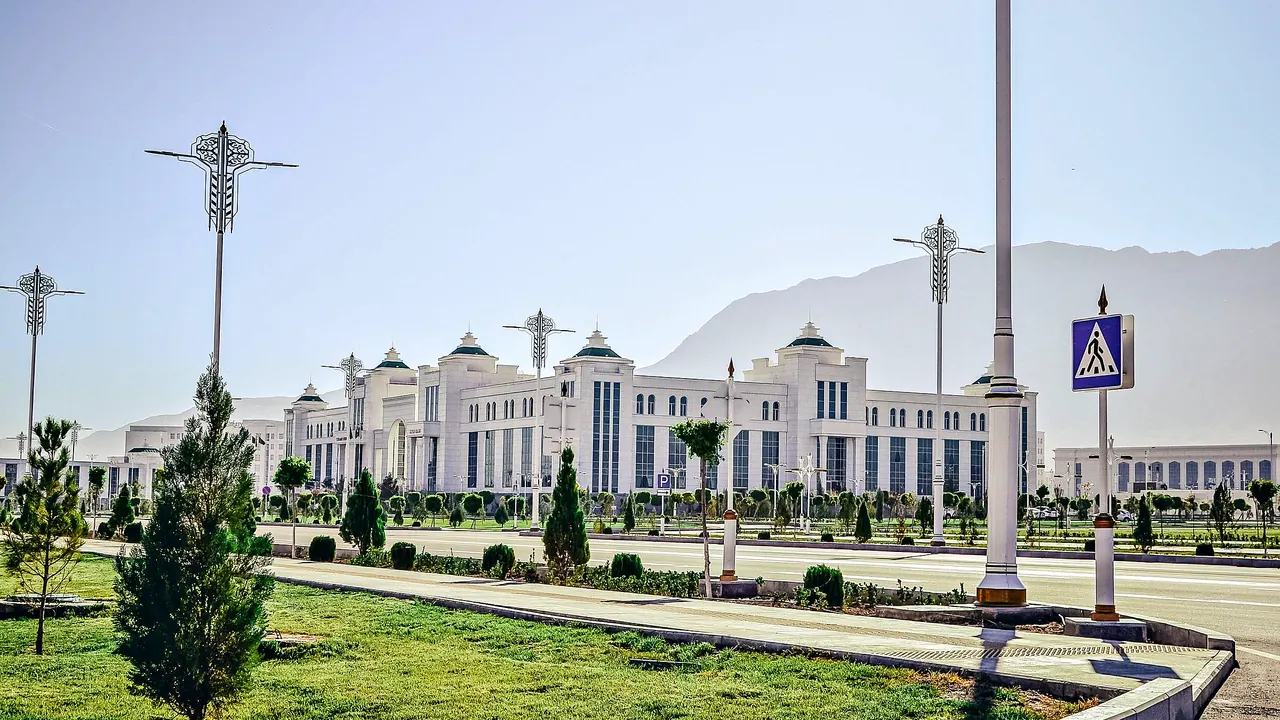
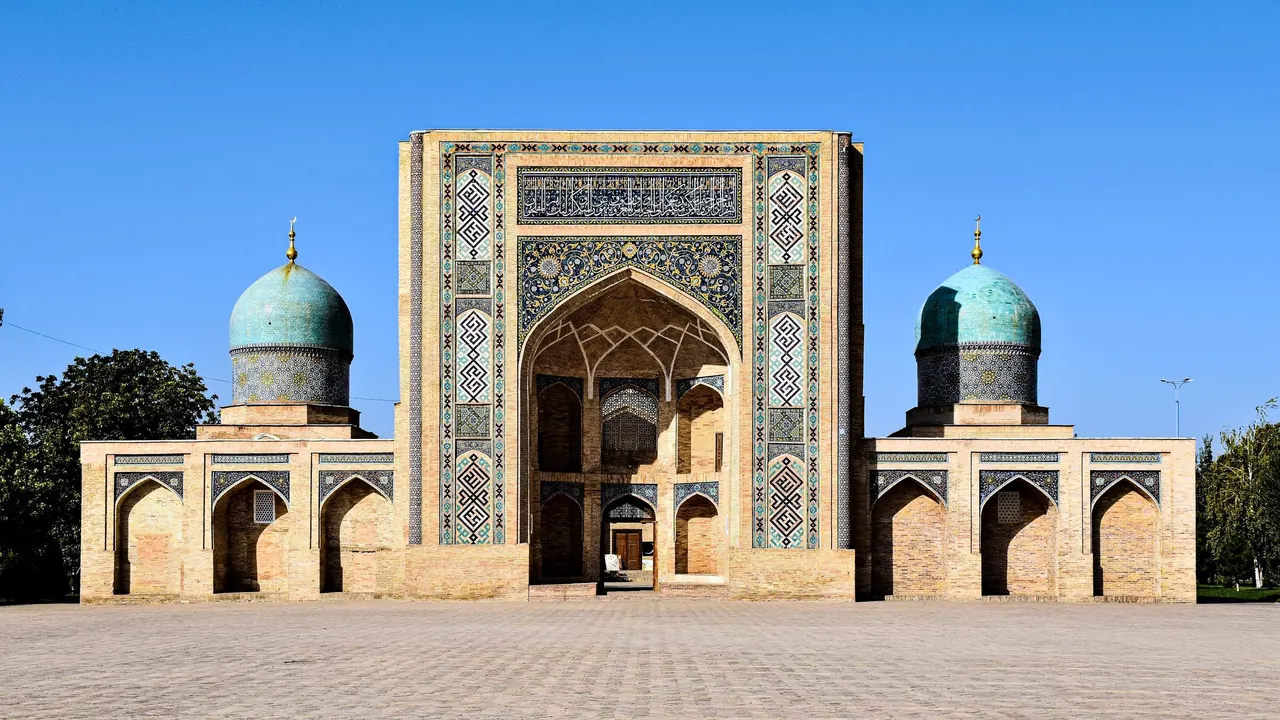
Photos: Ashgabat by IGaragin, Pexels License; Tashkent by AXP Photography, Pexels License.
Ashgabat or Tashkent?
Our verdict in twelve categories, each scored against the same fixed benchmark cities, and the climate month by month, so you can choose for your trip.
Choose Ashgabat for
Ashgabat does not lead in any category we score.
Ashgabat is for the traveller who wants to see a place unlike any other: a white marble capital of gilded statues and floodlit monuments, with the Carpet Museum, Parthian Nisa on the edge of town and the Darvaza crater for those with a night to spare. It works best as one stop on a guided route through Turkmenistan. In return for that strangeness you get quiet evenings, plain food and a stay that costs more than it should.
Choose Tashkent for
- prices
- live music and the arts
- food and drink
Pick Tashkent for an easier, more rounded Central Asian city. It eats better and costs far less. Its metro makes travelling on your own simple, the Alisher Navoi Theatre puts on ballet and opera, and the Tian Shan is close enough for hiking or skiing. It is also the gateway to Samarkand, a little over two hours away by high-speed train.
Scoreboard
Twelve categories on one fixed scale from 0 to 100. The shaded stretch is the gap between the two.
Your match
Pick a travel style or drag the sliders, and both match scores follow your weighting.
Has no clear advantage with the weighting you have chosen.
Wins on prices and live music and the arts with your weighting.
What matters to you?
Category by category
What the scores mean for a trip.
Beaches & swimming
Neither city is for swimming, but Tashkent at least has somewhere to go. The Charvak reservoir, about an hour and a half away in the foothills, has pebbly shores and cool mountain water for a summer day out, and the city's water parks help with the heat.
Ashgabat has only hotel pools. The Caspian coast is on the far side of the country, and the warm lake at Kow Ata is a soak in a cave rather than a swim.
Food & drink
Both cities cook the same pastoral food of plov, shashlik and clay-oven bread, all heavy on mutton. The difference is in how much of it you can find. In Ashgabat the Russian Bazaar and its gutap and ishlekli pastries are the highlights, while the restaurants lean towards Turkish, Russian and hotel menus, and there is no café culture.
Tashkent makes eating part of the visit. Huge plov kitchens sell out by early afternoon, and you can graze on samsa and lagman under Chorsu's green dome or linger on a tea-house platform. Vegetarians struggle in both cities.
Culture & sights
Ashgabat's main sight is the city itself. The 1948 earthquake left almost nothing older standing, and the white marble capital you see came much later, after independence: gilded statues, the Independence and Neutrality monuments and ministries shaped like what they govern, at their strangest under coloured floodlights at night. The real substance is in two museums, the vast hand-knotted rugs of the Carpet Museum and the Parthian ivory rhytons from Nisa in the National Museum.
Tashkent gives you more to see in two or three days, because pockets of real heritage survived its own earthquake of 1966 and the Soviet rebuilding that followed. The Hazrat Imam complex keeps one of the oldest surviving Qurans, the brick Kukeldash Madrasa stands above Chorsu, and the Museum of Applied Arts fills a carved and painted merchant's house. Add the chandeliered metro stations and you get more variety than Ashgabat's marble offers, though Tashkent is not a city of great monuments.
Nightlife
In Ashgabat the evening is for looking rather than going out. You have dinner, walk past the illuminated monuments on near-empty boulevards, perhaps have a drink in a hotel bar or a beer restaurant, and go to bed early.
Tashkent is livelier, though it is still no party city. Pubs, beer gardens, cocktail bars and a few clubs are grouped around Amir Timur Square, and karaoke and long dinners with friends fill the evenings. In summer people stay out in the parks and on terraces once the heat breaks, and most places wind down around midnight.
Nature & outdoors
Both cities sit at the foot of mountains, but Tashkent's are higher and easier to enjoy. The western Tian Shan rises to 3,309 m at Big Chimgan above the turquoise Charvak reservoir. It offers hiking through walnut and juniper valleys and paragliding in summer, and skiing at Chimgan and Amirsoy in winter.
Ashgabat has the bare Kopet Dag ridges right behind the city, with picnic valleys like Gökdere and the gorges of Nokhur further along. Trails are scarce and some areas need permits. The Darvaza gas crater is the famous sight, but it takes an overnight camping trip to see it.
Day trips
Tashkent has the better day trip by far: Samarkand, with the Registan and Shah-i-Zinda, is a little over two hours away by high-speed train. Beyond that the choice is the mountains and the reservoir.
Ashgabat's outings are smaller but closer. There is the Parthian fortress of Old Nisa a short drive west, the earthquake-toppled Anau mosque and the battlefield of Geok Depe. Merv and Kunya-Urgench are too far for a day.
Good for families
Tashkent is easier with children. Locals make a fuss of small children in restaurants and on the metro, and the city has a large zoo, water parks for summer and big parks where families gather in the evening. Cheap taxis cut down the walking.
Ashgabat is clean and calm, with fountain squares, a fairy-tale amusement park and a circus. Beyond those its sights are monuments and museums spread far apart, and summer heat above 40°C rules out much outdoor time. In both cities spring and autumn are the seasons for a family trip.
Getting around
Both capitals were built to a scale that wears out walkers, but Tashkent has a metro. Its frequent trains stop near the old town and the main squares, and cheap app taxis fill the gaps, so travelling on your own is easy.
Ashgabat's buses are clean but hard to use without Russian or Turkmen. Most visitors rely on taxis or on the guide and vehicle that come with an organised trip, which is easy enough but leaves you little freedom.
Shopping & style
For crafts the two cities specialise differently. Ashgabat has one great market, Tolkuchka on the desert edge of town, where hand-knotted carpets, camel-wool shawls and sheepskin telpek hats fill the weekend stalls. Buying a carpet there means official paperwork to export it.
Tashkent offers a wider spread of crafts around Chorsu and in the old madrasa workshops: suzani embroidery, ikat silk, blue Rishtan ceramics and knives. The finest pieces are cheaper in Samarkand or Bukhara. Neither city has boutique streets.
Affordability
This is where the two differ most. Tashkent is cheap for a visitor across the board, from plov and metro rides to opera tickets. Only the international business hotels are expensive, and guesthouses and mid-range hotels keep a stay cheap.
Ashgabat looks cheap at the bazaar, but visitors pay a second price. Hotels charge high rates for rooms of uneven quality, and a guide, a driver and agency arrangements raise the cost of most stays well above what daily life suggests.
Live music & performing arts
Tashkent's Alisher Navoi Theatre is the reason to plan an evening around a performance. Its halls are decorated in the styles of different Uzbek regions, it stages classic ballet and opera through most of the season, and tickets are easy to get. Conservatory concerts, independent theatre and maqom singing add to the programme.
Ashgabat has its own opera and ballet at the Magtymguly Theatre, as well as a Pushkin drama theatre and a philharmonic hall. Schedules are hard to find, though. Its most distinctive music is the bagshy singing epic poems to the dutar, which you will mostly hear at folk events.
Wellness & relaxation
Neither city is a place to unwind, and in both a spa usually means a hotel spa. Ashgabat has the single most memorable soak: the cave lake at Kow Ata, about two hours away, which stays near 33°C all year.
Tashkent has more for slowing down in everyday life. It has neighbourhood hammams, long afternoons on tea-house platforms, the Botanical Garden, and mountain sanatoria around Chimgan for a proper retreat.
When should you go?
Pick your month. The climate figures are measured averages, not a forecast.
Ashgabat in July
Tashkent in July
Daytime high, °C
Rainfall in the month, mm
Temperature and rainfall are climate normals, averaged over the years shown. Ashgabat: 1991-2020 normals, Ashgabat Keshi (4.8 km from centre). Tashkent: 1991-2020 normals, Tashkent (5.1 km from centre).
The two cities follow the same calendar. Spring and autumn are the times to go, and midsummer is too hot for walking the streets in either. Ashgabat runs a few degrees hotter, reaching 39°C in July against 36°C in Tashkent. In both cities April and October bring highs in the low to mid-20s, which is ideal for sightseeing. Neither has a sea, so the summer heat is only good for pools and, near Tashkent, the Charvak reservoir.
Winters are cool in both, but Tashkent is much the wetter. Rain falls there from November to April and peaks at 73mm in February, while March, the wettest month in Ashgabat, brings 41mm. Summers are almost rainless in both cities with long hours of sun, and Tashkent's skies are the sunnier through the hot months.
Which traveller are you?
On a trip on a tight budget, Tashkent is the clear choice. Bazaar meals, metro rides and app taxis cost very little, and simple guesthouses keep the bill low. In Ashgabat, high hotel rates and the need for a guide and driver push costs up.
For an outdoors trip, Tashkent wins again. The Chimgan range and Ugam-Chatkal National Park are about an hour and a half away, with ridge hikes, horse riding, paragliding and winter skiing. Around Ashgabat there are short walks in the Kopet Dag foothills and few marked trails.
On a food and nightlife trip, Tashkent gives you more to do. There is midday plov from communal cauldrons, long tea-house meals and summer terraces and beer gardens near Amir Timur Square. Ashgabat's boulevards empty after dark, and its restaurants are mostly hotel dining rooms.
Before you go
| Measure | Ashgabat | Tashkent |
|---|---|---|
| Official language | Turkmen | Uzbek |
| Currency | Turkmenistan New Manat (TMT) | Uzbekistan Sum (UZS) |
| Sockets | BCF220 V, 50 Hz | CFI220 V, 50 Hz |
| Driving side | Right | Right |
| Time zone | UTC+5 | UTC+5 |
| Emergency number | 112 | 112 |
| Elevation | 219 m | 455 m |
| Main airport | Ashgabat International Airport (ASB)5 km from centre19 non-stop destinations | Tashkent International Airport (TAS)6 km from centre113 non-stop destinations |
By the numbers
| Measure | Ashgabat | Tashkent |
|---|---|---|
| Population | 1,030,063 | 2,956,384 |
| People per km² | 1,346 | 8,830 |
| Museums within 10 km | 3 | 27 |
| UNESCO World Heritage sites within 50 km | 1 | 1 |
Where else could you go?
Every comparison below shares a destination with this one, so you can follow Ashgabat or Tashkent somewhere new.
- Samarkandvs Tashkent
- Dushanbevs Tashkent
- Khivavs Ashgabat
- Bukharavs Tashkent
- Bishkekvs Tashkent
- Bukharavs Ashgabat