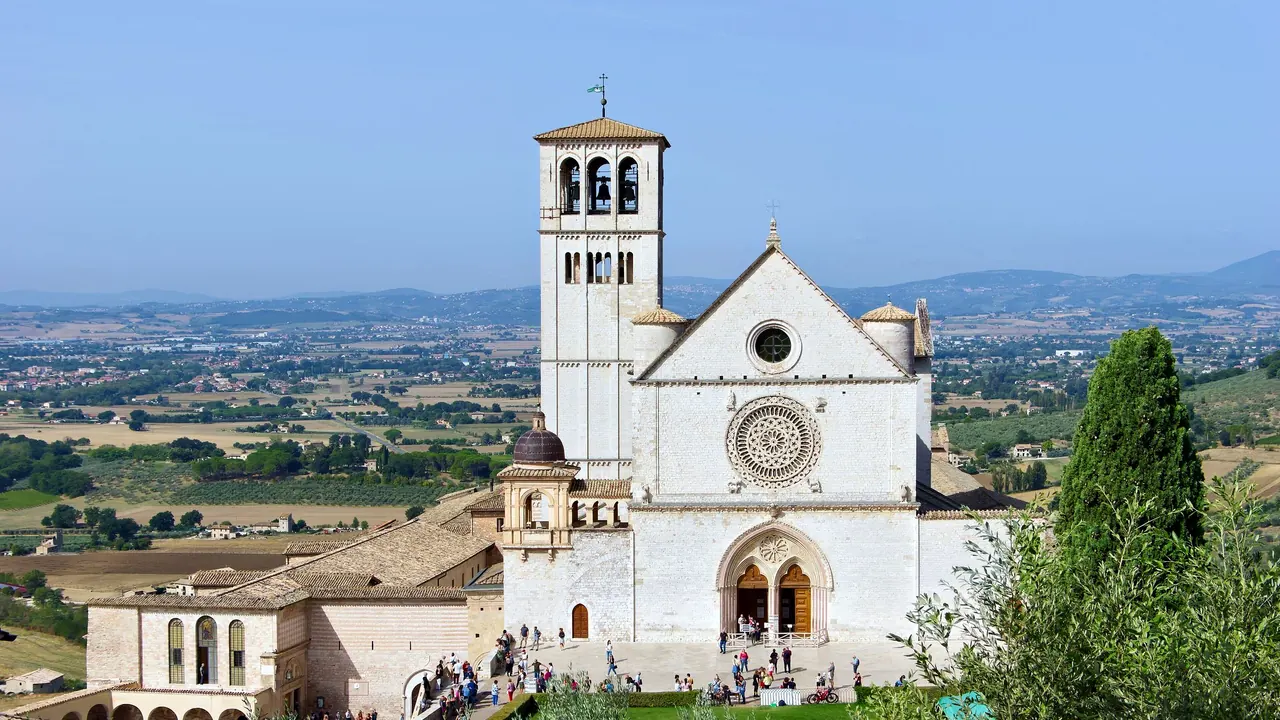
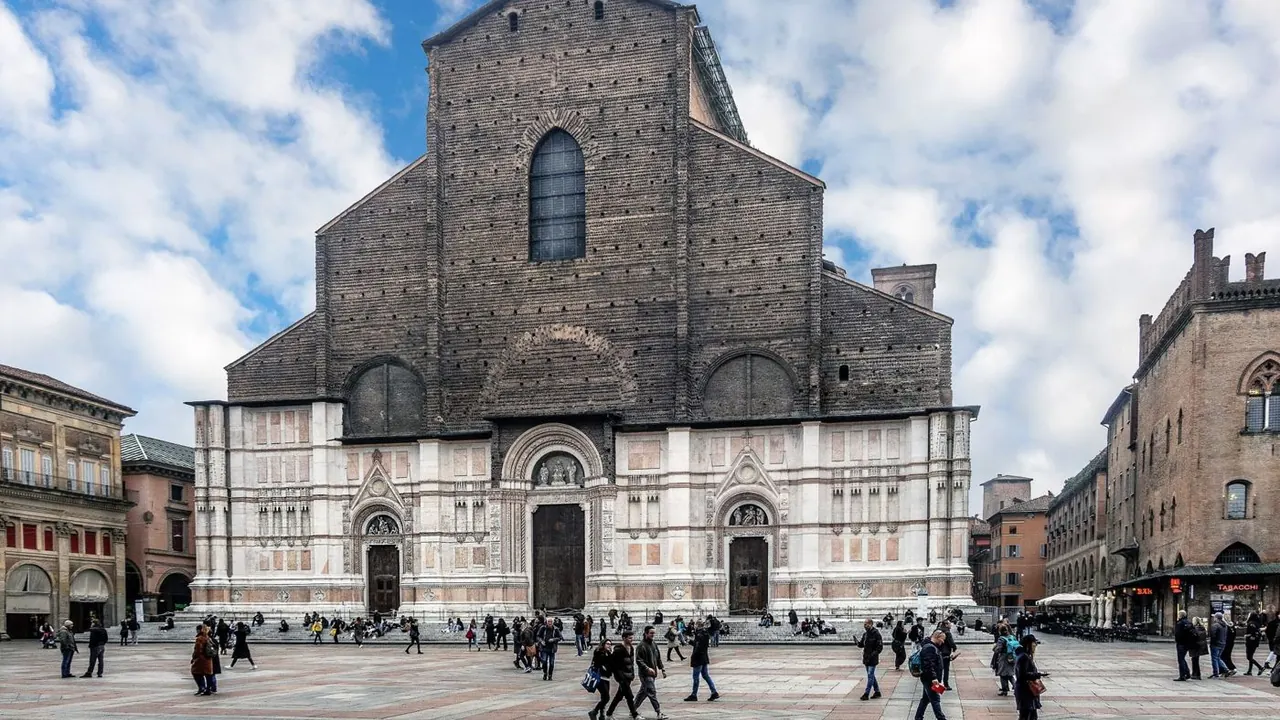
Photos: Assisi by Berthold Werner, CC BY-SA 4.0, cropped; Bologna by Vanni Lazzari, CC BY-SA 4.0, cropped.
Assisi or Bologna?
Our verdict in twelve categories, each scored against the same fixed benchmark cities, and the climate month by month, so you can choose for your trip.
Choose Assisi for
- nature and the outdoors
- prices
Assisi suits the traveller who wants stillness and one great monument rather than a city. The frescoed Basilica of San Francesco, the stone lanes emptied of day-trippers by evening and the walking paths of Monte Subasio make a slow, reflective stay. A car brings the Umbrian hill towns within easy reach, and rooms in convent guesthouses and agriturismi keep costs down. Expect early nights and little to buy beyond linens, olive oil and wine.
Choose Bologna for
- nightlife
- food and drink
- live music and the arts
Bologna is the choice for anyone who travels to eat, likes an evening out and wants plenty to do without a car. It is a real working city, with Emilian cooking at its source, student bars, opera and jazz, and a flat arcaded centre that is easy with children. Its station puts Florence, Ravenna, Venice and the food towns of the Via Emilia within a train ride.
Scoreboard
Twelve categories on one fixed scale from 0 to 100. The shaded stretch is the gap between the two.
Your match
Pick a travel style or drag the sliders, and both match scores follow your weighting.
Wins on nature and the outdoors and prices with your weighting.
Wins on nightlife and food and drink with your weighting.
What matters to you?
Category by category
What the scores mean for a trip.
Beaches & swimming
Neither city is for a beach vacation, but Bologna gets you to the sea far more easily. From Assisi the nearest swimming is at the small lido beaches of Lake Trasimeno, where the water is warm, shallow and a little murky, or in a hotel pool.
From Bologna, a train reaches Rimini in about an hour. The Adriatic there is warm and gentle in July and August, though the shore is lined with rented umbrellas, which is enough for a seaside day when the city heat gets too much.
Food & drink
Assisi cooks in the plain Umbrian way: truffled strangozzi, Castelluccio lentils, wild boar, torta al testo, olive oil from the slopes of Subasio and Sagrantino from Montefalco. It is good produce, but the choice is narrow, and the restaurants near the basilica lean towards set menus for tour groups. The better meals are found in side-lane trattorias and country agriturismi.
In Bologna, food is a reason to make the trip. Ragù, tortellini in brodo, mortadella and hand-rolled pasta are made with care in old osterie, and the market lanes of the Quadrilatero and the Mercato delle Erbe are a pleasure to wander. Parmigiano and balsamic vinegar come from towns close by. In both cities the cooking is regional, so there is little else on offer.
Culture & sights
Assisi holds one of the great artistic sights of Europe in the two-storey Basilica of San Francesco, with frescoes by Cimabue and Simone Martini below and the Giotto cycle of the life of Francis above. Add Santa Chiara, the Temple of Minerva and the Porziuncola down in the valley, and two calm days cover it all.
Bologna offers more to see overall. Its whole brick medieval centre is the sight, with miles of porticoes, San Petronio, the Two Towers and the seven churches of Santo Stefano, plus the anatomical theatre of the Archiginnasio and the Bolognese painters in the Pinacoteca. It fills a day longer and rewards wandering rather than a single pilgrimage.
Nightlife
After dark the two cities could hardly be more different. Assisi goes quiet once the day-trippers leave, and an evening means dinner, a glass of Sagrantino and a walk through empty floodlit lanes. Anyone who wants a night out drives to Perugia.
Bologna's large student population keeps the university quarter around Piazza Verdi busy late into the night, and Via del Pratello is lined with small taverns. The aperitivo crowd moves on to wine bars around Via San Vitale. It is informal rather than glamorous, the clubs are out on the edge of town, and August is quiet.
Nature & outdoors
Assisi has the better landscape right on its doorstep. You can walk from town up Monte Subasio, past the Eremo delle Carceri to grassy summit meadows above the Umbrian valley, and the olive and vineyard country below is gentle cycling. The Valnerina and the Sibillini make bigger days out by car.
Bologna has its pleasures too, including the arcaded climb to San Luca, the gypsum caves of the Parco dei Gessi and the Via degli Dei trail to Florence, which starts in Piazza Maggiore. Its higher Apennine peaks, though, are an hour and a half away, and the plain to the north is flat farmland.
Day trips
Both make excellent bases, but of different kinds. From Assisi the outings are the Umbrian hill towns close by: Spello in ten minutes, Perugia, Spoleto, Gubbio, Todi and Orvieto's cathedral, with a car needed for the smaller ones.
Bologna goes further, because it sits at the rail junction of northern Italy. Florence is about half an hour away by fast train, Ravenna's mosaics and Ferrara's castle are close, and Modena and Parma are short rides along the Via Emilia. Venice and Verona also make easy days out, all without a car.
Good for families
Bologna is noticeably easier with children. Its centre is flat and largely closed to traffic, the porticoes give shade, and older children enjoy climbing the Asinelli tower. Mirabilandia and the Rimini beaches make good extra days out.
Assisi is safe and welcoming, but its stepped lanes defeat pushchairs and its frescoed churches ask for silence. The Rocca Maggiore and the Subasio walk suit older children, and most families are happier at a valley agriturismo with a pool.
Getting around
Bologna is the simpler city to get around. Its centre is flat and walkable under the arcades, and the main station sits at the edge of the old town with trains in every direction. Buses fill the gaps, and a car only gets in the way.
Assisi is small but steep, with stairs and slopes from the basilica up to Piazza del Comune. Its station is 4km below in Santa Maria degli Angeli, so you need a bus or taxi up to town. Away from the valley rail line, most visitors end up hiring a car.
Shopping & style
In Assisi, shopping mostly means pilgrim souvenirs, rosaries and Tau crosses. Among them are worthwhile Umbrian linens with Assisi embroidery, Deruta ceramics, truffle products and Sagrantino.
Bologna has more choice, though food still leads: mortadella, aged Parmigiano and fresh tortellini from the Quadrilatero delicatessens. There are high-street chains on Via dell'Indipendenza, a small luxury cluster around the Galleria Cavour, the Montagnola market and independent bookshops and vintage stores in the university quarter.
Affordability
Assisi is the somewhat cheaper stay. The basilicas cost nothing to enter, convent guesthouses and valley agriturismi keep rooms affordable, and only restaurants beside the basilicas and hotels at Easter cost more.
In Bologna, eating and drinking are good value, with honest trattorias and food included with the aperitivo. The rooms are what costs, since hotels in the old town are priced for prosperous northern Italy and become scarce when the big trade fairs are on.
Live music & performing arts
Bologna has a real musical life. The historic Teatro Comunale stages opera, ballet and symphony concerts, small basement clubs play jazz most nights, and in summer there are concerts and film screenings in Piazza Maggiore.
Assisi's music is sacred and tied to the seasons: organ and choral concerts in the basilica around feast days, and the medieval costume and song of Calendimaggio in spring. For opera or jazz, visitors go to Perugia.
Wellness & relaxation
Neither city has a bathing tradition of its own, and their calm comes from different places. In Assisi it is spiritual: convent retreats, silent walks to the Eremo and empty lanes at dawn, with only a few spas in country hotels.
Bologna offers slow lunches under the porticoes and real thermal water nearby, at Castel San Pietro Terme and the old Apennine spa town of Porretta Terme. The noisy university quarter and the heavy summer heat make the city itself less restful.
When should you go?
Pick your month. The climate figures are measured averages, not a forecast.
Assisi in July
Bologna in July
Daytime high, °C
Rainfall in the month, mm
Where the figures come from
Assisi's temperatures are measured 51 km from the centre, at Frontone.
Assisi has no rain gauge within 25 km of the centre, so its rainfall comes from a gridded climate dataset read at the city rather than from a gauge further away.
Bologna has no rain gauge within 25 km of the centre, so its rainfall comes from a gridded climate dataset read at the city rather than from a gauge further away.
Bologna's sunshine is measured 82 km from the centre, at Cervia.
Temperature and rainfall are climate normals, averaged over the years shown. Assisi: 1991-2020 normals, Frontone (50.5 km from centre). Bologna: 1991-2020, 14 years observed normals, Bologna / Borgo Panigale (5.5 km from centre).
Winters are much alike in the two, cold and grey with January highs near 7°C, so the choice through the year comes down to the warmer months. Assisi is at its best in May, June and September, when the steep lanes and the Subasio paths are comfortable underfoot. By July it reaches 30°C, warm enough for a swim in Lake Trasimeno but hard going on the stepped streets in the afternoon. October is still a fine walking month, but the rain builds through autumn to a peak of about 94mm in November.
From spring through October Bologna runs two or three degrees warmer, and the plain holds the summer heat. July and August reach 32°C and feel heavy even under the porticoes. They are also the sunniest months, with over 300 hours of sun in July, and the best time for a beach day at Rimini. April, May and September are the pleasant months for walking the city. As in Assisi, October and November bring the most rain.
Which traveller are you?
For a food and nightlife trip, Bologna wins easily. It is where tagliatelle al ragù and tortellini come from, and the evening aperitivo leads naturally into a night out. The student bars of Piazza Verdi and Via del Pratello stay open late, while Assisi is silent by eleven.
On an outdoors trip, Assisi is the better choice because the walking starts at the edge of town. You can spend a morning on the mountain and be back for lunch without a car. In Bologna the hills are gentle, and real mountain country takes a longer journey.
On a tight budget, Assisi makes the money go further, mainly on the bed for the night, which is where most of a trip's costs build up. In Bologna the saving is at the table instead: you eat cheaply and well, but pay more to sleep near the centre.
Before you go
| Measure | Assisi | Bologna |
|---|---|---|
| Official language | Italian | Italian |
| Currency | Euro (EUR) | Euro (EUR) |
| Sockets | CFL230 V, 50 Hz | CFL230 V, 50 Hz |
| Driving side | Right | Right |
| Time zone | UTC+1, UTC+2 in summer | UTC+1, UTC+2 in summer |
| Emergency number | 112 | 112 |
| Elevation | 424 m | 54 m |
| Main airport | Perugia San Francesco d'Assisi – Umbria International Airport (PEG)9 km from centre17 non-stop destinations | Bologna Guglielmo Marconi Airport (BLQ)6 km from centre98 non-stop destinations |
| Public holidays this year | 13 days | 13 days |
By the numbers
| Measure | Assisi | Bologna |
|---|---|---|
| City population | 27,605 | 387,971 |
| People per km² | 147 | 2,754 |
| Museums within 10 km | 14 | 68 |
| UNESCO World Heritage sites within 50 km | 2 | 3 |
Where else could you go?
Every comparison below shares a destination with this one, so you can follow Assisi or Bologna somewhere new.
- Florencevs Bologna
- San Marinovs Assisi
- Luccavs Bologna
- Sienavs Assisi
- San Marinovs Bologna
- Veronavs Bologna