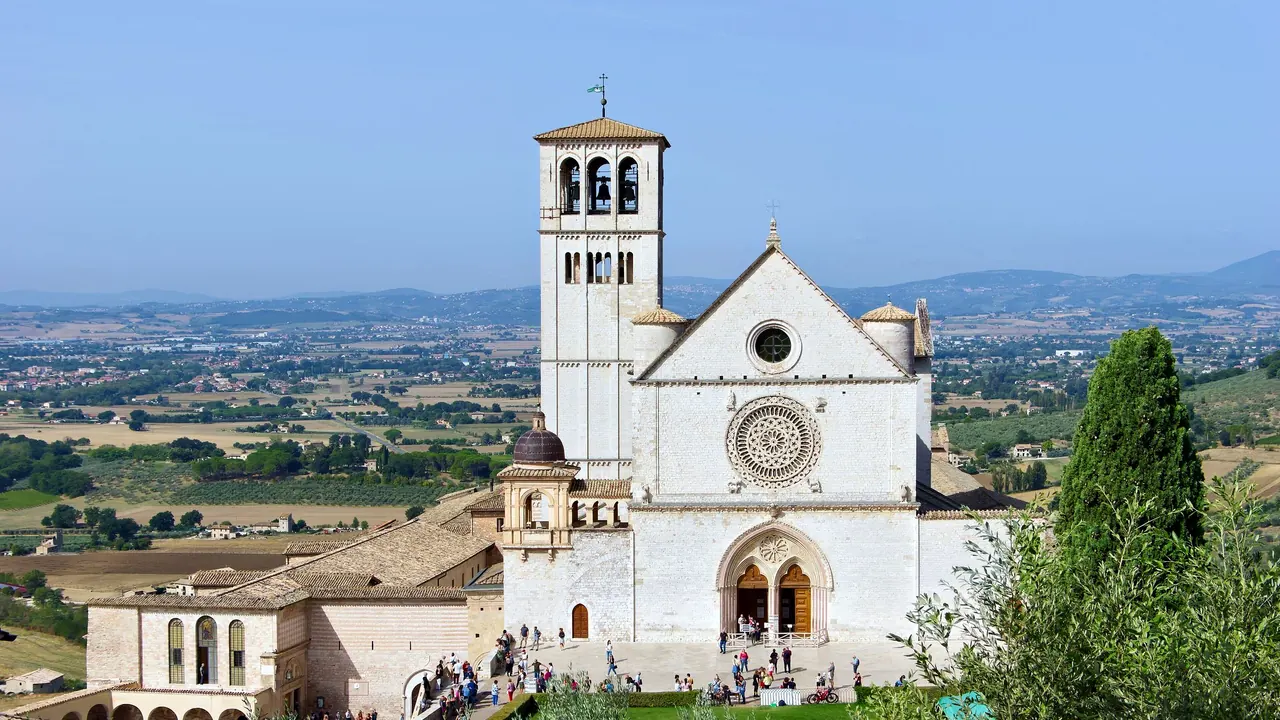
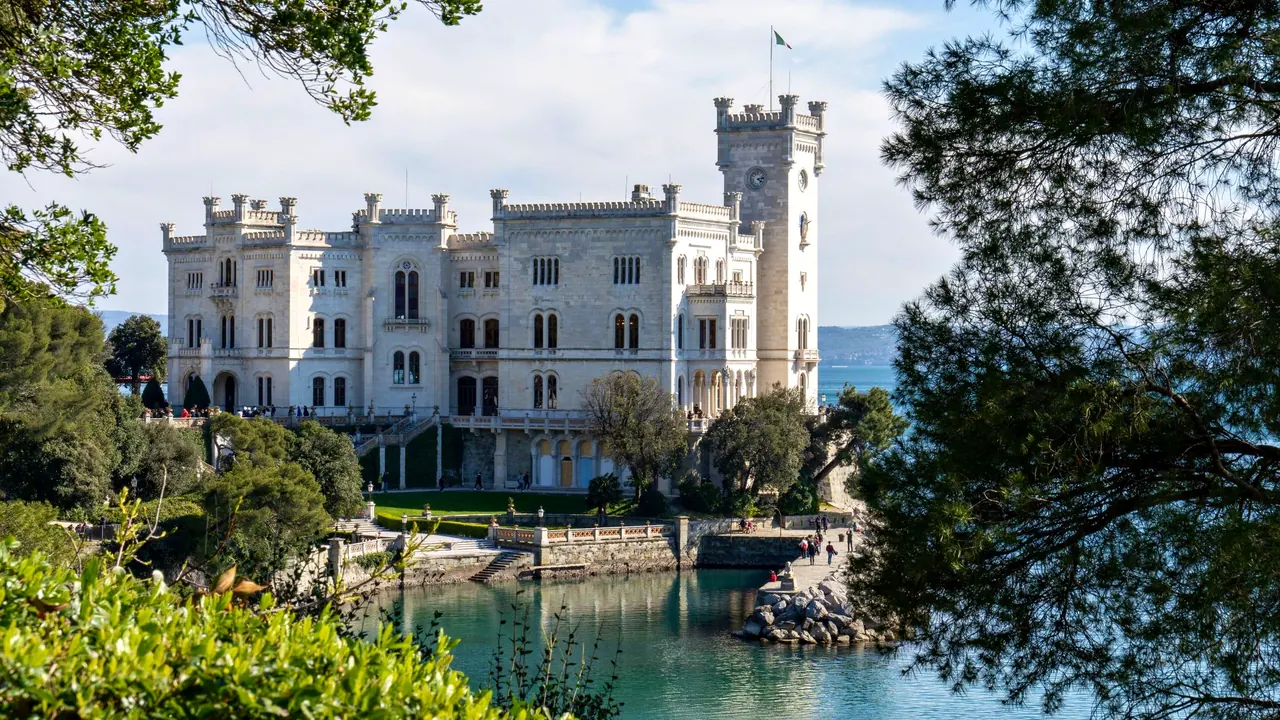
Photos: Assisi by Berthold Werner, CC BY-SA 4.0, cropped; Trieste by Tibor Szabo, Pexels License.
Assisi or Trieste?
Our verdict in twelve categories, each scored against the same fixed benchmark cities, and the climate month by month, so you can choose for your trip.
Choose Assisi for
- culture and sights
- day trips
- prices
Assisi suits travellers who want art and faith in one small, intact place: the frescoed Basilica of San Francesco, still evenings in stone lanes, and the hill towns of Umbria all around for day trips. It works best for couples and slower travellers who don't need beaches, nightlife or much for children, and who are willing to hire a car for Spello, Gubbio and Orvieto.
Choose Trieste for
- beaches
- live music and the arts
- nightlife
Trieste is the better pick if you want the sea right beside a real city. Swimming off Barcola, old coffee houses, buffet cooking, an opera season and the Karst cliffs give you more to do from morning to night. Families with older children will find more to keep them busy, and the city is easier to get around without a car.
Scoreboard
Twelve categories on one fixed scale from 0 to 100. The shaded stretch is the gap between the two.
Your match
Pick a travel style or drag the sliders, and both match scores follow your weighting.
Wins on culture and sights and day trips with your weighting.
Wins on beaches and live music and the arts with your weighting.
What matters to you?
Category by category
What the scores mean for a trip.
Beaches & swimming
On swimming, the two could hardly be further apart. Assisi is a hill town about two hours from either coast. Its nearest swimming is the shallow, slightly murky water of Lake Trasimeno or a hotel pool.
Trieste lives with the sea from June to September. You swim off rock and concrete rather than sand: ladders lead into clear water at Barcola, there are old bathing establishments in town, and prettier pebble coves lie at Sistiana and Grignano. Even so, a swim is part of an ordinary summer day there.
Food & drink
Both are honest regional kitchens rather than restaurant cities, but Trieste gives you more to explore. Assisi cooks the Umbrian way, with truffled strangozzi, Castelluccio lentils, wild boar, torta al testo, Monte Subasio olive oil and Sagrantino. The good meals are on the side lanes and in agriturismi, away from the set menus near the basilica.
Trieste mixes Italy, Austria and the Slavic world. There is pork carved at the buffet counters and served with horseradish, jota and sardoni, strudel and presnitz, and a coffee culture with its own vocabulary. The osmize on the Karst, farmhouses that sell their own wine and cured meats, offer something Assisi has no match for.
Culture & sights
Assisi edges ahead because of one supreme monument. The Basilica of San Francesco, with the Giotto cycle above and the Cimabue and Lorenzetti frescoes below, is art of the first rank. The Temple of Minerva, Santa Chiara and the Rocca complete a compact town you can see in two days.
Trieste's appeal is broader and more urban. It has Habsburg grandeur around Piazza Unità, the Borgo Teresiano and San Spiridione, San Giusto's mosaics, Miramare Castle, a great synagogue and the Risiera memorial. That gives more variety, but nothing with the weight of Assisi's basilica.
Nightlife
Neither is a place for a big night out, but Trieste at least has evenings. Assisi falls silent once the day-trippers leave, and a glass of Sagrantino and a walk through floodlit lanes is all there is. For anything later, you go to Perugia.
Trieste has an aperitivo culture around Piazza Unità, the Canal Grande and Cavana. Students keep a few streets of wine bars and pubs busy, and in summer the kiosks along Barcola stay open into warm nights. Clubs are few, though.
Nature & outdoors
Both have mountains on the doorstep, and Trieste adds the sea. In Assisi the outdoors means Monte Subasio, where a path climbs through holm oaks to the Eremo delle Carceri and on to open summit meadows. There is easy cycling across the valley to Spello and Bevagna, and bigger days out in the Valnerina or the Sibillini.
Trieste has more range. The Strada Napoleonica and the Rilke Path run along cliffs above the gulf, and Val Rosandra offers hiking and climbing. The Karst hides the Grotta Gigante and the Škocjan Caves. The Miramare marine reserve is good for snorkelling and kayaking, and the gulf is a serious sailing water.
Day trips
Both are excellent bases, and Assisi is slightly the stronger because the best of Umbria lies so close. Spello is minutes away and Perugia and Spoleto are an easy train ride. Gubbio, Todi and Orvieto each make a day out, and Montepulciano is just across the Tuscan border.
Trieste's reach spans three countries instead, from Aquileia's mosaics and star-shaped Palmanova to Piran, Ljubljana and Postojna, with Venice possible in a long day. The choice is between a dense cluster of hill towns and a wider, more varied map.
Good for families
Trieste is clearly the easier of the two with children. Miramare's gardens, the Grotta Gigante, the waterfront aquarium, the science centre and summer days at Barcola make real outings, even though swimming is off rocks and the upper town is steep.
Assisi is safe and welcoming but built for silence and devotion, and its stepped streets are hard on pushchairs. Older children may enjoy the Rocca Maggiore and Monte Subasio. Most families stay at a valley agriturismo with a pool and go up to the town in short bursts.
Getting around
Trieste is simpler to get around. Piazza Unità, the Canal Grande and the waterfront sit on flat ground, a dense bus network reaches Barcola, Miramare and the Karst, and boats cross the bay to Muggia. Only the walk up San Giusto is a real climb.
Assisi is small but steep from end to end, and its station is 4km below in Santa Maria degli Angeli. Off the valley railway to Perugia and Spoleto, a hire car becomes close to essential.
Shopping & style
Assisi's shops mostly sell devotion, while Trieste's trade on its merchant past and its coffee. Rosaries and Franciscan souvenirs fill Assisi's lanes. The things worth taking home are embroidered Assisi linen, Deruta ceramics, Subasio olive oil and a bottle of Sagrantino.
Trieste offers a little more browsing. You can search the antique and second-hand shops in the old-town lanes, buy beans from the city's roasters, and pick up Karst wine and presnitz to carry home. The clothes shops around Corso Italia are ordinary, though, and neither city has a fashion scene.
Affordability
Costs are much the same in both, fair rather than cheap. In Assisi you save through free entry to the basilicas and simple rooms in convent guesthouses. In Trieste the savings are cheap buffet meals and coffee at the bar, inexpensive buses and free swimming at Barcola.
Both charge more near their famous sights and at peak times: Easter and feast days in Assisi, and the autumn regatta and high summer in Trieste.
Live music & performing arts
Trieste offers far more for a night of performance. The Teatro Verdi runs a full season of opera and ballet, and operetta survives as a Habsburg legacy. The Politeama Rossetti and the Slovenian-language theatre add drama, and in summer there are concerts in the castle courtyard on San Giusto.
Assisi's music is sacred and seasonal: organ and choral concerts in the basilicas, and the medieval pageantry of Calendimaggio in spring. For opera or Perugia's summer jazz festival, you have to leave town.
Wellness & relaxation
Neither has thermal baths or much of a spa scene, so the rest comes from each town's pace. Assisi's quiet is spiritual: convent retreats, silent walks to the Eremo delle Carceri and empty lanes at dawn. Trieste's is urban and literary, with long sittings in old coffee houses and evening walks on the Molo Audace as the sun sets over the gulf.
When should you go?
Pick your month. The climate figures are measured averages, not a forecast.
Assisi in July
Trieste in July
Daytime high, °C
Rainfall in the month, mm
Where the figures come from
Assisi's temperatures are measured 51 km from the centre, at Frontone.
Assisi has no rain gauge within 25 km of the centre, so its rainfall comes from a gridded climate dataset read at the city rather than from a gauge further away.
Temperature and rainfall are climate normals, averaged over the years shown. Assisi: 1991-2020 normals, Frontone (50.5 km from centre). Trieste: 1991-2020 normals, Trieste (1.6 km from centre).
Assisi is best in spring and early autumn. May and September are warm enough for long days on foot without the heat of July, when afternoons reach 30°C on steep lanes with little shade. Rain builds from September and peaks in November. Winters are cold, with daytime highs in single figures from December to February, so the colder months suit short, quiet visits more than long walks.
Trieste is a little milder in winter and has the sea on its side in summer. The water is warm enough for swimming from June to September and reaches 25°C in July and August, and July is the sunniest month. Autumn is much wetter than in Assisi, with around 125mm in November, and winter days are often grey. For a mix of town and swimming, June and early September suit Trieste best. For walking and sightseeing in Assisi, choose late April to early June.
Which traveller are you?
For a pilgrimage or a spiritual retreat, Assisi is the obvious choice. The whole town is shaped by Saint Francis, and staying in a convent guesthouse lets you keep its rhythm of quiet mornings and silent evenings. Trieste, a secular port city, has nothing like it.
On a beach and sun trip, Assisi only works if your hotel or agriturismo has a pool, because the sea is two hours away. Trieste lets you combine a morning in town with an afternoon swim, as long as you are happy getting in off rocks rather than sand.
On a family trip with children, treat Assisi as a short visit from a valley base, because the town itself asks for quiet. Trieste can fill a whole week, and the caves, castles, boats and sea will keep older children busy.
Before you go
| Measure | Assisi | Trieste |
|---|---|---|
| Official language | Italian | Italian |
| Currency | Euro (EUR) | Euro (EUR) |
| Sockets | CFL230 V, 50 Hz | CFL230 V, 50 Hz |
| Driving side | Right | Right |
| Time zone | UTC+1, UTC+2 in summer | UTC+1, UTC+2 in summer |
| Emergency number | 112 | 112 |
| Elevation | 424 m | 2 m |
| Main airport | Perugia San Francesco d'Assisi – Umbria International Airport (PEG)9 km from centre17 non-stop destinations | Trieste Airport (TRS)31 km from centre32 non-stop destinations |
| Public holidays this year | 13 days | 13 days |
By the numbers
| Measure | Assisi | Trieste |
|---|---|---|
| City population | 27,605 | 198,417 |
| People per km² | 147 | 2,332 |
| Museums within 10 km | 14 | 33 |
| UNESCO World Heritage sites within 50 km | 2 | 5 |
| Swim season, months above 21 °C | - | 4 months |
Where else could you go?
Every comparison below shares a destination with this one, so you can follow Assisi or Trieste somewhere new.