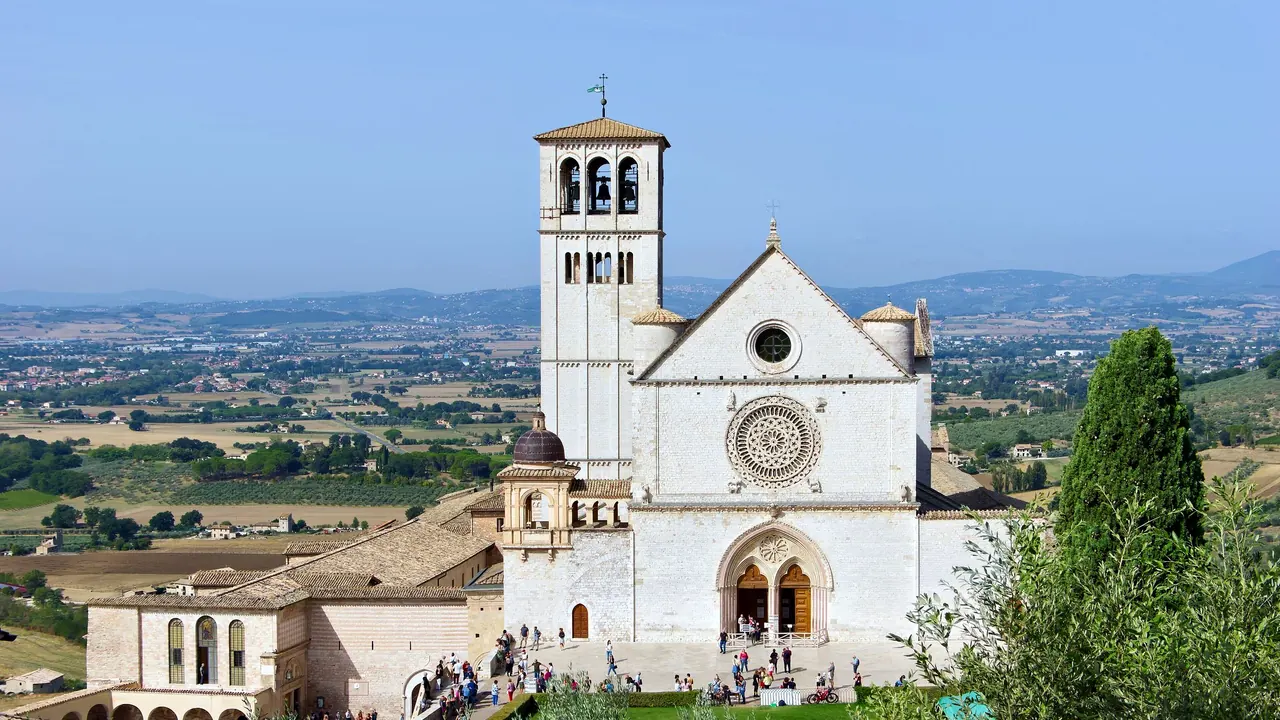
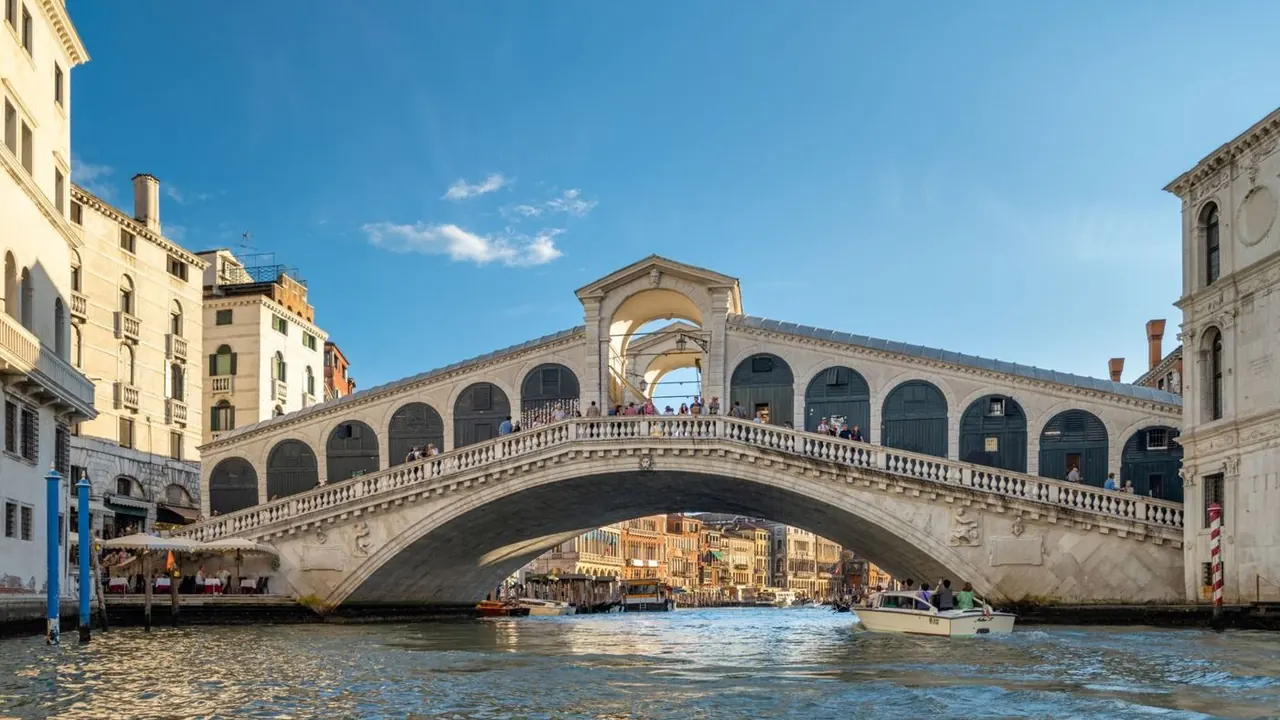
Photos: Assisi by Berthold Werner, CC BY-SA 4.0, cropped; Venice by David Vives, Pexels License.
Assisi or Venice?
Our verdict in twelve categories, each scored against the same fixed benchmark cities, and the climate month by month, so you can choose for your trip.
Choose Assisi for
- prices
- nature and the outdoors
Assisi suits travellers who want calm, walking and the Umbrian countryside more than a long list of sights. The town is small enough to absorb in two days, the slopes of Monte Subasio begin at the town gate, and with a car it makes an excellent base for Spello, Perugia, Gubbio and the wine villages. Convent guesthouses and valley agriturismi also keep the cost of a longer stay sensible.
Choose Venice for
- beaches
- live music and the arts
- shopping
Venice is the stronger choice for anyone whose trip is built around art, architecture and evenings out, even if those evenings are mostly aperitivo and opera rather than late nights. Its galleries and churches fill a week, La Fenice and the baroque concerts give it a real performing life, and the Lido adds a beach. The price of all this is crowds on the main routes and some of the highest costs in Italy.
Scoreboard
Twelve categories on one fixed scale from 0 to 100. The shaded stretch is the gap between the two.
Your match
Pick a travel style or drag the sliders, and both match scores follow your weighting.
Wins on prices and nature and the outdoors with your weighting.
Wins on beaches and live music and the arts with your weighting.
What matters to you?
Category by category
What the scores mean for a trip.
Beaches & swimming
Only Venice has a real beach. The Lido is a short boat ride from San Marco, with kilometres of fine sand and shallow, warm Adriatic water that suits children, and Pellestrina and Jesolo are further along the coast. The water is greenish rather than clear.
Assisi is inland, about two hours from either coast. The nearest swimming is at the small lake lidos of Trasimeno, so a pool at a country hotel is the realistic way to cool off.
Food & drink
Assisi serves plain Umbrian country food: strangozzi with black truffle, Castelluccio lentils, wild boar and Monte Subasio olive oil, with Sagrantino from Montefalco to drink. The choice is narrow, though, and the best meals are in side-lane trattorias and agriturismi.
Venice gives you more variety and a better way of eating. You can graze on cicchetti in the bacari around the Rialto, buy lagoon seafood at the market and order risotto turned black with cuttlefish ink. The tourist menus around San Marco mean you have to choose with care.
Culture & sights
Assisi is centred on one masterpiece, the double Basilica of San Francesco with its Giotto and Cimabue frescoes, along with the Temple of Minerva, Santa Chiara and the Rocca in a pink-stone town that two unhurried days cover.
Venice is on another scale. The whole city is the monument, from San Marco and the Doge's Palace to the palazzi of the Grand Canal, and the art goes deep: the Accademia, Titian at the Frari, Tintoretto at San Rocco, modern collections and the Biennale. Even a week leaves things unseen.
Nightlife
Neither city is a place for a big night out, but Venice at least has an evening scene. Spritz-fuelled aperitivo spills out along the Misericordia, and students keep Campo Santa Margherita busy later.
Assisi empties once the day-trippers leave. A glass of Sagrantino and a stroll through floodlit lanes is the whole programme, and for bars you go to Perugia.
Nature & outdoors
Assisi is better for getting outdoors. You can walk straight from town through holm-oak woods to the hermitage and on to Subasio's open summit meadows, and you can cycle among the olive groves of the valley. The Valnerina and the Sibillini are within driving range.
In Venice the outdoors is the lagoon: marshes with egrets and flamingos, kayaking or Venetian rowing, and flat rides along the Lido sea walls. Proper hills are an hour or more away.
Day trips
Both are excellent bases, but they work differently. From Assisi the excursions are a ring of Umbrian hill towns close by, such as Spello, Perugia, Spoleto, Gubbio and Todi, and a car makes the smaller ones far easier.
From Venice, fast trains reach larger cities: Padua, Vicenza, Verona and even Bologna. The lagoon islands of Murano, Burano and Torcello also make a day out without leaving the water.
Good for families
Venice is the easier sell to children: boats instead of buses, no traffic, glass-blowing on Murano, the dinosaurs in the natural history museum and a shallow beach at the Lido. Stepped bridges and summer crowds still make it hard work with a pushchair.
Assisi is safe and welcoming but offers little beyond the castle and a hill walk for older children. Families usually stay at a valley agriturismo with a pool and visit the town in short trips.
Getting around
Venice is easier to get around. It has no cars at all, almost everything is within walking distance, and vaporetti run along the Grand Canal and out to the islands. Arrival by train at Santa Lucia drops you right in the city, though the bridge steps punish wheeled luggage.
Assisi's centre is small but steep, and its station lies 4km below in the valley. Trains cover only the line through Perugia and Spoleto, so anyone touring Umbria ends up hiring a car.
Shopping & style
Venice has much more worth buying. There are workshops making Murano glass, Burano lace, papier-mâché masks, marbled paper and furlane slippers, and the big fashion names line the streets between San Marco and the Rialto. Watch for cheap imports passed off as local on the main routes.
In Assisi, pilgrim souvenirs dominate. The worthwhile buys are Assisi-embroidered linens, Deruta ceramics, olive oil and Sagrantino.
Affordability
Assisi costs a good deal less. Its basilicas are free, convent guesthouses and agriturismi keep rooms cheap, and walking a lane or two away from the basilicas cuts the cost of meals.
Venice is among the most expensive places to stay in Italy. Hotels, water transport and most church entries all add up, so savings come from eating cicchetti at the counter, sleeping in Mestre or coming in winter.
Live music & performing arts
Venice has a genuine stage culture. La Fenice puts on full seasons of opera, ballet and concerts, the Goldoni stages drama, the Biennale runs its own festivals, and Vivaldi concerts fill the churches most evenings.
Assisi's music is mostly sacred: organ and choral concerts in the basilica, plus the medieval pageantry of Calendimaggio in spring. For opera or jazz you go to Perugia.
Wellness & relaxation
Neither has much in the way of spas, and in both the calm comes from stillness rather than treatments. In Assisi that means convent retreats and silent walks to the Eremo delle Carceri.
Venice offers hotel spas in palazzi and on the Lido. Real thermal pools are an hour away at Abano Terme, and the quiet is found in Castello, Cannaregio and Giudecca rather than around San Marco.
When should you go?
Pick your month. The climate figures are measured averages, not a forecast.
Assisi in July
Venice in July
Daytime high, °C
Rainfall in the month, mm
Where the figures come from
Assisi's temperatures are measured 51 km from the centre, at Frontone.
Assisi has no rain gauge within 25 km of the centre, so its rainfall comes from a gridded climate dataset read at the city rather than from a gauge further away.
Temperature and rainfall are climate normals, averaged over the years shown. Assisi: 1991-2020 normals, Frontone (50.5 km from centre). Venice: 1991-2020 (sunshine 1971-2000, rainfall 1981-2010) normals, Venezia / Tessera (6.7 km from centre).
Both cities follow a similar curve, cold and grey in winter and hot in midsummer, with Assisi reaching about 30°C in July. Spring from April to early June and September are the comfortable months for walking in either place. In Assisi the autumn is best for hiking on Subasio but turns wetter through October and November, its rainiest month at about 94mm, while July is the driest.
Venice gets its heaviest rain at a different time of year, with June the wettest month at about 96mm. High summer is when it comes into its own for swimming: the sea at the Lido is warm from late June to early September, around 26°C in August, and July brings the longest sunny days. Assisi has no sea, so summer there means early starts on the hills and a pool in the afternoon heat.
Which traveller are you?
On a trip on a tight budget, Assisi lets the money stretch to a longer stay. Days go on footpaths and in churches that cost nothing, and regional trains reach Spello and Spoleto for little. In Venice, even a short stay drains the budget quickly.
For an outdoors trip, Assisi is the better base. You can walk out of your room in boots and be on a mountain trail within the hour, and autumn suits long walking days. In Venice the outdoors means a morning out on the water rather than a day in the hills.
On a culture and arts trip, Venice is the clear choice. You can spend mornings in the galleries, afternoons tracking paintings through parish churches and evenings at the opera. Assisi suits a slower, pilgrimage-paced visit built around a single great fresco cycle.
Before you go
| Measure | Assisi | Venice |
|---|---|---|
| Official language | Italian | Italian |
| Currency | Euro (EUR) | Euro (EUR) |
| Sockets | CFL230 V, 50 Hz | CFL230 V, 50 Hz |
| Driving side | Right | Right |
| Time zone | UTC+1, UTC+2 in summer | UTC+1, UTC+2 in summer |
| Emergency number | 112 | 112 |
| Elevation | 424 m | 2 m |
| Main airport | Perugia San Francesco d'Assisi – Umbria International Airport (PEG)9 km from centre17 non-stop destinations | Venice Marco Polo Airport (VCE)7 km from centre103 non-stop destinations |
| Public holidays this year | 13 days | 13 days |
By the numbers
| Measure | Assisi | Venice |
|---|---|---|
| City population | 27,605 | 250,369 |
| People per km² | 147 | 602 |
| Museums within 10 km | 14 | 52 |
| UNESCO World Heritage sites within 50 km | 2 | 5 |
| Swim season, months above 21 °C | - | 4 months |
Where else could you go?
Every comparison below shares a destination with this one, so you can follow Assisi or Venice somewhere new.