Australia
Melbourne
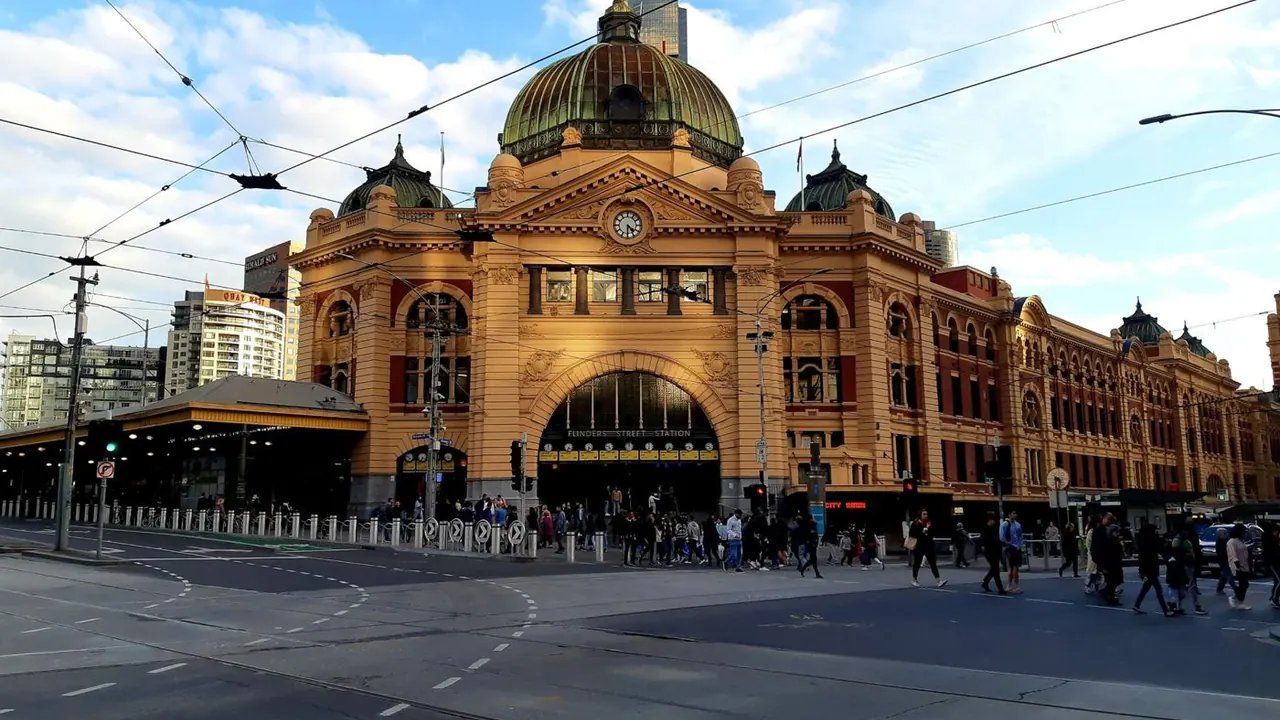
Flinders Street Station
- Getting around76
- Food & drink75
- Nightlife75
Photo: Medelam, CC BY-SA 4.0, cropped
Match
64
Every category weighted equally
- Beach & sun61
- Culture & arts65
- Food & nightlife67
- Family trip62
- Outdoors62
- Relax & unwind61
- Shopping & style67
- On a budget60
Melbourne in twelve categories
Our verdict on each, scored 0 to 100 against the same fixed benchmark cities, so a score means the same thing on every page.
Beaches & swimming. Scores 50 out of 100.
Food & drink. Scores 75 out of 100.
Culture & sights. Scores 57 out of 100.
Nightlife. Scores 75 out of 100.
Nature & outdoors. Scores 70 out of 100.
Day trips. Scores 62 out of 100.
Good for families. Scores 73 out of 100.
Getting around. Scores 76 out of 100.
Shopping & style. Scores 70 out of 100.
Affordability. Scores 31 out of 100.
Live music & performing arts. Scores 72 out of 100.
Wellness & relaxation. Scores 54 out of 100.
Melbourne category by category
Beaches & swimming
50Melbourne sits on Port Phillip Bay, so the city beaches face sheltered, mostly calm water rather than open surf. St Kilda, Elwood, Brighton with its bathing boxes and Williamstown are a short tram or train ride from the centre, and on a hot summer day locals fill them. The bay reaches about 20°C at its warmest, which makes for pleasant but not balmy swimming.
The weather is the catch. A summer heatwave can turn cool and windy within hours, and the season for swimming is short. Better beaches lie on the Mornington Peninsula, with calm bay sand on one side and wild back beaches on the Bass Strait side, about an hour or more away by car. Swimming here is something to do on a warm afternoon, not the reason for the trip.
Food & drink
75Eating out is one of the main reasons people come to Melbourne. The coffee culture is serious and everywhere, from espresso bars wedged into CBD laneways to all-day brunch cafés in Fitzroy, Collingwood and Brunswick, where a flat white and an inventive breakfast are a local ritual. Queen Victoria Market and South Melbourne Market are good for produce, deli counters and quick bites.
The strength is range rather than a single local cuisine. Generations of migration show in the Greek tavernas of Lonsdale Street, the Italian strip of Lygon Street in Carlton, Vietnamese noodle houses in Richmond and Footscray, and a deep Chinatown. Modern Australian cooking, wine from the Yarra Valley and Mornington Peninsula, and a strong small-bar and craft-beer scene complete it. Prices are high, and a visitor looking for one distinctive national dish will find a city of many cuisines instead.
Culture & sights
57Melbourne's heritage is young but handsome. The gold rush of the 1850s paid for a grand Victorian city, and much of it survives: the Royal Exhibition Building in the Carlton Gardens, a UNESCO site, Flinders Street Station, the State Library's domed reading room, the arcades and the bluestone lanes of the CBD. St Paul's and St Patrick's cathedrals and the Shrine of Remembrance add weight.
The National Gallery of Victoria is the main draw, with a large international collection on St Kilda Road and Australian art at Federation Square, where the Australian Centre for the Moving Image also sits. The Melbourne Museum and the Immigration Museum fill out a day or two. Street art in the laneways is part of the visit. There is no single landmark that draws travellers across the world, and two or three days cover the essentials.
Nightlife
75Going out in Melbourne starts in the laneways. Small bars hide up stairwells, behind unmarked doors and on rooftops across the CBD, and the city's taste runs to cocktail bars, wine bars and craft beer rather than big venues. Fitzroy and Collingwood, along Brunswick and Smith streets, have the most character, with pubs, late bars and a student and creative crowd.
Chapel Street in South Yarra and Prahran is glossier and more club-focused, and St Kilda keeps a beachside, slightly rough-edged night out. Clubs run into the early hours at weekends, and the scene is busy most nights of the week, though it does not stay up as long as the world's all-night cities. Drinks are expensive.
Nature & outdoors
70The city itself is flat, with green relief in the Royal Botanic Gardens, the parklands that ring the CBD and the Yarra River trail, popular for running and cycling. Beyond the suburbs the options widen. The Dandenong Ranges, an hour east, have tall mountain ash forest, tree ferns and walking tracks, and the Yarra Ranges behind them are wilder still.
To the south, the Mornington Peninsula has coastal walks along cliffs and rock platforms, and Phillip Island, about two hours away, is known for the evening parade of little penguins and colonies of fur seals. Torquay and the start of the Great Ocean Road are a surf coast with dramatic cliffs, though the famous rock stacks are too far for an easy return. Wildlife sanctuaries close to the city show koalas and kangaroos. Weather is changeable in every season, so bring layers.
Day trips
62Wine country is the strongest day out. The Yarra Valley, about an hour north-east, is known for cool-climate chardonnay and pinot noir and has a good regional gallery and dairy produce, and the Mornington Peninsula combines vineyards with seaside villages. The Bellarine Peninsula and the old port of Queenscliff are reached via Geelong, or by ferry across the bay.
Inland, the gold rush towns are the main heritage trips: Ballarat, with its Victorian streets and an open-air goldfields museum, and Bendigo, with grand boom-era buildings and a fine art gallery, are each under two hours by train. Daylesford and Hepburn Springs combine spa culture with a pretty country town. Distances are long by European standards, and beyond these the list thins out.
Good for families
73Melbourne works well with children. Melbourne Zoo is close to the centre in Parkville, the open-range zoo at Werribee has a safari-style bus through grassland, and the Healesville wildlife sanctuary in the Yarra Valley is the place to see platypus, koalas and wombats. Sea Life on the river, Scienceworks in Spotswood and the Melbourne Museum's children's gallery cover rainy days.
The Royal Botanic Gardens has a dedicated children's garden, St Kilda has the century-old Luna Park, and the Puffing Billy steam railway through the Dandenongs is a classic family outing. The penguin parade on Phillip Island makes a memorable evening, if a late one for small children. Trams and flat streets make prams easy, and the city is safe and relaxed. There is no large theme-park resort nearby.
Getting around
76The central grid is flat and easy to walk, and the city's tram network, one of the largest in the world, does most of the work beyond it. Within the CBD the trams are free, and lines run out to St Kilda, Fitzroy, Carlton, South Yarra and the other inner neighbourhoods a visitor is likely to want. One reloadable card covers trams, trains and buses.
Suburban trains radiate from Flinders Street and Southern Cross to the bayside suburbs and beyond, and regional trains reach Geelong, Ballarat and Bendigo. Outside the inner areas the city sprawls, services thin out, and the Yarra Valley, the Dandenongs, the Mornington Peninsula and Phillip Island are easiest with a car or a tour.
Shopping & style
70Shopping in Melbourne mixes old arcades with independent style. The Block Arcade and Royal Arcade, with mosaic floors and glass roofs, lead off Collins Street, whose upper end holds the international luxury labels, while Bourke Street Mall has the big department stores. The laneways hide small boutiques, record shops and design stores.
The independent scene is the city's strength: Gertrude and Smith streets in Fitzroy and Collingwood for local designers, vintage and homewares, and Chapel Street in South Yarra and Prahran for fashion. Queen Victoria Market sells everything from produce to souvenirs, and weekend craft and design markets turn up around the inner suburbs. It is good, varied browsing, though it lacks the luxury depth and market culture of the great shopping capitals.
Affordability
31Melbourne is an expensive city for a visitor. Central hotel rooms are pricey, especially during major sporting events and festivals, and sit-down restaurants, wine and beer cost well above Southern European or Asian levels. Coffee is good but not cheap.
There are ways to soften it. The free tram zone covers the centre, many of the main museums and galleries are free to enter, and the cheap eats of Chinatown, Footscray, Richmond and the inner suburbs are reliably good. Self-catering apartments and markets help on longer stays, but it is not a budget destination.
Live music & performing arts
72Melbourne takes its stage seriously. The Arts Centre on St Kilda Road, beneath its spire, houses the State Theatre and Hamer Hall, home to the Melbourne Symphony Orchestra. It is also the base of the Australian Ballet and hosts opera seasons through the year. The Melbourne Recital Centre and the Melbourne Theatre Company are nearby in Southbank, and in summer the Sidney Myer Music Bowl in the Kings Domain holds outdoor concerts. On the east side of the CBD, historic theatres such as the Regent, the Princess and Her Majesty's host the big musicals.
Live music is where the city stands out. Pub stages and band rooms in Fitzroy, Collingwood, Brunswick and St Kilda put on local acts most nights, and the scene has a long rock and indie history. Small jazz rooms and late gigs fill in the rest of the week. Each autumn the International Comedy Festival takes over theatres, town halls and back rooms across the centre for several weeks, the busiest time of year for anyone who wants a show every night.
Wellness & relaxation
54Melbourne has no bathing tradition in the city itself, but it has more than most places for a slow day. Day spas and hotel spas are plentiful, and the bayside sea baths at St Kilda and Brighton offer pools and saunas by the water. The park belt around the CBD and a café culture built on lingering give the inner city a fairly unhurried feel.
The real draws lie outside. Daylesford and Hepburn Springs, about an hour and a half north-west, are Australia's spa country, with mineral springs bathed in since the nineteenth century and a historic bathhouse at their heart. On the Mornington Peninsula, a large complex of geothermal hot pools set in the hills makes a popular day out.
When should you go?
Pick a month to see what it is like. The climate figures are measured averages, not a forecast.
Melbourne in July
Daytime high, °C
Rainfall in the month, mm
The whole year
Shaded against this city’s own year: the deepest cell is its best month for that figure and the palest its weakest.
Temperature and rainfall are climate normals, averaged over the years shown. Melbourne: 1991-2020 normals, Latrobe University / Kingsbury (13.1 km from centre).
Before you go
| Measure | Melbourne |
|---|---|
| Official language | English |
| Currency | Australian Dollar (AUD) |
| Sockets | I230 V, 50 Hz |
| Driving side | Left |
| Time zone | UTC+10, UTC+11 in summer |
| Emergency number | 000 |
| Elevation | 31 m |
| Main airport | Melbourne Airport (MEL)19 km from centre69 non-stop destinations |
| Public holidays this year | 13 days |
By the numbers
| Measure | Melbourne |
|---|---|
| City population | 5,350,705 |
| People per km² | 535 |
| Museums within 10 km | 43 |
| UNESCO World Heritage sites within 50 km | 1 |
| Swim season, months above 21 °C | None |
Compare Melbourne with
Every comparison with a written verdict behind it.