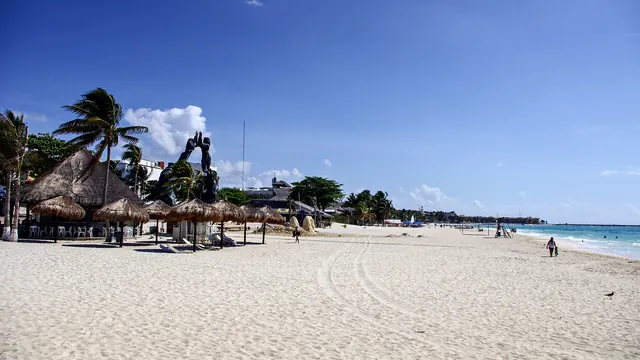
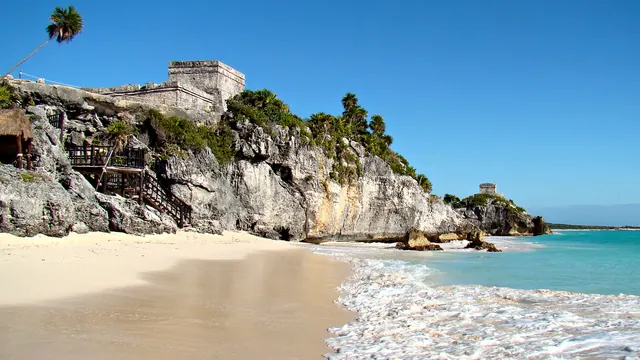
Photos: Baja California Sur by Stan Shebs, CC BY-SA 3.0, cropped; Riviera Maya by Dennis G. Jarvis, CC BY-SA 2.0, cropped.
Baja California Sur or Riviera Maya?
Our verdict in twelve categories, each scored against the same fixed benchmark cities, and the climate month by month, so you can choose for your trip.
Choose Baja California Sur for
- nature and the outdoors
- prices
- food and drink
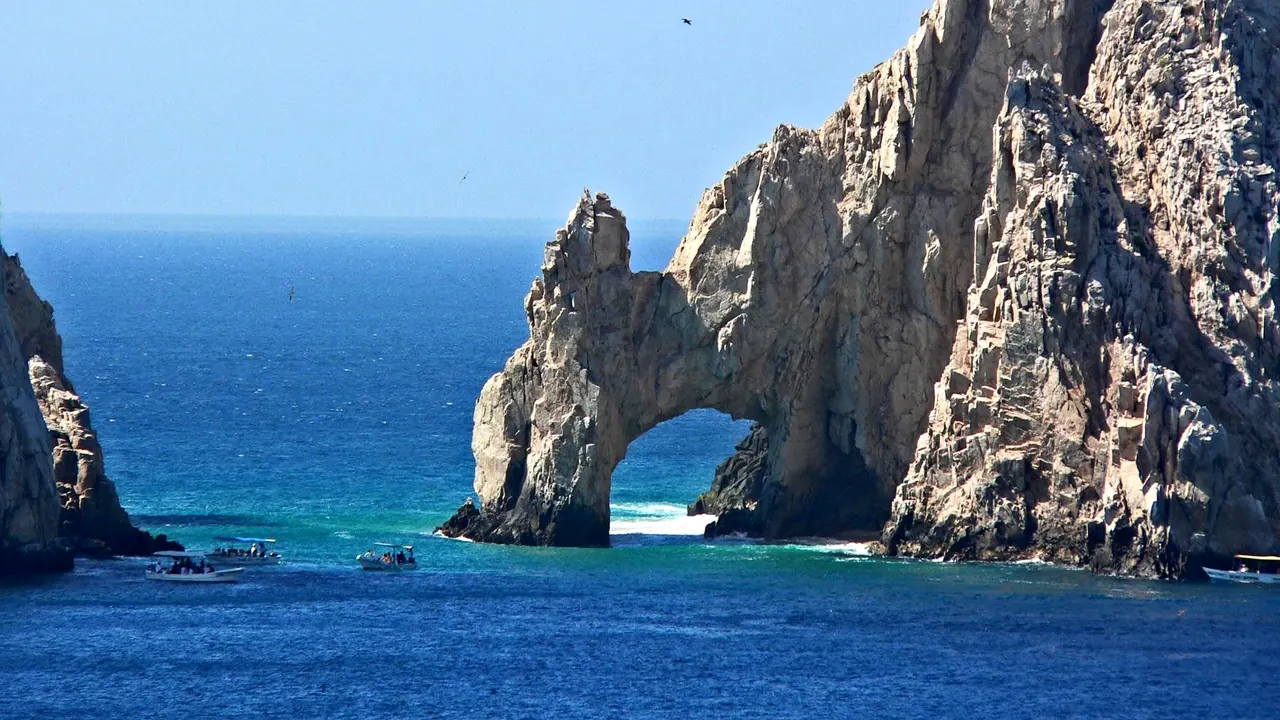
Baja California Sur is the choice for travellers who come for wild sea life and desert scenery more than for the beach scene. Gray whales with their calves in the Pacific lagoons, sea lions off Isla Espíritu Santo, the living reef at Cabo Pulmo and the mountain forests of the Sierra de la Laguna make a richer outdoor trip than anything on the Caribbean side. In return you need a hire car, you face long distances, and there is less to see in the way of ruins and towns.
Choose Riviera Maya for
- families
- getting around
- day trips
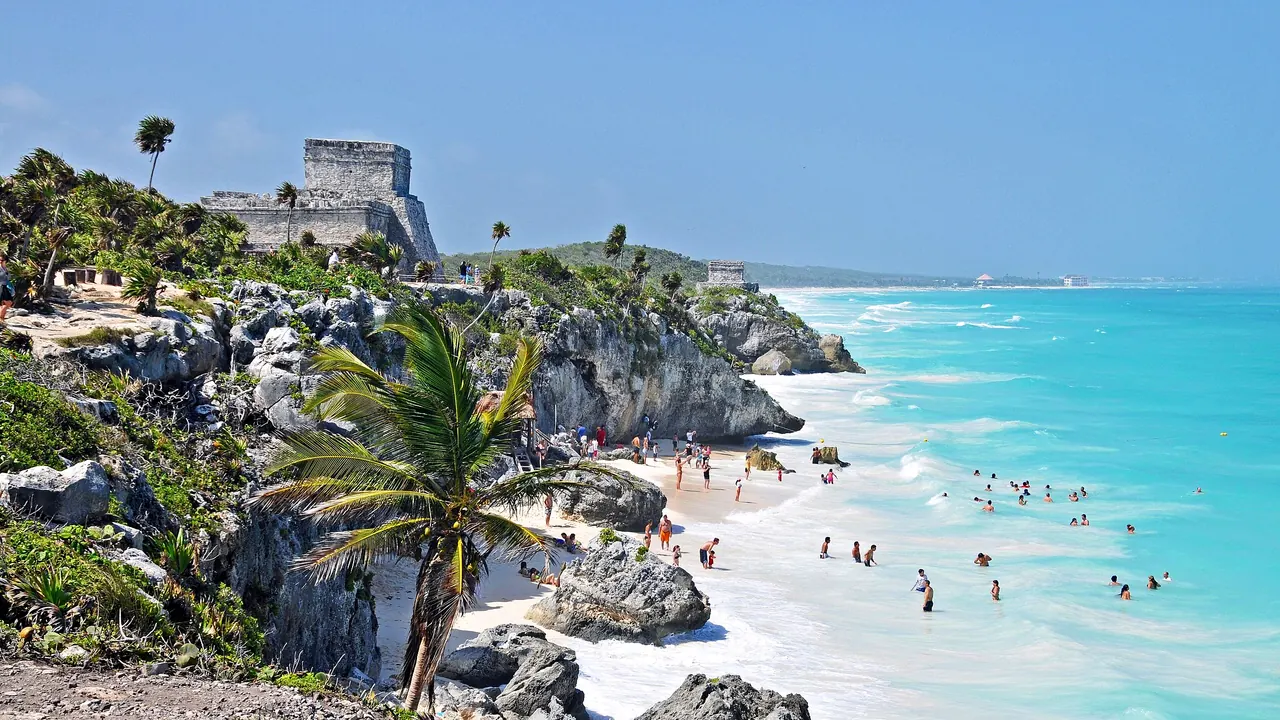
The Riviera Maya makes the easier vacation, and it suits a wider range of travellers. Its beaches are softer and more reliable, and families get calm turtle bays and big eco-parks to fill the days. Tulum's yoga and spa culture is a draw of its own, Maya ruins sit right on the coast, and buses and colectivos link the whole strip. It fits people who want everything within reach of one coastal highway rather than a road trip down a peninsula.
Scoreboard
Twelve categories on one fixed scale from 0 to 100. The shaded stretch is the gap between the two.
Your match
Pick a travel style or drag the sliders, and both match scores follow your weighting.
Wins on nature and the outdoors and prices with your weighting.
Wins on families and getting around with your weighting.
What matters to you?
Category by category
What the scores mean for a trip.
Beaches & swimming
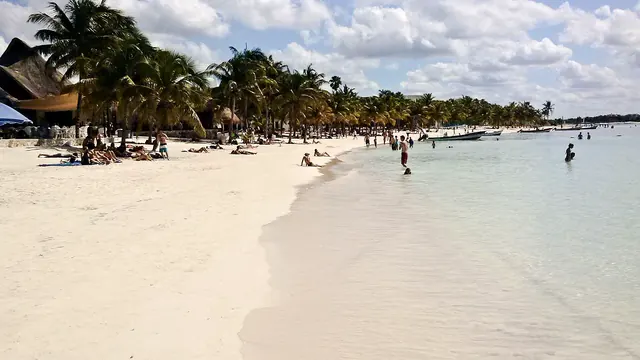
The Riviera Maya is the stronger coast for a beach vacation. More than 100km of white sand runs from Puerto Morelos to Tulum, the sea is warm all year, and reef-sheltered bays at Akumal and Xpu-Ha are calm enough for anyone. The catch is sargassum seaweed, which in some years fouls public beaches from spring into late summer.
Baja California Sur has superb beaches, but you have to choose them. The swimming is on the Sea of Cortez side, at Balandra and El Tecolote near La Paz or in the corridor coves such as Chileno and Santa María. Much of the Pacific shore is too rough to swim, and the winter sea is noticeably cooler than the Caribbean.
Food & drink
The two eat about equally well, but in different ways. Baja's cooking is almost entirely seafood: fish tacos, aguachile and chocolate clams roasted over fire, eaten best among locals in La Paz. The Riviera Maya has Yucatecan dishes such as cochinita pibil and sopa de lima, found a few streets back from Playa del Carmen's Quinta Avenida.
Each also has a polished upper tier. In Baja it is the orchard restaurants around San José del Cabo, and on the Riviera Maya the wood-fired kitchens of Tulum's beach road. In both, the resort food is forgettable.
Culture & sights
The Riviera Maya has the more memorable sights, thanks to its Maya ruins. Tulum's walled city above the sea and the tall pyramids of Coba, with raised roads you can cycle between, are both easy to fit into a beach stay. The resort towns themselves have no history.
Baja California Sur's heritage is Jesuit missions and plazas: Loreto's mission of 1697, stone San Javier in its valley, and the colonial square of San José del Cabo. Its finest treasure, the rock art of the Sierra de San Francisco, takes days to reach.
Nightlife
Both have lively nights, but Baja puts all of its going out in one place. Cabo San Lucas has tequila bars, dance clubs and party boats around the marina, a scene built for groups. The Riviera Maya splits its nightlife between two styles: late clubs around Calle 12 in Playa del Carmen, and electronic DJ nights in Tulum's jungle clearings and beach clubs, aimed at a more fashionable crowd. Away from those centres, both regions go quiet early.
Nature & outdoors
Baja California Sur is the better wildlife destination. Gray whales bring their calves up to small boats in the Pacific lagoons from January to March, whale sharks gather off La Paz, and the sea lions at Isla Espíritu Santo and the reef at Cabo Pulmo are world-class. The Sierra de la Laguna also gives you mountain trails to waterfalls and hot springs.
The Riviera Maya's natural wonders lie underwater and underground: cenotes such as Dos Ojos, Cozumel's drift dives and the lagoons of Sian Ka'an. It has no hills to climb, though, and the jungle heat makes walking hard.
Day trips
The Riviera Maya has the better day out. Chichen Itza paired with colonial Valladolid is a long but rewarding day, and Ek Balam makes a quieter alternative. The Cozumel ferry and a boat to Isla Mujeres are easy extra outings.
Baja's day trips are to small places: the galleries of Todos Santos, the old mining villages of El Triunfo and San Antonio, or the road up to San Javier. Its best excursions are boat and wildlife trips rather than sightseeing.
Good for families
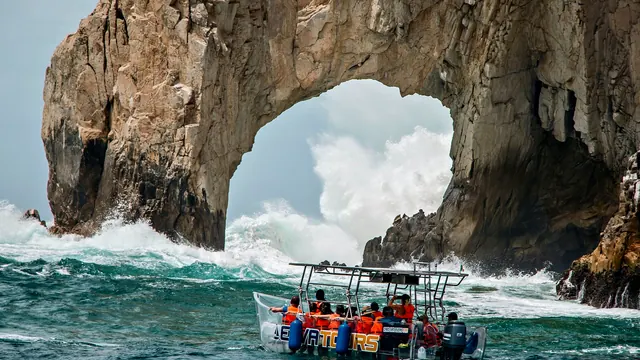
Children who love animals get a lot out of Baja California Sur. There are the shallows at Balandra near La Paz, glass-bottom boats out to the Arch at Land's End and, for older ones, snorkelling beside sea lions. Beyond that, little is built for them. There are no theme parks or big aquariums, and the Pacific beaches need close watching.
With children, the going is far easier on the Riviera Maya. The eco-parks between Playa del Carmen and Tulum fill whole days with underground rivers, zip lines and evening shows, and the resorts run kids' clubs. Akumal's calm bay lets children swim near turtles. Humid heat and mosquitoes after dusk are the main drawbacks.
Getting around
Getting around Baja California Sur means driving. Beaches, Todos Santos and La Paz are far easier to reach with a hire car, though the town centres themselves are compact enough to walk. Loreto lies many hours up the narrow, winding Highway 1, so most visitors fly there instead.
A single flat highway ties the Riviera Maya together, which makes it much simpler to manage without a car. Buses run between Cancun airport, Playa del Carmen and Tulum, colectivo vans stop on request at cenote turnoffs, and bicycles link Tulum's town, beach road and ruins. Taxis are the expensive irritation.
Shopping & style
Neither is a shopping destination, and what they sell is different. Baja is better for art: the gallery district of San José del Cabo with its evening art walk, and the small studios of Todos Santos. The Riviera Maya is more about fashion and crafts, with beachwear and silver along the Quinta Avenida, linen and woven baskets in Tulum's boutiques, and embroidered huipiles inland in Valladolid.
Affordability
Both are expensive at the top end, with Los Cabos and Tulum priced for international visitors, and both have cheaper bases. In Baja those are La Paz and Loreto. On the Riviera Maya, stay a few blocks back from the sea in Playa del Carmen or Puerto Morelos. The real difference is transport: cheap colectivos and buses keep Riviera Maya costs down, while Baja usually adds a hire car to the bill.
Live music & performing arts
Neither suits anyone looking for serious stage life. The Riviera Maya at least has staged evening spectacles at the eco-parks, with Maya ball games and folk dance, and live Latin and reggae bands in Playa del Carmen and Tulum. Baja has even less: occasional concerts at the La Paz city theatre, small festivals in Todos Santos, and cover bands in Cabo San Lucas.
Wellness & relaxation
Both regions have large resort spas, so the real difference is what lies around them. Baja California Sur's calm comes from space and small towns rather than from any wellness scene. There are a handful of yoga retreats in Todos Santos and the surf village of Cerritos, simple hot springs up in the Sierra de la Laguna and the slow pace of Loreto and La Paz. It suits someone who wants quiet more than a programme of classes.
On the Riviera Maya, rest is a reason to come in its own right. Wellness takes up a whole stretch of Tulum's beach road, so a week of daily sessions is easy to put together, where in Baja you would have to seek out each retreat. For real peace, stay in Puerto Morelos, Akumal or at the southern end of Tulum's beach. Playa del Carmen's centre is as poor a choice for sleep as the marina in Cabo San Lucas.
When should you go?
Pick your month. The climate figures are measured averages, not a forecast.
Baja California Sur in July
Riviera Maya in July
Daytime high, °C
Rainfall in the month, mm
Where the figures come from
Baja California Sur has no weather station within reach, so its figures come from a gridded climate model rather than a measured record, and read a broad area rather than one spot.
Riviera Maya has no weather station within reach, so its figures come from a gridded climate model rather than a measured record, and read a broad area rather than one spot.
Temperature and rainfall are climate normals, averaged over the years shown. Baja California Sur: 2001-2020 normals, NASA POWER reanalysis grid, no weather station within 90 km. Riviera Maya: 2001-2020 normals, NASA POWER reanalysis grid, no weather station within 90 km.
Where most visitors stay in Baja California Sur, the climate is desert-dry almost all year. Rain only really comes in August and September, with about 99mm in September, and that late-summer stretch also carries hurricane risk. Winter days of around 24°C are perfect for walking and whale watching, but the sea drops to about 22°C from February to April, which is fresh for long swims. October and November give the best balance of warm water and dry weather.
On the Riviera Maya the Caribbean stays at about 27°C or warmer all year, so the sea is never the problem. Rain is. It picks up in May and is heaviest in June and from September to November, peaking at around 224mm in October. Days are warm and humid all year. December to April is the driest and most comfortable time, while the cape in Baja is at its wettest in late summer and dry the rest of the time.
Which traveller are you?
For an outdoors trip, Baja California Sur is the clear pick. You can get close to calving gray whales, snorkel with whale sharks and sea lions, and kayak the islands of Loreto Bay, and the Sierra de la Laguna adds proper mountain hiking, which the flat Yucatán jungle cannot match.
On a family trip with children, the Riviera Maya is far easier. Shallow reef bays let small children snorkel among turtles, and eco-parks have underground rivers and zip lines. Large resorts have kids' clubs, and the ruins are short enough to manage. Baja has calm coves but little built for children.
For a relaxing and wellness trip, the Riviera Maya offers more. Tulum has jungle yoga shalas, temazcal ceremonies, cool cenotes and thatched beach spas, and the resorts have huge hydrotherapy circuits. Baja's rest is mostly in the Cabo corridor resort spas or a few retreats around Todos Santos.
Before you go
| Measure | Baja California Sur | Riviera Maya |
|---|---|---|
| Official language | Spanish, Nahuatl, Yucatec Maya | Spanish, Nahuatl, Yucatec Maya |
| Currency | Mexican Peso (MXN) | Mexican Peso (MXN) |
| Sockets | AB127 V, 60 Hz | AB127 V, 60 Hz |
| Driving side | Right | Right |
| Time zone | UTC-7 | UTC-5 |
| Emergency number | 911 | 911 |
| Main airport | Los Cabos International Airport (SJD)54 non-stop destinations | Cancún International Airport (CUN)136 non-stop destinations |
| Public holidays this year | 9 days | 9 days |
By the numbers
| Measure | Baja California Sur | Riviera Maya |
|---|---|---|
| Population | 637,026 | - |
| Swim season, months above 21 °C | 12 months | 12 months |
Where else could you go?
Every comparison below shares a destination with this one, so you can follow Baja California Sur or Riviera Maya somewhere new.
- Cozumelvs Riviera Maya
- Cancunvs Riviera Maya
- Isla Mujeresvs Riviera Maya
- Holboxvs Riviera Maya
- Yucatanvs Riviera Maya
- Ambergris Cayevs Riviera Maya