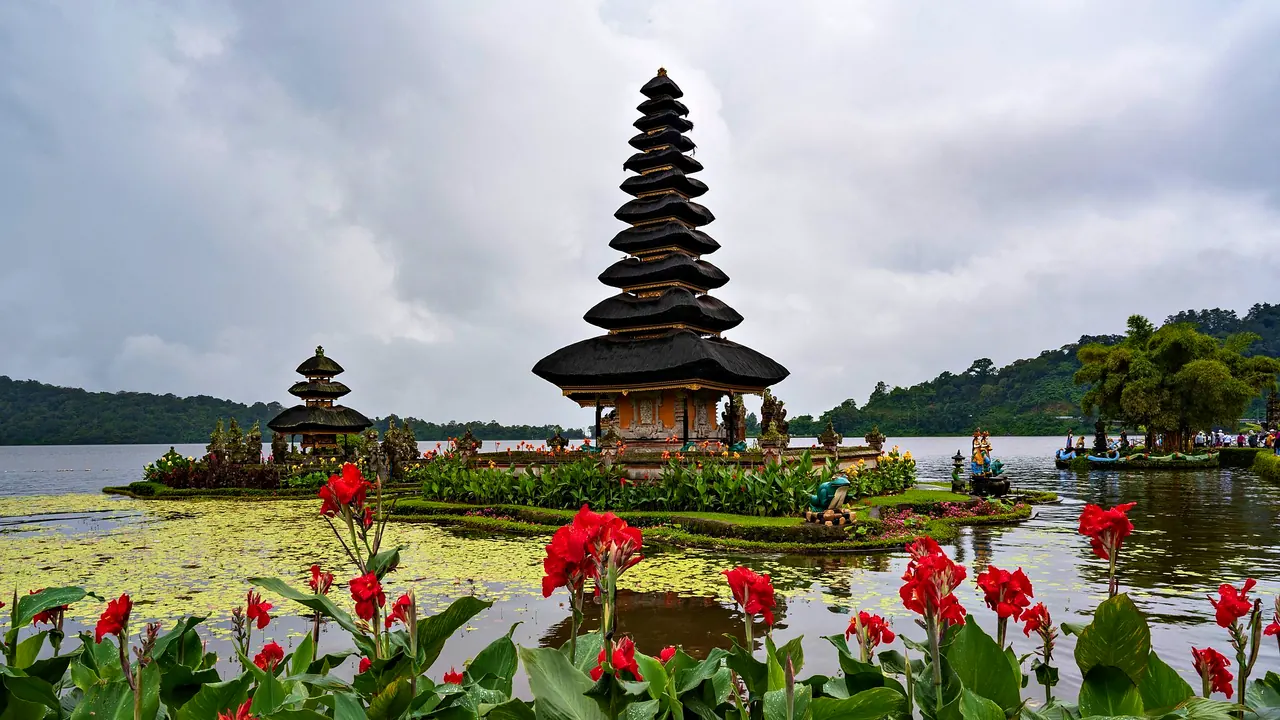
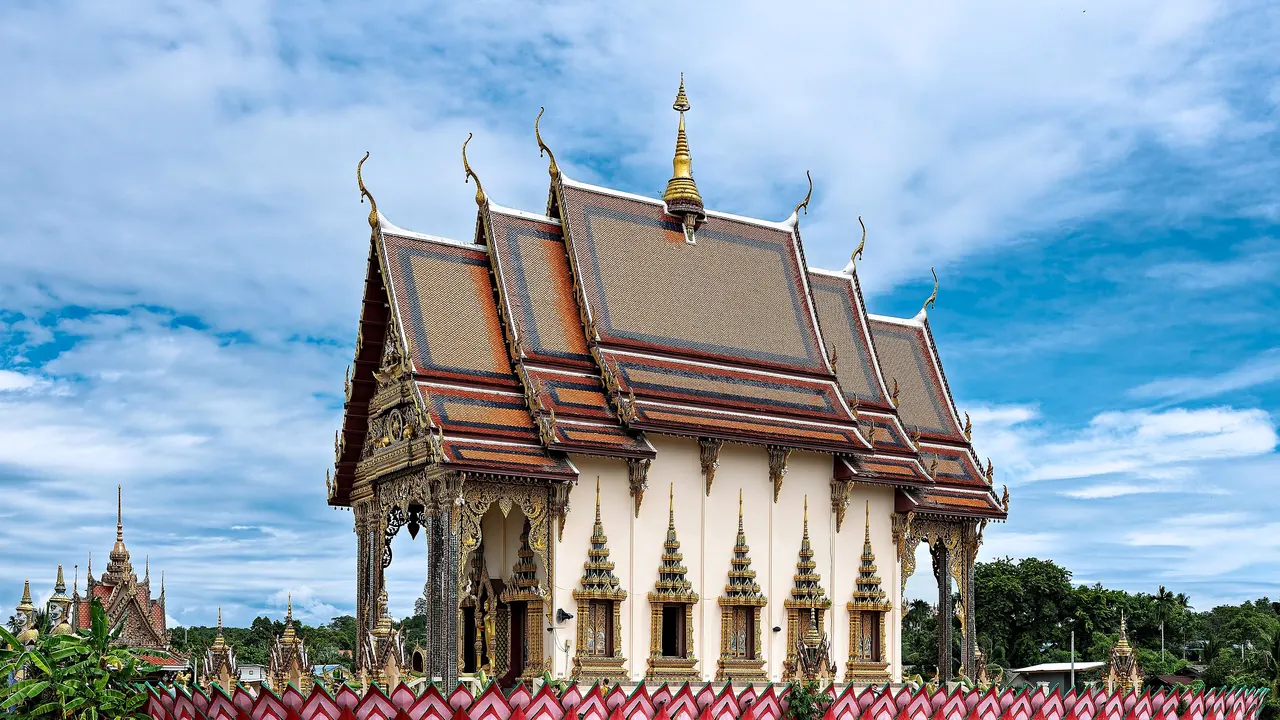
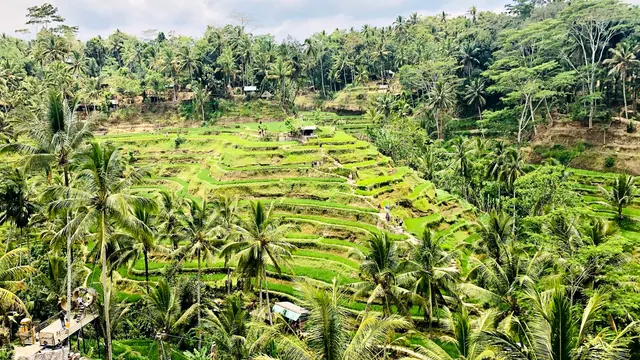
Photos: Bali by Evelin Magnus, Pexels License; Koh Samui by Mustang Joe, CC0.
Bali or Koh Samui?
Our verdict in twelve categories, each scored against the same fixed benchmark cities, and the climate month by month, so you can choose for your trip.
Choose Bali for
- culture and sights
- live music and the arts
- shopping
Bali suits travellers who want an island with depth. Temple ceremonies, nightly dance in Ubud, volcano climbs, surf and a famous retreat scene give a long stay real variety, and comfortable villas cost less than you might expect. The price is time on congested roads, so Bali rewards a trip planned around one or two well-chosen bases.
Choose Koh Samui for
- getting around
- beaches
For a straightforward beach vacation, Koh Samui is the easier pick. Its swimming beaches are softer and closer together, one ring road joins them all, and boat trips to Ang Thong, Koh Tao and the Koh Phangan parties fill any spare days. What it gives up is culture, food beyond Thai cooking and, from October to December, dry weather.
Scoreboard
Twelve categories on one fixed scale from 0 to 100. The shaded stretch is the gap between the two.
Your match
Pick a travel style or drag the sliders, and both match scores follow your weighting.
Wins on culture and sights and live music and the arts with your weighting.
Wins on getting around and beaches with your weighting.
What matters to you?
Category by category
What the scores mean for a trip.
Beaches & swimming
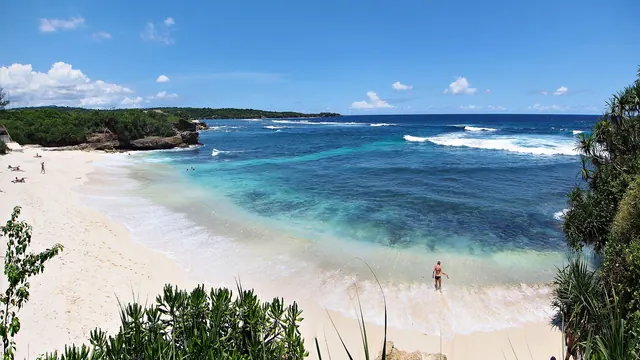
Both islands are built around the beach, but they offer different kinds. Bali's sand is varied and often hard work. The surf beaches of Kuta, Seminyak and Canggu have strong rips, the cliff coves of the Bukit are reached by long stairs, and the calm lagoons are behind the reefs at Sanur and Nusa Dua.
Koh Samui's strength is the easy swimming beach. Chaweng's broad white sand and clear water, the sheltered bay at Choeng Mon and the gentle north coast at Bophut and Maenam are all a short drive apart. The catch is timing, as the east coast turns rough during the late-year monsoon.
Food & drink
Bali has more to offer at the table. Its Hindu cooking, with babi guling, bebek betutu and sate lilit, is unlike food anywhere else in Indonesia. Canggu, Seminyak and Ubud add serious coffee, brunch and tasting menus for the island's many long-stay visitors.
Koh Samui eats well but within a narrower range: southern Thai curries, seafood grilled on the beach and the night markets at Lamai, Maenam and Fisherman's Village. Beyond Thai food and fish there is little choice, and the Chaweng strip is as uneven as Bali's busiest streets.
Culture & sights
Here the gap is wide. In Bali, heritage is part of daily life, from offerings on the pavements and village processions to the sea temples of Tanah Lot and Uluwatu, Besakih on the slopes of Mount Agung and the subak terraces of Jatiluwih. Ubud's palace and painting museums make a good base, and although the major temples mean long drives, the island can fill a week of sightseeing.
Koh Samui's sights are the Big Buddha, Wat Plai Laem and the mummified monk at Wat Khunaram. They fit into a half-day loop, and there are no museums or historic towns to follow them.
Nightlife
The two islands are close on nightlife but go out differently. Bali spreads its evenings across the southwest. You can stay at the beach clubs of Seminyak, Canggu and the Uluwatu cliffs from afternoon through sunset, bar-hop with a young crowd in Canggu's lanes, drink in Seminyak's polished lounges or stay late in the cheap clubs of Kuta.
Koh Samui puts almost everything in Chaweng, with beach bars, fire shows and clubs in the lanes behind the sand, though some of it is generic or seedy. Its trump card is the full moon parties on Koh Phangan, a short boat ride away.
Nature & outdoors
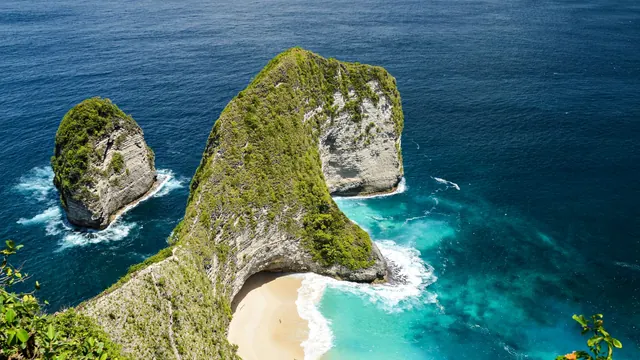
Bali has the bigger landscape. Its interior offers the pre-dawn climb up Mount Batur, the crater lakes and waterfalls of Munduk and Bedugul, and rice valleys at Sidemen for walking and cycling. At sea there is famous surf on the Bukit, manta rays off Nusa Penida and the wreck dive at Tulamben.
Koh Samui's best nature lies offshore, in the limestone islands and hidden lake of Ang Thong and at the dive pinnacles towards Koh Tao and Sail Rock. On the island itself the hills are modest, the coast is pretty rather than dramatic, and heat and rain cut walks short.
Day trips
Neither island is a great base for day trips, but Bali has a little more to offer. The old Bali Aga villages of Tenganan and Penglipuran, the Sidemen valley and Nusa Lembongan, a fast boat ride from Sanur, all make worthwhile outings, even if southern traffic makes each one longer.
From Koh Samui, outings mean a boat to Koh Phangan or Koh Tao and its sandbar islets of Koh Nang Yuan. The mainland across the water has little to see, so a day out means more beaches on another island rather than new sights.
Good for families
Both islands work for families who base themselves by calm water, at Sanur and Nusa Dua on Bali or Choeng Mon, Bophut and Maenam on Samui. Bali has more to do away from the pool, with a water park, a safari park, turtle visits and Ubud's Monkey Forest, though the monkeys need watching.
Samui has less on offer beyond the beach, but its short distances spare children the long temple and volcano drives that test their patience on Bali. On both islands, roads without pavements make pushchairs hard work. On Bali, stomach upsets are common and any animal bite needs prompt treatment.
Getting around
Koh Samui is the easier island to get around. A single ring road of about 51km links every beach, so Chaweng to Bophut or Lamai takes only a quarter of an hour. Shared songthaews run along the ring road, though taxi fares must be agreed in advance.
Bali has no public transport a visitor can rely on, and the traffic between the airport, Seminyak, Canggu and Uluwatu makes short trips slow. The north and east are long, winding drives over the mountains, so most visitors hire a driver by the day and stay close to their base. Riding a scooter is risky on both islands.
Shopping & style
Bali is the better island for shopping, thanks to its crafts. Each village on the road to Ubud has its own specialism: silver at Celuk, woodcarving at Mas and stone carving at Batubulan. Seminyak and Canggu add boutiques run by local designers, selling linen, ceramics and furniture.
On Koh Samui the choice is mostly beachwear, souvenirs and tailored suits. The Friday walking street in Fisherman's Village is the most pleasant place to browse, and Chaweng has a large mall for international chains. Neither island has real luxury shopping.
Affordability
Bali gives more for your money. Pool villas and guesthouses are cheap by Western standards, warung food and drivers by the day suit most budgets, and Ubud and the east and north coasts are cheaper still. The exception is Seminyak, Canggu and Uluwatu, where beach clubs and cliff-top resorts charge close to Western prices.
Koh Samui is one of the more expensive places to stay in Thailand. Resorts, imported drinks and taxis all cost more, and the limited flights to the island add to the cost of getting there. Night markets, local kitchens, massages and bungalows away from the beach still help a careful traveller keep costs down.
Live music & performing arts
Bali has a living performance tradition, and Samui does not. In Ubud, Legong, Barong and shadow puppet shows are performed to gamelan music in palace courtyards most nights, and the Kecak is chanted at sunset on the Uluwatu cliffs. In the dry season, the Bali Arts Festival in Denpasar brings village troupes together.
On Koh Samui, live performance is entertainment for visitors: Muay Thai fight nights, cabaret, fire dancers and cover bands. Neither island has opera, orchestras or theatre worth travelling for.
Wellness & relaxation
Both islands are places people go to slow down, but Bali takes it further. Ubud and its valleys are full of yoga, meditation and breathwork retreats, with spas among the rice fields, purification rituals at Tirta Empul and hot springs at Banjar and Lake Batur.
Koh Samui's retreats are known for detox and fasting programmes around Lamai, along with yoga centres, hillside spas over the Gulf and cheap Thai massage everywhere. It has no hot springs or bathing tradition, though. On both islands the party areas, Kuta and Canggu on Bali and Chaweng on Samui, are the wrong places to rest.
When should you go?
Pick your month. The climate figures are measured averages, not a forecast.
Bali in July
Koh Samui in July
Daytime high, °C
Rainfall in the month, mm
Where the figures come from
Koh Samui has no rain gauge within 25 km of the centre, so its rainfall comes from a gridded climate dataset read at the destination rather than from a gauge further away.
Temperature and rainfall are climate normals, averaged over the years shown. Bali: 1991-2020 normals, Denpasar / Ngurah-Rai (3.5 km from centre). Koh Samui: 1991-2020 normals, Ko Samui (7.4 km from centre).
Bali is hot all year, with highs of around 31°C in every month, so the real choice is about rain. The dry season from May to September is the time for the beach, volcano climbs and walks through the rice terraces. August is the driest and sunniest month, with only about 12mm of rain. The rain builds from November, is heaviest in January at almost 400mm and lasts into March. The sea stays warm all year and is only slightly cooler from July to September.
Koh Samui's wet season starts earlier and is shorter. The heavy rain falls from October to December, peaking at about 372mm in November, and it has eased by February, the island's driest month. From February to September the weather is mostly fair, though May and June reach about 33°C, which makes walking at midday hard work. The sea is warm in every month. Both islands are wet in November and December. From January to March, Samui is much drier, while from July to September Bali has the better weather.
Which traveller are you?
For a culture and arts trip, Bali wins easily. Ubud puts palace dance, gamelan and painting museums on your doorstep, and the sea temples, Besakih and the rice terraces make memorable days out. Samui's temples fill a single afternoon.
On a beach and sun trip, Koh Samui is the simpler choice. Its soft swimming beaches at Chaweng, Choeng Mon and Bophut are minutes apart on one ring road. Bali's surf beaches have strong rips, and its prettiest coves mean long drives and steep stairs.
For an outdoors trip, Bali has more to climb and ride. Sunrise on Mount Batur, cycling through Sidemen's terraces, famous surf on the Bukit and manta dives off Nusa Penida go well beyond Samui's day out to Ang Thong and its dives near Koh Tao.
Before you go
| Measure | Bali | Koh Samui |
|---|---|---|
| Official language | Indonesian | Thai |
| Currency | Rupiah (IDR) | Baht (THB) |
| Sockets | CF50 Hz | ABCF220 V, 50 Hz |
| Driving side | Left | Left |
| Time zone | UTC+8 | UTC+7 |
| Emergency number | 112 | Police 191, ambulance 1669, fire 199 |
| Main airport | Denpasar I Gusti Ngurah Rai International Airport (DPS)64 non-stop destinations | Samui International Airport (USM)10 non-stop destinations |
By the numbers
| Measure | Bali | Koh Samui |
|---|---|---|
| Population | 4,404,300 | 62,500 |
| People per km² | 782 | 273 |
| Swim season, months above 21 °C | 12 months | 12 months |
Where else could you go?
Every comparison below shares a destination with this one, so you can follow Bali or Koh Samui somewhere new.
- Koh Phanganvs Koh Samui
- Koh Taovs Koh Samui
- Lombokvs Bali
- Gili Islandsvs Bali
- Krabivs Koh Samui
- Koh Lantavs Koh Samui