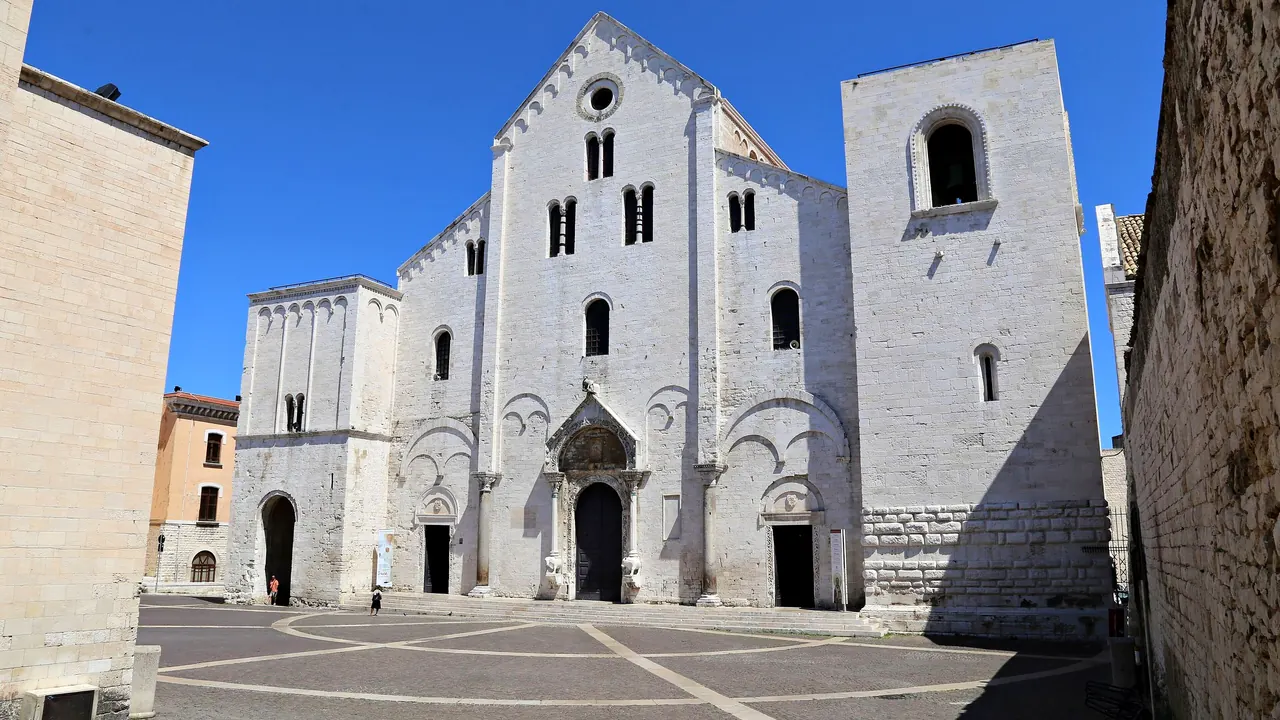
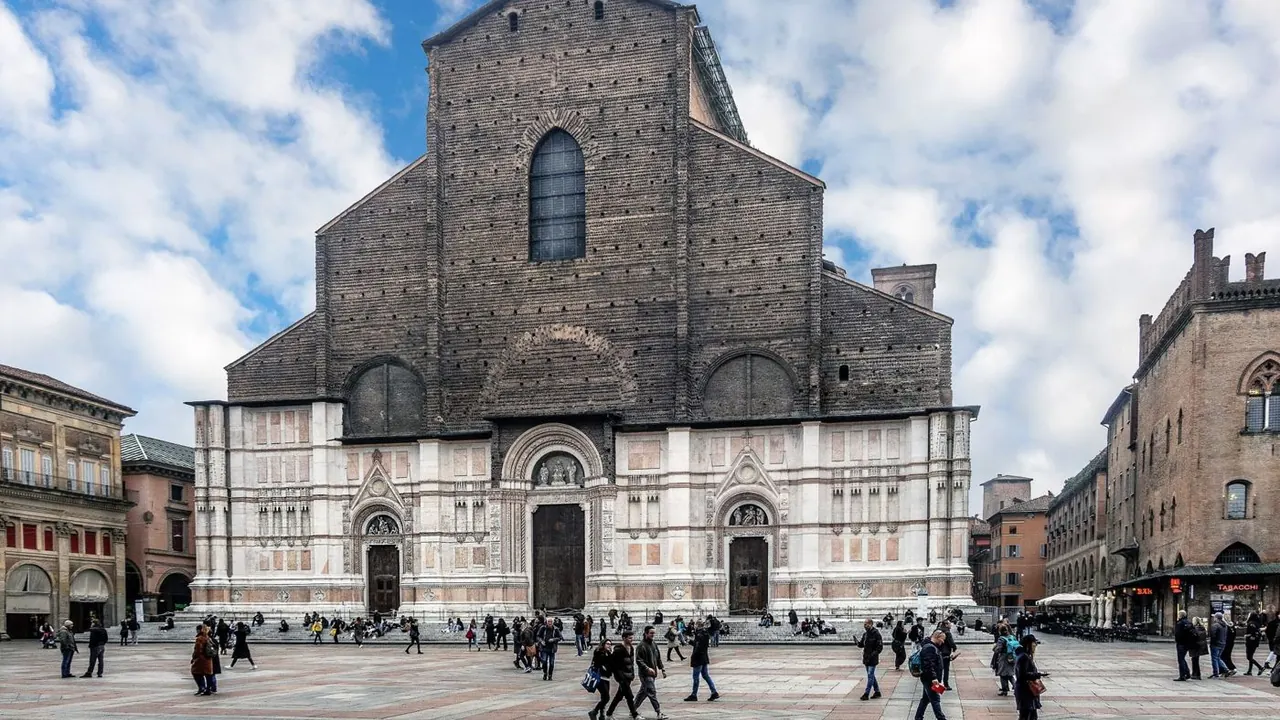
Photos: Bari by Sailko, CC BY-SA 4.0, cropped; Bologna by Vanni Lazzari, CC BY-SA 4.0, cropped.
Bari or Bologna?
Our verdict in twelve categories, each scored against the same fixed benchmark cities, and the climate month by month, so you can choose for your trip.
Choose Bari for
- beaches
- prices
- families
Bari is the better pick for a summer trip that combines the sea, southern food and the countryside of Puglia. You can swim at the city beach or in the coves around Polignano and Monopoli, spend days among the cave houses of Matera and the trulli of the Valle d'Itria, and eat focaccia and raw seafood by the old pier. It is also the cheaper of the two, and it is the only one where swimming fits easily into a stay.
Choose Bologna for
- culture and sights
- getting around
- food and drink
Travellers who want a city to walk, eat in and travel out from should head to Bologna. Its medieval centre of brick and porticoes holds far more to see. The cooking of Emilia is among the richest in Italy, and fast trains reach Florence, Ravenna and Venice for the day. It also has more music in the evenings. The trade-off is that there is no sea, the summers are sticky and rooms cost more.
Scoreboard
Twelve categories on one fixed scale from 0 to 100. The shaded stretch is the gap between the two.
Your match
Pick a travel style or drag the sliders, and both match scores follow your weighting.
Wins on beaches and prices with your weighting.
Wins on culture and sights and getting around with your weighting.
What matters to you?
Category by category
What the scores mean for a trip.
Beaches & swimming
Swimming is a real part of a summer in Bari. Pane e Pomodoro gives the city its own sandy beach, and the rocky platforms at Torre Quetta continue along the shore. The best water is half an hour south, in the pebble cove at Polignano a Mare and the clear inlets around Monopoli.
Bologna is inland. Reaching the sea means a train of about an hour to Rimini and the long rows of sunbeds on the Romagna Riviera, where the water is shallow and often greenish. That works as an escape from the city heat, but not as a beach vacation.
Food & drink
Both cities eat well, but Bologna has the edge and it is a main reason to go. Its tagliatelle al ragù, tortellini in brodo and mortadella come from the city itself. Parmigiano, Parma ham and balsamic vinegar are made nearby, and the market lanes of the Quadrilatero are a sight in their own right.
Bari's strength is simpler and cheaper food rooted in the sea and the street: orecchiette rolled in doorways, focaccia barese, fried panzerotti and raw sea urchins by the fishermen's pier. It is lighter eating than the heavy Emilian dishes when the summer is hot.
Culture & sights
Bologna has much more to see. The whole brick centre and its UNESCO-listed porticoes count as the main sight, and around them are San Petronio, the Two Towers, the seven churches of Santo Stefano and the anatomical theatre of Europe's oldest university. It rewards two or three full days.
Bari's sights fit into the old town peninsula and the Murat grid. The Basilica di San Nicola is a fine Romanesque church and a pilgrimage site, and the cathedral and the castle are close by. It is charming, but most visitors have seen it in a day or so.
Nightlife
Evenings out are about as lively in both cities, but they peak at opposite times of year. Bari's nights happen outdoors, on the steps of Piazza Mercantile and Piazza Ferrarese, and in high summer they move to beach clubs on the coast. Bologna's are driven by students, with cheap bars around Piazza Verdi and the taverns of Via del Pratello. In August the students leave and the city goes quiet, just when Bari is at its busiest.
Nature & outdoors
Neither city is a destination for the outdoors, and the landscapes differ. Around Bari the land is flat olive country. The open karst plateau of the Alta Murgia and the Castellana caves are about an hour away, and the coast offers walking and sailing.
Bologna has green hills at its edge. You can walk up to San Luca or onto the Via degli Dei trail to Florence straight from the centre. The Apennines further south give summer hiking and some modest skiing.
Day trips
From Bari, the outings lead into countryside and small towns. You can see the cave dwellings and rock churches of Matera, the trulli of Alberobello, the white towns of the Valle d'Itria and Trani's pale cathedral on the sea, and Baroque Lecce is about an hour and a half away. The landscapes stay with you, but places like Castel del Monte are easiest by car.
Bologna sits at northern Italy's main rail junction, and that makes it the stronger base. Florence is barely half an hour away by fast train. Ravenna's mosaics, Ferrara, Modena and Parma are short rides, and Venice, Verona and Padua are within reach, all without a car.
Good for families
Children are welcome in both, and neither has much built for them, so the difference lies in what fills the days. In Bari it is the sandy city beach, plus outings to the Castellana caves and the Fasano safari park. In Bologna it is shaded portico walks, the climb up the Asinelli tower for older children, and a day at the Mirabilandia theme park. Both get uncomfortably hot at midday in summer.
Getting around
Bologna is the easier city to get around. Its compact centre is flat and largely closed to cars, the porticoes keep you out of sun and rain, and the station at the edge of the old town puts much of northern Italy within easy reach.
Central Bari is also walkable, with the old town, the Murat streets and the seafront side by side. The buses are hard for visitors to work out, though, and the infrequent regional lines mean many people drive to the inland towns.
Shopping & style
Bari's shopping is practical. Via Sparano and the Murat streets carry Italian chains and a few boutiques. The things worth packing are taralli, dried orecchiette, olive oil and Puglian ceramics, and there is no luxury district.
Bologna has more to browse beyond its delicatessens. Via Farini and the Galleria Cavour arcade gather the luxury fashion houses, and the Montagnola market and the antiques fair in Piazza Santo Stefano add variety. The university quarter has bookshops and vintage stores. Even so, mortadella and aged Parmigiano are what most visitors carry home.
Affordability
Bari is the cheaper stay. Rooms are moderately priced for most of the year, and street food and local wine cost very little. Costs tighten only in high summer, or when you add beach clubs and car hire.
Bologna's eating out is good value for northern Italy, and you will spend little getting around on foot. Its hotels are where the bill climbs, and during the big trade fairs rooms across the city become scarce and costly.
Live music & performing arts
Bologna has the richer scene. Besides its season at the Teatro Comunale, it has basement jazz clubs playing most nights, a steady run of student rock and indie gigs, and summer concerts and film screenings in Piazza Maggiore.
Bari's main draw is the Teatro Petruzzelli, one of the country's largest opera houses and well worth a night. Beyond the summer jazz festival and open-air concerts, there is little regular live music for a visitor who does not speak Italian.
Wellness & relaxation
Bari has no thermal baths, and its spas are mostly in hotels. Rest there comes from the southern rhythm of long lunches, the afternoon break and the evening walk along the seafront promenade. For real pampering, book a few nights at a restored country estate inland.
Bologna has the edge because thermal water is close by. Castel San Pietro Terme, about twenty minutes away, has pools fed by local springs. Porretta Terme is an old spa town in a green Apennine valley, about an hour south by train. Either makes a calm half day away from the noise of the university quarter.
When should you go?
Pick your month. The climate figures are measured averages, not a forecast.
Bari in July
Bologna in July
Daytime high, °C
Rainfall in the month, mm
Where the figures come from
Bari has no rain gauge within 25 km of the centre, so its rainfall comes from a gridded climate dataset read at the city rather than from a gauge further away.
Bari's sunshine is measured 77 km from the centre, at Marina Di Ginosa.
Bologna has no rain gauge within 25 km of the centre, so its rainfall comes from a gridded climate dataset read at the city rather than from a gauge further away.
Bologna's sunshine is measured 82 km from the centre, at Cervia.
Temperature and rainfall are climate normals, averaged over the years shown. Bari: 1991-2020 (sunshine 1961-1990) normals, Bari / Palese Macchie (7 km from centre). Bologna: 1991-2020, 14 years observed normals, Bologna / Borgo Panigale (5.5 km from centre).
Bari has the longer good season. Its winters are mild, with January highs around 12°C, so a spring or autumn city stay is comfortable. The sea is warm enough for swimming from June to September and peaks at about 26°C in August. Summers are dry and hot but manageable by the water. Rain arrives in September and builds through the autumn.
Bologna has the sharper seasons. Winters are cold, with January highs around 7°C, and the city is grey and damp. July and August reach about 32°C under long hours of sunshine, and the plain holds the heat, which makes walking the streets hard work in the middle of the day. Late spring and September are the times to go. October and November are the wettest months, with close to 95mm in November.
Which traveller are you?
For a beach and sun trip, Bari is the clear choice. It has a sandy beach in town, warm calm water through the summer, and the cliffs and coves of Polignano and Monopoli a short train ride away. Bologna is a long way from any swimming.
On a culture and arts trip, Bologna gives you more. Its whole medieval centre, the porticoes, the Archiginnasio and the Pinacoteca take days to see properly, and evenings bring opera at the Teatro Comunale or jazz in small cellar clubs.
On a tight budget, Bari stretches the money further. Street food, trattoria lunches and local wine cost little, and its old town and basilica are free. Bologna's food is fair value, but its hotels are priced like the rest of prosperous northern Italy.
Before you go
| Measure | Bari | Bologna |
|---|---|---|
| Official language | Italian | Italian |
| Currency | Euro (EUR) | Euro (EUR) |
| Sockets | CFL230 V, 50 Hz | CFL230 V, 50 Hz |
| Driving side | Right | Right |
| Time zone | UTC+1, UTC+2 in summer | UTC+1, UTC+2 in summer |
| Emergency number | 112 | 112 |
| Elevation | 5 m | 54 m |
| Main airport | Bari Karol Wojtyła International Airport (BRI)9 km from centre104 non-stop destinations | Bologna Guglielmo Marconi Airport (BLQ)6 km from centre98 non-stop destinations |
| Public holidays this year | 13 days | 13 days |
By the numbers
| Measure | Bari | Bologna |
|---|---|---|
| City population | 315,473 | 387,971 |
| People per km² | 2,687 | 2,754 |
| Museums within 10 km | 12 | 68 |
| UNESCO World Heritage sites within 50 km | 1 | 3 |
| Swim season, months above 21 °C | 4 months | - |
Where else could you go?
Every comparison below shares a destination with this one, so you can follow Bari or Bologna somewhere new.