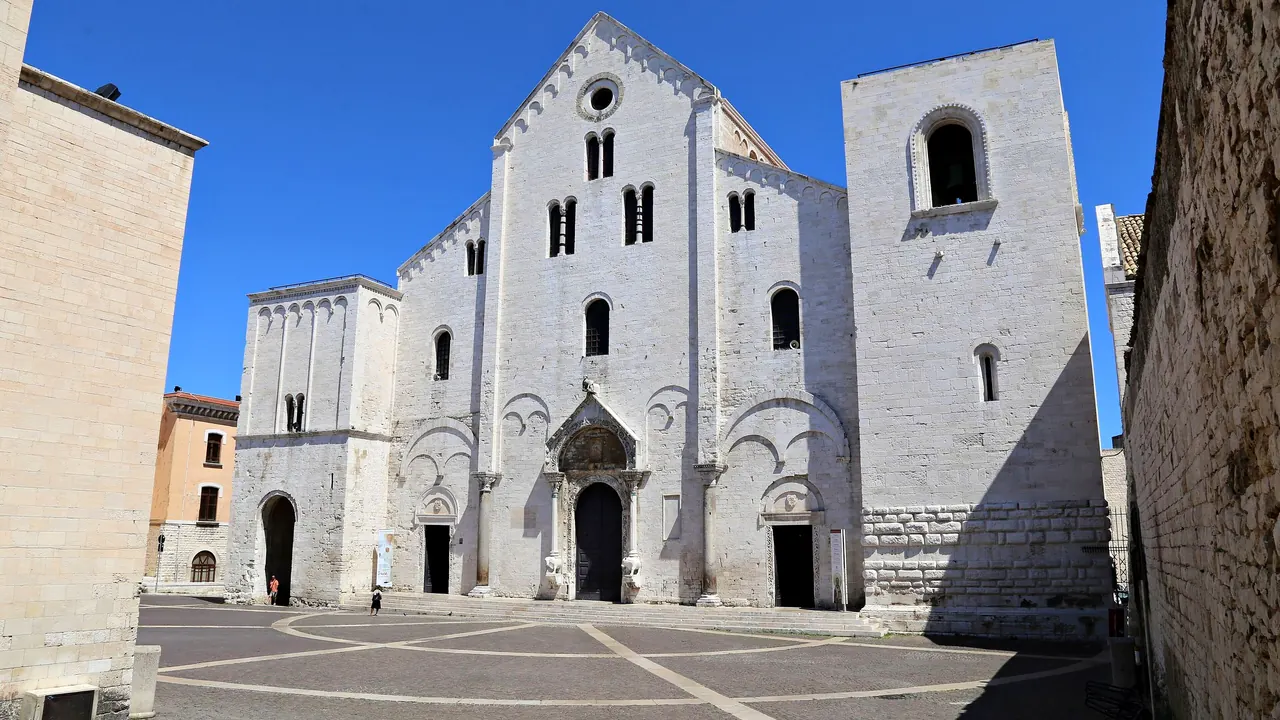
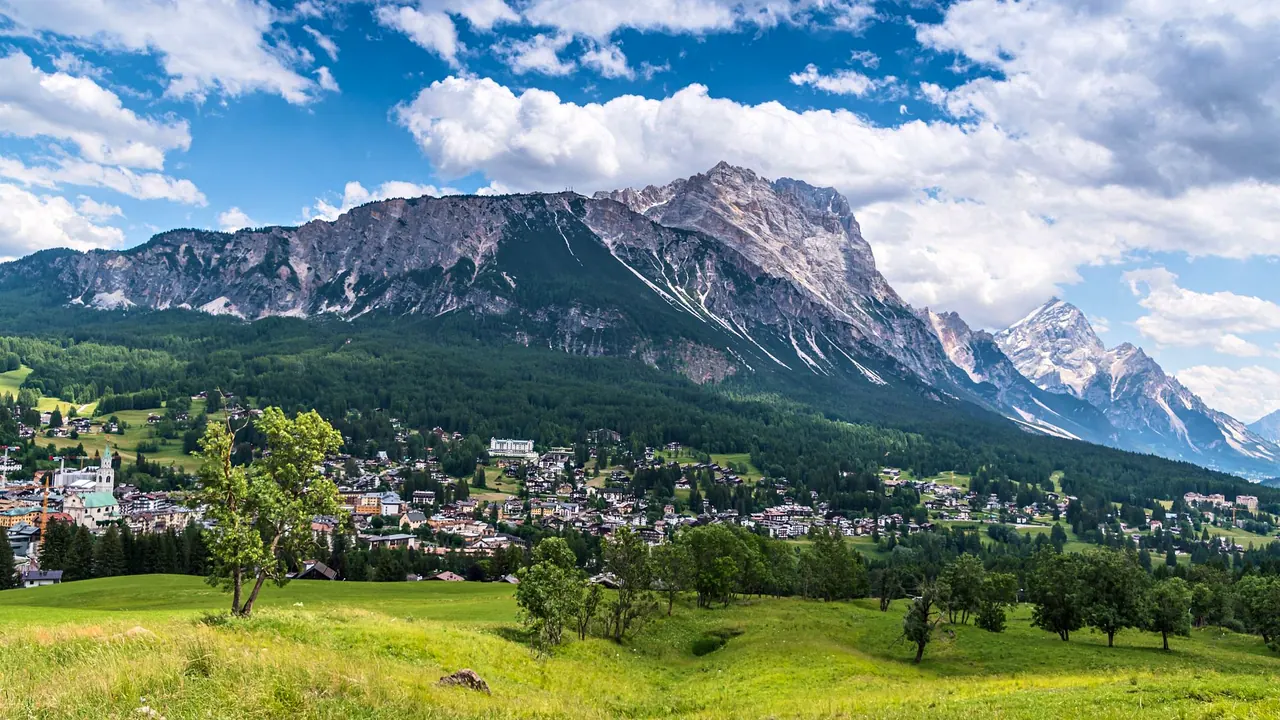
Photos: Bari by Sailko, CC BY-SA 4.0, cropped; Cortina d'Ampezzo by Andreas Neubauer, Pexels License.
Bari or Cortina d'Ampezzo?
Our verdict in twelve categories, each scored against the same fixed benchmark cities, and the climate month by month, so you can choose for your trip.
Choose Bari for
- beaches
- prices
- day trips
Bari is for a warm-weather trip built around eating, wandering and getting out on day trips. It has a compact old town, a working seafront and hand-rolled orecchiette on the doorsteps. It also sits within reach of Matera, the trulli and the white towns of the Valle d'Itria, so you can spend a week there without running out of places to go. It costs far less than an Alpine resort, has more going on in the evenings, and in summer the sea is warm enough for proper swimming.
Choose Cortina d'Ampezzo for
- nature and the outdoors
- wellness
Choose Cortina d'Ampezzo when the mountains are the whole point. The Dolomites rise straight from the town, the lifts take you onto the peaks, and in winter you are linked to one of the largest ski areas in the Alps. In summer there are hut-to-hut trails and via ferrata routes. It costs a lot, is quiet at night and has little in the way of sights. What you are paying for is the landscape and a polished, hotel-spa kind of comfort, and for walkers, climbers and skiers nowhere on the Adriatic comes close.
Scoreboard
Twelve categories on one fixed scale from 0 to 100. The shaded stretch is the gap between the two.
Your match
Pick a travel style or drag the sliders, and both match scores follow your weighting.
Wins on beaches and prices with your weighting.
Wins on nature and the outdoors and wellness with your weighting.
What matters to you?
Category by category
What the scores mean for a trip.
Beaches & swimming
Bari has real beach life and Cortina has none. In Bari you can swim at the sandy Pane e Pomodoro beach in town, or take the train to the pebble cove at Polignano a Mare and the clear rocky inlets around Monopoli.
Cortina is a high Alpine valley more than two hours from the sea. Lakes like Ghedina and Pianozes are lovely to walk round, but a swim there is a cold dare, and for anything more comfortable you need a hotel pool.
Food & drink
Bari is the better place to eat, and it covers more ground: street food from kitchen windows, raw sea urchins by the fishermen's pier, and tiella or orecchiette with turnip tops at the table, with Primitivo to drink. It is generous food, and it does not cost much.
Cortina's cooking is good for such a small town, built around casunziei, polenta with game and long lunches on the terraces of the rifugi. The range is narrow, though, there is almost no street food, and very little of it is cheap.
Culture & sights
Bari has much more to see. The whitewashed lanes of Bari Vecchia lead to the Romanesque Basilica di San Nicola, the cathedral and the Norman-Swabian castle, and the nineteenth-century Murat quarter and the Pinacoteca fill a second day.
Cortina's sights in town amount to a bell tower, painted houses, the 1956 Olympic ice stadium and three small museums, enough for a rainy afternoon. Its most powerful history is the First World War front preserved on Lagazuoi and the Cinque Torri, but you will need a day in the mountains to reach it.
Nightlife
Bari gives you proper evenings out. Students and young locals fill Piazza Mercantile and Piazza Ferrarese, the Umbertino bars stay open past midnight, and in high summer the crowd moves to the beach clubs along the coast.
In Cortina the evening means après-ski drinks, a stroll along the Corso Italia and a long dinner. In the peak winter weeks a few smart bars and clubs stay open late, but in summer the town is quiet by late evening.
Nature & outdoors
This is Cortina's category by a wide margin. The ring of Dolomite peaks, the lifts straight from town, Lago di Misurina, the Fanes-Sennes-Braies park, the Alta Via 1 and the Sella Ronda make it one of Europe's great mountain bases in both summer and winter.
Bari's outdoors is gentler: kilometres of seafront promenade, open karst walking and cycling in the Alta Murgia about an hour inland, and the Grotte di Castellana. There are no mountains anywhere near.
Day trips
Bari is a far better base for day trips. Matera's cave dwellings, Alberobello's trulli, Ostuni and the Valle d'Itria towns, Castel del Monte, Trani's seafront cathedral and Baroque Lecce are all within a morning's travel. You could fill a week with outings and still not see everything.
From Cortina, most outings head up into the peaks rather than to other towns. South Tyrol's Brunico, San Candido and Bolzano, with the Iceman, are the best choices, while Venice is a long day by coach.
Good for families
Both places suit families about equally well, but in different ways. Bari is an easy-going city where children join the evening passeggiata, with a sandy beach, gelato and traffic-free lanes, plus outings to the caves or the Fasano safari park. You will need to plan around the midday summer heat.
Cortina suits active families, with ski schools, the Socrepes beginner slopes, skating at the Olympic stadium and meadow walks to the huts. Rainy days can drag with young children, and the bills add up.
Getting around
Bari is easier to get to and easier to get around. A rail link connects it to the airport, the old town, Murat and the seafront sit next to each other on flat ground, and regional trains reach Polignano, Trani and Matera, though slowly. Many visitors still hire a car for the Valle d'Itria.
Cortina's centre takes minutes to cross, but the town has had no railway since 1964. You arrive by coach from Venice or by a long drive, buses up to the passes run a thin service, and a car is close to essential for exploring the wider Dolomites.
Shopping & style
Neither place is a shopping destination, and what they sell is quite different. Bari's Via Sparano carries Italian high-street chains, and the best things to take home are dried orecchiette, taralli, olive oil and Puglian ceramics.
Cortina's Corso Italia is short but glossy, with jewellers, furriers, luxury labels and upmarket ski wear. The century-old Cooperativa di Cortina and shops selling wood carving and filigree give it a more local side.
Affordability
The gap here is wide. Bari is one of Italy's more affordable cities, with cheap street food and wine and free sights, and its rooms only get tight in July and August.
Cortina charges luxury-resort prices in the winter peak and in August, before you add lift passes and equipment hire. Meals at the rifugi and the quieter weeks of June and late September soften the cost a little, but only a little.
Live music & performing arts
Bari has a proper stage. The Teatro Petruzzelli, one of Italy's largest opera houses, runs a full season of opera, ballet and concerts, and in summer jazz and open-air music move into the piazzas and the castle.
Cortina has no theatre season and no regular venue. Its music comes from summer chamber and classical festivals in churches and, now and then, out in the mountains, plus a few concerts around New Year.
Wellness & relaxation
Cortina is the better choice for a restful stay. Many of its hotels have Alpine spas with saunas, steam rooms, hay baths and indoor pools, ideal after a day on the slopes. In June and September the clear air and quiet hut terraces add to the calm, though the peak weeks are busier.
Bari has no bathing tradition, and its spas are mostly basic hotel facilities. Its version of relaxing is the long lunch, the afternoon break and the evening walk along the seafront, and visitors who want real pampering head out to the restored country estates.
When should you go?
Pick your month. The climate figures are measured averages, not a forecast.
Bari in July
Cortina d'Ampezzo in July
Daytime high, °C
Rainfall in the month, mm
Where the figures come from
Bari has no rain gauge within 25 km of the centre, so its rainfall comes from a gridded climate dataset read at the city rather than from a gauge further away.
Bari's sunshine is measured 77 km from the centre, at Marina Di Ginosa.
Temperature and rainfall are climate normals, averaged over the years shown. Bari: 1991-2020 (sunshine 1961-1990) normals, Bari / Palese Macchie (7 km from centre). Cortina d'Ampezzo: 1991-2020 normals, Dobbiaco (22.5 km from centre).
These two places are at their best at opposite ends of the year. Bari is a summer and shoulder-season city. From June to September the days are hot, reaching 30°C in July and August, and by August the sea has warmed to 26°C, so this is the time for beach afternoons. Midday in high summer is too hot for walking the old town, which makes May, June and late September the best months for sightseeing. The rain sets in from September and is heaviest in November, at 83mm. Winters are mild, cool enough for comfortable walking but far too cold for swimming.
Cortina has two separate seasons. From December to March the days stay cold, close to freezing at midwinter, which is what the skiing needs. From late June to early September the valley warms to about 22°C, pleasant for hiking just when Bari is at its hottest. Summer is also Cortina's wettest stretch, with about 130mm in July, so expect some wet days on the trails. Spring and late autumn fall between the two seasons and suit neither skiers nor walkers.
Which traveller are you?
On a beach and sun trip, Bari is the clear choice. It has a sandy city beach, and the coves of Polignano a Mare and Monopoli are a short train ride away, with the water at bath temperature in August. Cortina's lakes are fed by snowmelt and stay cold all year.
For an outdoors trip, Cortina wins easily. Lifts run from the town onto the Dolomites, the Tre Cime are close, and you can choose between hut-to-hut hiking, via ferrata, climbing and, in winter, the Dolomiti Superski network. The best Bari offers is gentle walking on the Murgia plateau.
On a trip on a tight budget, go to Bari. Focaccia, panzerotti and trattoria lunches cost little, and the old town and basilica are free. Cortina is one of Italy's most expensive resorts, and budget travellers often sleep in cheaper valleys and drive in.
Before you go
| Measure | Bari | Cortina d'Ampezzo |
|---|---|---|
| Official language | Italian | Italian |
| Currency | Euro (EUR) | Euro (EUR) |
| Sockets | CFL230 V, 50 Hz | CFL230 V, 50 Hz |
| Driving side | Right | Right |
| Time zone | UTC+1, UTC+2 in summer | UTC+1, UTC+2 in summer |
| Emergency number | 112 | 112 |
| Elevation | 5 m | 1,224 m |
| Main airport | Bari Karol Wojtyła International Airport (BRI)9 km from centre104 non-stop destinations | Venice Marco Polo Airport (VCE)116 km from centre103 non-stop destinations |
| Public holidays this year | 13 days | 13 days |
By the numbers
| Measure | Bari | Cortina d'Ampezzo |
|---|---|---|
| City population | 315,473 | 5,546 |
| People per km² | 2,687 | 22 |
| Museums within 10 km | 12 | 3 |
| UNESCO World Heritage sites within 50 km | 1 | 1 |
| Swim season, months above 21 °C | 4 months | - |
Where else could you go?
Every comparison below shares a destination with this one, so you can follow Bari or Cortina d'Ampezzo somewhere new.
- Materavs Bari
- Innsbruckvs Cortina d'Ampezzo
- Venicevs Cortina d'Ampezzo
- Leccevs Bari
- Veronavs Cortina d'Ampezzo
- Bledvs Cortina d'Ampezzo