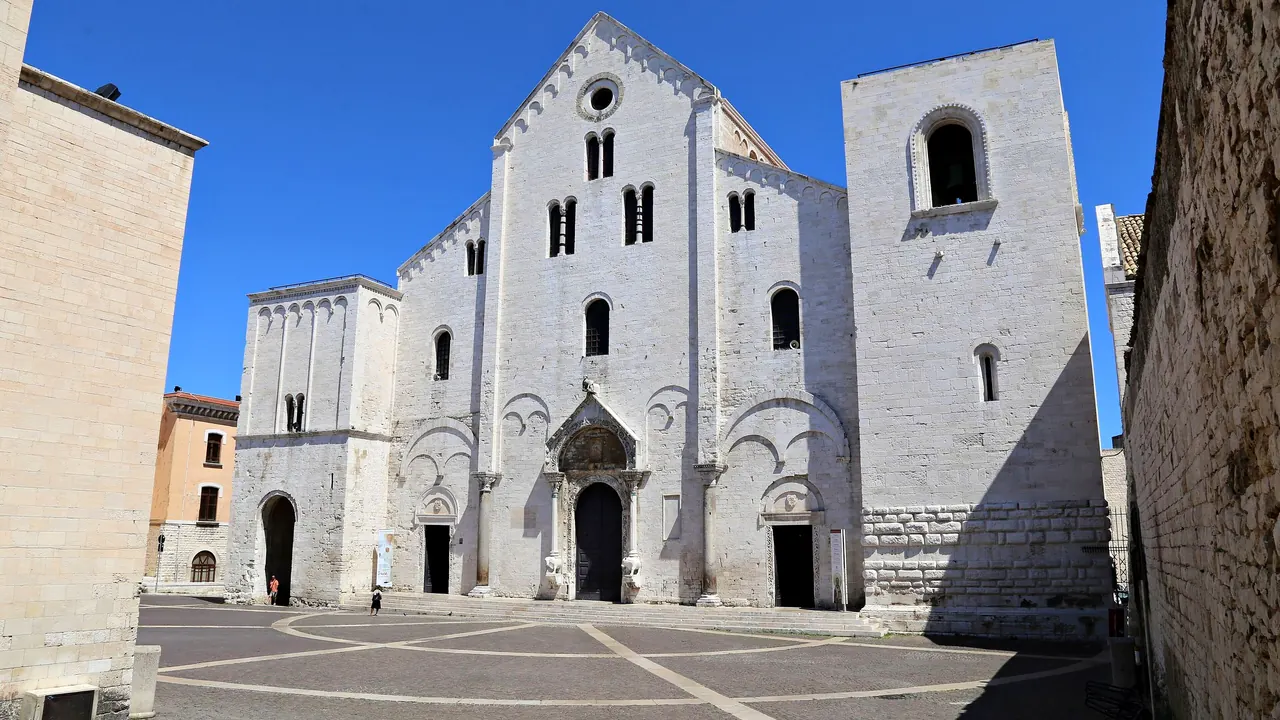
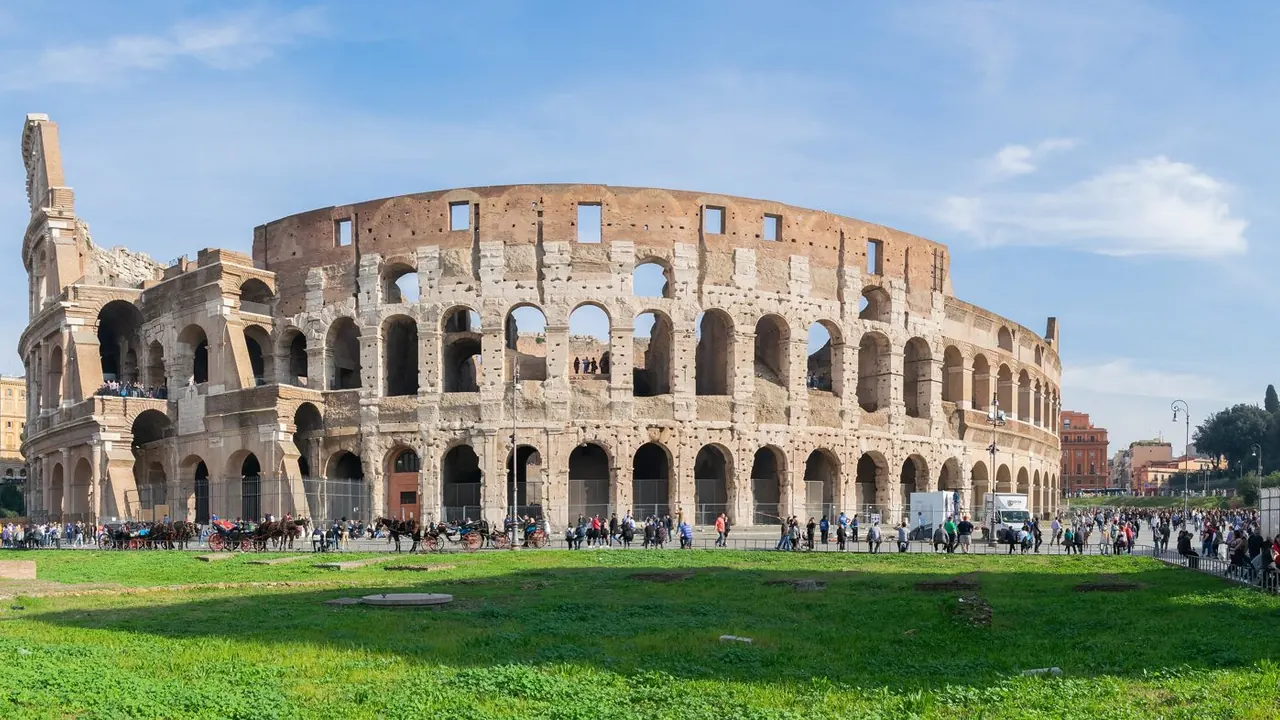
Photos: Bari by Sailko, CC BY-SA 4.0, cropped; Rome by Tournasol7, CC BY-SA 4.0, cropped.
Bari or Rome?
Our verdict in twelve categories, each scored against the same fixed benchmark cities, and the climate month by month, so you can choose for your trip.
Choose Bari for
- prices
- beaches
- families
Bari suits travellers who want southern Italy at an easy pace and a lower cost. It is a compact, flat base for exploring Puglia and Basilicata: Matera's cave dwellings, the trulli and white hill towns of the Valle d'Itria, and the clear coves around Polignano and Monopoli. You get a sandy beach in town and rooted Apulian cooking. The city's own sights are seen in a day or two, so pick Bari if the region matters more to you than the city.
Choose Rome for
- culture and sights
- shopping
- live music and the arts
Rome is for a trip built around history, art and eating well, where the city itself is the reason to go. Ancient ruins, the Vatican, Baroque churches and great museums can fill a week, with Roman trattorias, luxury and independent shopping, and opera in the Baths of Caracalla in between. Rooms cost more and the centre is louder and more crowded, but for a first visit to Italy, or for anyone who wants depth of culture, nowhere in this pairing comes close.
Scoreboard
Twelve categories on one fixed scale from 0 to 100. The shaded stretch is the gap between the two.
Your match
Pick a travel style or drag the sliders, and both match scores follow your weighting.
Wins on prices and beaches with your weighting.
Wins on culture and sights and shopping with your weighting.
What matters to you?
Category by category
What the scores mean for a trip.
Beaches & swimming
Bari wins clearly here. Pane e Pomodoro gives you sand within walking distance of the centre, with rocky platforms around Torre Quetta beyond it. Swimming can be fitted into any summer afternoon, and the limestone coves of Polignano a Mare and the inlets around Monopoli are about half an hour south.
Rome's sea is a separate outing. Ostia's dark volcanic sand is mostly lined with paid lidos and crowded at weekends, and the water is rarely clear. For coves to match Puglia's you would have to travel down to Sperlonga or Sabaudia.
Food & drink
Both cities do their best eating in plain, unfussy places, but Rome has more to offer. Bari's strengths are narrow and very good: hand-rolled orecchiette in Bari Vecchia, focaccia barese and sgagliozze from kitchen windows, and raw sea urchins by the fishermen's pier, with fine-dining and international choices both thin.
Rome has a whole cuisine to work through, from carbonara and cacio e pepe to Jewish-style artichokes in the Ghetto, Testaccio's offal dishes and pizza al taglio. The catch is the area around the big sights, so eat in Trastevere, Monti or Testaccio. Bari has the better local wines, Primitivo and Negroamaro, against Rome's modest Frascati.
Culture & sights
There is no real contest. Bari's sights cluster in one old town: the Romanesque Basilica di San Nicola with its pilgrims, the cathedral, the Norman-Swabian castle and the Murat quarter's palazzi. They are charming and seen in a day or two.
Rome layers the Colosseum, Forum, Pantheon and Baths of Caracalla under early Christian mosaics, Renaissance palaces and the Baroque of Bernini and Borromini. Add the Vatican Museums, the Sistine Chapel and the Borghese Gallery, and a week is too short.
Nightlife
Evenings are much alike in both cities: late, outdoors and centred on a drink in a piazza, with clubbing a minor part of either. In Bari the scene is concentrated in Piazza Mercantile and Piazza Ferrarese and is mostly local students. In July and August it moves out to beach clubs on the coast, while winter weeknights are quiet.
Rome gives you more neighbourhoods to choose from. Trastevere has crowded wine bars, Monti has small cocktail bars, San Lorenzo is cheap and full of students, and Pigneto draws an arty crowd, all after the aperitivo hour.
Nature & outdoors
Rome has the edge outdoors, oddly for a capital. Villa Borghese and Villa Pamphili give green space in town, the Appian Way makes a superb bike ride past tombs and aqueducts, and the Alban Hills' crater lakes and the Apennines, with hiking and winter skiing, are within reach.
Bari stands on a flat plain of olive groves. Its outdoor life is the long seafront promenade, quiet walks and cycling on the Alta Murgia plateau about an hour inland, and the Grotte di Castellana. There are no mountains nearby.
Day trips
Both are excellent bases, with different kinds of trips. From Bari you head into rural southern Italy: Matera's rock churches, the trulli of Alberobello, white Ostuni and Locorotondo, Trani's cathedral by the sea and Baroque Lecce. Slow regional lines mean a car helps for the inland towns.
Rome's day trips lean towards antiquity and the great Italian cities. You can visit Ostia Antica, Hadrian's Villa and Villa d'Este at Tivoli, Etruscan tombs at Tarquinia and Orvieto on its cliff. High-speed trains put Florence and Naples within about ninety minutes, so you rarely need to drive.
Good for families
Neither city is built around children, and both welcome them warmly. Bari's advantages are the sandy city beach, traffic-free old-town lanes and a small centre, with the Fasano safari park and the Castellana caves as outings.
Rome has more to catch a child's imagination, with gladiators, catacombs and the Bioparco and rowing boats in Villa Borghese. It also brings long queues, cobbles that are hard on pushchairs, and busy roads. In both, summer middle days call for a long break indoors.
Getting around
In both cities you get around mostly on foot, and both have weak buses. Bari's old town, Murat grid and promenade are next to each other on flat ground, and there is a rail link to the airport. Its slow regional railways often push visitors towards a hire car for the Valle d'Itria.
Rome's centre is a longer walk over cobbles, among scooters and in summer heat. The metro barely reaches the historic core, and a car is a burden there. Fast trains make leaving the city easy.
Shopping & style
Rome is the place for serious shopping. The fashion houses on Via Condotti and the streets off the Spanish Steps, independent and vintage boutiques in Monti, antique dealers around Via dei Coronari and the huge Porta Portese flea market give it real range.
Bari is practical by comparison: chains and a few boutiques on Via Sparano, and the best souvenirs are edible. Dried orecchiette, taralli, olive oil and Puglian ceramics are what to pack home.
Affordability
Bari is clearly easier on the wallet. Rooms are moderately priced for most of the year, street food and local wine cost little, and the old town and basilica are free. Prices tighten mainly in July and August, and beach clubs and car hire add up.
Rome's costs come from small, expensive central rooms that are hard to find in spring and autumn, and from hefty entry fees at the Vatican, Colosseum and Borghese. Standing espresso, free drinking fountains and open churches soften the daily spend.
Live music & performing arts
Rome offers far more here. Opera and ballet at the Teatro dell'Opera move outdoors to the Baths of Caracalla in summer. The Santa Cecilia orchestra plays at the Auditorium Parco della Musica, and church organ concerts and a long-established jazz club scene fill other nights.
Bari has one big draw, the Teatro Petruzzelli, one of Italy's largest opera houses, along with a summer jazz festival in its piazzas and castle. Beyond that, regular live music is thin and theatre is in Italian.
Wellness & relaxation
Rome edges ahead because real thermal water is within reach, and Bari has none. In Bari, unwinding comes from pace rather than facilities. Spas are found only in hotels, but the city is smaller and gentler than Rome, the day slows down after lunch, and families come out to walk by the water once evening cools things off. Anyone who wants serious treatments usually leaves town for one of the converted masserie, the old fortified farmhouses of the Apulian countryside.
Rome's centre is harder to rest in: it is loud, hot and full of people, and nobody bathes in its famous ancient baths any more. What it adds is the chance of a proper soak. The sulphur-fed outdoor pools of Bagni di Tivoli are close by, and the free hot springs around Viterbo make a day out about ninety minutes north. Back in town, the villa parks and the Aventine hill are the quietest places to stop.
When should you go?
Pick your month. The climate figures are measured averages, not a forecast.
Bari in July
Rome in July
Daytime high, °C
Rainfall in the month, mm
Where the figures come from
Bari has no rain gauge within 25 km of the centre, so its rainfall comes from a gridded climate dataset read at the city rather than from a gauge further away.
Bari's sunshine is measured 77 km from the centre, at Marina Di Ginosa.
Rome's sunshine is measured 31 km from the centre, at Vigna Di Valle.
Temperature and rainfall are climate normals, averaged over the years shown. Bari: 1991-2020 (sunshine 1961-1990) normals, Bari / Palese Macchie (7 km from centre). Rome: 1991-2020 normals, Roma / Ciampino (15.1 km from centre).
The two cities share almost the same temperature curve. Both are mild in winter, pleasant for walking in April and May, and hot in July and August, when afternoons reach about 30°C and sightseeing at midday becomes hard work. The sea warms to around 26°C off Bari in August and only slightly less at Ostia, so June to September is the swimming season at both. Late September and October are often the best compromise, with warm water and kinder heat for the streets.
Rain is where they part. Bari is the drier of the two all year, with very dry summers and a wetter spell from September into winter that peaks at about 83mm in November. Rome's autumn is markedly wetter, with November bringing about 114mm, and its spring is showery too. Rome's summers are very sunny, so its best walking months are May and late September, when long bright days come without the full summer heat.
Which traveller are you?
For a beach and sun trip, Bari is the better pick. It has a sandy beach in town, and the clear coves of Polignano a Mare and Monopoli are a short train ride south. From Rome the sea means Ostia's crowded lidos and cloudier water.
On a culture and arts trip, Rome is unmatched. The Colosseum, Forum, Vatican Museums, Borghese Gallery and Baroque churches with Caravaggios could fill weeks, and summer opera at Caracalla tops it off. Bari's basilica and old town make a charming day or two, but nothing more.
On a tight budget, Bari stretches the money further. Rooms are moderately priced, street food like focaccia and panzerotti costs little, and the old town and basilica are free. In Rome, central rooms and big entry fees take a much larger share.
Before you go
| Measure | Bari | Rome |
|---|---|---|
| Official language | Italian | Italian |
| Currency | Euro (EUR) | Euro (EUR) |
| Sockets | CFL230 V, 50 Hz | CFL230 V, 50 Hz |
| Driving side | Right | Right |
| Time zone | UTC+1, UTC+2 in summer | UTC+1, UTC+2 in summer |
| Emergency number | 112 | 112 |
| Elevation | 5 m | 21 m |
| Main airport | Bari Karol Wojtyła International Airport (BRI)9 km from centre104 non-stop destinations | Rome–Fiumicino Leonardo da Vinci International Airport (FCO)23 km from centre242 non-stop destinations |
| Public holidays this year | 13 days | 13 days |
By the numbers
| Measure | Bari | Rome |
|---|---|---|
| City population | 315,473 | 2,748,109 |
| People per km² | 2,687 | 2,135 |
| Museums within 10 km | 12 | 178 |
| UNESCO World Heritage sites within 50 km | 1 | 8 |
| Swim season, months above 21 °C | 4 months | 5 months |
Where else could you go?
Every comparison below shares a destination with this one, so you can follow Bari or Rome somewhere new.