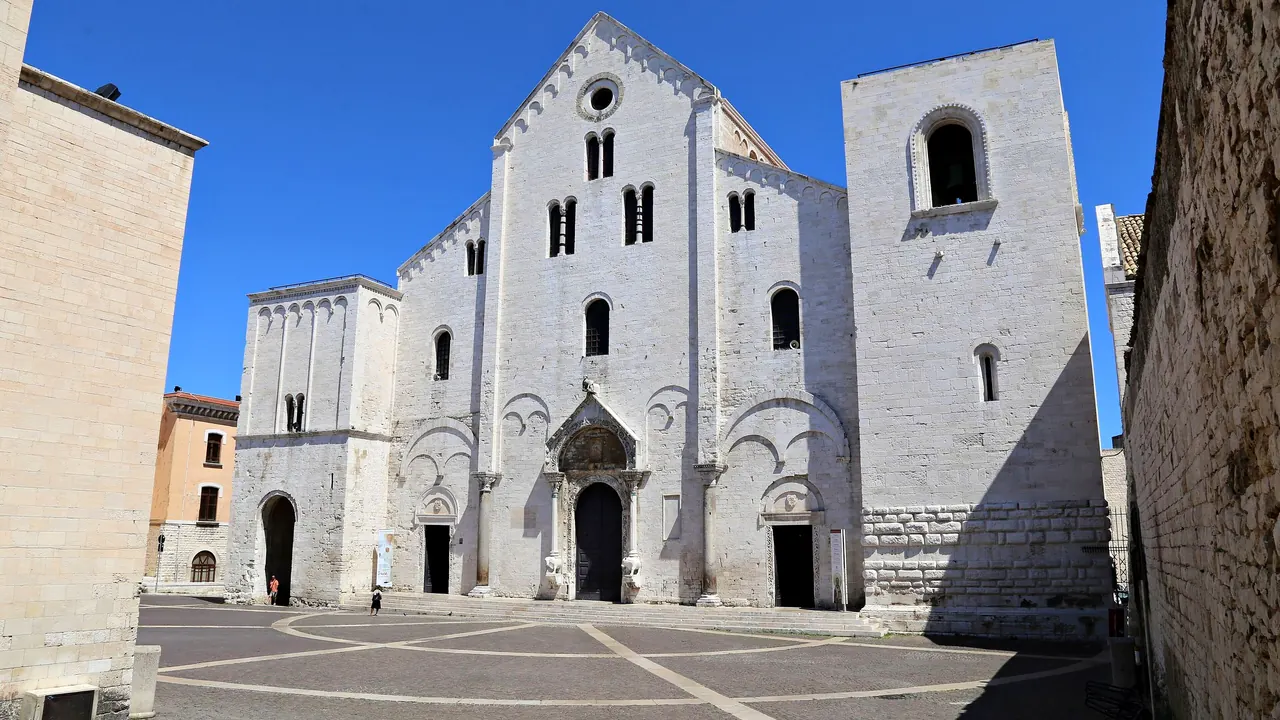
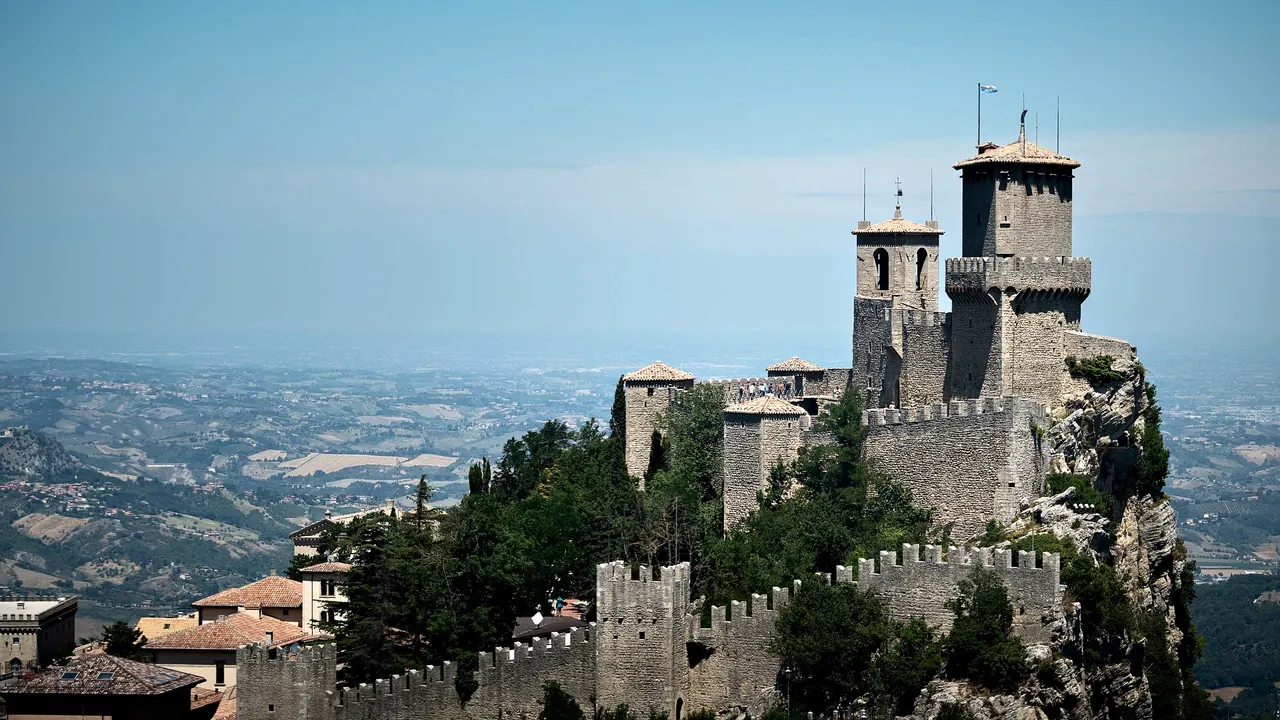
Photos: Bari by Sailko, CC BY-SA 4.0, cropped; San Marino by Tibor Szabo, Pexels License.
Bari or San Marino?
Our verdict in twelve categories, each scored against the same fixed benchmark cities, and the climate month by month, so you can choose for your trip.
Choose Bari for
- nightlife
- live music and the arts
- food and drink
Bari is the stronger choice for most trips. It is a working southern city where eating is the highlight, summer evenings fill the piazzas at the edge of the old town, and Matera, Alberobello, Polignano and Lecce are all within a day's reach. It suits travellers who want a base for a week of food, swimming in rocky coves and exploring Puglia, in a city that stays awake after dark.
Choose San Marino for
San Marino does not lead in any category we score.
Pick San Marino for the setting rather than city life. It is a walled medieval town on a ridge, with towers above the cliffs and calm evenings once the coaches have gone. It works as a short stop, or as a quiet base for a driver touring Urbino, San Leo and Ravenna with the Rimini beaches below. Anyone after good restaurants, nights out or a concert season will find much more in Bari.
Scoreboard
Twelve categories on one fixed scale from 0 to 100. The shaded stretch is the gap between the two.
Your match
Pick a travel style or drag the sliders, and both match scores follow your weighting.
Wins on nightlife and live music and the arts with your weighting.
Has no clear advantage with the weighting you have chosen.
What matters to you?
Category by category
What the scores mean for a trip.
Beaches & swimming
Bari has the sea on its doorstep. The sandy Pane e Pomodoro beach and the rocks around Torre Quetta are a short walk from the centre. Better swimming is a short train ride south, in the pebble cove at Polignano a Mare and the clear rocky inlets around Monopoli.
San Marino is on a mountain, so a beach day means going down to Rimini or Riccione, about half an hour away. There you get long sandy beaches with rows of umbrellas and shallow water. The sea is about as warm as Bari's, but the trip makes it an outing rather than part of daily life.
Food & drink
Food is one of the main reasons to choose Bari. In Bari Vecchia you can watch orecchiette being rolled in doorways and buy sgagliozze from kitchen windows. Down at the fishermen's pier, locals eat raw sea urchins with a beer. Dinner is tiella, burrata and Primitivo at fair prices.
San Marino serves good Romagna hill cooking, such as passatelli, piadina and grilled meats. But the summit restaurants trade on the view, and the best meals are down in Borgo Maggiore or over the border. It is a pleasant side to a visit, not a reason to go.
Culture & sights
What separates the two is how long the sightseeing lasts. In Bari Vecchia, between the two harbours, the Basilica di San Nicola is a model of Apulian Romanesque that still draws Orthodox pilgrims to the relics of St Nicholas. The Cathedral of San Sabino, the Norman-Swabian castle and the whitewashed courtyards and shrines are all close by. The nineteenth-century palazzi of the Murat quarter and the southern Italian painting at the Pinacoteca stretch the visit to a day or two.
San Marino has one striking set piece: the walled town along the crest of Monte Titano. The Guaita and Cesta towers are joined by a cliffside path, and the Palazzo Pubblico is where the Captains Regent are installed. It tells the story of one of the world's oldest republics well, but you will have seen it in half a day.
Nightlife
Bari has a real night out. On summer evenings students and young locals fill Piazza Mercantile and Piazza Ferrarese, the bars of the Umbertino streets stay open past midnight, and in July and August the crowds move to beach clubs along the coast.
San Marino has almost nothing after dinner. A few wine bars look down on the lights of the coast, and anyone who wants clubs has to drive down to the Riviera at Rimini and Riccione.
Nature & outdoors
Bari has more varied outdoor options within an hour. You can walk or cycle across the open karst plateau of the Alta Murgia, go underground at the Grotte di Castellana, sail along the southern coast or cycle gently through the Valle d'Itria. The city itself is flat, and the long seafront is its main green space.
San Marino offers the better view from the doorstep. Paths link the towers along the cliffs of Monte Titano and drop through woodland to Borgo Maggiore, with views to the Adriatic and the Apennines. These are short walks, though, and the Montefeltro hills are best seen by car or bike.
Day trips
Both make good bases, but Bari has more to choose from and you can reach more of it by train. Matera's cave dwellings, Lecce's Baroque streets, Trani's cathedral on the sea and the coves of Polignano are all reachable by rail. A car makes it easy to add Alberobello's trulli, Ostuni and Castel del Monte.
San Marino's trips are rewarding but depend on a car. San Leo's fortress, the ducal palace town of Urbino, Gradara and Verucchio are all a short drive away. Ravenna's mosaics and Bologna are easiest by train once you are down in Rimini.
Good for families
The two are about even for families, but they work in different ways. In Bari, children have a sandy beach in town, flat traffic-free lanes and a centre small enough to cover on foot. The cave system and the Fasano safari park make good half-days out.
San Marino is more exciting for children, with battlements, cliff edges and the cable car up from Borgo Maggiore. However, the steps make pushchairs hard work, and the theme parks, waterparks and shallow beaches are on the coast below, so a car helps.
Getting around
Bari is much easier to get around. The old town, the Murat streets and the seafront sit side by side on flat ground, a train runs to the airport, and regional lines go to Polignano, Trani, Matera and Alberobello, though some are slow.
In San Marino, almost every street climbs or drops by steps. Beyond the cable car to Borgo Maggiore, the only regular link to the outside world is the bus to Rimini, so the hill towns are hard to reach without a car.
Shopping & style
Neither is a shopping destination, but Bari has more ordinary shopping. Via Sparano is a long pedestrian street of Italian chains and a few boutiques, and the best things to take home are food: dried orecchiette, taralli and olive oil from the old town.
San Marino's shops are mostly souvenirs, decorative crossbows and stamps for collectors. Lower taxes bring Italians up for perfume, watches and spirits, and there is an outlet centre in the valley.
Affordability
Bari is the cheaper of the two. Street food, a trattoria lunch and local wine cost little, and the old town and basilica are free, although rooms get tighter in July and August.
San Marino has middling prices, and the summit hotels and view terraces cost more than places a few kilometres downhill. Lower taxes make fuel and spirits cheaper.
Live music & performing arts
Only Bari can fill an evening at the opera. The Teatro Petruzzelli, among the largest opera houses in Italy, runs a season of opera, ballet and symphonic concerts. In summer a long-running jazz festival plays in the castle and the piazzas. Plays at the Teatro Piccinni and the smaller stages are mostly in Italian.
San Marino has a small theatre and the odd concert by local ensembles. Its liveliest moment is the Medieval Days festival in summer, with costumed musicians, crossbow contests and flag-throwers. For opera or a concert season, you have to go to Bologna or to Pesaro, Rossini's festival town.
Wellness & relaxation
Neither city has thermal baths or a real spa culture, so relaxation comes from the pace of the place. In Bari that means long lunches, a quiet afternoon break and an evening walk by the sea. For proper pampering, visitors stay at a restored country estate outside the city.
San Marino's calm comes in the evening, when the day visitors have gone and you can walk the walls above the plain. Thermal spas on the coast or in the Apennine valleys need a separate trip.
When should you go?
Pick your month. The climate figures are measured averages, not a forecast.
Bari in July
San Marino in July
Daytime high, °C
Rainfall in the month, mm
Where the figures come from
Bari has no rain gauge within 25 km of the centre, so its rainfall comes from a gridded climate dataset read at the city rather than from a gauge further away.
Bari's sunshine is measured 77 km from the centre, at Marina Di Ginosa.
San Marino's temperatures are measured 52 km from the centre, at Frontone.
San Marino has no rain gauge within 25 km of the centre, so its rainfall comes from a gridded climate dataset read at the city rather than from a gauge further away.
Temperature and rainfall are climate normals, averaged over the years shown. Bari: 1991-2020 (sunshine 1961-1990) normals, Bari / Palese Macchie (7 km from centre). San Marino: 1991-2020 normals, Frontone (51.5 km from centre).
Bari has the longer warm season. Beach weather runs from June to September, the sea is at its warmest in July and August, and high summer is very sunny and almost dry, with only 17mm of rain in August. July and August reach about 30°C, which is too hot for the old town lanes at midday, so May, late September and early October are better for sightseeing and day trips. Rain arrives in September and peaks in November, and winters stay mild at around 12°C in January.
San Marino reaches a similar summer peak but has a shorter, wetter season. Spring stays cool into April, rain falls in every month, and autumn is the wettest time, with 105mm in November. Winter days on the ridge are cold at around 7°C, which makes the walks between the towers raw. The best months are late May, June and September. The sea at Rimini is warm enough to swim from late June to early September.
Which traveller are you?
On a food and nightlife trip, Bari is the clear pick. You get handmade orecchiette, focaccia and raw seafood by the old pier, followed by late, crowded evenings in the old-town piazzas. San Marino's summit is mostly tourist terraces and goes quiet after dark.
For a culture and arts trip, Bari also offers more. The Basilica di San Nicola, the Murat quarter and an opera season at the Petruzzelli fill several days, with Matera and Lecce close by. San Marino's towers and Palazzo Pubblico take half a day.
On a family trip with children and a car, San Marino has more variety. Children love the towers, battlements and cable car, and the theme parks, waterparks and shallow beaches around Rimini are close. Bari is easier on foot but has less built for children.
Before you go
| Measure | Bari | San Marino |
|---|---|---|
| Official language | Italian | Italian |
| Currency | Euro (EUR) | Euro (EUR) |
| Sockets | CFL230 V, 50 Hz | CFL230 V, 50 Hz |
| Driving side | Right | Right |
| Time zone | UTC+1, UTC+2 in summer | UTC+1, UTC+2 in summer |
| Emergency number | 112 | 112 |
| Elevation | 5 m | 675 m |
| Main airport | Bari Karol Wojtyła International Airport (BRI)9 km from centre104 non-stop destinations | Bologna Guglielmo Marconi Airport (BLQ)114 km from centre98 non-stop destinations |
| Public holidays this year | 13 days | 18 days |
By the numbers
| Measure | Bari | San Marino |
|---|---|---|
| City population | 315,473 | 4,040 |
| People per km² | 2,687 | 569 |
| Museums within 10 km | 12 | 19 |
| UNESCO World Heritage sites within 50 km | 1 | 2 |
| Swim season, months above 21 °C | 4 months | 4 months |
Where else could you go?
Every comparison below shares a destination with this one, so you can follow Bari or San Marino somewhere new.
- Materavs Bari
- Assisivs San Marino
- Florencevs San Marino
- Bolognavs San Marino
- Sienavs San Marino
- Leccevs Bari