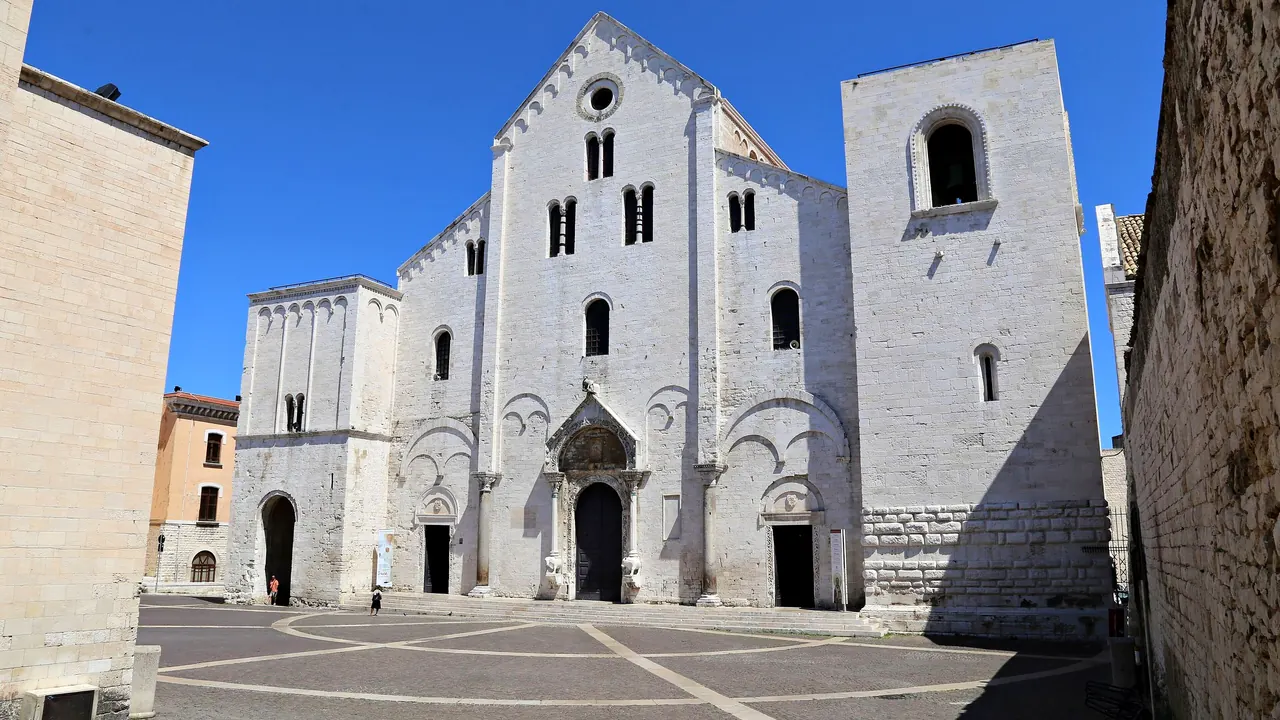
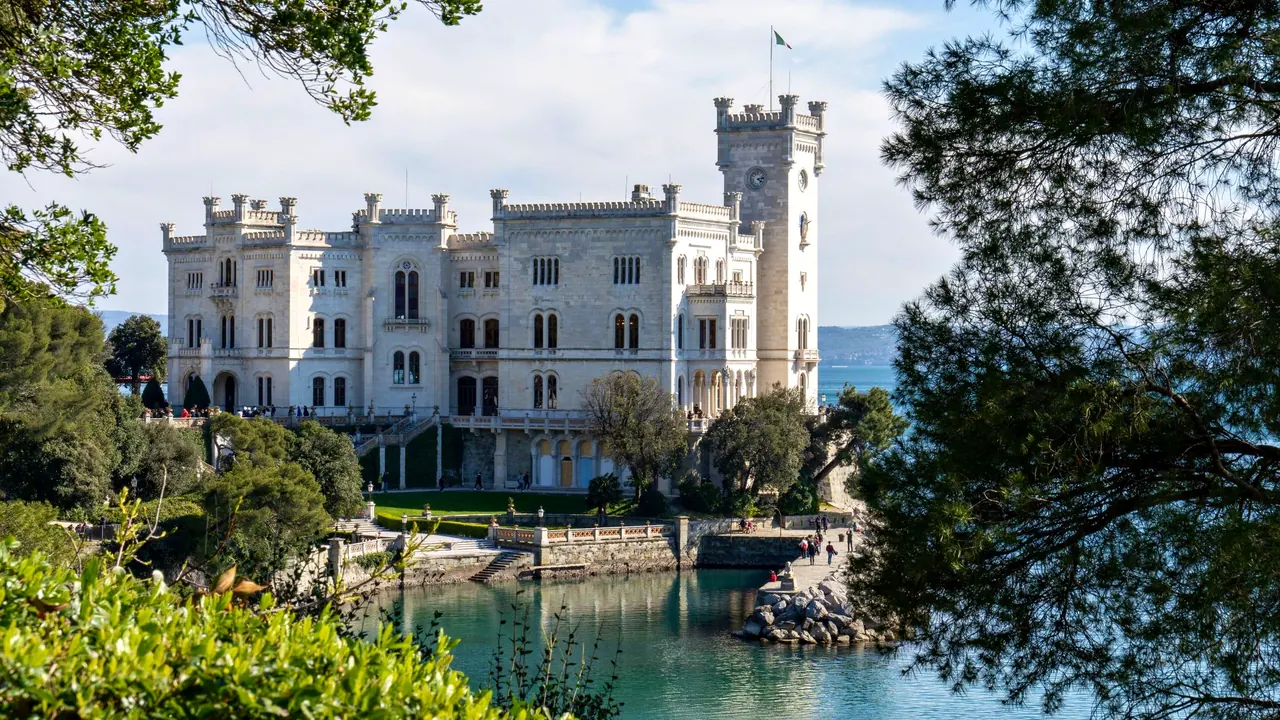
Photos: Bari by Sailko, CC BY-SA 4.0, cropped; Trieste by Tibor Szabo, Pexels License.
Bari or Trieste?
Our verdict in twelve categories, each scored against the same fixed benchmark cities, and the climate month by month, so you can choose for your trip.
Choose Bari for
- nightlife
- day trips
- food and drink
Bari suits the traveller who wants to eat well, stay out late and spend most days somewhere else. It is the better base for southern Italy's classic excursions, from the cave city of Matera to the trulli of the Valle d'Itria and the cliffside coves of Polignano. Evenings in the old town piazzas run later and livelier than anything Trieste offers, and the street food and home cooking are a reason to come in their own right.
Choose Trieste for
- nature and the outdoors
- wellness
- getting around
Trieste is the choice for a slower, more reflective trip with the outdoors close at hand. The Karst plateau rises straight behind the city, with cliff paths, gorges and huge caves all within easy reach. Its Habsburg squares, coffee houses and border position, with Slovenia and Croatia nearby, give it a Central European character that Bari doesn't have. It also rewards quiet days more than late nights.
Scoreboard
Twelve categories on one fixed scale from 0 to 100. The shaded stretch is the gap between the two.
Your match
Pick a travel style or drag the sliders, and both match scores follow your weighting.
Too close to call, level with your weighting
Wins on nightlife and day trips with your weighting.
Wins on nature and the outdoors and wellness with your weighting.
What matters to you?
Category by category
What the scores mean for a trip.
Beaches & swimming
Swimming is about equally good in both cities, but it feels different. Bari has actual sand at Pane e Pomodoro, a short walk from the centre, and the coves south towards Polignano and Monopoli mix pebbles, rock and small sandy bays.
Trieste has almost no sand. Locals swim off the concrete platforms and lawns of Barcola or from old bathing establishments with cabins, and the prettier spots are pebble coves under the cliffs at Sistiana and Duino. Anyone who wants sand should pick Bari. Those happy to climb down a ladder into clear water will enjoy Trieste's seafront culture.
Food & drink
Bari has the edge, and its food is one of the main reasons people go. Orecchiette rolled in the lanes of Bari Vecchia, focaccia barese, sgagliozze and raw sea urchins at the fishermen's pier make for an eating trip based on cheap, generous southern cooking, with Primitivo and Negroamaro to drink.
Trieste's table is more unusual than abundant. Its buffets carve boiled pork with horseradish and sauerkraut, jota and strudel sit beside Adriatic sardoni, and the coffee rituals are a pleasure of their own. The osmize on the Karst are a lovely extra, but the restaurant range overall is narrower than Bari's.
Culture & sights
Trieste offers the richer set of sights. Piazza Unità opens onto the sea, the Borgo Teresiano lines the Canal Grande, and San Giusto has mosaics, a castle and a Roman theatre below. Add Miramare Castle, the Revoltella museum, the great synagogue and the Risiera di San Sabba memorial, and there is more to fill several days.
Bari's sights cluster in Bari Vecchia around the Basilica di San Nicola, a landmark of Apulian Romanesque, along with the cathedral, the castle and the Murat quarter's palazzi. It is a characterful set of sights, but most visitors finish it in a day or two.
Nightlife
Bari is clearly the place to go out. On summer nights Piazza Mercantile and Piazza Ferrarese fill with young locals, bars along the seafront and the Umbertino streets stay open past midnight, and in July and August the crowd moves to beach clubs down the coast.
Trieste's evenings stop at a spritz around Piazza Unità or in Cavana, a few student wine bars, and kiosks on the Barcola seafront in summer. There are few clubs and the city goes quiet early.
Nature & outdoors
Trieste is far stronger for the outdoors. The Karst rises straight behind the city, so cliff walks on the Rilke Path, climbing in Val Rosandra and visits to the Grotta Gigante need no planning. The gulf is serious sailing water, Miramare is a marine reserve, and the Julian Alps are within reach for mountain days.
Bari's surroundings are gentler and further away. The city sits on a flat plain of olive groves, so the open grassland of Alta Murgia is an hour inland. There is easy cycling in the Valle d'Itria but no mountains nearby.
Day trips
Both cities make excellent bases, but Bari's list is the more famous. Matera's cave dwellings, the trulli of Alberobello, the white towns of Ostuni and Locorotondo, Castel del Monte, Trani's seafront cathedral and Baroque Lecce cover the best of Puglia and Basilicata. Some of the inland lines are slow, though.
Trieste's strength is variety across borders. You can see Aquileia's mosaics, star-shaped Palmanova and the Collio vineyards in Italy, Piran and Ljubljana in Slovenia, and Istria by car, with Venice a long day away.
Good for families
Both work about equally well for families, and neither has much built for children. Bari's advantages are the sandy city beach, flat traffic-free lanes and the evening passeggiata, which make it easier with toddlers. The Fasano safari park and the Castellana caves are good outings.
Trieste suits older children better. Miramare's gardens, the vast Grotta Gigante, the aquarium and the science centre appeal to them, while rocky swimming and steep stepped streets are harder with small children.
Getting around
Trieste is the easier city to get around. Its flat waterfront core is walkable, the bus network is dense and reaches Barcola, Miramare and the Karst, and passenger boats cross the bay to Muggia. The one effort is the steep climb to San Giusto.
Bari's centre is just as walkable, with the old town, Murat and the promenade side by side. Beyond them, though, city buses are slow and confusing, and the regional railways can be infrequent, so many visitors hire a car for the inland day trips.
Shopping & style
Neither city is a shopping destination, but Bari offers a little more. Via Sparano has a long pedestrian stretch of Italian chains and some upmarket boutiques, and Puglian ceramics are worth looking for alongside taralli, olive oil and dried orecchiette.
Trieste has fewer shops but more quirky browsing. Its antique and second-hand shops in the old town are the most interesting stops, and coffee from local roasters and presnitz make good gifts.
Affordability
Both are good value by Italian standards, and the savings come from different places. In Bari, street food, trattoria lunches and local wine are cheap, but rooms tighten in July and August, and beach clubs and hire cars add up.
In Trieste the savings are buffet meals, bar coffee, cheap buses and free swimming and walking. Rooms get tight around the autumn regatta, and seafood dinners cost what they would in any Italian city.
Live music & performing arts
The two are close here, and both centre on opera. Bari has the Teatro Petruzzelli, one of Italy's largest houses, plus a summer jazz festival in its piazzas and castle. Trieste has the waterfront Teatro Verdi and a Habsburg taste for operetta that is rare in Italy. It also has musicals at the Politeama Rossetti and a Slovenian-language theatre. Outside the theatres, both have little regular live music.
Wellness & relaxation
Trieste is better for unwinding, even though neither city has thermal baths. Its pace is unhurried, with long sittings in old coffee houses, an older population and quiet sunset walks on the Molo Audace.
In Bari, relaxation comes from the long lunch, the afternoon break and the evening stroll on the seafront. Visitors who want real pampering usually book a restored country estate outside the city.
When should you go?
Pick your month. The climate figures are measured averages, not a forecast.
Bari in July
Trieste in July
Daytime high, °C
Rainfall in the month, mm
Where the figures come from
Bari has no rain gauge within 25 km of the centre, so its rainfall comes from a gridded climate dataset read at the city rather than from a gauge further away.
Bari's sunshine is measured 77 km from the centre, at Marina Di Ginosa.
Temperature and rainfall are climate normals, averaged over the years shown. Bari: 1991-2020 (sunshine 1961-1990) normals, Bari / Palese Macchie (7 km from centre). Trieste: 1991-2020 normals, Trieste (1.6 km from centre).
Bari is the drier of the two for most of the year, and its summer is the more reliable. June, July and August bring very little rain and highs around 30°C, hot enough that the streets are best walked in the morning or evening, and the sea is at its warmest from July into September. September stays warm, but the rain comes back, at about 65mm, and autumn gets wetter through to November. Winters are mild and often grey rather than cold. For sightseeing and day trips, May and early June work best, warm and dry before the heat sets in.
Trieste is slightly cooler and, apart from January, wetter month for month. Summer still brings long sunny days and a sea about as warm as Bari's, so June to August suit swimming at Barcola. Autumn is the wet season, with September, October and November all heavy and November the wettest at about 125mm. Winter is colder than in Bari, with highs near 9°C. For walking on the Karst, May and June are the months to choose: warm rather than hot, though showers are common.
Which traveller are you?
On a food and nightlife trip, Bari is the stronger pick. Eating there is cheap, generous and rooted in the region, and summer evenings carry on outdoors well past midnight. Trieste is a city for one good dinner followed by an early night.
For an outdoors trip, choose Trieste. Bari's flat olive country puts the best walking an hour inland. In Trieste, Karst cliff paths, gorges and caves start at the edge of the city, the gulf is there for sailing, and the Julian Alps make an occasional longer day out.
On a relaxing and wellness trip, Trieste is the calmer choice. Bari slows down for a long lunch, but the summer heat and late evenings in its piazzas make resting harder work. Trieste moves slowly all day, with coffee-house sittings, sunset walks on the pier and early nights.
Before you go
| Measure | Bari | Trieste |
|---|---|---|
| Official language | Italian | Italian |
| Currency | Euro (EUR) | Euro (EUR) |
| Sockets | CFL230 V, 50 Hz | CFL230 V, 50 Hz |
| Driving side | Right | Right |
| Time zone | UTC+1, UTC+2 in summer | UTC+1, UTC+2 in summer |
| Emergency number | 112 | 112 |
| Elevation | 5 m | 2 m |
| Main airport | Bari Karol Wojtyła International Airport (BRI)9 km from centre104 non-stop destinations | Trieste Airport (TRS)31 km from centre32 non-stop destinations |
| Public holidays this year | 13 days | 13 days |
By the numbers
| Measure | Bari | Trieste |
|---|---|---|
| City population | 315,473 | 198,417 |
| People per km² | 2,687 | 2,332 |
| Museums within 10 km | 12 | 33 |
| UNESCO World Heritage sites within 50 km | 1 | 5 |
| Swim season, months above 21 °C | 4 months | 4 months |
Where else could you go?
Every comparison below shares a destination with this one, so you can follow Bari or Trieste somewhere new.