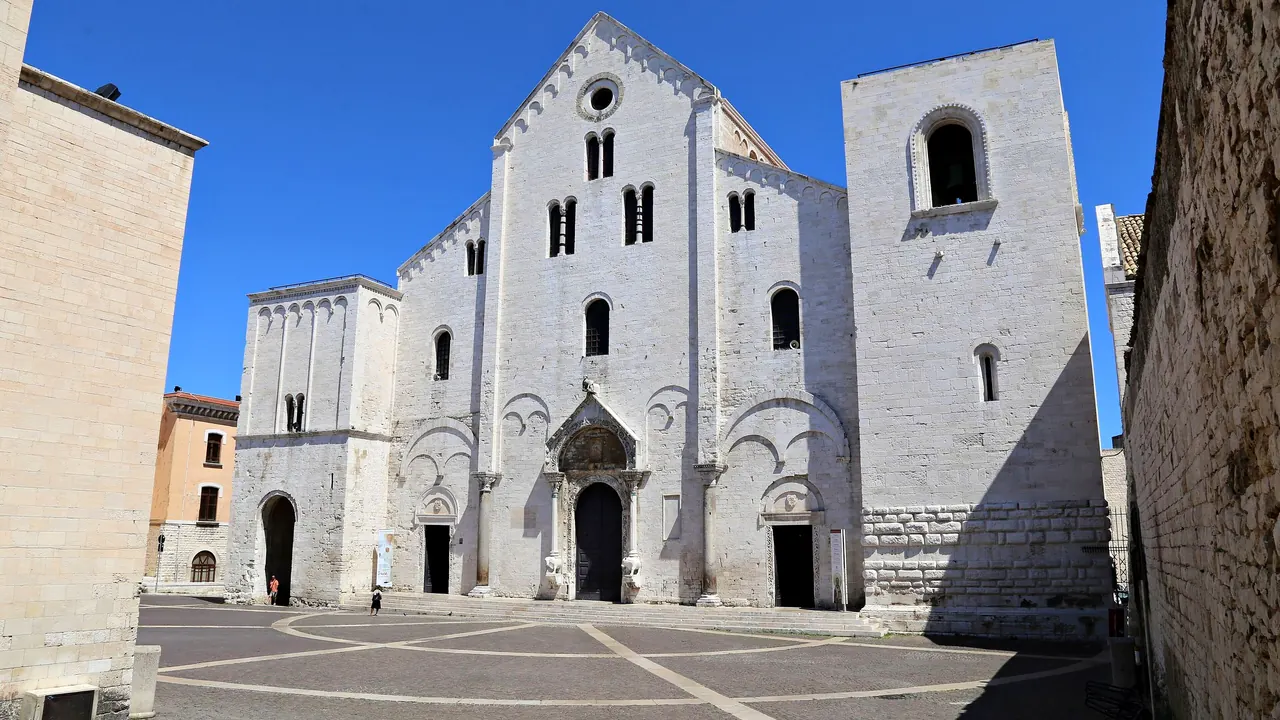
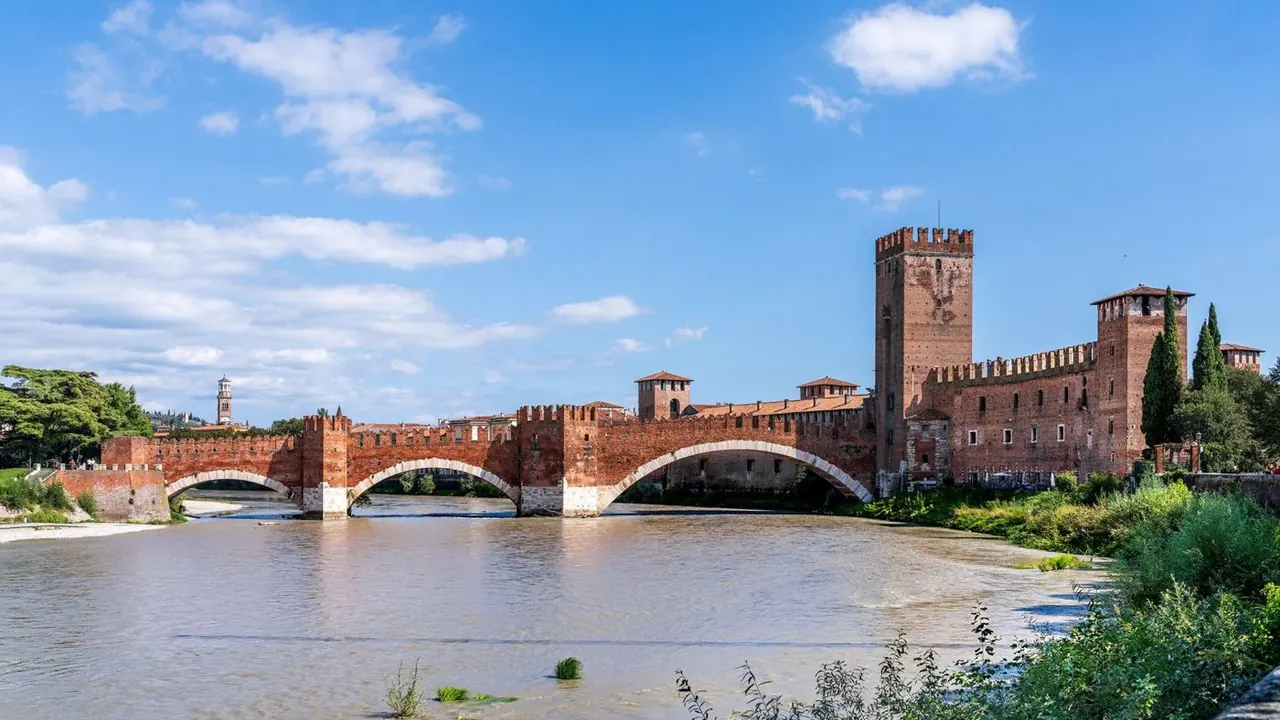
Photos: Bari by Sailko, CC BY-SA 4.0, cropped; Verona by NorbertNagel, CC BY-SA 4.0, cropped.
Bari or Verona?
Our verdict in twelve categories, each scored against the same fixed benchmark cities, and the climate month by month, so you can choose for your trip.
Choose Bari for
- beaches
- nightlife
- prices
Bari suits a trip that combines southern towns, the coast and eating well without spending much. It has a sandy beach in the city and better coves a short train ride south. Its evenings in the old-town piazzas run later, and it is the natural base for Matera, the trulli and the white towns of the Valle d'Itria. Expect an old town full of character rather than a long list of monuments.
Choose Verona for
- culture and sights
- wellness
- live music and the arts
If you are coming for history, art and a night at the opera, Verona is the better pick. The Roman Arena, San Zeno and Castelvecchio give it a much richer centre. The Alpine foothills and Lake Garda add walking, sailing and thermal pools, and Venice, Padua and Vicenza are a short train ride away. It costs more, and the nights end earlier.
Scoreboard
Twelve categories on one fixed scale from 0 to 100. The shaded stretch is the gap between the two.
Your match
Pick a travel style or drag the sliders, and both match scores follow your weighting.
Wins on beaches and nightlife with your weighting.
Wins on culture and sights and wellness with your weighting.
What matters to you?
Category by category
What the scores mean for a trip.
Beaches & swimming
Bari is on the sea and Verona is not. Bari has the sandy Pane e Pomodoro beach and the rocky platforms around Torre Quetta on its own shoreline. The cliff-backed cove at Polignano a Mare and the inlets around Monopoli are a short regional train ride south.
Verona's swimming is in Lake Garda, about half an hour away. The water is calm and tideless, with lidos and lawns at Lazise and Bardolino and flat limestone shelves at Sirmione. It makes a pleasant summer afternoon, but the beaches are narrow and crowded at weekends, and few visitors choose Verona for the water.
Food & drink
Both cities eat well, but in very different ways. Bari's strength is street food and seafood: focaccia barese, panzerotti and sgagliozze sold from kitchen windows, orecchiette rolled by hand in the old-town lanes, and raw sea urchins and octopus by the fishermen's pier, all at fair prices.
Verona is about risotto, bigoli and bollito with pearà, eaten in wood-panelled osterie. Above all it is about wine, with Valpolicella, Amarone and Soave made within a short drive. It has little street food, and the tables around the Arena can be tired. Bari's weak point is a thin fine-dining and international range.
Culture & sights
Verona has far more to see. Its UNESCO-listed centre holds the Roman Arena and theatre, the medieval squares of the Scaliger lords, the Romanesque San Zeno and the art museum in Carlo Scarpa's Castelvecchio, enough for two or three unhurried days.
Bari's sights are fewer and mostly in Bari Vecchia: the Basilica di San Nicola, a fine Apulian Romanesque church that draws Orthodox pilgrims, plus the cathedral and the Norman-Swabian castle. The nineteenth-century Murat grid adds a grand seafront. It is full of atmosphere and easily seen in a day or two.
Nightlife
Bari stays out later. On summer nights students and young locals fill Piazza Mercantile and Piazza Ferrarese, and the bars of the Umbertino streets carry on past midnight. In July and August the crowd moves to beach clubs along the coast.
In Verona the evening is built around the aperitivo, a spritz or a glass of Valpolicella in Piazza delle Erbe, and Veronetta's student bars are the main late option. There is no dance scene in the centre, and apart from opera nights the streets empty early.
Nature & outdoors
Verona has the better outdoors because it sits at the foot of the Alps. The Valpolicella hills, the gorges and beech woods of the Lessinia, the Adige cycle route and the ridges of Monte Baldo above Lake Garda give proper walking and cycling. The north end of the lake is known for reliable wind for sailing and windsurfing.
Bari is surrounded by flat olive country. The Alta Murgia plateau, about an hour inland, suits quiet walks and cycling, and the Grotte di Castellana are worth a visit, but there are no mountains within easy reach.
Day trips
Both are excellent bases, and the difference is in where you go. From Bari the trips are to small southern places: the cave city of Matera, the trulli of Alberobello, the white towns of the Valle d'Itria, Castel del Monte and Trani's cathedral by the sea, with Lecce for a longer day. Several of these are easier by car.
From Verona the trips are mostly to major art cities on a fast railway. Venice is just over an hour away, and Padua, Vicenza and Mantua are closer still. The Lake Garda towns and the wine cellars of Valpolicella and Soave add gentler days.
Good for families
Verona is easier with children because the big attractions are close by. Gardaland, the water parks around Lake Garda and the Parco Natura Viva safari zoo are all about half an hour away, though most need a car or a transfer. In town, the Arena and the Roman theatre tend to catch a child's imagination.
Bari is just as welcoming and has a sandy city beach and traffic-free lanes, but little is made for children. The Grotte di Castellana and the Fasano safari park are the main outings. In both cities, summer afternoons are too hot to do much.
Getting around
Both centres are flat and easy to walk, and Verona is a little simpler. Its sights sit close together inside a compact, largely traffic-free loop of the Adige, and the railway to Venice, Milan and Lake Garda is fast and frequent.
Bari's old town, Murat streets and promenade are also next to each other, and a rail link runs to the airport. Its regional lines to Matera and Alberobello are slow and infrequent, though, so more of its day trips need a hire car.
Shopping & style
Neither city is a shopping destination, but Verona's shops are more polished. The marble-paved Via Mazzini has Italian fashion labels, Corso Porta Borsari has jewellers and shoe shops, and Milan is within reach for serious shopping.
Bari's Via Sparano is mostly chains with a few boutiques. In both cities the best things to take home are food and drink: orecchiette, taralli and olive oil in Bari, along with Puglian ceramics, and Amarone and pandoro in Verona.
Affordability
Bari is the cheaper stay. Street food, a trattoria lunch and local wine cost little, and rooms are moderately priced outside July and August.
In Verona everyday eating is fairly priced, but hotels in the historic centre are expensive for a provincial city and become scarce on summer opera nights and during trade fairs. Staying near the station or in Veronetta brings costs down.
Live music & performing arts
Verona has the bigger draw in summer opera at the Roman Arena, with grand Verdi and Puccini productions played to thousands on the ancient stone. The Roman theatre adds Shakespeare, dance and jazz under the stars, and the Teatro Filarmonico runs a season through the cooler months.
Bari's Teatro Petruzzelli, one of Italy's largest opera houses, has a serious season of opera, ballet and concerts, and a summer jazz festival uses the piazzas and the castle. Beyond that, there is little for visitors who do not speak Italian.
Wellness & relaxation
Verona is the better choice for unwinding because thermal water is close by. Sirmione's spa pools face Lake Garda, a spring-fed lake near Lazise sits in an old villa garden, and the springs at Caldiero have been used since Roman times. In town, the terraces of the Giardino Giusti are a quiet retreat.
Bari has no bathing tradition and only hotel spas. Relaxing there means long lunches, the afternoon break and the evening walk along the seafront. Visitors who want real pampering book a stay at a restored country estate outside the city.
When should you go?
Pick your month. The climate figures are measured averages, not a forecast.
Bari in July
Verona in July
Daytime high, °C
Rainfall in the month, mm
Where the figures come from
Bari has no rain gauge within 25 km of the centre, so its rainfall comes from a gridded climate dataset read at the city rather than from a gauge further away.
Bari's sunshine is measured 77 km from the centre, at Marina Di Ginosa.
Temperature and rainfall are climate normals, averaged over the years shown. Bari: 1991-2020 (sunshine 1961-1990) normals, Bari / Palese Macchie (7 km from centre). Verona: 1991-2020 normals, Verona / Villafranca (11.6 km from centre).
Bari has the longer warm season and the milder winter. June to August is hot and almost dry, with highs around 30°C at the peak, and the sea is warm enough for swimming all through these months, reaching 26°C in August. September is still warm and the water still pleasant, but that is when the rain starts. The wet spell builds through October and peaks in November. Winters are mild enough to walk the old town in comfort. April and May are the easiest months for sightseeing on foot, and October is warm but wetter.
Verona has colder winters, with January highs around 7°C. Its rain is spread across the year instead of being held back until autumn. Spring and summer bring regular showers, and September through November are the wettest stretch. July is the sunniest month and as hot as Bari at its peak, so the middle of the day is too hot for walking. May, June and early September give the best balance for exploring the streets.
Which traveller are you?
On a beach and sun trip, Bari is the clear choice. You stay on the sea itself, with a long, dry summer and warm water, so swimming fits around everything else. From Verona, every swim means a separate outing to the lake.
For a culture and arts trip, pick Verona. Roman, medieval and Renaissance layers make its centre far richer to explore, and a summer night of opera in the Arena is reason enough to go. Bari charms, but it runs out sooner.
On a family trip with children, Verona is the safer bet, especially if you have a car. The region's big days out for children are close at hand, which keeps a week varied. Bari suits families who are happy with the beach, gelato and slow evenings.
Before you go
| Measure | Bari | Verona |
|---|---|---|
| Official language | Italian | Italian |
| Currency | Euro (EUR) | Euro (EUR) |
| Sockets | CFL230 V, 50 Hz | CFL230 V, 50 Hz |
| Driving side | Right | Right |
| Time zone | UTC+1, UTC+2 in summer | UTC+1, UTC+2 in summer |
| Emergency number | 112 | 112 |
| Elevation | 5 m | 59 m |
| Main airport | Bari Karol Wojtyła International Airport (BRI)9 km from centre104 non-stop destinations | Verona Villafranca Valerio Catullo Airport (VRN)10 km from centre96 non-stop destinations |
| Public holidays this year | 13 days | 13 days |
By the numbers
| Measure | Bari | Verona |
|---|---|---|
| City population | 315,473 | 255,588 |
| People per km² | 2,687 | 1,285 |
| Museums within 10 km | 12 | 18 |
| UNESCO World Heritage sites within 50 km | 1 | 5 |
| Swim season, months above 21 °C | 4 months | - |
Where else could you go?
Every comparison below shares a destination with this one, so you can follow Bari or Verona somewhere new.