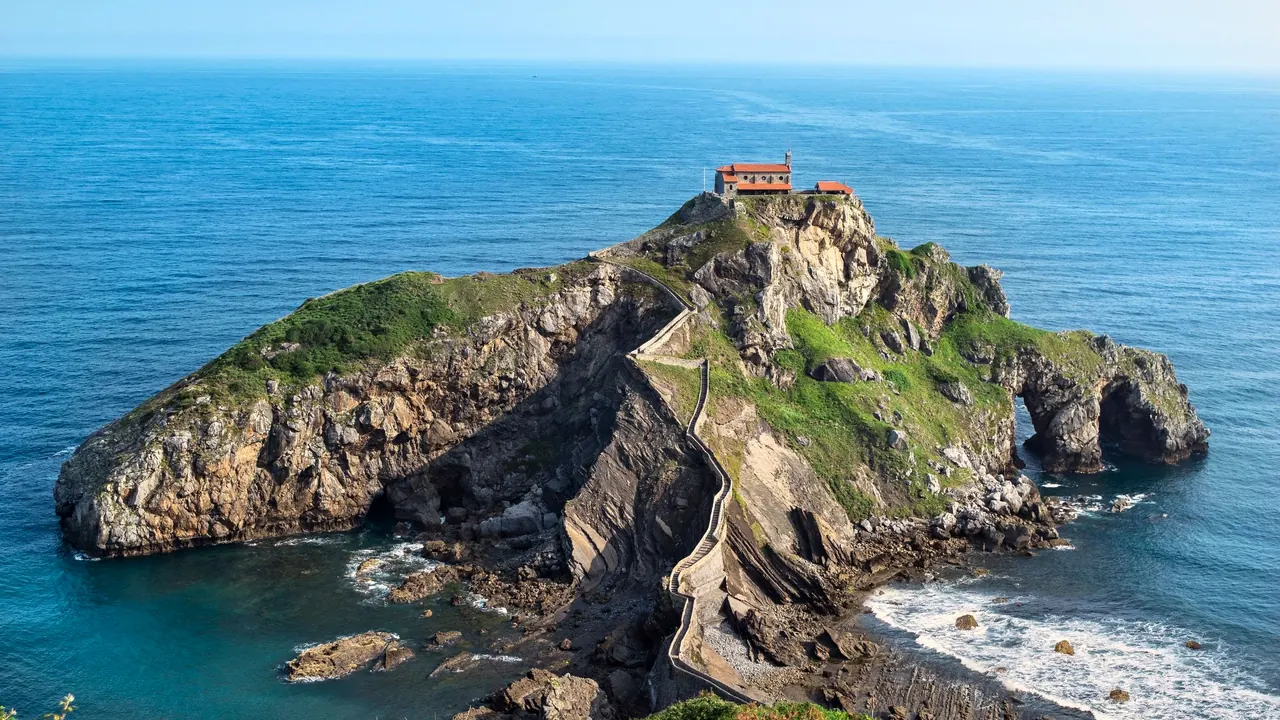
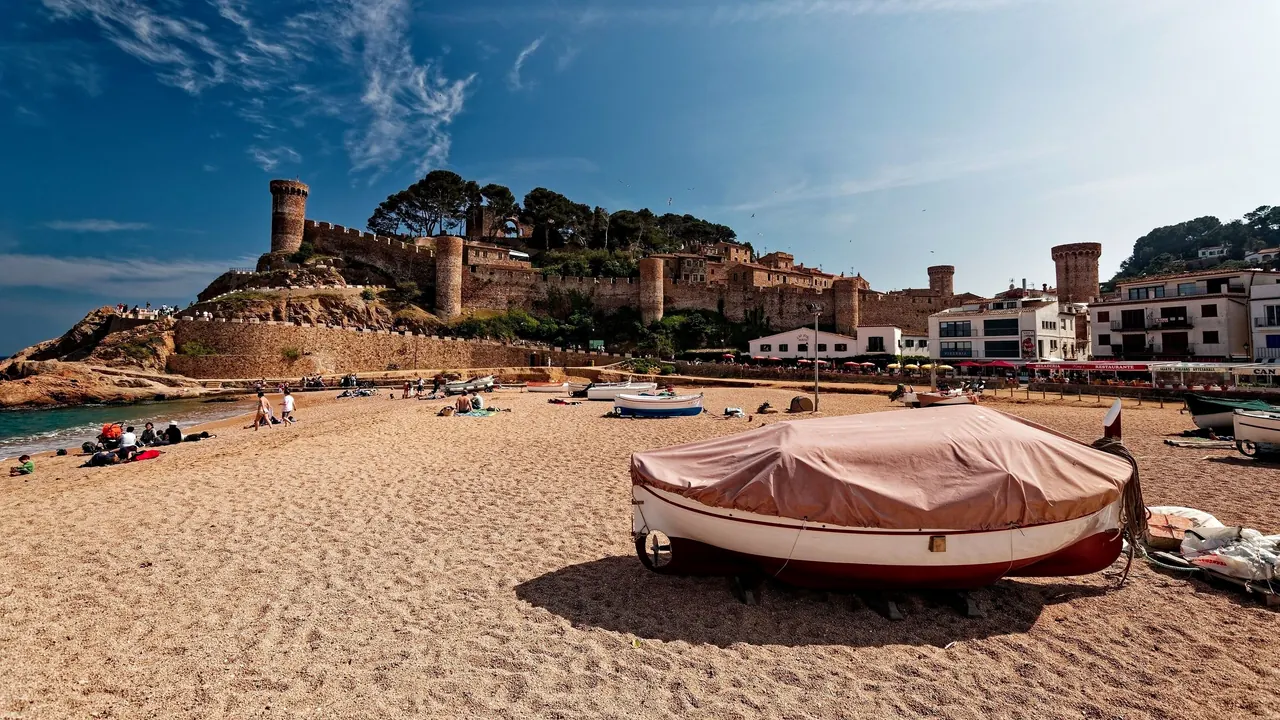
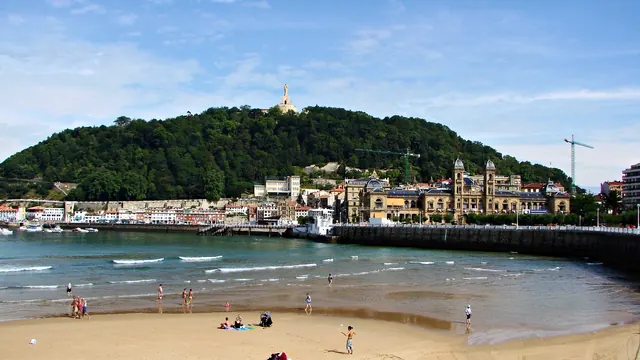
Photos: Basque Country by Enrique, Pexels License; Costa Brava by Txllxt TxllxT, CC BY-SA 4.0, cropped.
Basque Country or Costa Brava?
Our verdict in twelve categories, each scored against the same fixed benchmark cities, and the climate month by month, so you can choose for your trip.
Choose Basque Country for
- getting around
- food and drink
- live music and the arts
The Basque Country is the better pick if you plan your days around meals and want towns rather than coves. The evening round of pintxos in San Sebastián's Parte Vieja and Bilbao's Casco Viejo is the main draw, along with cider houses, grill restaurants, the Guggenheim and Vitoria's medieval core. Motorways, coaches, trains and a metro link it all, so you can manage without a car. In return you get a cool Atlantic sea and grey days, even in summer.
Choose Costa Brava for
- beaches
- families
- prices
The Costa Brava is the place for a classic Mediterranean summer. It has warm, clear water in the pine-backed coves around Begur and Palafrugell, long shallow sands at Pals and the Bay of Roses for children, and far more sunny days. It suits a beach vacation with a hire car, with Dalí, Girona and Empordà cooking on the side, more than a trip built on city evenings.
Scoreboard
Twelve categories on one fixed scale from 0 to 100. The shaded stretch is the gap between the two.
Your match
Pick a travel style or drag the sliders, and both match scores follow your weighting.
Wins on getting around and food and drink with your weighting.
Wins on beaches and families with your weighting.
What matters to you?
Category by category
What the scores mean for a trip.
Beaches & swimming
The Costa Brava is the much stronger beach destination. It has dozens of coves with clear green water at Aiguablava, Sa Tuna and Tamariu, plus kilometres of dune-backed sand at Pals and Sant Pere Pescador, and the sea there is a few degrees warmer all summer.
The Basque Country has one great town beach instead: La Concha, calm inside its bay. Zurriola takes the surf, and Sopelana lies under green headlands near Bilbao. The water is cooler Atlantic and grey spells break up the summer, so the beach is part of a stay rather than the reason for it.
Food & drink
Both are serious places to eat, but the Basque Country is where food is the whole point. Evenings are a walk from counter to counter in the Parte Vieja, Gros and Bilbao's Casco Viejo, and the hills around San Sebastián hold a rare cluster of famous restaurants. Good cooking reaches ordinary places too, from Getaria's grilled turbot to the cider houses of Astigarraga.
Empordà cooking on the Costa Brava is distinctive in its own right, with mar i muntanya dishes, Palamós red prawns, L'Escala anchovies and fine dining around Girona. The quality is uneven, though: eat in the fishing villages and inland, not in the big resorts.
Culture & sights
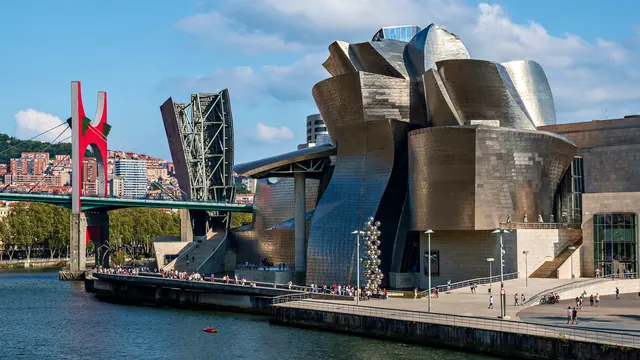
The Basque Country is a little ahead, mainly because of its cities. Bilbao has the Guggenheim, the Fine Arts Museum and the Seven Streets. San Sebastián adds Belle Époque promenades and the San Telmo Museum, and Vitoria keeps a medieval core built in rings around its cathedral.
The Costa Brava's highlights are more spread out: the Dalí Theatre-Museum in Figueres and his house at Portlligat, Girona's Jewish quarter and cathedral steps, and the Greek and Roman ruins of Empúries beside the sea. Seeing them takes a car and several days, while the Basque sights sit in centres you can walk.
Nightlife
The two are fairly even for going out, but the nights are very different. In the Basque Country, going out is a city habit that carries on all year. The pintxos round in San Sebastián's Parte Vieja or Bilbao's Casco Viejo simply moves on to cocktail bars and late pubs. Bilbao has the widest spread, and Vitoria's students keep its old quarter busy at weekends. The August fiestas are the high point, but a winter Friday still has life in it, even if midweek is quiet.
The Costa Brava has a summer resort scene, and where you stay decides what kind of night you get. Lloret de Mar and Platja d'Aro have the big clubs and nights that end at dawn from June to September, but they are towns you pick for the parties. The cove villages around Begur and Palafrugell offer sunset drinks and a village square, and they are quiet by midnight. Outside summer most of the coast closes early, and there is no city scene to fall back on, as there is in Bilbao.
Nature & outdoors
Both have dramatic coasts, of quite different kinds. The Basque shore is green and Atlantic, with the tilted flysch rock of the Geopark between Zumaia and Deba, San Juan de Gaztelugatxe and the Urdaibai estuary. Inland there are ridges of around 1,500m in Gorbeia and Aizkorri, and Mundaka has a famous surf wave.
The Costa Brava is Mediterranean rock and pine, best seen from the Camí de Ronda path between Calella, Llafranc and Tamariu and on bare Cap de Creus. Its extra is underwater: the Medes Islands reserve gives diving and snorkelling that the Basque coast cannot match.
Day trips
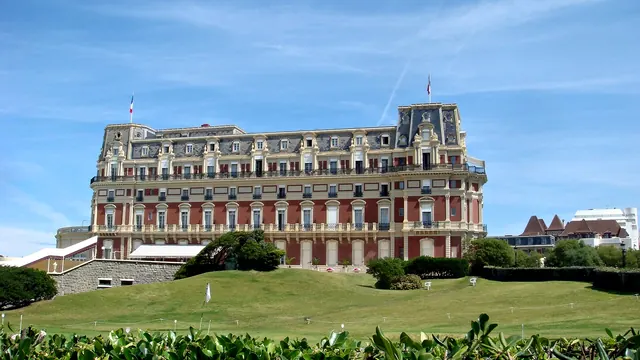
Outings from the Basque Country head for wine and the French Basque coast. You can go to Laguardia and the rock-cut cellars of Rioja Alavesa, or cross the border to Saint-Jean-de-Luz, Biarritz and Bayonne. Closer to home are fishing ports such as Getaria, Lekeitio and walled Hondarribia, and Pamplona and Burgos's Gothic cathedral are within reach.
From the Costa Brava the big day out is Barcelona, under an hour from Girona by high-speed train. The quieter options are Collioure and Perpignan over the border, Besalú's fortified bridge, the Garrotxa volcanoes and tastings in the Empordà villages.
Good for families
The Costa Brava is better set up for children, and families have come back to this coast for generations. Long, shallow beaches at Pals, L'Estartit and the Bay of Roses, with campsites and family resorts behind them, water parks and glass-bottom boats to the Medes Islands, make for easy days in reliable weather.
In the Basque Country, families do best in San Sebastián. There is calm water at La Concha, the aquarium, the Eureka science museum and the funicular up to Monte Igueldo's small amusement park. Rain is frequent and there is no big park, so plan a few indoor days.
Getting around
Getting around is far easier in the Basque Country. Its three cities are about an hour apart by motorway and frequent coaches, and Bilbao has its Foster-designed metro and a tram along the river. Euskotren runs on to the French border, so a trip without a car is realistic, with a car needed only for wine country and the hills.
On the Costa Brava you will almost certainly want a car. Coastal buses are sparse, the high-speed line stops inland at Girona and Figueres, and the narrow roads down to the coves near Begur and Cadaqués clog in high summer.
Shopping & style
Neither is a shopping destination, but the Basque Country has more to browse. Bilbao's Gran Vía has the fashion chains and a department store, and San Sebastián's Centro has independent boutiques. Good things to take home include Idiazabal cheese, Getaria anchovies and striped Basque linen.
On the Costa Brava, the best buys are the ceramics of La Bisbal d'Empordà and produce from the weekly markets. Girona is the only real fashion stop, and serious shoppers go to Barcelona for the day.
Affordability
In the Basque Country, which city you stay in decides what you pay. San Sebastián is among the dearest places in Spain to sleep in summer, while Bilbao and Vitoria cost noticeably less. Pintxos evenings, set lunches and cheap trains and buses keep daily spending in check, so many people stay in Bilbao and spend a day in San Sebastián.
On the Costa Brava it comes down to the village and the car. Begur, Cadaqués and S'Agaró are at the top end, while Lloret and the big campsites around Roses and L'Estartit are far cheaper. A hire car and parking by the coves add to almost every bill.
Live music & performing arts
The Basque Country has the fuller musical life, mostly because it carries on outside summer. Bilbao has ABAO's opera season at the Euskalduna, two orchestras and the Arriaga Theatre. Summer adds Jazzaldia on the beach and in the Kursaal, the Quincena Musical and the BBK Live rock festival.
On the Costa Brava, live music belongs to July and August: opera and ballet at Peralada castle, big-name acts at Cap Roig and the havaneres night at Calella de Palafrugell. The rest of the year there is little outside Girona.
Wellness & relaxation
The Basque Country's spa is by the sea. In the old bathing pavilion on La Concha, seawater pools look out over the bay, and the village of Zestoa has used its warm springs since the 19th century. Beyond those, rest comes from promenade walks and quiet nights in fishing towns such as Lekeitio.
The Costa Brava's version is inland at Caldes de Malavella, a long-established spa town near Girona with Roman baths, mineral springs and historic spa hotels. Stone farmhouses in the Baix Empordà add calm, but come in June or September, as August brings crowds and busy roads.
When should you go?
Pick your month. The climate figures are measured averages, not a forecast.
Basque Country in July
Costa Brava in July
Daytime high, °C
Rainfall in the month, mm
Where the figures come from
Basque Country's station stands 253 m above the place it is measured for, so that place is likely a little warmer than the figures say.
Temperature and rainfall are climate normals, averaged over the years shown. Basque Country: 1991-2020 normals, San Sebastian / Igueldo (10 km from centre). Costa Brava: 1991-2020 normals, Gerona / Costa Brava (23.2 km from centre).
The Basque Country stays mild and green. Summer highs reach only about 23°C, which is comfortable for walking and eating outdoors, and beach weather runs from July to early September, with a cool sea even then. Rain comes all year and is heaviest from late autumn through winter, peaking at about 203mm in November. There is much less sunshine than on the Mediterranean side in every month.
The Costa Brava is drier and much sunnier all year. July and August reach 31°C, too hot for long afternoons in Girona's streets but right for the coves, and the sea warms to 25°C in August. June and September are the best months for swimming and walking together. Autumn brings the wettest weeks, though still far lighter than Basque rain, and winter days are a few degrees milder.
Which traveller are you?
For a beach and sun trip, choose the Costa Brava. Its coves near Begur and Tamariu and the long sands of Pals have warmer, clearer water and far more sunshine. The Basque coast offers one splendid town beach and a cooler, often cloudy Atlantic.
On a food and nightlife trip, choose the Basque Country. Bar-hopping for pintxos in San Sebastián and Bilbao turns dinner into the night out, and celebrated restaurants and cider houses are close by. The Costa Brava's cooking is good but patchy in the resorts.
For a culture and arts trip, the Basque Country gives more without a car. The Guggenheim, Bilbao's Fine Arts Museum and Vitoria's old town lie in walkable cities, with opera and orchestras all year. On the Costa Brava, Dalí's sights are spread out, and most of the music is in summer.
Before you go
| Measure | Basque Country | Costa Brava |
|---|---|---|
| Official language | Spanish | Spanish |
| Currency | Euro (EUR) | Euro (EUR) |
| Sockets | CF230 V, 50 Hz | CF230 V, 50 Hz |
| Driving side | Right | Right |
| Time zone | UTC+1, UTC+2 in summer | UTC+1, UTC+2 in summer |
| Emergency number | 112 | 112 |
| Main airport | Bilbao Airport (BIO)73 non-stop destinations | Girona-Costa Brava Airport (GRO)18 non-stop destinations |
| Public holidays this year | 13 days | 14 days |
By the numbers
| Measure | Basque Country | Costa Brava |
|---|---|---|
| Population | 3,193,513 | - |
| Swim season, months above 21 °C | 2 months | 3 months |
Where else could you go?
Every comparison below shares a destination with this one, so you can follow Basque Country or Costa Brava somewhere new.
- Bordeauxvs Basque Country
- Menorcavs Costa Brava
- Mallorcavs Costa Brava
- Balearic Islandsvs Costa Brava
- Provencevs Costa Brava
- Dordognevs Basque Country