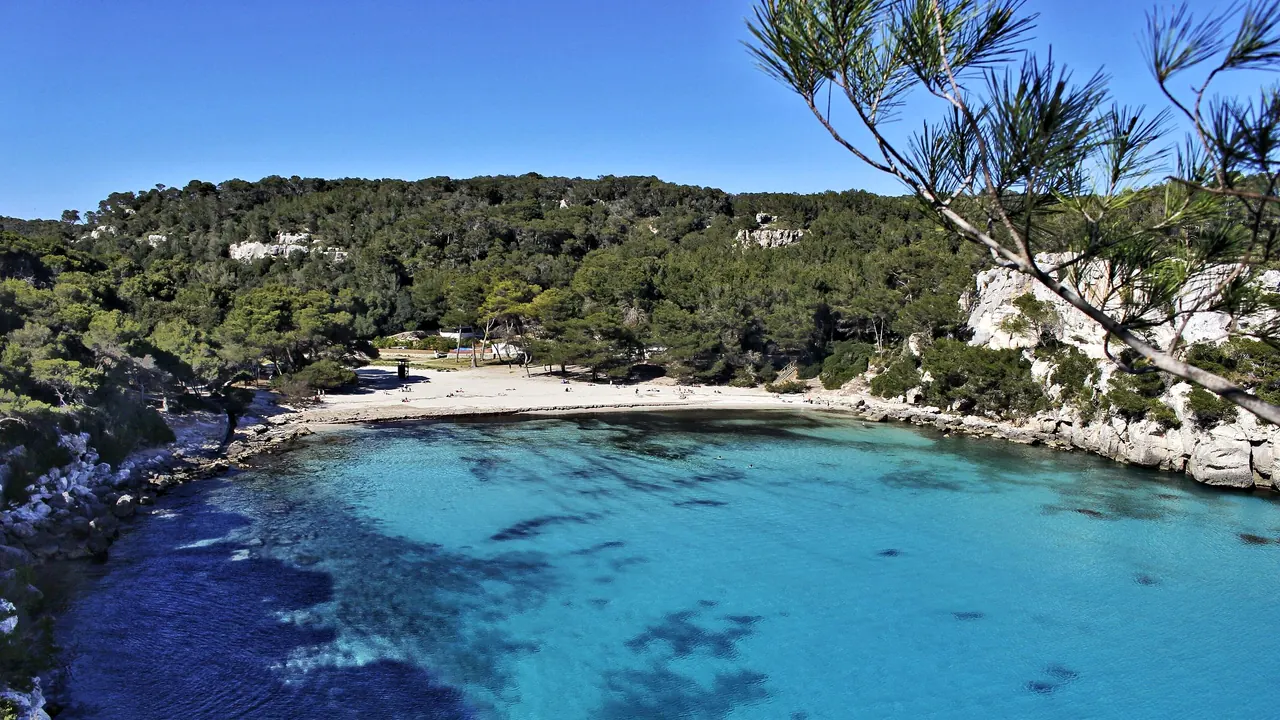
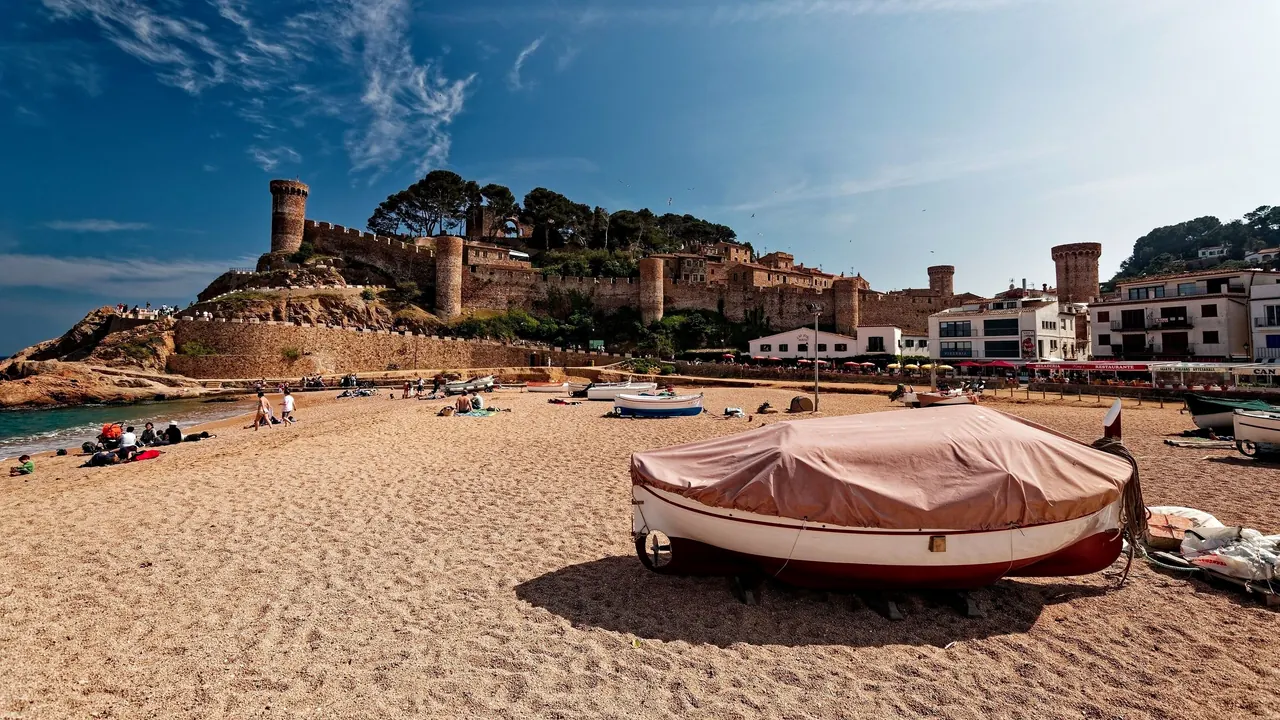
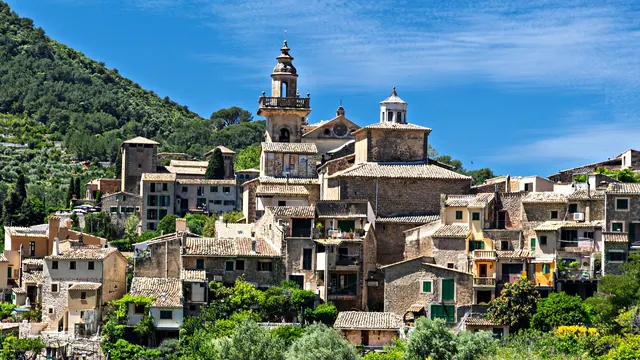
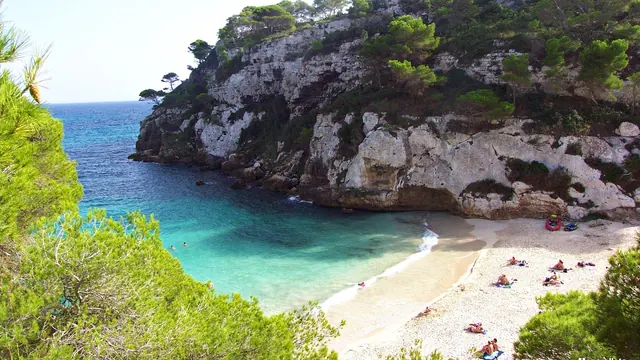
Photos: Balearic Islands by Travelinho, CC BY-SA 3.0, cropped; Costa Brava by Txllxt TxllxT, CC BY-SA 4.0, cropped.
Balearic Islands or Costa Brava?
Our verdict in twelve categories, each scored against the same fixed benchmark cities, and the climate month by month, so you can choose for your trip.
Choose Balearic Islands for
- nightlife
- shopping
- wellness
The Balearic Islands suit a trip where the sea comes first. The coves of Menorca, the pale spit of Formentera and the long beaches of Mallorca are among the finest in the Mediterranean, and Ibiza adds club nights on a scale the mainland cannot match. Shopping for local leather and crafts and quiet farmhouse stays in the Tramuntana round it out. Expect to pay more, and expect to stay on one island rather than tour.
Choose Costa Brava for
- day trips
- food and drink
- prices
Anyone who travels to eat, or who wants their beach days broken up by outings, will do better on the Costa Brava. Empordà cooking is the stronger table, the Dalí sites and Girona sit within easy reach, and Barcelona and the French border towns make realistic day trips. It is also kinder to the budget. In return the water is a little cooler, the beaches are a notch below the islands, and the nights are much quieter.
Scoreboard
Twelve categories on one fixed scale from 0 to 100. The shaded stretch is the gap between the two.
Your match
Pick a travel style or drag the sliders, and both match scores follow your weighting.
Wins on nightlife and shopping with your weighting.
Wins on day trips and food and drink with your weighting.
What matters to you?
Category by category
What the scores mean for a trip.
Beaches & swimming
The islands have the edge, and it shows in the variety: pine-backed coves of white sand on Menorca's south coast, the turquoise shallows either side of Ses Illetes on Formentera, Es Trenc's dunes and the calm northern bays of Mallorca. The water is a touch warmer and noticeably clearer, and summer brings few interruptions from wind.
The Costa Brava's coves are lovely in their own way, green water under red cliffs and pine woods around Begur, Tamariu and Calella de Palafrugell, and the Bay of Roses gives kilometres of open sand. Its sea is fresher early in the summer, though, and the tramontana can spoil the northern beaches for days at a stretch.
Food & drink
The Costa Brava eats better. Empordà cooking pairs seafood with meat and game, the Palamós red prawns and L'Escala anchovies are famous in their own right, and the countryside around Girona has drawn serious food travellers for decades. Grilled fish on a terrace in an old fishing village is the everyday pleasure here.
Island cooking is plainer and heartier, built on sobrasada, tumbet and ensaïmada, with Menorca's lobster stew and Mahón cheese as highlights. Palma is the one place with real depth. On both coasts the package resorts serve forgettable food, so the advice to eat in villages applies equally.
Culture & sights
The Costa Brava pulls slightly ahead, mostly thanks to Dalí: the Theatre-Museum in Figueres, Portlligat and Púbol make a trail no other region can copy, and Girona's old town and Jewish quarter add a whole medieval city. Empúries and Sant Pere de Rodes give it ancient and Romanesque depth as well.
The islands' best sights are concentrated in Palma, where the cathedral of La Seu and Bellver Castle stand out, with Ibiza's walled Dalt Vila and Menorca's Bronze Age talayots further afield. Since crossing between islands is slow, most visitors see only one island's share.
Nightlife
This is the widest gap between the two. Ibiza is a global name for dance music, with superclubs around Playa d'en Bossa and Sant Antoni, sunset bars and parties that run past dawn all season. Mallorca adds Palma's cocktail bars in Santa Catalina and La Lonja as well as the loud strips of Magaluf.
The Costa Brava's late nights are confined to Lloret de Mar, Platja d'Aro and, on a smaller scale, Roses. Elsewhere an evening means a long dinner and a drink in the square, and places like Cadaqués and Calella de Palafrugell are quiet by midnight.
Nature & outdoors
The two are close, but the landscapes differ. Mallorca's Serra de Tramuntana gives real mountains, rising above 1,400m from the sea, with the GR221 trail between villages, the Torrent de Pareis gorge and the hairpins road cyclists come for. Menorca's Camí de Cavalls circles a whole biosphere-reserve island.
The Costa Brava is about cliffs and headlands rather than peaks: the Camí de Ronda between coves, the wind-scoured Cap de Creus and diving at the Medes Islands reserve. Its advantage lies inland, with wetland birdwatching, the Garrotxa volcanoes and the Pyrenees all within a drive.
Day trips
Being on the mainland makes the difference. From the Costa Brava, Barcelona is an easy day out, Collioure and Perpignan lie just over the French border, and Besalú, Vic and Montserrat fill other days. A base near Girona reaches most of them comfortably.
On the islands, outings stay within the island you are on. Mallorca has the best of them, the wooden train to Sóller, Deià's stone villages and walled Alcúdia, while Formentera is a short hop from Ibiza. Beyond that the list runs out sooner.
Good for families
Both are long-established family destinations, but they cater in different ways. Mallorca's northern bays at Alcúdia and Pollença have shallow sand and resort hotels built around kids' clubs, plus the Caves of Drach and Palma's aquarium. Menorca suits those who want calm.
On the Costa Brava, families tend to stay at big campsites behind the Bay of Roses and L'Estartit, with glass-bottom boats to the Medes Islands and cliff-top gardens at Blanes. Either way, keep clear of the party zones of Ibiza, Magaluf or Lloret.
Getting around
In both places you will want a car to reach the coves, and both get jammed near the beaches in high summer. The islands have slightly more public transport, with Palma's city buses, Mallorca's island-wide network and the Sóller line, but changing islands means a ferry or a flight.
The Costa Brava is linked overland to the rest of Spain and France, and high-speed trains stop at Girona and Figueres, though no beach town has a station. Coastal paths connecting the villages let you leave the car parked for whole days.
Shopping & style
The islands give shoppers more to do. Palma's Passeig des Born has international fashion, and the local crafts are distinctive: Inca leather, Menorca's avarca sandals, Manacor pearls, Ibiza's white Adlib cotton and the hippy markets at Las Dalias and Es Canar.
The Costa Brava's best buy is La Bisbal's pottery, and Girona has a reasonable range of shops. Beyond that, most people save serious shopping for a day in Barcelona.
Affordability
The Costa Brava is the cheaper of the two, though neither is a bargain in summer. Lloret de Mar, the campsites around Roses and inland set lunches keep costs down, while Begur and Cadaqués charge upmarket rates.
On the islands, Ibiza and Formentera are among the dearest places in the Mediterranean, and only Mallorca's package bays come close to mainland prices. Both get cheaper in spring and autumn, and on both a hire car adds up.
Live music & performing arts
Neither is a destination for the stage, and both lean on summer festivals. The islands have the steadier year-round base, with Palma's Teatre Principal and the Balearic Symphony's winter season, and in summer there is classical music in the cloisters of Pollença and Chopin's Valldemossa.
The Costa Brava's summer is broader: opera and ballet at Peralada castle, big international acts at Cap Roig, and the havaneres sea songs sung in harbours, best heard on the night of the Calella de Palafrugell Cantada.
Wellness & relaxation
The islands are better for unwinding, thanks to their places to stay: agroturismos among almond groves, spa hotels in the Tramuntana villages and the yoga and retreat culture of northern Ibiza, with slow-paced Menorca and Formentera as a fallback.
The Costa Brava does have one thing the islands lack: proper thermal waters at Caldes de Malavella, with Roman baths and historic spa hotels. Apart from that, it offers hotel spas around S'Agaró and Begur and farmhouse stays in the Baix Empordà.
When should you go?
Pick your month. The climate figures are measured averages, not a forecast.
Balearic Islands in July
Costa Brava in July
Daytime high, °C
Rainfall in the month, mm
Temperature and rainfall are climate normals, averaged over the years shown. Balearic Islands: 1991-2020 normals, Palma De Mallorca / Son San Juan (0.3 km from centre). Costa Brava: 1991-2020 normals, Gerona / Costa Brava (23.2 km from centre).
Summer brings the same heat to both, about 31°C in July and August. That is hot for walking streets or hills at midday, so May, June and September are the comfortable months for sightseeing and hiking on either. On the islands, measured where most visitors stay, summer is drier and sunnier. July is almost rainless and the sea warms sooner, so swimming runs from June into early autumn, and in September the water is still around 25°C. Winters there are also a little milder.
The Costa Brava gets more rain all year, including a fair share in summer, and its sea stays a couple of degrees cooler. It is pleasant for swimming from late June to September. On both, autumn brings the heaviest rain, and both are wettest in October: about 86mm on the Costa Brava and 67mm on the islands. That makes October a gamble for beach days on either. For a late swimming week, September on the islands is the safer choice.
Which traveller are you?
For a beach and sun trip, the Balearic Islands win. Menorca's white-sand coves, Formentera's Ses Illetes and Mallorca's Es Trenc beat most of the mainland, the water is warmer and clearer, and summer is drier and sunnier.
On a culture and arts trip, the Costa Brava is the better base. The Dalí museum in Figueres, his house at Portlligat, medieval Girona and the Greek ruins at Empúries are close together, and Barcelona is an easy day out by train.
For clubbers who travel for dance music, nothing on the Costa Brava compares with Ibiza. Its superclubs, star DJs and season-framing parties run from late spring to early October, while Lloret de Mar offers a cheaper but far more ordinary resort party scene.
Before you go
| Measure | Balearic Islands | Costa Brava |
|---|---|---|
| Official language | Spanish | Spanish |
| Currency | Euro (EUR) | Euro (EUR) |
| Sockets | CF230 V, 50 Hz | CF230 V, 50 Hz |
| Driving side | Right | Right |
| Time zone | UTC+1, UTC+2 in summer | UTC+1, UTC+2 in summer |
| Emergency number | 112 | 112 |
| Main airport | Palma de Mallorca Airport (PMI)201 non-stop destinations | Girona-Costa Brava Airport (GRO)18 non-stop destinations |
| Public holidays this year | 13 days | 14 days |
By the numbers
| Measure | Balearic Islands | Costa Brava |
|---|---|---|
| Population | 1,221,403 | - |
| People per km² | 245 | - |
| Swim season, months above 21 °C | 5 months | 3 months |
Where else could you go?
Every comparison below shares a destination with this one, so you can follow Balearic Islands or Costa Brava somewhere new.
- Menorcavs Costa Brava
- Mallorcavs Costa Brava
- Costa Blancavs Balearic Islands
- Provencevs Costa Brava
- Ibizavs Costa Brava
- Formenteravs Costa Brava