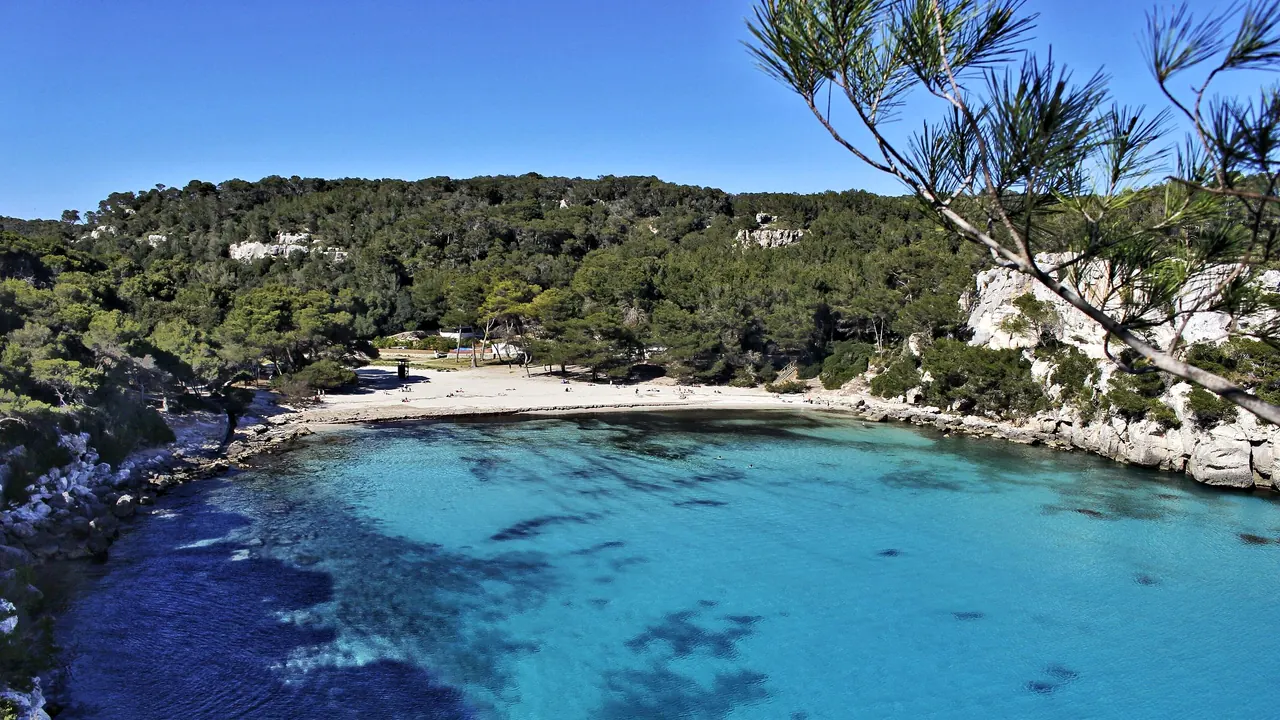
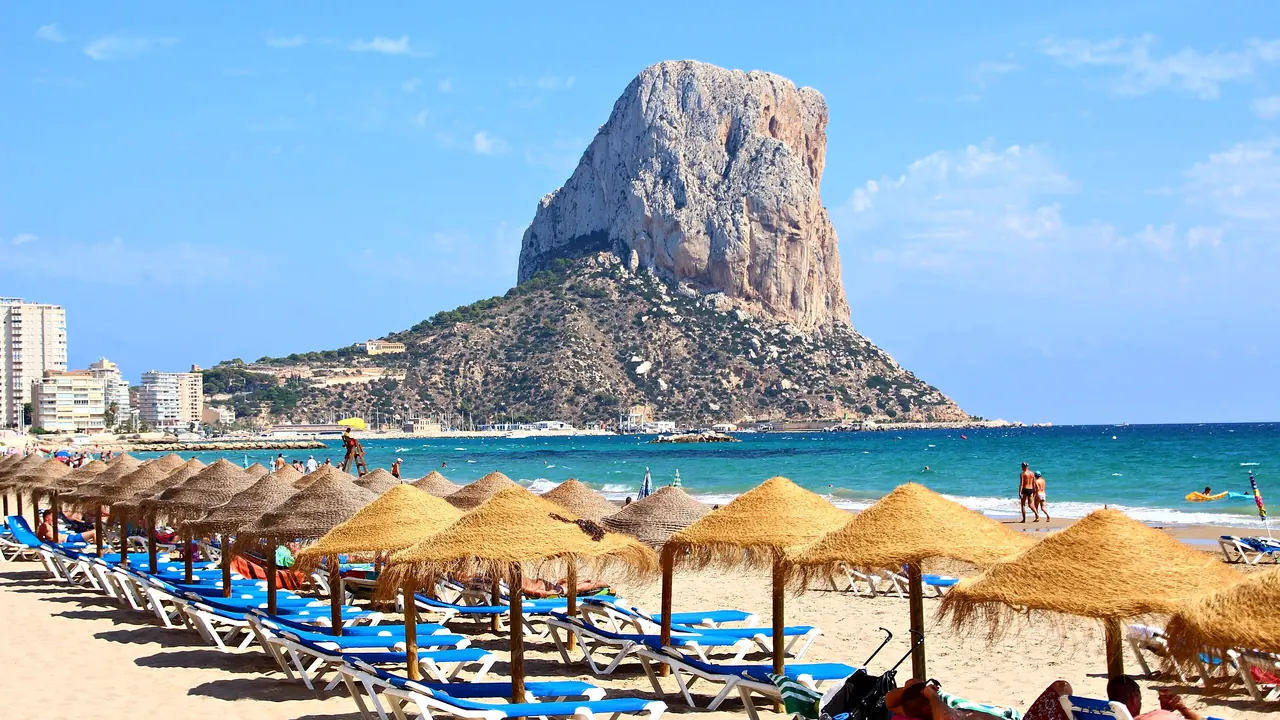
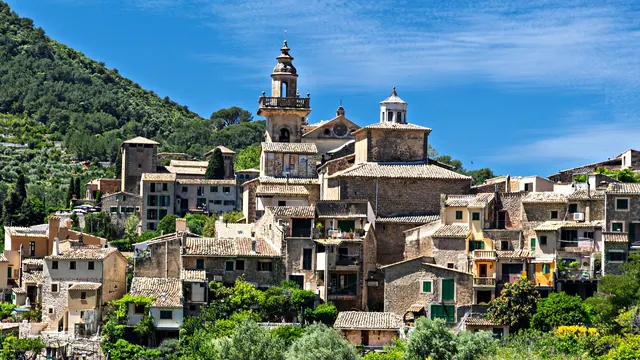
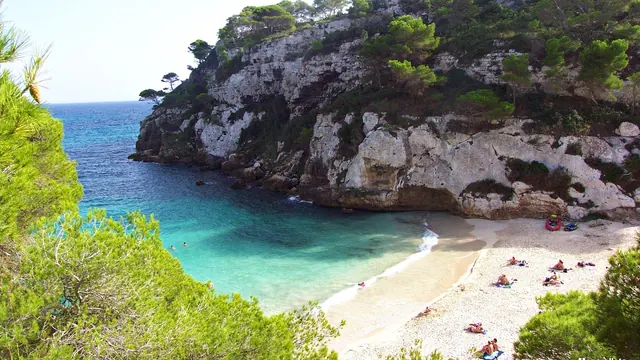
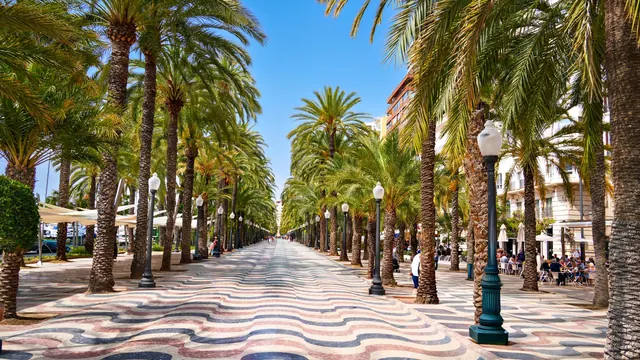
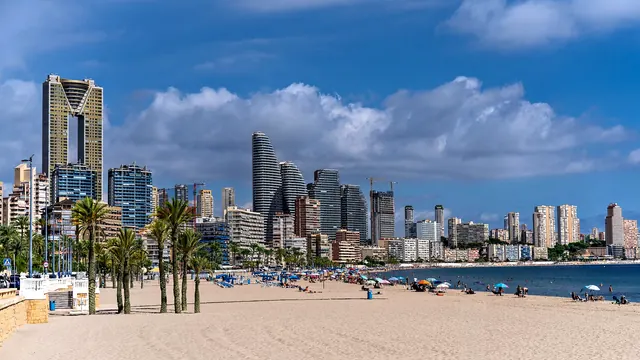
Photos: Balearic Islands by Travelinho, CC BY-SA 3.0, cropped; Costa Blanca by Jorghé Van Hecke, CC BY-SA 4.0, cropped.
Balearic Islands or Costa Blanca?
Our verdict in twelve categories, each scored against the same fixed benchmark cities, and the climate month by month, so you can choose for your trip.
Choose Balearic Islands for
- nightlife
- shopping
- wellness
The Balearic Islands suit a summer built around clear water, with the night there if you want it. Ibiza's dance-music season has no equal anywhere on this stretch of the Mediterranean. Mallorca's mountains give walkers and road cyclists the stronger terrain, and Palma makes a city day worth more, with more to see and to buy. Quiet is easy to find on Menorca, on Formentera or at an inland finca. The cost is money and range: this is the dearer trip, and most people stay on one island.
Choose Costa Blanca for
- prices
- day trips
- getting around
If the budget is tight, or you want a whole coast to explore from one base, the Costa Blanca makes more sense. Its resorts cost less, its rice cooking gives it the edge at the table, and Valencia, Alcoy and Cartagena are all within reach over land. After dark it offers a cheerful resort party of bars and shows rather than a pilgrimage to famous DJs, and Benidorm keeps going all year. That mild, sunny winter also suits a long stay in a way the islands do not.
Scoreboard
Twelve categories on one fixed scale from 0 to 100. The shaded stretch is the gap between the two.
Your match
Pick a travel style or drag the sliders, and both match scores follow your weighting.
Too close to call, 2 points apart
Wins on nightlife and shopping with your weighting.
Wins on prices and day trips with your weighting.
What matters to you?
Category by category
What the scores mean for a trip.
Beaches & swimming
Both have plenty of sand and coves, and the same warm sea. The Balearics lean towards the postcard cove with very clear water: Menorca's pine-backed Macarella and Turqueta, the pale spit of Ses Illetes on Formentera and Mallorca's Es Trenc dunes. Many of these are reached on foot or by boat.
The Costa Blanca's strength is length and ease of access. Benidorm's Levante and Poniente, and the long strands at San Juan and Guardamar, slope gently into the sea straight off the promenade. The coves near Jávea and the pebbles at Altea are its rockier, clearer side.
Food & drink
The Costa Blanca eats a little better, and its cooking has a clearer focus. Rice is the thing, from arroz a banda to Elche's egg-crusted arroz con costra, with Dénia's red prawns and Xixona's turrón besides. Its weak spot is the full-breakfast menus of Benidorm and Torrevieja.
The islands' cooking is more rustic and more scattered: sobrasada, tumbet, morning ensaïmadas and Menorca's lobster stew. In Palma it comes together best, in the Mercat de l'Olivar and the tapas bars of Santa Catalina.
Culture & sights
The islands have more to see, and in Palma they have a real centre for it. The sea-wall cathedral of La Seu, the Almudaina, Bellver Castle and the Miró foundation are all there. Ibiza's walled Dalt Vila and Menorca's Bronze Age taulas and navetas add history that the mainland cannot match.
On the Costa Blanca, heritage comes in smaller pieces: Alicante's castle and the MARQ, Elche's UNESCO-listed palm grove and the hilltop villages of Altea and Guadalest. Its festivals, the Hogueras and the Moors and Christians parades, are where its traditions show most strongly.
Nightlife
Ibiza puts the islands in a different league. It has superclubs with headline DJs, opening and closing parties, sunsets on Sant Antoni's western shore and nights that end well after sunrise. Palma adds cocktail bars in Santa Catalina and La Lonja, and Magaluf offers the package-crowd version.
Benidorm is the Costa Blanca's answer, a cheerful and unpretentious one, with British and Dutch bars, drag shows and karaoke around the Rincón de Loix. Alicante's El Barrio offers a more Spanish evening on its terraces. Unlike Ibiza, Benidorm keeps going through the winter.
Nature & outdoors
Both have limestone mountains falling into the sea, but Mallorca's Serra de Tramuntana is the grander landscape. It has the GR221 path between stone villages, the Torrent de Pareis gorge and the Sa Calobra hairpins that draw road cyclists. Menorca's Camí de Cavalls and the protected waters of Cabrera add coastal walking and snorkelling.
The Costa Blanca still offers proper hiking on Puig Campana, Bernia and the Aitana range, and the crags around Sella are known to climbers across Europe. The flamingos on the salt lakes of Torrevieja and Santa Pola are its unusual extra.
Day trips
On the islands, outings mostly stay on the island you are on. Mallorca's are lovely: the wooden train to Sóller, Valldemossa and Deià, and walled Alcúdia. Formentera is a short ferry from Ibiza, but the crossings between the larger islands rarely suit a day out.
The mainland coast reaches further. Valencia makes a full day from the northern towns, or by direct train from Alicante. Xàtiva, Alcoy, Villena, Murcia and Cartagena's Roman theatre are all within an hour or two, and boats cross to walled Tabarca.
Good for families
Both are built for families, with gently sloping sand and pool hotels, and the difference is in style. Mallorca's northern bays at Alcúdia and Pollença, and quieter Menorca, suit a calmer stay, with the Caves of Drach as the classic outing. Around Benidorm the attractions are close together, with a theme park, water parks and animal and marine parks a short ride away, plus the cool pools of the Fonts de l'Algar.
Getting around
On the islands, a hire car is close to essential once you leave Palma. The Tramuntana roads are slow, and buses on the smaller islands run mainly in summer. Changing island means a ferry or a flight.
The Costa Blanca is easier, one continuous coast with the airport at Alicante and every main resort within an hour. The TRAM runs north through Benidorm and Altea towards Dénia, and the larger towns are walkable, though a car still helps for coves and mountain villages.
Shopping & style
The islands have more worth buying. Palma's Passeig des Born covers fashion, but the crafts are the real interest: Inca leather, Menorcan avarcas, Manacor pearls, Ibiza's white cotton fashion and the hippy markets of Las Dalias and Es Canar.
Shopping on the Costa Blanca is more practical. Alicante's high streets and Elche's shoe outlets cover the basics, and turrón, local wine and palm crafts are the things to take home.
Affordability
Overall the Costa Blanca is the cheaper of the two, and its affordable end is much larger. On the islands, summer is expensive by Spanish standards almost everywhere, and even low-key Menorca charges a good deal for its small hotels and villas. Mallorca leaves the most room to manoeuvre, with package resorts and apartments in the big bays and fair set lunches in the inland villages. Ferries between islands add to the bill.
On the Costa Blanca, your money goes furthest in the package hotels around Benidorm and in the southern resorts, and Alicante is moderately priced for a Spanish city, so a city base there stays affordable. The dear end is the north, where Jávea, Moraira and Altea draw villa owners and wealthier visitors. On both coasts, spring and autumn bring good beach weather at noticeably lower rates than July and August.
Live music & performing arts
Neither is a destination for the stage, and their offers differ in kind. The islands' strength is classical music in summer settings, in Pollença's cloister and in Valldemossa, where Chopin wintered, with Palma's Teatre Principal and the Balearic Symphony Orchestra through the winter season.
The Costa Blanca's highlight is the Misteri d'Elx, a sung medieval play performed in Elche's basilica each August. Alongside it are Alicante's ADDA concerts and Benidorm's cabaret and tribute shows.
Wellness & relaxation
Neither has a bathing tradition, but the islands make real quiet easier to find. Mallorca's stone agroturismos, the spa hotels of Deià and Valldemossa, and the slow pace of Menorca and Formentera give the calm, best enjoyed in May, June or September.
The Costa Blanca relies on hotel spas, a few Arab-style baths in Alicante and the health retreats in the hills around Altea. Its calm northern coast comes into its own outside summer, when long-stay visitors settle in for the mild winter.
When should you go?
Pick your month. The climate figures are measured averages, not a forecast.
Balearic Islands in July
Costa Blanca in July
Daytime high, °C
Rainfall in the month, mm
Where the figures come from
Costa Blanca's temperatures are measured 57 km from the centre, at Alicante.
Costa Blanca has no rain gauge within 25 km of the centre, so its rainfall comes from a gridded climate dataset read at the destination rather than from a gauge further away.
Temperature and rainfall are climate normals, averaged over the years shown. Balearic Islands: 1991-2020 normals, Palma De Mallorca / Son San Juan (0.3 km from centre). Costa Blanca: 1991-2020 normals, Alicante (56.6 km from centre).
Both coasts share the same sea. It is warm enough to swim from June to October and reaches about 26°C in August. Daytime heat also follows the same curve: July and August reach around 31°C, which is too hot for long walks through Palma or Alicante at midday. May, June and September are the best months on both, warm on the beach and comfortable in the streets.
The two part ways in autumn and winter. In the islands' figures the autumn is clearly wetter, with October the rainiest month at 67mm. The Costa Blanca stays drier and gets more sunshine from October through March, with January highs around 17°C, a mild, bright winter that suits long stays on its northern coast. On the islands, the cooler months are better for hill walking and cycling than for the beach.
Which traveller are you?
On a trip on a tight budget, the Costa Blanca is the easier choice. Benidorm and Torrevieja have a huge stock of apartments, cheap set lunches and inexpensive drinks. The islands, above all Ibiza and Formentera, are among the costliest summer stays in the Mediterranean.
For a relaxing and wellness trip, the Balearic Islands offer more. You can choose agroturismos among almond trees, Tramuntana village hotels with spas, the yoga retreats of northern Ibiza or slow Menorca. The Costa Blanca relies mostly on hotel spas, and Benidorm is anything but quiet.
For clubbers who travel for dance music, Ibiza settles it. From late spring to early October its superclubs around Playa d'en Bossa and Sant Antoni book famous DJs. Benidorm runs late too, but with karaoke, cabaret and bars rather than headline sets.
Before you go
| Measure | Balearic Islands | Costa Blanca |
|---|---|---|
| Official language | Spanish | Spanish |
| Currency | Euro (EUR) | Euro (EUR) |
| Sockets | CF230 V, 50 Hz | CF230 V, 50 Hz |
| Driving side | Right | Right |
| Time zone | UTC+1, UTC+2 in summer | UTC+1, UTC+2 in summer |
| Emergency number | 112 | 112 |
| Main airport | Palma de Mallorca Airport (PMI)201 non-stop destinations | Alicante-Elche Miguel Hernández Airport (ALC)126 non-stop destinations |
| Public holidays this year | 13 days | 13 days |
By the numbers
| Measure | Balearic Islands | Costa Blanca |
|---|---|---|
| Population | 1,221,403 | - |
| People per km² | 245 | - |
| Swim season, months above 21 °C | 5 months | 5 months |
Where else could you go?
Every comparison below shares a destination with this one, so you can follow Balearic Islands or Costa Blanca somewhere new.
- Formenteravs Costa Blanca
- Ibizavs Costa Blanca
- Costa Bravavs Balearic Islands
- Mallorcavs Costa Blanca
- Menorcavs Costa Blanca
- Costa Bravavs Costa Blanca