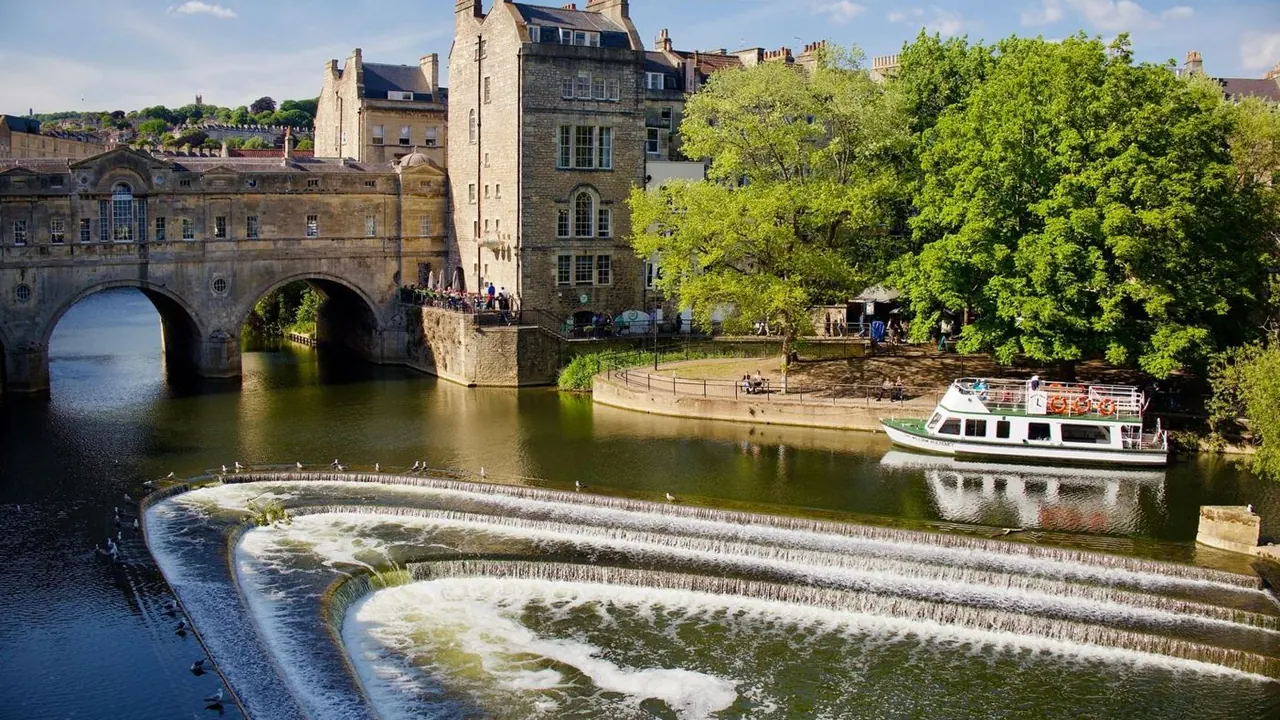
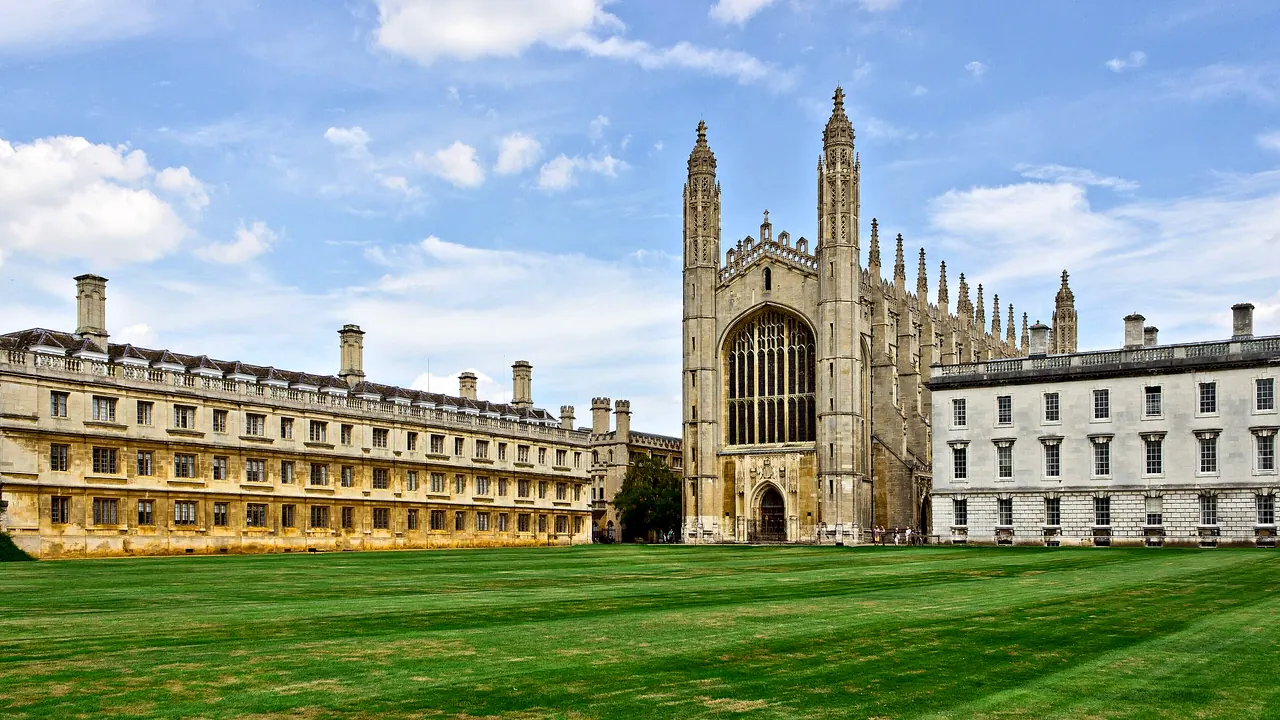
Photos: Bath by Lucas Carlini, Pexels License; Cambridge by Dmitry Tonkonog, CC BY-SA 3.0, cropped.
Bath or Cambridge?
Our verdict in twelve categories, each scored against the same fixed benchmark cities, and the climate month by month, so you can choose for your trip.
Choose Bath for
- wellness
- nature and the outdoors
- shopping
Bath suits the traveller who wants a slower, gentler stay. Its hot springs give it a real spa culture that Cambridge has nothing to match, the green hills start at the edge of the streets, and its independent shops and Georgian crescents make for unhurried days. Choose it for a restorative weekend, a walking break with a soak at the end, or a base for Stonehenge, Wells and the southern Cotswolds.
Choose Cambridge for
- live music and the arts
- nightlife
- families
Cambridge is the better pick for anyone drawn by the university itself: the college courts and chapels, free museums and, above all, choral evensong sung by world-famous choirs. It is flat, which makes it easier for families and cyclists, its evenings are a little livelier, and London is close enough for a day trip. Choose it if music and learning interest you more than spas and hills.
Scoreboard
Twelve categories on one fixed scale from 0 to 100. The shaded stretch is the gap between the two.
Your match
Pick a travel style or drag the sliders, and both match scores follow your weighting.
Wins on wellness and nature and the outdoors with your weighting.
Wins on live music and the arts and nightlife with your weighting.
What matters to you?
Category by category
What the scores mean for a trip.
Beaches & swimming
Neither city is a place for a beach vacation, and the swimming in both is freshwater. Bath's locals use the Avon at a weir east of the city, and the nearest sea is the brown, tidal Bristol Channel at Weston-super-Mare, about an hour away.
Cambridge has a proper outdoor pool in Jesus Green Lido as well as river swimming at Grantchester Meadows, but its coast in Suffolk and Norfolk is further off. For clear water, Bath is better placed for a long day out to Dorset or Devon.
Food & drink
The two eat about as well as each other, but in different ways. Bath has a stronger local identity: West Country cheese, Somerset cider, its own Bath bun, Bath Oliver and Sally Lunn bun, and a farmers' market in the old Green Park station.
Cambridge has more range instead. The daily market on Market Hill has street-food stalls, and Mill Road brings Asian and Mediterranean cooking that Bath largely lacks. In both, the old pub and the afternoon tea room do much of the work.
Culture & sights
Both are among England's finest historic cities, and two or three days covers either. Bath's appeal is a whole townscape: the Royal Crescent, the Circus and Pulteney Bridge in honey-coloured stone, with the Roman Baths and the Abbey at its heart and smaller museums such as the Holburne filling out a stay.
Cambridge is built around its colleges, from King's College Chapel to Trinity's Great Court and the Wren Library, and its university museums are stronger, led by the grand Fitzwilliam. Choose Bath for Roman and Georgian history, Cambridge for medieval chapels and serious collections.
Nightlife
Evenings in both revolve around the pub, and neither has a big club scene. Bath's coaching inns and real-ale houses on Walcot Street quieten early, especially midweek, with Bristol fifteen minutes away for a bigger night.
Cambridge has a little more going on, with livelier bars around Regent Street and Mill Road and riverside pub gardens that fill on summer evenings, though its student clubs go quiet outside term.
Nature & outdoors
Bath has much more to offer outdoors. It sits in a bowl of steep green hills, so the Skyline loop, the Kennet and Avon towpath and the Two Tunnels Greenway start from town, with the Cotswolds to the north and the Mendips and Cheddar Gorge within an hour.
Cambridge's landscape is flat fen edge with wide skies. Punting through the Backs, the meadow walk to Grantchester and the birdlife and wild ponies at Wicken Fen are pleasant, but there are no hills and nothing dramatic within reach.
Day trips
Both make excellent bases, with quite different country around them. From Bath you reach prehistoric England at Stonehenge and Avebury, the cathedral city of Wells, Glastonbury, Lacock and the southern Cotswold villages, with Bristol fifteen minutes away by train.
Cambridge's big advantage is London, under an hour by train, and Ely's cathedral is only fifteen minutes away. Beyond that come the Suffolk wool towns of Lavenham and Long Melford, Norwich and Newmarket. Many of Bath's villages need a car or a tour.
Good for families
Cambridge is the slightly easier city with children. It is flat and green, its zoology and Sedgwick museums are free and full of skeletons and dinosaurs, and Duxford's airfield of historic aircraft is the best family day out in either place.
Bath's Roman Baths, with rising steam and costumed characters, are a real hit, and Royal Victoria Park has a good playground. But the steep streets are hard with a pushchair, and for more, families tend to head to Bristol or Longleat.
Getting around
Both centres are compact, largely pedestrian and best on foot, and in both a car is more trouble than it is worth. Bath's station is right at the bottom of town, but its streets climb steeply, so buses help with the outer viewpoints.
Cambridge is flat, and the bicycle is the natural way to reach Grantchester or the further colleges, though its station is a longer walk from the centre.
Shopping & style
Bath is the better shopping city, and many visitors give it a full day. Milsom Street has fashion and British brands in Georgian buildings, the lanes around the Abbey hold independent jewellers and homeware shops, and Walcot Street and Bartlett Street add makers, salvage and antiques, with little shops on Pulteney Bridge too.
Cambridge is smaller in scale. Its strength is books, from academic booksellers to second-hand dealers, plus vintage on Mill Road, and shopping there fits around sightseeing.
Affordability
Both are expensive, with dear central hotels in steady demand, and neither has a clear edge. Bath's costs go up with the Roman Baths and the spa, and sleeping in Bristol and taking the train over saves the most.
Cambridge has more that costs nothing: the Fitzwilliam and most university museums are free, as is evensong in the college chapels, though the famous colleges charge for entry.
Live music & performing arts
Cambridge has the more distinctive live programme, chiefly through its choirs. Hearing King's, St John's or Trinity sing evensong in a candlelit chapel is a reason to visit on its own, and the Footlights tradition, the ADC's student theatre and the summer Folk Festival add more.
Bath's stage life centres on the gilded Georgian Theatre Royal, with touring plays, opera and dance, plus festivals of literature and Mozart. On an ordinary night, though, there is less live music to choose from.
Wellness & relaxation
This is where the two cities differ most. Bath was built on its hot springs, and you can still bathe in natural thermal water at Thermae Bath Spa's rooftop pool above the Abbey or in the small Cross Bath, then take tea in the Pump Room.
Cambridge has no bathing culture of its own, just hotel spas and the lido. Its rest is quieter and more outdoorsy, a punt on the river or tea in the orchard at Grantchester, and the centre gets crowded in summer.
When should you go?
Pick your month. The climate figures are measured averages, not a forecast.
Bath in July
Cambridge in July
Daytime high, °C
Rainfall in the month, mm
Where the figures come from
Bath's temperatures are measured 29 km from the centre, at Lyneham.
Bath has no rain gauge within 25 km of the centre, so its rainfall comes from a gridded climate dataset read at the city rather than from a gauge further away.
Cambridge's temperatures are measured 59 km from the centre, at Wattisham.
Cambridge has no rain gauge within 25 km of the centre, so its rainfall comes from a gridded climate dataset read at the city rather than from a gauge further away.
Temperature and rainfall are climate normals, averaged over the years shown. Bath: 1991-2020 normals, Lyneham (29.2 km from centre). Cambridge: 1991-2020 normals, Wattisham (58.5 km from centre).
The two cities have almost the same temperatures through the year. July and August reach about 21°C to 22°C, which is comfortable for walking the streets all day and never too hot. December and January sit around 7°C, so you will want a good coat in either. Neither gets warm enough for a beach summer. Even in August the sea within reach of Bath is too cool for most people to do more than paddle.
The real difference is rain. Bath lies in a western valley and is wetter in every month, with close to 90mm a month from October to December. Cambridge is on the drier eastern side of England and peaks at about 60mm in October, roughly two-thirds of Bath's autumn rain. Late spring to early autumn suits both cities best, with the longest and sunniest days from May to August. That is also when Bath's hills and towpaths are dry underfoot, before the autumn rain turns them muddy. Cambridge is the safer bet for a dry winter visit, though a cold, grey evening is exactly when Bath's rooftop thermal pool feels best.
Which traveller are you?
On a relaxing and wellness trip, Bath is the clear choice. Bathing in natural hot spring water, at the rooftop pool or in the small Georgian Cross Bath, is something Cambridge simply cannot offer, and the Pump Room and gardens suit a slow pace.
For an outdoors trip, Bath again comes out ahead. You can walk straight out onto the Skyline loop, follow the canal towpath through the Limpley Stoke valley, or head for the Cotswolds and Cheddar Gorge, while Cambridge has flat fen country and gentle meadow walks.
On a family trip with children, Cambridge is the easier city. Its flat streets suit pushchairs and small legs, the zoology and dinosaur museums are free, punting delights most ages, and the historic aircraft at Duxford are just south of town. Bath's steep hills make pushchairs hard work.
Before you go
| Measure | Bath | Cambridge |
|---|---|---|
| Official language | English | English |
| Currency | Pound Sterling (GBP) | Pound Sterling (GBP) |
| Sockets | G230 V, 50 Hz | G230 V, 50 Hz |
| Driving side | Left | Left |
| Time zone | UTC, UTC+1 in summer | UTC, UTC+1 in summer |
| Emergency number | 112 or 999 | 112 or 999 |
| Elevation | 132 m | 6 m |
| Main airport | Bristol Airport (BRS)25 km from centre117 non-stop destinations | London Stansted Airport (STN)37 km from centre197 non-stop destinations |
| Public holidays this year | 8 days | 8 days |
By the numbers
| Measure | Bath | Cambridge |
|---|---|---|
| City population | 94,092 | 123,867 |
| People per km² | 3,245 | 3,043 |
| Museums within 10 km | 17 | 17 |
| UNESCO World Heritage sites within 50 km | 3 | 0 |
| Swim season, months above 21 °C | None | - |
Where else could you go?
Every comparison below shares a destination with this one, so you can follow Bath or Cambridge somewhere new.