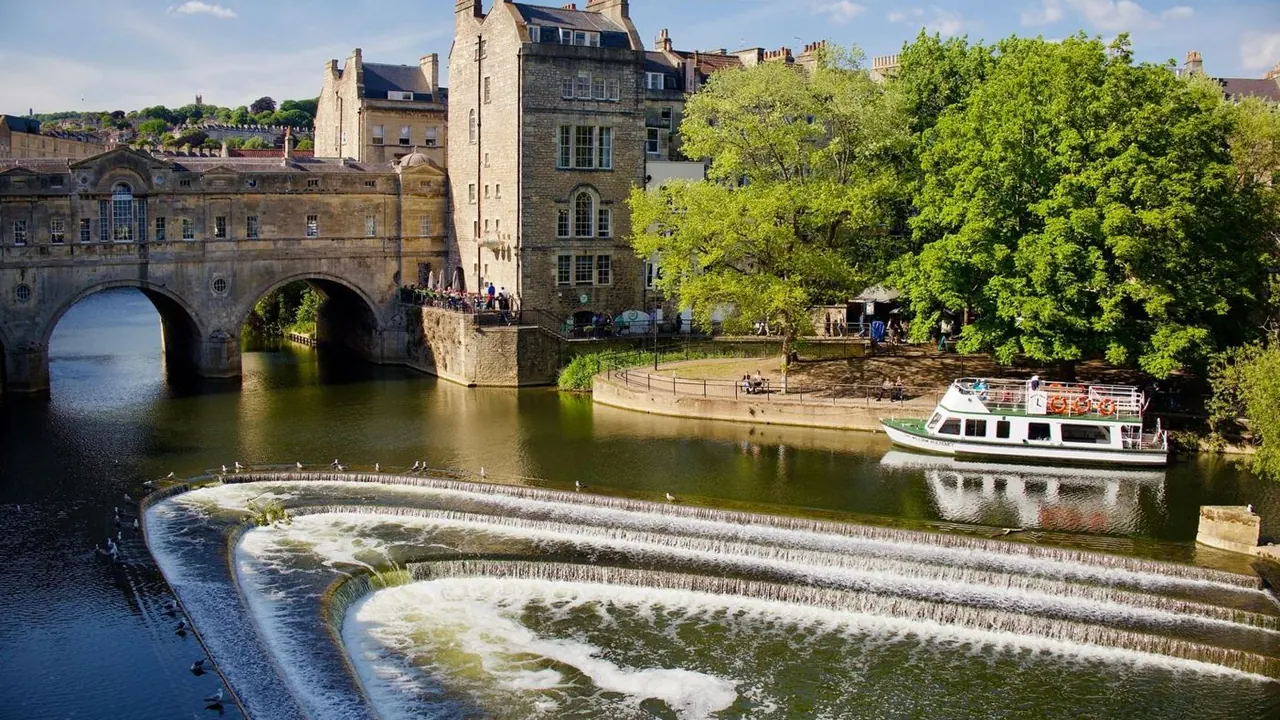
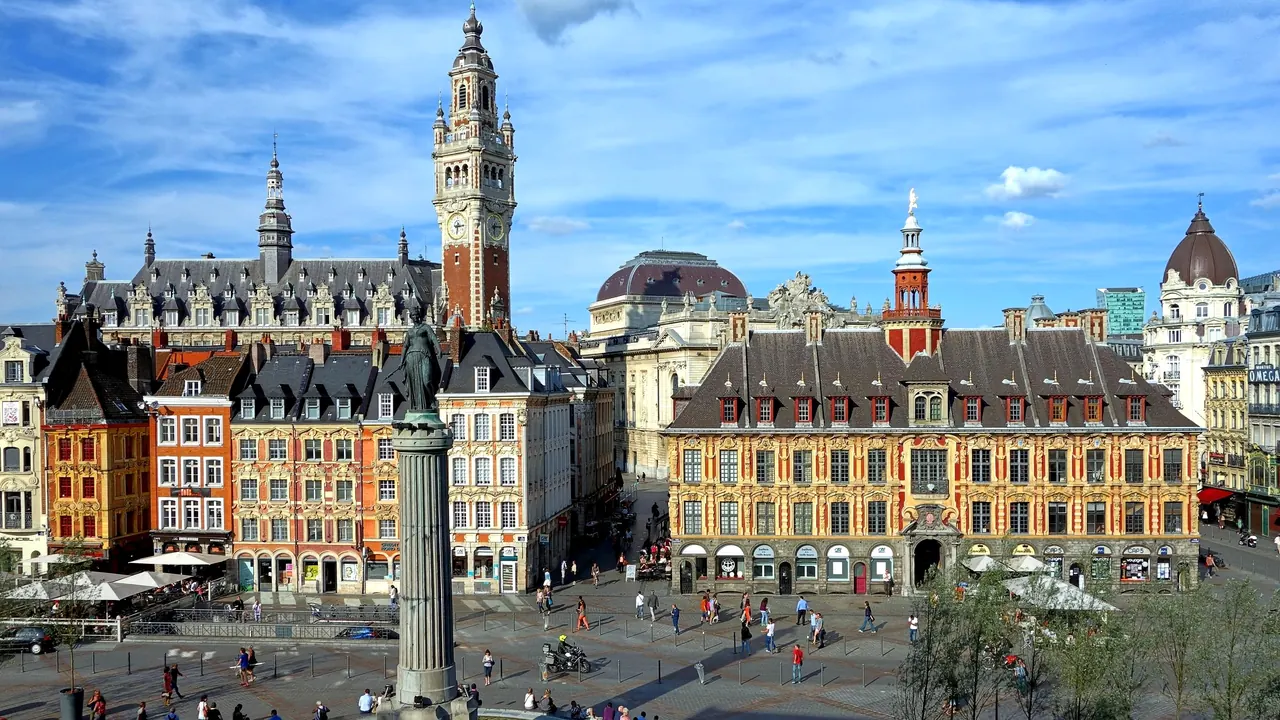
Photos: Bath by Lucas Carlini, Pexels License; Lille by Velvet, CC BY-SA 3.0, cropped.
Bath or Lille?
Our verdict in twelve categories, each scored against the same fixed benchmark cities, and the climate month by month, so you can choose for your trip.
Choose Bath for
- wellness
- nature and the outdoors
- culture and sights
Bath suits a slower, restorative trip: soaking in natural hot spring water, wandering Georgian crescents and walking up onto the green hills or along the canal towpath. It works best for travellers who want everything within an easy stroll, don't mind paying more for a room and are happy with early evenings. Stonehenge, Wells and the Cotswolds make good days out.
Choose Lille for
- nightlife
- prices
- food and drink
Pick Lille if you want more on the plate and more going on after dark, and you'd rather pay less. Flemish taverns, beer bars and a large student crowd keep the evenings going. The Palais des Beaux-Arts is as good as anything in Bath for an afternoon, and with two stations beside the old town, Brussels, Bruges and Paris are easy days out. It makes a better base for hopping between cities than for countryside or rest.
Scoreboard
Twelve categories on one fixed scale from 0 to 100. The shaded stretch is the gap between the two.
Your match
Pick a travel style or drag the sliders, and both match scores follow your weighting.
Too close to call, 2 points apart
Wins on wellness and nature and the outdoors with your weighting.
Wins on nightlife and prices with your weighting.
What matters to you?
Category by category
What the scores mean for a trip.
Beaches & swimming
Neither city is a beach destination, and from both you travel about an hour to reach a cold, tidal sea. Lille's option is slightly better: a train to the wide sands of Malo-les-Bains at Dunkirk, with longer dune beaches on the Opal Coast further on.
Bath's nearest shore, Weston-super-Mare, has murky water and a tide that goes out a very long way, so locals swim in the Avon instead. For clear water you need the Dorset or Devon coast, two hours or more each way.
Food & drink
Lille's food has more character. Its Flemish estaminets serve beer-braised carbonnade, potjevleesch and the welsh, Maroilles cheese turns up in everything, and specialist beer bars make drinking part of the meal. Wazemmes market adds a multi-ethnic Sunday morning.
Bath does the English version well, with gastropubs, West Country cheese and cider, afternoon tea in Georgian tearooms and its own buns and biscuits. The range is narrower, though: there is little street food, and kitchens wind down early.
Culture & sights
Both reward two or three days, but in different ways. In Bath the city itself is the sight. The whole townscape is Georgian, in honey-coloured stone, with the Royal Crescent, the Circus and Pulteney Bridge a few minutes apart and the Roman Baths steaming below them.
Lille's strength is one great collection: the Palais des Beaux-Arts, with its Flemish masters, Goya and relief maps, in a Flemish baroque old town around the Vieille Bourse. Its other highlights are more spread out, from Vauban's citadel to La Piscine in Roubaix, which you reach by metro or tram.
Nightlife
Lille is the much better night out. A large student population fills the bars of Rue Masséna and Rue Solférino, Vieux-Lille adds beer cafés and cocktail bars in brick cellars, and Belgium is close for clubbing late.
Bath's evenings centre on old coaching inns and real-ale pubs, with a few late bars in term time. On weeknights the streets empty after dinner, and anyone who wants more takes the short train to Bristol.
Nature & outdoors
Bath has much more to offer outdoors. Steep green hills ring the city, so the Skyline loop, the Kennet and Avon towpath and the Two Tunnels Greenway start almost at the door, and the southern Cotswolds and the Mendips are close by.
Around Lille the land is flat and farmed. The Citadel park and the Deûle towpaths are pleasant for easy cycling, and the Monts de Flandre give short walks, but for real scenery you need a long day out to the cliffs of the Opal Coast.
Day trips
Both are excellent bases, but Lille's rail links give it the edge. Brussels is about half an hour away and Ghent, Bruges and Paris roughly an hour. Amiens, Arras and the First World War battlefields are close too, so you can spend days in different countries without a car.
Bath's day trips are rich as well, from Stonehenge and Avebury to Wells, Glastonbury, Lacock and the Cotswolds, and Bristol is a quarter of an hour away by train. The difference is that many of Bath's best are villages and country sights that need a car or a tour.
Good for families
Neither city is built around children, and both work best for a few days with outings further afield. The big hit in Bath is the Roman Baths, and Royal Victoria Park has a playground below the Royal Crescent. The steep streets are hard on pushchairs, and the larger attractions are in Bristol or at Longleat.
Lille is flat, and the Citadel park, with its small zoo, playgrounds and paths for scooters, easily fills a morning. A hands-on science centre is a metro ride away, and the main family day out is the large zoo park over the Belgian border, though the cobbles of the old town slow a pushchair down.
Getting around
Both centres are easy to walk, and in either a car is more trouble than help. Lille is a touch easier: the centre is flat, both main stations stand beside the old town, and the automated VAL metro and the tram reach the outlying museums.
Bath is compact too, about twenty minutes from end to end, but its hills are steep and it is buses that climb to the viewpoints and the university.
Shopping & style
For shopping the two are about equal, with a different flavour in each. Bath's appeal is its independent shops: bookshops and jewellers in the lanes around the Abbey, antiques on Bartlett Street, furniture makers and salvage dealers on Walcot Street, and the centuries-old Guildhall Market.
Lille feels more like a big city, with chains on Rue Neuve, a large mall by the stations and independent fashion and delicatessens in Vieux-Lille. Its trump card is the Braderie each September, when the whole city turns into a vast flea market.
Affordability
Lille is easier on the wallet. Hotels are reasonable for most of the year, estaminet meals and beer are fairly priced, and the metro and the main museums cost little.
Bath is an expensive place to stay, especially on summer weekends and at Christmas, and entry to the Roman Baths and the spa adds up. Walking everywhere and eating pub lunches help, and staying midweek or sleeping in Bristol saves the most.
Live music & performing arts
Lille has the fuller programme. The Opéra de Lille, the symphonic season of the Orchestre National de Lille and the Théâtre du Nord give it resident companies that Bath lacks. Roubaix and Tourcoing add contemporary dance, and the Zénith and the Aéronef bring in touring bands.
Bath's stage life centres on the gilded Georgian Theatre Royal, with touring drama, opera, dance and pantomime. There are also concerts in the Abbey and the Assembly Rooms, and long-running literature and music festivals, but on an ordinary night the choice is small.
Wellness & relaxation
This is where the two differ most. Bath grew up around its hot springs, and you can bathe in them in an open-air rooftop pool looking over the Abbey, best after dark in winter, or in the small Georgian Cross Bath. Tea in the Pump Room and the riverside gardens set an unhurried pace.
Lille has no bathing tradition of its own, so relaxing there means hotel spas and long afternoons on café terraces. The nearest thermal bath is a train ride away at Saint-Amand-les-Eaux.
When should you go?
Pick your month. The climate figures are measured averages, not a forecast.
Bath in July
Lille in July
Daytime high, °C
Rainfall in the month, mm
Where the figures come from
Bath's temperatures are measured 29 km from the centre, at Lyneham.
Bath has no rain gauge within 25 km of the centre, so its rainfall comes from a gridded climate dataset read at the city rather than from a gauge further away.
Temperature and rainfall are climate normals, averaged over the years shown. Bath: 1991-2020 normals, Lyneham (29.2 km from centre). Lille: 1991-2020 normals, Lille (7.8 km from centre).
Both cities have a cool, changeable north-western climate, and the best months for walking the streets run from May to September. Lille is a few degrees warmer in high summer, reaching about 24°C in July and August against Bath's 21°C, and it is the drier of the two for most of the year. In Bath the rain builds through autumn to around 90mm in December, which makes October to December its dampest, greyest months. Lille's late-autumn rain is lighter. Winters are equally cold in both, around 7°C by day, so that season suits museums, the theatre and, in Bath, a steaming outdoor pool better than long walks.
Neither city is warm enough for a beach trip. The sea within reach of Bath gets to only about 18°C in late summer, which means a bracing dip rather than a swim you stay in. Sunshine follows the same pattern in both cities, with long bright days from May to August and short, gloomy ones in midwinter.
Which traveller are you?
On a relaxing and wellness trip, Bath is the clear choice. It is the one place in Britain where you can bathe in natural thermal water, and the town is made for slow strolling and tea. Lille offers little beyond hotel spas and café terraces.
For a food and nightlife trip, Lille gives you far more. There are estaminets serving carbonnade and Maroilles tarts, Belgian ales and a big student crowd that keeps the bars full. Bath centres on pubs and tearooms and goes quiet soon after dinner.
On an outdoors trip, Bath wins easily. You can walk straight out of town onto the Skyline ridges, follow the canal through the Limpley Stoke valley or reach Cheddar Gorge within an hour. Flat French Flanders offers mostly canal cycling.
Before you go
| Measure | Bath | Lille |
|---|---|---|
| Official language | English | French |
| Currency | Pound Sterling (GBP) | Euro (EUR) |
| Sockets | G230 V, 50 Hz | CE230 V, 50 Hz |
| Driving side | Left | Right |
| Time zone | UTC, UTC+1 in summer | UTC+1, UTC+2 in summer |
| Emergency number | 112 or 999 | 112 |
| Elevation | 132 m | 17 m |
| Main airport | Bristol Airport (BRS)25 km from centre117 non-stop destinations | Lille Airport (LIL)8 km from centre61 non-stop destinations |
| Public holidays this year | 8 days | 11 days |
By the numbers
| Measure | Bath | Lille |
|---|---|---|
| City population | 94,092 | 238,246 |
| People per km² | 3,245 | 6,846 |
| Museums within 10 km | 17 | 23 |
| UNESCO World Heritage sites within 50 km | 3 | 6 |
| Swim season, months above 21 °C | None | - |
Where else could you go?
Every comparison below shares a destination with this one, so you can follow Bath or Lille somewhere new.