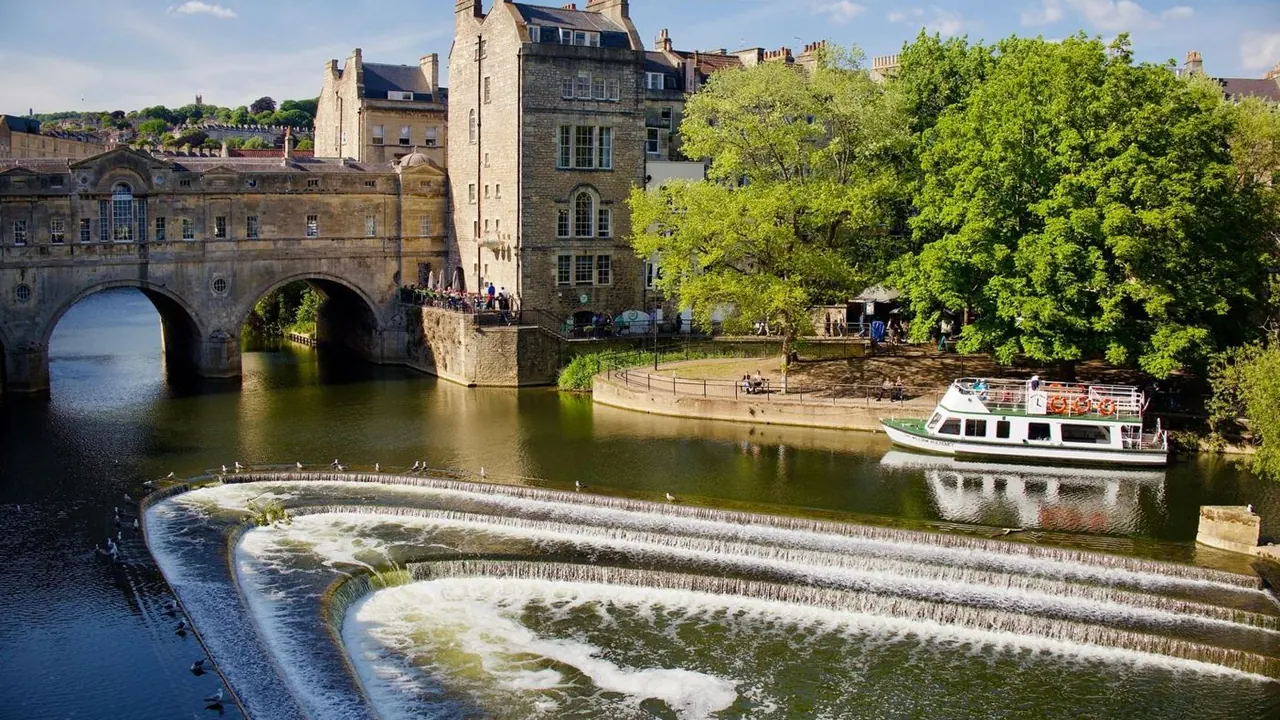
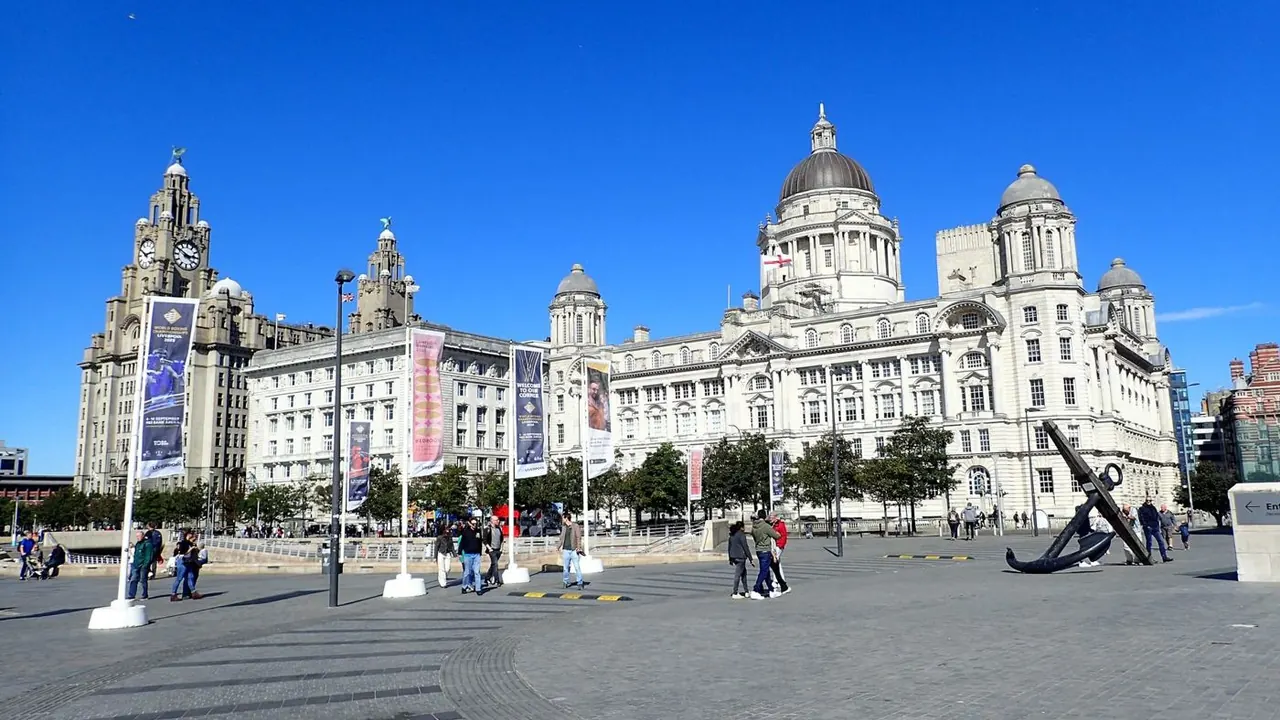
Photos: Bath by Lucas Carlini, Pexels License; Liverpool by Marathon, CC BY-SA 2.0, cropped.
Bath or Liverpool?
Our verdict in twelve categories, each scored against the same fixed benchmark cities, and the climate month by month, so you can choose for your trip.
Choose Bath for
- wellness
- day trips
- nature and the outdoors
Bath suits a slower, more polished trip. It works well for couples or small groups who want to walk a Georgian city of honey-coloured stone, soak in Britain's only natural hot springs, and spend the other days visiting Stonehenge, Wells or the Cotswold villages. Evenings are quiet and rooms are expensive, so Bath is best for travellers who care more about setting and calm than about late nights or the bill.
Choose Liverpool for
- nightlife
- prices
- live music and the arts
Pick Liverpool if you want more noise and more to do after dark. Its bars, clubs and live music run late, and the Philharmonic and two theatres that produce their own work give it a real stage life. Most of the big museums are free, so money goes noticeably further. The port history along the docks is as absorbing as anything in Bath, but this is a trip for energy rather than rest.
Scoreboard
Twelve categories on one fixed scale from 0 to 100. The shaded stretch is the gap between the two.
Your match
Pick a travel style or drag the sliders, and both match scores follow your weighting.
Too close to call, 1 point apart
Wins on wellness and day trips with your weighting.
Wins on nightlife and prices with your weighting.
What matters to you?
Category by category
What the scores mean for a trip.
Beaches & swimming
Neither city is a swimming destination, but Liverpool at least has sand close by. Merseyrail runs straight out to Crosby, where Gormley's iron men stand on the flats, and on to the dunes and pines of Formby, and New Brighton is just across the river. These are beaches for walks and sunsets rather than a swim in the Irish Sea.
Bath sits in a river valley and has nothing like this. Weston-super-Mare is an hour away and its sea is brown and shallow. A summer swim means the Avon near the weir, or a long day out to the Dorset and Devon coast.
Food & drink
The two are close here and differ in what you eat rather than how well. Bath relies on West Country produce and its own baking: Somerset cider and cheese, the Sally Lunn bun, afternoon tea in Georgian tearooms and the farmers' market at Green Park station. The range is narrow, though, with little cooking from other cuisines and almost no street food.
Liverpool has its own dish, scouse, and a long-standing Chinatown. Its more interesting eating is found in the international kitchens of Bold Street and the street-food halls of the Baltic Triangle. Neither is a fine-dining city, and Liverpool's Victorian gin palaces are the more memorable places to sit with a drink.
Culture & sights
Both cities fill two or three days well, but in very different ways. The whole of Bath is a World Heritage Site and reads as one complete eighteenth-century set piece. The Royal Crescent, the Circus and Pulteney Bridge sit above the Roman Baths and beside the Abbey, and Jane Austen turns up at every corner.
Liverpool's sights tell the story of a great port: the Three Graces at the Pier Head, the maritime and slavery museums in the Royal Albert Dock warehouses, and the Walker's Pre-Raphaelites on William Brown Street. Add the Beatles and two striking twentieth-century cathedrals, and Liverpool offers weightier history and bigger museums, where Bath offers unbroken Georgian streets.
Nightlife
Liverpool is by far the better night out. Concert Square, Seel Street and Wood Street fill with bars and clubs at weekends, the Baltic Triangle's warehouses hold late electronic nights, and Lark Lane has a calmer run of local bars. Many nights finish well after 2am.
Evenings in Bath centre on old coaching inns, real-ale pubs on Walcot Street and a handful of cocktail bars. On weeknights the city goes quiet soon after dinner, and anyone wanting more takes the short train to Bristol.
Nature & outdoors
Bath has the slight edge, mainly because its countryside starts at the end of the street. The Skyline loop follows the green ridges above the city, the Kennet and Avon towpath heads into the Limpley Stoke valley, and the Cotswolds and Cheddar Gorge are within an hour.
Liverpool is flat and its green spaces are gentler: Sefton Park with its palm house, the breezy promenade along the Mersey, and the protected dunes of Formby, where red squirrels live. Real hills in North Wales or the Lake District are about two hours away.
Day trips
Bath is clearly the better base for day trips. Stonehenge and Avebury, Wells and Glastonbury, Lacock, Bradford-on-Avon and the southern Cotswolds are all within about an hour, and Bristol is a quarter of an hour away by train. Many of the villages, though, need a car or a tour.
From Liverpool you can reach Chester's walls and Rows, Manchester in under an hour and Port Sunlight close by, with Conwy and Llandudno for a longer day. After that the options run out, while Bath could fill a week of outings.
Good for families
The two are broadly level, though Liverpool is a little easier on parents. Its free museums do much of the work, with dinosaurs and a planetarium at the World Museum and a play gallery at the Museum of Liverpool. The waterfront is flat, the Mersey ferry makes an easy outing, and Chester Zoo and Knowsley Safari Park are both close.
Bath has the Roman Baths, which children usually love, and a large playground in Royal Victoria Park. Beyond those, its steep streets are hard work with a pushchair and most of the city is built for adults. Families usually add Longleat's safari park or Bristol's science centre and aquarium.
Getting around
Both centres are easy to walk, so the difference lies in the shape of each place. Bath is tiny, about twenty minutes from end to end and largely pedestrianised, but its hills are steep and a car is a burden, so drivers use the park-and-ride.
Liverpool spreads a little wider, with its sights within about 2km of each other. Its real advantage is Merseyrail, with frequent trains to the beaches and the Wirral. Liverpool's buses are confusing for visitors, while most of Bath's country sights need a car.
Shopping & style
Little separates the two, and the choice comes down to style. Bath is a city for browsing: independent bookshops and jewellers in the lanes by the Abbey, antiques on Bartlett Street, makers and salvage dealers on Walcot Street, and the Guildhall Market, which has traded for centuries. Fashion is along Milsom Street.
Liverpool is the high-street city, with the chains and department stores of Liverpool ONE's open-air streets balanced by vintage clothes and records on Bold Street. Beatles and football souvenirs are the local speciality, and neither city has much luxury shopping.
Affordability
Liverpool is clearly the cheaper stay. Hotel rooms cost noticeably less for most of the year, except on big match weekends, during the Grand National and around large concerts. Free entry to the major museums keeps sightseeing cheap.
Bath is expensive. Central rooms are costly in a small, popular city, and the Roman Baths and the spa charge high entry. Staying midweek or sleeping in Bristol helps, and in both cities pub lunches keep the cost of food down.
Live music & performing arts
Liverpool has the fuller programme. The Royal Liverpool Philharmonic plays a full season in its hall on Hope Street, and the Everyman and the Playhouse produce their own theatre. Live bands play most nights around Mathew Street and the Baltic Triangle, including in the famous Cavern cellar.
Bath's stage life centres on the gilded Georgian Theatre Royal, with touring drama, opera and pantomime. There are also concerts in the Abbey and the Assembly Rooms and long-running literature and music festivals. Bath has no resident orchestra, though, and on most nights there is little live music to choose from.
Wellness & relaxation
This is Bath's defining strength and Liverpool's weakest point. Bath is the one place in Britain where you can bathe in natural thermal water, which rises at about 46°C. You can soak in the rooftop pool looking over the Abbey or in the small Georgian Cross Bath, and the whole town moves at a slow pace of tea in the Pump Room and walks in the gardens.
Liverpool has hotel and day spas but no bathing culture, and its weekend nights are loud. Rest there means a walk in Sefton Park, a ferry crossing or a quiet afternoon in a gallery.
When should you go?
Pick your month. The climate figures are measured averages, not a forecast.
Bath in July
Liverpool in July
Daytime high, °C
Rainfall in the month, mm
Where the figures come from
Bath's temperatures are measured 29 km from the centre, at Lyneham.
Bath has no rain gauge within 25 km of the centre, so its rainfall comes from a gridded climate dataset read at the city rather than from a gauge further away.
Liverpool's temperatures are measured 47 km from the centre, at Manchester Airport.
Liverpool has no rain gauge within 25 km of the centre, so its rainfall comes from a gridded climate dataset read at the city rather than from a gauge further away.
Temperature and rainfall are climate normals, averaged over the years shown. Bath: 1991-2020 normals, Lyneham (29.2 km from centre). Liverpool: 1991-2020 normals, Manchester Airport (47.4 km from centre).
The two cities have almost the same climate, so the month you go hardly favours either one. Both are at their best from May to September. Highs reach around 21°C in July and August, which is pleasant for walking but never warm enough for a proper beach day, and the sea off either coast stays too cold for most swimmers. October brings some of the wettest weather, with 87mm in Bath and a little less in Liverpool. From December to February daytime highs sit near 7°C, which makes sightseeing grey and chilly.
The real difference is in the light. Bath, further south, is the sunnier of the two through late spring and summer, with over 200 hours of sunshine in May and July, which suits its hill walks and Cotswold outings. Liverpool is a little wetter from August onwards. Winter favours Bath in another way: a cold evening in the rooftop thermal pool is one of its best experiences.
Which traveller are you?
On a relaxing and wellness trip, choose Bath. The thermal springs can anchor every unhurried day, and the town is quiet by evening. Liverpool manages a calm afternoon, but its centre is built for going out rather than winding down.
For a food and nightlife trip, Liverpool wins. Bath suits a long dinner and a pint in an old inn, then bed. Liverpool treats supper as the start of the night, with bands and clubs running into the small hours.
On a trip on a tight budget, Liverpool stretches the money further. In Bath you pay extra simply to stay in the setting, and the town's signature experiences carry a charge. In Liverpool a full day of sightseeing can cost almost nothing beyond food.
Before you go
| Measure | Bath | Liverpool |
|---|---|---|
| Official language | English | English |
| Currency | Pound Sterling (GBP) | Pound Sterling (GBP) |
| Sockets | G230 V, 50 Hz | G230 V, 50 Hz |
| Driving side | Left | Left |
| Time zone | UTC, UTC+1 in summer | UTC, UTC+1 in summer |
| Emergency number | 112 or 999 | 112 or 999 |
| Elevation | 132 m | 70 m |
| Main airport | Bristol Airport (BRS)25 km from centre117 non-stop destinations | Liverpool John Lennon Airport (LPL)12 km from centre75 non-stop destinations |
| Public holidays this year | 8 days | 8 days |
By the numbers
| Measure | Bath | Liverpool |
|---|---|---|
| City population | 94,092 | 513,441 |
| People per km² | 3,245 | 4,592 |
| Museums within 10 km | 17 | 31 |
| UNESCO World Heritage sites within 50 km | 2 | 2 |
| Swim season, months above 21 °C | None | None |
Where else could you go?
Every comparison below shares a destination with this one, so you can follow Bath or Liverpool somewhere new.