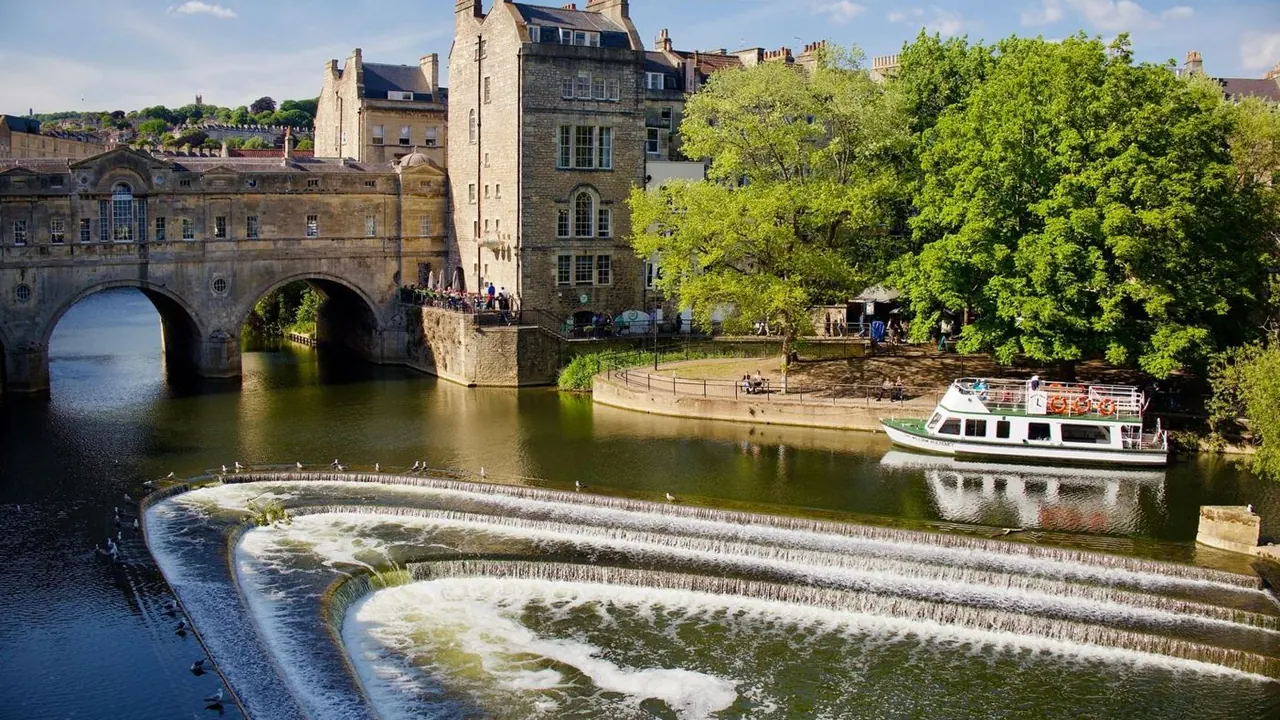
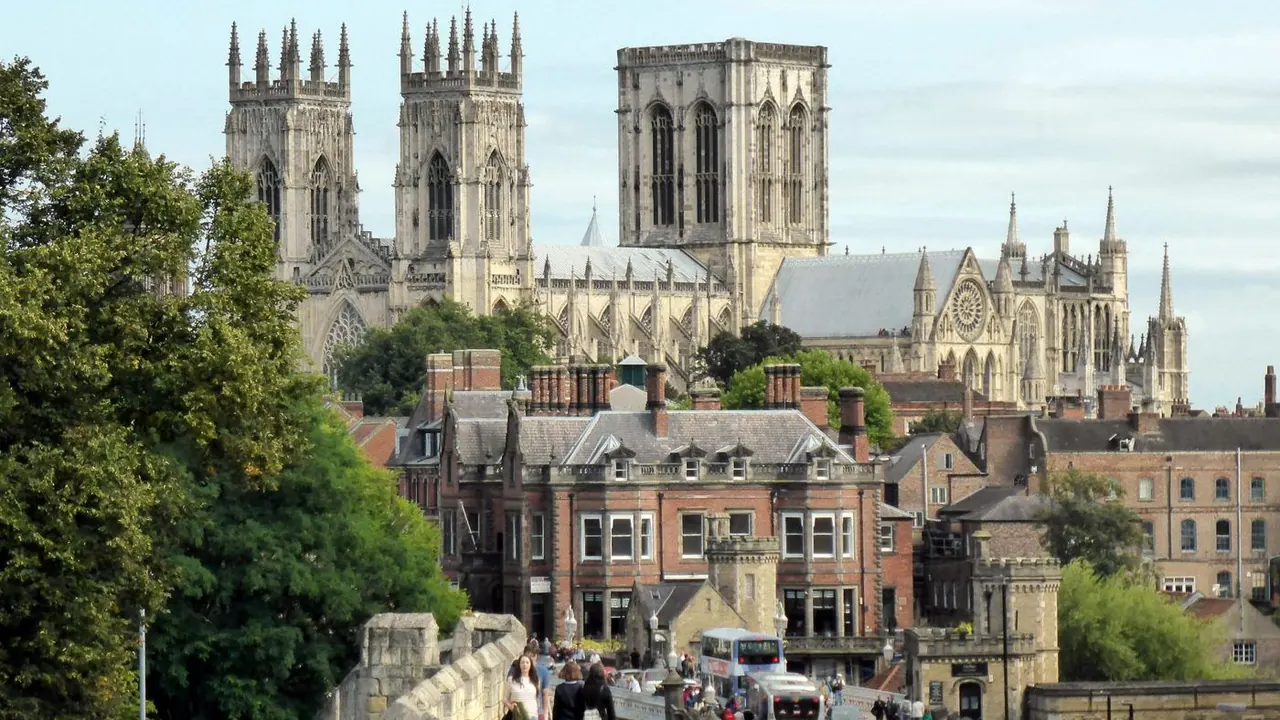
Photos: Bath by Lucas Carlini, Pexels License; York by PAUL FARMER, CC BY-SA 2.0, cropped.
Bath or York?
Our verdict in twelve categories, each scored against the same fixed benchmark cities, and the climate month by month, so you can choose for your trip.
Choose Bath for
- wellness
- shopping
- live music and the arts
Bath suits a slower, more indulgent trip. Its hot springs give it something no other British city has, a soak in natural thermal water with the Abbey above you. Add the Georgian streets, the independent shops and the Theatre Royal, and it is ideal for couples who want comfort and polish over a few days and don't mind paying more for it.
Choose York for
- prices
- families
- nightlife
Families and anyone watching the budget will find York the easier fit. The National Railway Museum, Jorvik and the city walls keep children busy, several of the best sights are free, and the flat, compact centre makes days on foot simple. The pubs are a touch livelier too, and the moors and Dales beyond the city are wilder than Bath's soft hills.
Scoreboard
Twelve categories on one fixed scale from 0 to 100. The shaded stretch is the gap between the two.
Your match
Pick a travel style or drag the sliders, and both match scores follow your weighting.
Too close to call, 2 points apart
Wins on wellness and shopping with your weighting.
Wins on prices and families with your weighting.
What matters to you?
Category by category
What the scores mean for a trip.
Beaches & swimming
Neither city is a beach destination, but the coast within reach differs. Bath's nearest seaside is Weston-super-Mare on the Bristol Channel, where the water is brown and the tide goes out a very long way, so in summer locals swim in the Avon at the weir east of the city instead. Good sand means the Dorset or Devon coast, a long day out.
York has nowhere to swim in the city, but the train reaches Scarborough's two sandy bays in about an hour, with Filey and Whitby a little further. The North Sea stays cold, so treat it as a classic seaside day out rather than a swim.
Food & drink
Both cities are much alike here: tearooms, pubs and good local produce, with little range beyond British cooking. Bath draws on the West Country, with Somerset cider, local cheeses and its own Sally Lunn bun and Bath Oliver biscuit. The farmers' market in the old Green Park station is the place to try them.
York has fat rascals, Sunday roasts with Yorkshire pudding and ale from Yorkshire breweries. The Shambles Market also gives it some street food, which Bath almost entirely lacks.
Culture & sights
Both are among England's richest historic cities, but their characters are very different. Bath is one unified Georgian set piece in honey-coloured stone, with the Royal Crescent, the Circus and Pulteney Bridge built above the Roman Baths. Much of its pleasure lies in how complete it feels.
York is layered instead, with Roman, Viking and medieval history side by side: the Minster's stained glass, walls you can walk on, the timber-framed Shambles and the Jorvik Viking Centre. York's museums are larger, above all the National Railway Museum, while Bath's are smaller and more intimate.
Nightlife
York has a little more going on after dark. Its centuries-old inns along Micklegate, Stonegate and the river make for a proper pub crawl. Weekends and race days at the Knavesmire bring crowds, along with stag and hen parties.
Bath's evenings are quieter: coaching inns, real-ale houses on Walcot Street, a few wine bars, and most visitors back at their hotel after dinner on weeknights. People from both cities go elsewhere for clubbing, but Bath has the shorter trip, with Bristol fifteen minutes away by train, while Leeds is half an hour from York.
Nature & outdoors
The two are broadly level, but their countryside works differently. Bath sits in a bowl of hills, so you can walk straight out of town onto the Skyline loop or the Kennet and Avon towpath without any transport. The southern Cotswolds and Cheddar Gorge are close by too.
York itself is flat, with riverside paths and the open Strays. The real landscapes lie beyond: the heather of the North York Moors, the sea cliffs at Robin Hood's Bay and the limestone Yorkshire Dales are wilder than anything near Bath, but you will want a car to reach them.
Day trips
Both make superb bases, so the choice comes down to which part of England you want to see. Bath opens up prehistoric and cathedral country: Stonehenge and Avebury, Wells and Glastonbury, Lacock and the southern Cotswolds, with Bristol a few minutes away by train.
York opens up the North: Durham's cathedral and castle, Harrogate and Leeds by train, and Castle Howard, Fountains Abbey and the ruined abbeys of the moors by road. From either city the towns are easy by rail, but the villages and great houses are much easier by car or on a tour.
Good for families
York is the easier city with children. The hall of real locomotives at the National Railway Museum, Jorvik, the Victorian street in the Castle Museum and a walk along the walls fill two or three days. The flat centre is kind to small legs and pushchairs.
Bath has the steaming Roman Baths, which children love, and a large playground in Royal Victoria Park. Beyond that it is a city made for adults, its steep streets are hard work with a buggy, and families tend to spend days out in Bristol or at Longleat.
Getting around
Both centres are compact, largely pedestrianised and best seen on foot, and in neither is a car worth bringing into town. The difference is the terrain. Bath climbs steeply from the river, so the upper viewpoints mean a stiff walk or a bus.
York is flat inside its walls and easy to cycle. Its station is also the bigger rail hub for trips further afield, while Bath's direct trains run mainly to Bristol and London.
Shopping & style
Bath is the better choice for shopping. Milsom Street puts fashion and British brands inside Georgian buildings and SouthGate gathers the chains. The real strength is the independent shops: the lanes around the Abbey, the antiques on Bartlett Street and the artisan quarter of Walcot Street, with the old Guildhall Market and the shops on Pulteney Bridge adding character.
York's medieval streets, especially Stonegate and Petergate, are lovely to browse, but the Shambles leans towards souvenirs and wizard-themed shops. Its strongest season is the Christmas markets, and for serious fashion shopping locals go to Leeds.
Affordability
Neither city is cheap, but York is noticeably easier on the budget. The National Railway Museum, the walls and the Museum Gardens are all free, and staying just outside the centre brings the bill down.
Bath is the more expensive place to stay, with scarce central hotels and high admission to the Roman Baths and the spa. In both cities, staying midweek and eating pub lunches save the most. In Bath you can also sleep in Bristol and come in by train.
Live music & performing arts
Bath has the fuller stage programme. Its Georgian Theatre Royal stages touring drama, plays heading for the West End, opera and dance, and has a studio and a children's theatre alongside. Concerts in the Abbey and the Assembly Rooms and festivals of literature, music and Mozart fill out the year.
York has less on but some distinctive things: early music in a medieval church, free choral evensong at the Minster, and the Mystery Plays performed on wagons in the streets when they are revived. Bigger touring shows usually go to Leeds instead.
Wellness & relaxation
Bath is in a different league here. It is the only place in Britain where you can bathe in natural thermal water, from the rooftop pool of Thermae Bath Spa overlooking the Abbey to the small Georgian Cross Bath. Tea in the Pump Room rounds off a slow day.
York has only hotel spas and a few day spas, and its calm comes from early mornings on the walls or in the Museum Gardens. For proper bathing you take the train half an hour to Harrogate and its Victorian Turkish baths.
When should you go?
Pick your month. The climate figures are measured averages, not a forecast.
Bath in July
York in July
Daytime high, °C
Rainfall in the month, mm
Where the figures come from
Bath's temperatures are measured 29 km from the centre, at Lyneham.
Bath has no rain gauge within 25 km of the centre, so its rainfall comes from a gridded climate dataset read at the city rather than from a gauge further away.
York has no rain gauge within 25 km of the centre, so its rainfall comes from a gridded climate dataset read at the city rather than from a gauge further away.
York's sunshine is measured 48 km from the centre, at Leeming.
Temperature and rainfall are climate normals, averaged over the years shown. Bath: 1991-2020 normals, Lyneham (29.2 km from centre). York: 1991-2020 normals, Linton-On-Ouse (14.9 km from centre).
The two cities have almost the same temperatures all year, with highs of around 21°C in July and August and about 7°C in midwinter. Late spring to early autumn is the best time for both, when the streets and the surrounding countryside are pleasant to walk. Neither gets uncomfortably hot. Bath is the sunnier of the two in summer and the wetter in autumn and winter: October brings around 87mm there, while York stays noticeably drier through the darker months.
Swimming is not really part of either trip. The Bristol Channel near Bath reaches only about 18°C in July and August, which is enough for a quick dip at most. Winters in both are cold and grey, but Bath's open-air thermal pool makes a damp December evening worth looking forward to, while York's winter draw is its Christmas markets.
Which traveller are you?
For a relaxing and wellness trip, Bath is the natural pick. Whole days can be built around warm water, long teas and slow walks without leaving the centre. The trade-off is cost, so come midweek, when the spa is calmer and rooms are easier.
On a family trip with young children, York makes life simpler. Its history comes in forms children can climb, touch and walk through, so two or three days pass without much planning. Bath's highlights for children are soon done, and its hills tire small legs.
On a tight budget, York stretches the money further. Several of its best days out cost nothing, and a bed just beyond the walls still leaves the sights a short walk away. Bath costs more at nearly every turn, from where you sleep to where you bathe.
Before you go
| Measure | Bath | York |
|---|---|---|
| Official language | English | English |
| Currency | Pound Sterling (GBP) | Pound Sterling (GBP) |
| Sockets | G230 V, 50 Hz | G230 V, 50 Hz |
| Driving side | Left | Left |
| Time zone | UTC, UTC+1 in summer | UTC, UTC+1 in summer |
| Emergency number | 112 or 999 | 112 or 999 |
| Elevation | 132 m | 25 m |
| Main airport | Bristol Airport (BRS)25 km from centre117 non-stop destinations | Leeds Bradford Airport (LBA)39 km from centre69 non-stop destinations |
| Public holidays this year | 8 days | 8 days |
By the numbers
| Measure | Bath | York |
|---|---|---|
| City population | 94,092 | 208,400 |
| People per km² | 3,245 | 766 |
| Museums within 10 km | 17 | 24 |
| UNESCO World Heritage sites within 50 km | 2 | 2 |
| Swim season, months above 21 °C | None | - |
Where else could you go?
Every comparison below shares a destination with this one, so you can follow Bath or York somewhere new.