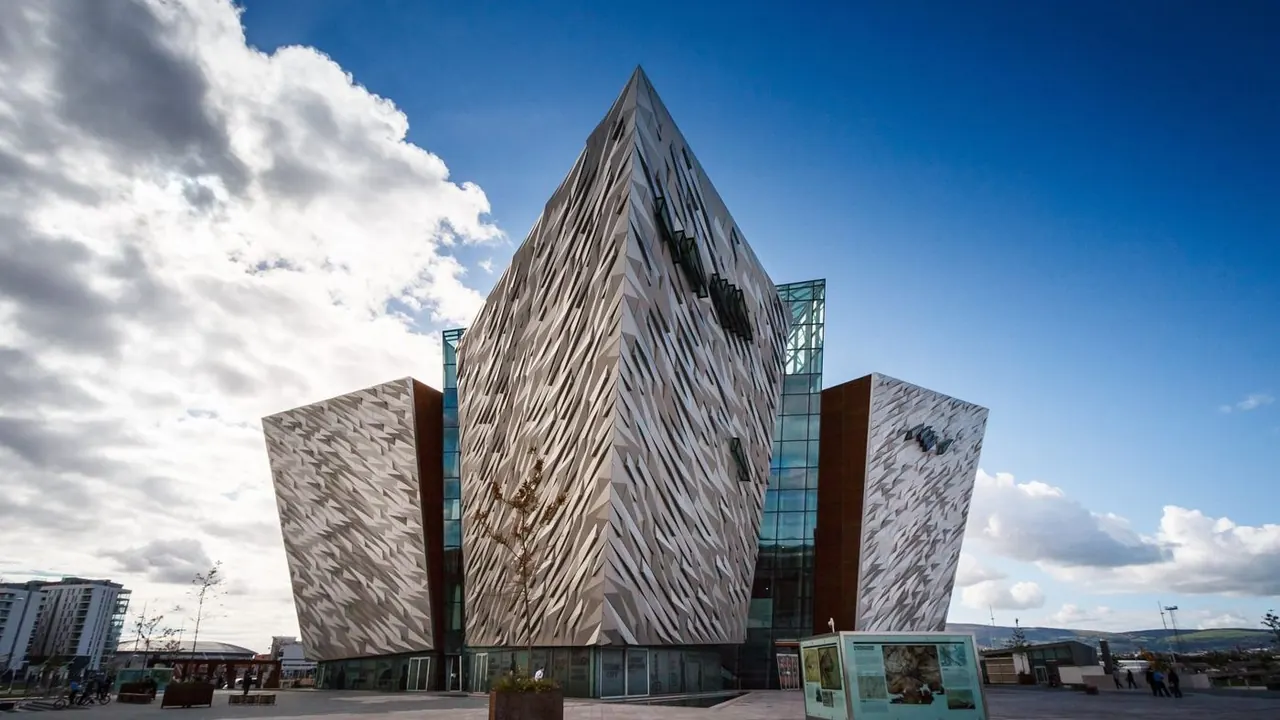
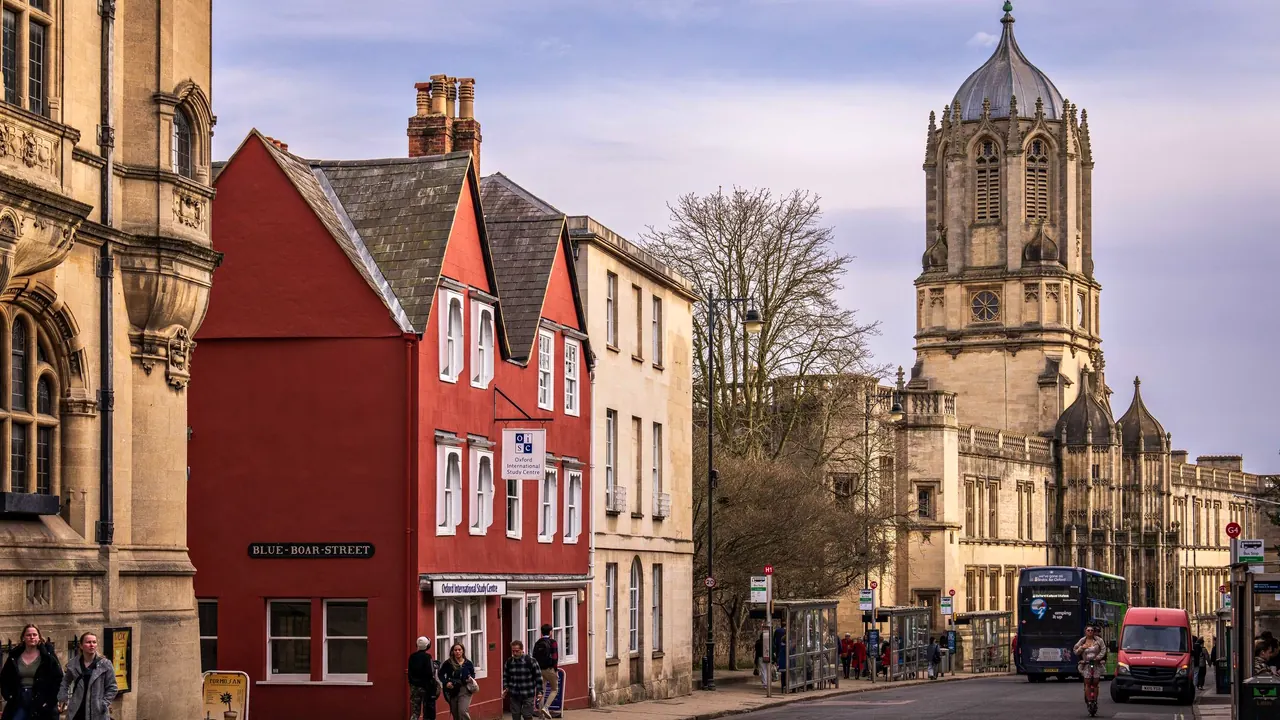
Photos: Belfast by Nico Kaiser, CC BY 2.0, cropped; Oxford by Mark Stebnicki, Pexels License.
Belfast or Oxford?
Our verdict in twelve categories, each scored against the same fixed benchmark cities, and the climate month by month, so you can choose for your trip.
Choose Belfast for
- nature and the outdoors
- prices
- nightlife
Belfast suits travellers who want rugged scenery and a sociable evening more than a grand set of monuments. The Mournes, the Causeway Coast and Cave Hill give it far stronger walking country. Its pubs, with traditional sessions on most nights, make for livelier nights out, and the stay costs noticeably less. Its story is industrial and political, told through the shipyard, Titanic Belfast and the murals of West Belfast, so it rewards curiosity about recent history.
Choose Oxford for
- day trips
- culture and sights
- getting around
Oxford is the better pick for anyone drawn by architecture, scholarship and museums. Medieval college quads, the Bodleian, the Ashmolean and Evensong in candlelit chapels sit within a short walk of each other. It is also an excellent base for Blenheim, the Cotswolds, Bath and London by train. Expect quieter evenings and higher hotel costs, and gentle meadows rather than mountains.
Scoreboard
Twelve categories on one fixed scale from 0 to 100. The shaded stretch is the gap between the two.
Your match
Pick a travel style or drag the sliders, and both match scores follow your weighting.
Too close to call, 2 points apart
Wins on nature and the outdoors and prices with your weighting.
Wins on day trips and culture and sights with your weighting.
What matters to you?
Category by category
What the scores mean for a trip.
Beaches & swimming
Belfast at least has the sea. Sandy coves at Helen's Bay and Crawfordsburn are a short train ride away, and the long north-coast strands of Whiterocks and Portstewart make a day out, though the water stays cold enough that a swim is a bracing dip.
Oxford is about as far inland as England gets, so swimming means the Thames at Port Meadow, the Cherwell or the open-air pool at Hinksey. On a hot afternoon a river dip can be pleasant, but neither city should be chosen for beach time.
Food & drink
Belfast eats better, mainly because of what comes off the land and loughs around it: Mourne lamb, dry-aged beef, Strangford oysters and mussels, cooked with care in the Cathedral Quarter and on the Lisburn Road. St George's Market makes a weekend grazing stop, and the Ulster fry gives it a local signature.
Oxford's strength is the pub, especially a Sunday roast by the Thames, plus the old Covered Market. For variety, head up Cowley Road for cheap international food or to Jericho's bistros. Neither is a food destination, but Belfast offers more that is distinctly its own.
Culture & sights
Oxford is the richer place for sightseeing. The Radcliffe Camera, the Bodleian, the Sheldonian and Christ Church all lie within minutes of each other in honey-coloured stone, and the Ashmolean, Pitt Rivers and Natural History Museum give it museums of national weight. It fills two or three full days without strain.
Belfast offers a few strong sights spread across the city rather than a dense historic core. Titanic Belfast on the old slipways, City Hall, Crumlin Road Gaol and the Ulster Museum tell an industrial and political story. The guided walk along the Falls and Shankill murals is something Oxford has no equivalent for.
Nightlife
After dark, the Cathedral Quarter gives Belfast the edge. Its cobbled entries are lined with old bars around Hill Street, the Crown Liquor Saloon has carved wood and snugs, and a talkative crowd keeps weekend nights going. There are few clubs and they close fairly early, so plan on a long round of pubs rather than dancing until dawn.
Oxford winds down sooner. Its taverns fill with students in term, and the riverside pubs draw people on summer evenings, but on most nights the centre is quiet by midnight, and the long university vacation empties it further. Cowley Road's late bars and small clubs are the place to stay out, while Jericho's wine bars suit a drink after dinner.
Nature & outdoors
Belfast has much the bigger landscapes. Basalt cliffs on Cave Hill and the views from Divis are a bus ride away. The granite Mournes and the Giant's Causeway, Carrick-a-Rede and the Glens of Antrim offer proper hill and coastal walking, with wind and rain as part of the deal.
Oxford's green space is gentler and closer to hand: Port Meadow with its grazing horses, Christ Church Meadow, and flat towpath walks along the Thames and Cherwell, with punting as the classic pastime. The Cotswolds, Chilterns and Ridgeway add rolling walks, not drama.
Day trips
Oxford is the stronger base. Blenheim Palace is about twenty minutes away and the Cotswold villages are within an hour. London is roughly an hour by train, and Stratford-upon-Avon, Warwick, Windsor and Bath are all reachable for the day, giving an unusually dense spread of famous places.
Belfast's outings are more about landscape and history together. A drive up the Antrim coast takes in Dunluce Castle and Bushmills, Carrickfergus has its Norman castle, and Armagh, Derry and Dublin by train round out a varied list, though the distances are longer.
Good for families
Both are compact, safe-feeling and easy with children, with Belfast holding a slight edge for variety. W5's hands-on science, Titanic Belfast, the zoo on Cave Hill and the steam engines and trams at the Ulster Folk and Transport Museum give several dedicated family outings.
Oxford wins children over with the dinosaurs of the Natural History Museum, the curiosities of the Pitt Rivers, a punt on the Cherwell and Christ Church's Harry Potter connections. Beyond those, its bigger draws such as the wildlife park and the studio tour need a trip out.
Getting around
Oxford is easier to get around. Its centre can be crossed on foot in twenty minutes, several streets are closed to through traffic, bikes are everywhere, and the station is a short walk from the colleges with direct trains to London.
Belfast's centre is also walkable, and the Glider rapid buses and suburban trains along the lough cover the city well. Evening buses thin out, though, and reaching the Mournes or the Causeway Coast is far simpler with a hire car or a coach tour.
Shopping & style
Oxford has a little more character to its shopping. Blackwell's on Broad Street, antique map and print dealers, the Covered Market's small traders and the independents of Little Clarendon Street stand out from the chains. The designer outlet near Bicester, about twenty minutes away, adds luxury labels.
Belfast is mostly high-street shopping around Donegall Place and the glass dome of Victoria Square. Its best buys are Irish linen, whiskey and local food, with crafts and vintage at St George's Market on weekends.
Affordability
Belfast is clearly the cheaper stay, chiefly because hotel rooms at a fair price are much easier to find. Free entry to the Ulster Museum, the Botanic Gardens and City Hall tours helps, though meals and drinks still cost what they do across the UK.
Oxford's few central hotels and steady demand from university events keep rooms expensive, and many visitors sleep out by the ring road or come from London. Once there, free museums and a walkable centre ease the bill, but college entries and tours add up.
Live music & performing arts
The two are evenly matched but sound very different. Belfast's live culture is informal and Irish: traditional sessions in city-centre pubs most nights, small-venue gigs in the Cathedral Quarter and Irish drama at the Lyric, with the Grand Opera House and two festivals adding scale.
Oxford's highlight is choral. Evensong sung by the choirs of Christ Church, Magdalen and New College is world class and free to attend. Concerts at the Sheldonian and the historic Holywell Music Room add chamber music, while its theatre and gig scene stays modest.
Wellness & relaxation
Neither city has a spa or bathing tradition, though Oxford is slightly better for slowing down. The Botanic Garden, walled college gardens, Magdalen's deer park and an afternoon on a punt offer real calm, best enjoyed early before the tour groups arrive.
Belfast relies on hotel and country-house spas, cold dips along the lough with the local sea swimmers, and quiet walks in the Botanic Gardens or along the Lagan. Those wanting to unwind usually head out to the coast or the hills.
When should you go?
Pick your month. The climate figures are measured averages, not a forecast.
Belfast in July
Oxford in July
Daytime high, °C
Rainfall in the month, mm
Where the figures come from
Oxford's temperatures are measured 37 km from the centre, at Fairford Royal Air Force Base.
Oxford has no rain gauge within 25 km of the centre, so its rainfall comes from a gridded climate dataset read at the city rather than from a gauge further away.
Oxford's sunshine is measured 57 km from the centre, at Lyneham.
Temperature and rainfall are climate normals, averaged over the years shown. Belfast: 1991-2020 normals, Belfast / Aldergrove Airport (19.4 km from centre). Oxford: 1961-1990 (sunshine 1991-2020, rainfall 1991-2020) normals, Fairford Royal Air Force Base (37 km from centre).
Neither city is a beach destination, and both are best from late spring to early autumn for walking the streets and getting into the countryside. Oxford has the warmer, sunnier and drier summer, reaching about 22°C in July against Belfast's 19°C, with clearly more sunshine through June and July. Belfast's brightest month tends to be May, and its rain builds through late summer into autumn, peaking at around 89mm in October.
The Irish Sea off Belfast is coldest in spring and only reaches about 14°C in September and October, so any swim is a brisk one. In winter Belfast stays a touch milder but wetter and darker. Oxford is colder, with January highs near 5°C, though its winter days are a little drier and brighter for a museum-led trip.
Which traveller are you?
On an outdoors trip, Belfast is the clear choice. Cave Hill and Divis rise straight behind the city, the Mourne Mountains offer real hill walking about an hour away, and the Causeway Coast's cliff paths are among the finest coastal scenery in these islands.
For a culture and arts trip, Oxford gives far more in a small space. Its college quads, chapels and libraries are packed into a few walkable streets, the Ashmolean and Pitt Rivers punch well above the city's size, and Evensong adds a memorable live experience.
On a trip with a tight budget, Belfast stretches money further. Hotel rooms are easier to find at a fair price, while Oxford's scarce central beds push many visitors out to the ring road. Free museums help in both, but Belfast's overall bill is lighter.
Before you go
| Measure | Belfast | Oxford |
|---|---|---|
| Official language | English | English |
| Currency | Pound Sterling (GBP) | Pound Sterling (GBP) |
| Sockets | G230 V, 50 Hz | G230 V, 50 Hz |
| Driving side | Left | Left |
| Time zone | UTC, UTC+1 in summer | UTC, UTC+1 in summer |
| Emergency number | 112 or 999 | 112 or 999 |
| Elevation | 3 m | 73 m |
| Main airport | George Best Belfast City Airport (BHD)4 km from centre25 non-stop destinations | London Heathrow Airport (LHR)63 km from centre224 non-stop destinations |
| Public holidays this year | 10 days | 8 days |
By the numbers
| Measure | Belfast | Oxford |
|---|---|---|
| City population | 345,006 | 147,500 |
| People per km² | 3,000 | 3,235 |
| Museums within 10 km | 8 | 11 |
| UNESCO World Heritage sites within 50 km | 1 | 1 |
| Swim season, months above 21 °C | None | - |
Where else could you go?
Every comparison below shares a destination with this one, so you can follow Belfast or Oxford somewhere new.