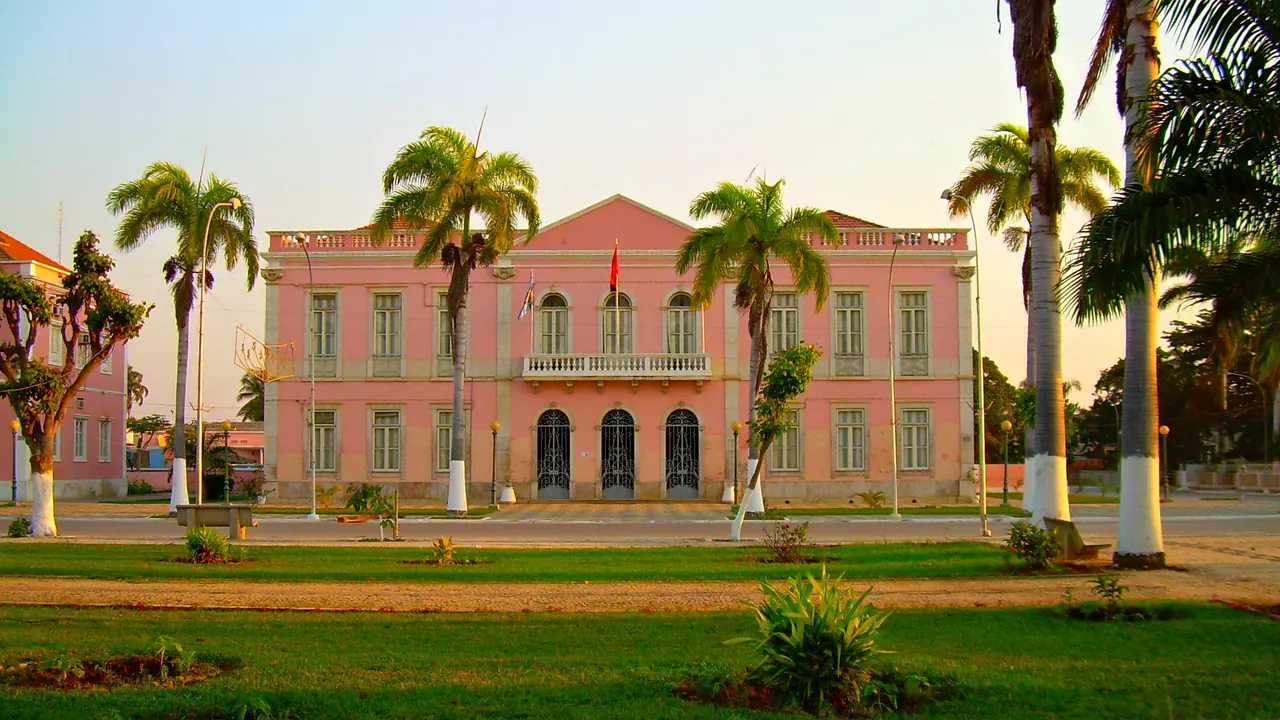
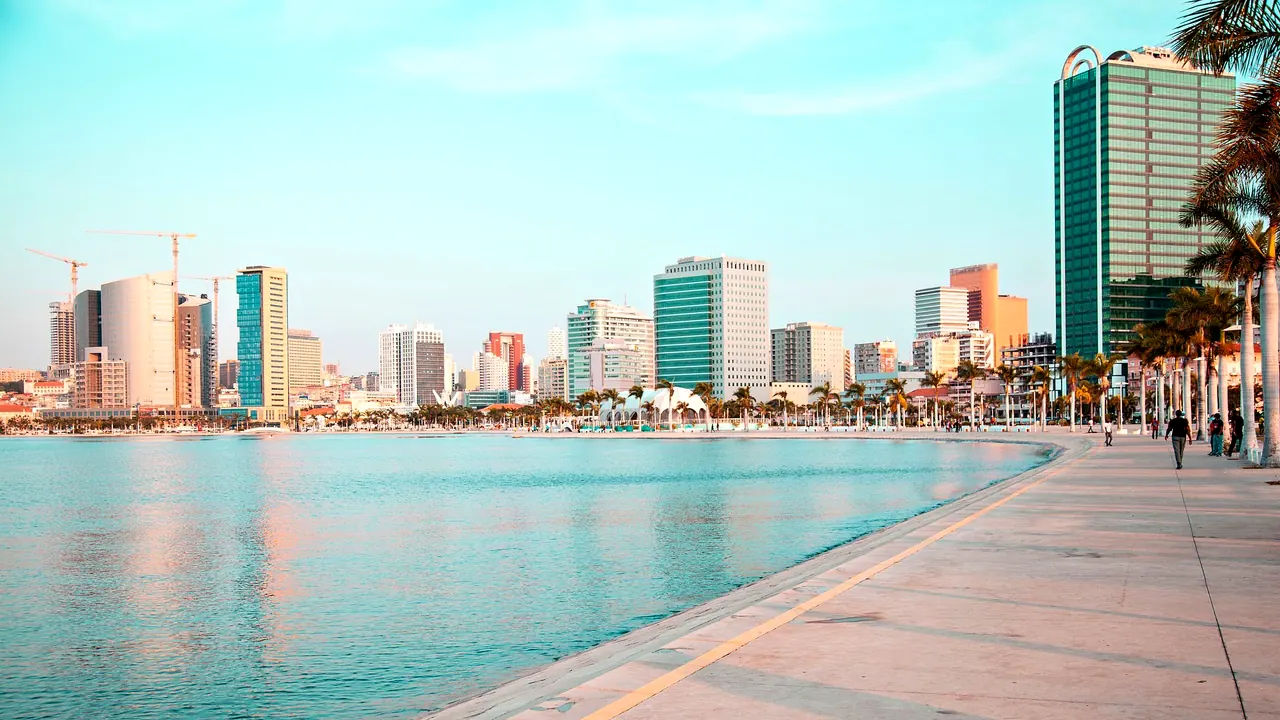
Photos: Benguela by F H Mira, CC BY-SA 2.0, cropped; Luanda by Dm Photography DM, Pexels License.
Benguela or Luanda?
Our verdict in twelve categories, each scored against the same fixed benchmark cities, and the climate month by month, so you can choose for your trip.
Choose Benguela for
- day trips
- getting around
- prices
Benguela suits a slower coastal trip. Its flat colonial centre and seafront can be walked, the calm bays at Baía Azul and the Restinga at Lobito are within easy reach, and a short train or car ride brings Lobito and Catumbela into play. Costs are easier to manage than in the capital, and the pace lets you settle into long lunches and evenings under the palms. Expect few sights and a quiet midweek.
Choose Luanda for
- nightlife
- shopping
- live music and the arts
Luanda is for the traveller who wants Angola's capital at full volume: weekend nights of kizomba and kuduro on the Ilha, the fortress and slavery museum, grilled prawns by the water and the craft stalls at Benfica. It asks more in return. You need a driver for almost everything, traffic eats into every day, and the bill runs high, so it works best for people who have business there or local friends to show them around.
Scoreboard
Twelve categories on one fixed scale from 0 to 100. The shaded stretch is the gap between the two.
Your match
Pick a travel style or drag the sliders, and both match scores follow your weighting.
Too close to call, level with your weighting
Wins on day trips and getting around with your weighting.
Wins on nightlife and shopping with your weighting.
What matters to you?
Category by category
What the scores mean for a trip.
Beaches & swimming
Benguela has a slight edge, mostly because of what lies just south of it. Baía Azul is a wide, calm bay with pale sand and blue-green water, and the coves at Caotinha and Baía Farta are close by. Add the town strip of Praia Morena and the sheltered Restinga at Lobito, and you have more variety within an easy drive.
Luanda's beach life is more social. Whole weekends are spent on the Ilha among restaurants and bars, but the water there is not clean, so swimmers cross the lagoon to Mussulo's quieter sand. Cabo Ledo, further south, offers surf rather than gentle bathing.
Food & drink
Both towns cook the same Angolan dishes, with muamba de galinha, calulu and funge alongside Portuguese bread and custard pastries, and in both the best meals are fish and prawns fresh off the boats. Benguela's version is plainer: simple grills on Praia Morena and catches landed at Baía Farta, with little beyond a few hotel kitchens.
Luanda gives you more choice. The grills along the Ilha are joined by a small number of upmarket restaurants for business visitors and expatriates, and a good local guide opens up Angolan cooking that a stranger would struggle to find. It is still a narrow scene, but there is more of it.
Culture & sights
Both were Portuguese slave ports, but Luanda tells that story more fully. The Fortaleza de São Miguel with its azulejo panels, the sober Museu Nacional da Escravatura, the Baixa's churches, the Palácio de Ferro and the Agostinho Neto mausoleum fill a day or two.
Benguela is smaller but better preserved in feel. Its low pink and ochre colonial streets have survived where Luanda's have given way to towers. The Pópulo church, the archaeology museum in a former slave-trade building and the railway station can be seen in a single unhurried morning.
Nightlife
Luanda is the birthplace of kizomba and kuduro, and its weekends prove it. There are beach bars on the Ilha, semba lounges and clubs that keep dancing until dawn, although the venues are scattered, often pricey, and easiest to enjoy with local friends.
Benguela offers a small version of the same thing. A few terraces on Praia Morena and the Restinga fill up for dancing on Friday and Saturday, then fall quiet during the week. In both towns you will need a car to get home.
Nature & outdoors
Both coasts have the same dry drama of red and ochre cliffs falling into the Atlantic. The difference lies in what you can do there. From Luanda you can join game drives for elephant and giraffe in Kissama, take boat trips and fish for tarpon where the Kwanza meets the sea, see the Miradouro da Lua at dusk and surf at Cabo Ledo, though city traffic turns each into a full day.
Benguela's surroundings feel wilder and less organised. There are baobabs in Chimalavera, the green Catumbela valley and the bays along the road south towards Namibe, plus whales offshore in the southern winter. You will want a 4x4 and a driver.
Day trips
Here Benguela is far ahead. Lobito, with its art deco houses on the Restinga, is about half an hour away. Catumbela's fortress sits along the way, and the fishing town of Baía Farta, with its drying racks, lies to the south.
From Luanda, the outings are to the coast and the countryside, such as Mussulo or Kissama, rather than to towns. Benguela and Lobito themselves are a flight or an overnight trip away.
Good for families
Neither is easy with children, and families in both end up relying on a hotel pool, a driver and the beach. Malaria precautions are needed in both.
The calm water at Baía Azul and the Restinga, along with the shorter distances, makes Benguela slightly less tiring. Luanda has the weekend lunches on the Ilha, where Angolan families gather and children are welcome, but also the long hours stuck in traffic.
Getting around
Benguela is the easier town to get around. The old centre and Praia Morena are flat and close together, so you can walk between them, and a suburban train on the Benguela Railway runs to Catumbela and Lobito. You only need a driver for the bays further south.
In Luanda a car or ride-hailing is essential. The railway skips the places visitors go, the distances between the Baixa, the Ilha and the southern districts are long, and a crossing that looks short on the map can take an hour in traffic.
Shopping & style
Benguela gives a visitor very little to buy. Its open-air markets trade in produce, fish and wax-print fabric for local households, and a carved figure or a basket turns up now and then, but nothing is gathered in one place for someone hunting souvenirs.
Luanda has exactly that in the Benfica craft market, a long row of stalls with Chokwe masks, Pensador thinkers and paintings where haggling is part of the visit. Its southern malls add international chains, although Luanda has no boutique street to wander either.
Affordability
Neither town is a bargain for a visitor, and imported goods and anything comfortable cost more than you might expect in both. Where Benguela pulls ahead is in how much of an ordinary day can be spent at local prices. Fish from the grills along Praia Morena, cold lager on a terrace and minibus rides all stay cheap, so the total lands in the middle range rather than at the top.
Luanda keeps nudging a visitor upwards. The restaurants and bars you are likely to use, on the Ilha or in the southern districts, charge international rates. Its cheap local food and markets are there, but they are harder for an outsider to find and live on. The same kind of trip simply costs more in the capital.
Live music & performing arts
There is no opera or orchestra in either town, and in both the music is dance music. Luanda has more to hear: live semba bands play to older crowds on weekend nights, and there are a few theatre groups and cultural centres staging Portuguese-language plays.
In Benguela, the weekend bands in beach bars and dance halls play for the dance floor, not for an audience. Carnival parades are the one event worth planning around in either town.
Wellness & relaxation
For unwinding, Benguela is the better choice. Its pampering stops at a few hotel treatment rooms, but the town's pace does most of the work: lunches that run into the afternoon, a walk under the seafront palms as the heat eases, and weekdays when little stirs.
Luanda offers the pool or spa of a large international hotel and not much more. Its noise and traffic make rest hard to find in town, so people who need a break usually cross the lagoon to Mussulo for a quieter weekend.
When should you go?
Pick your month. The climate figures are measured averages, not a forecast.
Benguela in July
Luanda in July
Daytime high, °C
Rainfall in the month, mm
Where the figures come from
Benguela has no weather station within reach, so its figures come from a gridded climate model rather than a measured record, and read a broad area rather than one spot.
Temperature and rainfall are climate normals, averaged over the years shown. Benguela: 2001-2020 normals, NASA POWER reanalysis grid, no weather station within 90 km. Luanda: 1963-2025, 15 years observed (rainfall 1971-2000) normals, Luanda (3.9 km from centre).
Both towns follow the same pattern. A hot, wet season runs from about November to April, the rain peaks in March and April, and the cacimbo brings grey, dry and cooler weather from June to September. The sea is at its warmest from January to April, close to 28°C off both coasts, and it falls to about 20°C by August. That makes the early months the swimming season, as long as you can live with the downpours.
The difference is heat against rain. Luanda is the hotter of the two, with highs above 30°C for much of the year, so walking the streets is more comfortable in the cacimbo months. Benguela stays milder, about 22°C in August, but its March rains are much heavier, around 182mm. May and October are a good compromise in both towns: dry, warm and with the sea still pleasant.
Which traveller are you?
For a beach and sun trip, Benguela is the better base. Praia Morena starts at the edge of town, and the clear, calm water of Baía Azul and the southern coves is a short drive away. In Luanda, proper swimming usually means a boat across to Mussulo.
On a food and nightlife trip, Luanda wins clearly. It has more places to eat grilled seafood on the Ilha, a few upmarket restaurants, and weekend clubs where the kizomba and kuduro go on until dawn. Benguela's handful of terraces are quiet outside Friday and Saturday.
On a tight budget, Benguela stretches your money further. Its hotels carry less of the oil-town premium, and because the centre is walkable you can cover it without paying a driver all day. Luanda's rooms, restaurants and constant car hire make for a heavy daily bill.
Before you go
| Measure | Benguela | Luanda |
|---|---|---|
| Official language | Portuguese | Portuguese |
| Currency | Kwanza (AOA) | Kwanza (AOA) |
| Sockets | C220 V, 50 Hz | C220 V, 50 Hz |
| Driving side | Right | Right |
| Time zone | UTC+1 | UTC+1 |
| Emergency number | Police 113, ambulance 116, fire 115 | Police 113, ambulance 116, fire 115 |
| Elevation | 39 m | 6 m |
| Main airport | Benguela Airport (BUG)7 km from centre1 non-stop destination | Quatro de Fevereiro International Airport (LAD)5 km from centre |
| Public holidays this year | 14 days | 14 days |
By the numbers
| Measure | Benguela | Luanda |
|---|---|---|
| Population | 561,775 | 2,487,444 |
| People per km² | 268 | 22,013 |
| Museums within 10 km | 1 | 4 |
| UNESCO World Heritage sites within 50 km | 0 | 0 |
| Swim season, months above 21 °C | 11 months | 11 months |
Where else could you go?
Every comparison below shares a destination with this one, so you can follow Benguela or Luanda somewhere new.
- Pointe-Noirevs Luanda
- Swakopmundvs Benguela
- Windhoekvs Luanda
- Accravs Luanda
- Nairobivs Luanda
- Maputovs Luanda