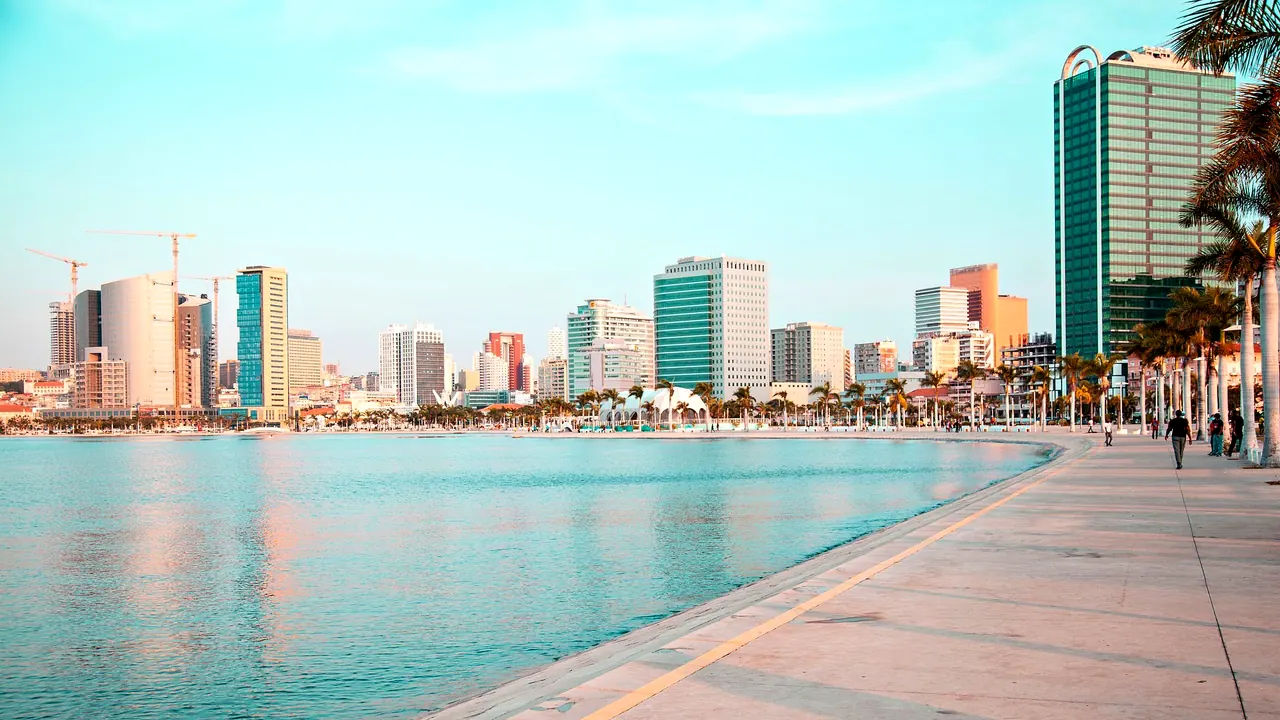
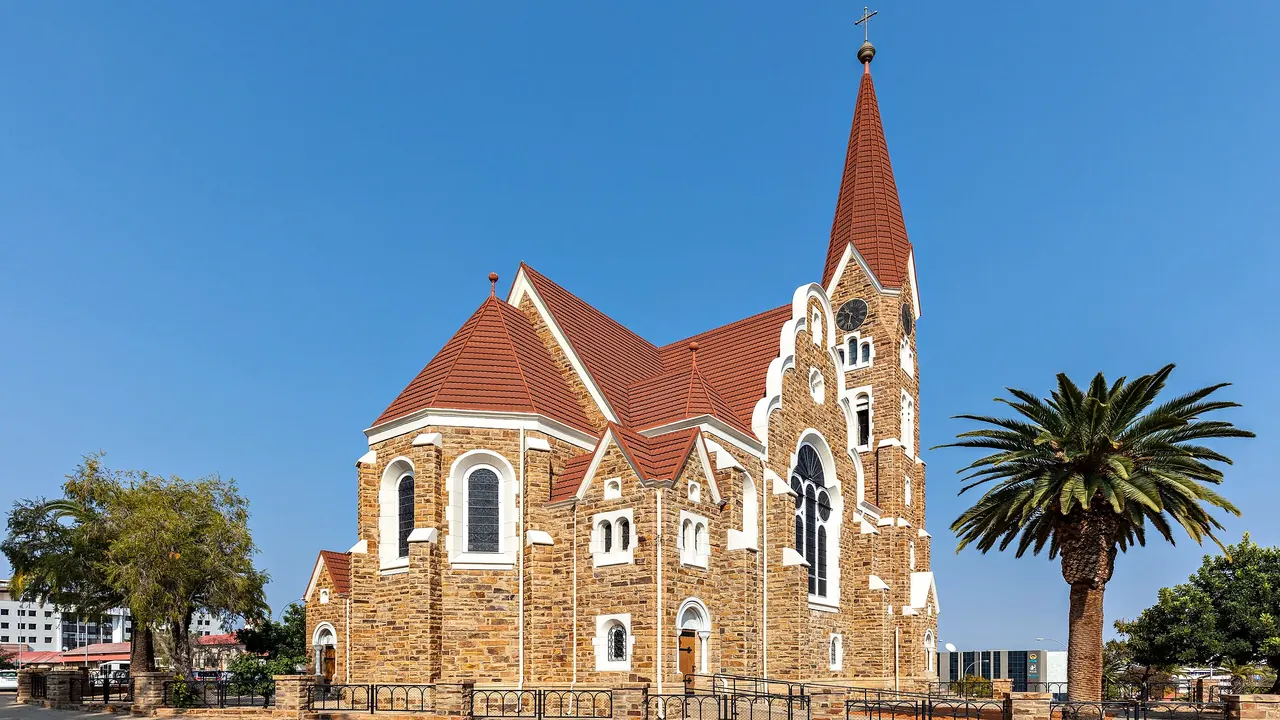
Photos: Luanda by Dm Photography DM, Pexels License; Windhoek by Diego Delso, CC BY-SA 4.0, cropped.
Luanda or Windhoek?
Our verdict in twelve categories, each scored against the same fixed benchmark cities, and the climate month by month, so you can choose for your trip.
Choose Luanda for
- beaches
- nightlife
- live music and the arts
Luanda is the better pick for a traveller who wants the sea, music and a city with a strong Atlantic port character. You get weekends on the Ilha sandbar, a boat across to the calm water at Mussulo, grilled prawns by the water and late nights dancing kizomba and semba. Its history as a Portuguese slave-trading port also gives it the more affecting sights. The catch is that it is expensive, choked with traffic and hard going with children, so it suits an adult trip with a driver booked and some local contacts.
Choose Windhoek for
- prices
- wellness
- families
Windhoek works best as a calm, affordable base on a wider Namibian journey rather than as a destination in itself. The city is quieter and cheaper, easier to manage with a hire car and friendlier to families, and game drives at Daan Viljoen are only half an hour away. There is no beach and not much nightlife. Choose it if the dunes, the wildlife and the open road are the real point of the trip and you want a restful garden guest house at either end.
Scoreboard
Twelve categories on one fixed scale from 0 to 100. The shaded stretch is the gap between the two.
Your match
Pick a travel style or drag the sliders, and both match scores follow your weighting.
Wins on beaches and nightlife with your weighting.
Wins on prices and wellness with your weighting.
What matters to you?
Category by category
What the scores mean for a trip.
Beaches & swimming
This is where Luanda pulls furthest ahead. The Ilha gives the city a long stretch of sand lined with beach bars where Luandans spend whole weekends. The water close to town is not very clean, so most people who want a proper swim take the boat over to Mussulo, with its palms and calm bay. Cabo Ledo, further south, adds surf.
Windhoek has no beach at all. It sits on a high inland plateau, and Swakopmund on the coast is four hours away across the desert, where the cold Benguela current makes swimming chilly. Here a swim means a pool at your guest house.
Food & drink
Luanda has the more rewarding table. Its own dishes, such as muamba de galinha, calulu and funge, come with a strong Portuguese thread of bacalhau, sardines and custard tarts, and the best meals are fish and prawns grilled on the Ilha. Away from the water, though, the choice narrows to hotels and expensive expatriate restaurants.
Windhoek's cooking is mostly about meat and German heritage: oryx and kudu steaks, kapana beef grilled over open fires in Katutura, strudel from the bakeries and lager brewed to the old purity law. It is good honest food, but there is less of it than in Luanda.
Culture & sights
Neither city has a long list of sights, and a day or two covers each, but Luanda has the deeper story. The Fortaleza de São Miguel above the bay and the slavery museum in its coastal chapel tell of the centuries when the city shipped enslaved people across the Atlantic. The Baixa still has colonial churches and the iron Palácio de Ferro among the towers.
Windhoek's sights all sit on one ridge: the Christuskirche, the Tintenpalast and the Alte Feste. The Independence Memorial Museum is the one place that rewards time, with its frank account of the Herero and Nama genocide. Most visitors give the city an afternoon on their way to somewhere else.
Nightlife
Luanda is a city that goes out to dance. It is the home of kizomba and kuduro, and on weekends the beach bars on the Ilha and the clubs in the smarter districts keep going until dawn. Venues are spread out and you need a driver between them, and the night is much better with local friends.
In Windhoek, evenings mean long dinners, beer gardens and a few lounges in Klein Windhoek. A handful of clubs play amapiano at weekends, and the Katutura shebeens are livelier, but most visitors are back at their lodging early.
Nature & outdoors
There is little to choose between them, but the outdoors works differently in each. From Luanda the draw is the coast to the south: the eroded red cliffs of the Miradouro da Lua, the mangroves where the Kwanza meets the sea, and game drives through baobab savannah at Kissama, where animals are fairly few. Heavy traffic turns each of these into a full day.
Windhoek has wildlife much closer. Daan Viljoen, half an hour away, lets you hike among zebra and oryx in the thornbush hills of the Khomas Hochland, and the dry, clear winter is ideal for being out on foot. Its famous dunes and Etosha are further off and need an overnight stay.
Day trips
Both are poor bases for exploring towns. Luanda's outings are to beaches and landscapes such as Mussulo and Kissama, and its historic towns, Benguela and Lobito, need a flight. Windhoek does a little better for an easy half-day: the woodcarvers' market at Okahandja and the Gross Barmen hot springs are about an hour north. Swakopmund and Sossusvlei belong on a road trip with nights away.
Good for families
Windhoek is the easier of the two with children. Little in the city is built for them, but a game drive to see giraffe and zebra is close at hand, and guest houses with gardens and pools make a calm base. With a hire car the city is simple to get around.
Luanda asks a lot more of families. You face long hours in traffic, humid heat, malaria precautions all year and few places where children can roam freely. A day on the sand at Mussulo or a weekend lunch on the Ilha, where local families gather, is what makes it work.
Getting around
Neither city has public transport a visitor can rely on, but Windhoek is less of a struggle. Its centre around Independence Avenue and the church ridge is compact enough to walk by day, and a hire car, which you will want anyway for the wider country, deals with the hilly suburbs.
Luanda's distances between the Baixa, the Ilha and the southern districts are long, and its traffic is notorious, so a short-looking crossing can take an hour. The candongueiro minibuses are hard for a newcomer to use, so a driver or ride-hailing is the realistic choice. In both cities, avoid walking after dark.
Shopping & style
In both cities shopping really means crafts, but the experience differs. Luanda's Benfica market is a long open-air run of stalls selling Chokwe masks, Pensador figures and wax-print cloth, and you are expected to bargain. Windhoek gathers crafts from across Namibia under one roof at the Namibia Craft Centre, with baskets, Herero dolls and ostrich-shell jewellery, plus semi-precious stones and karakul wool. Beyond the crafts, both offer only suburban malls.
Affordability
Windhoek is clearly the cheaper city to stay in. Suburban guest houses, kapana stalls and a beer in a garden all cost little, and the real expense comes from the safaris and lodges further out in the country.
Luanda is costly from the moment you arrive. Hotels are built around oil and business travel, comfortable mid-range rooms are scarce, and a car with a driver adds to every day. Street food and minibuses are cheap, but most visitors rarely live at that level.
Live music & performing arts
Luanda's music is part of the reason to go. Semba bands play to dancing crowds in bars and restaurants on weekend nights, and the city's kizomba and kuduro are heard well beyond Angola. Formal theatre and concerts are thin, though.
Windhoek's performing life centres on the National Theatre of Namibia and student concerts at the College of the Arts. Live shambo or kwaito turns up only now and then, so check what is on before you go.
Wellness & relaxation
Rest is hard to find within Luanda itself. Between the traffic jams and the pace of an oil capital, any calm you find is behind hotel walls, in an international spa or beside a pool, and there is no local bathing or massage custom to look for. Even Luandans leave town for a weekend on Mussulo to unwind, so in Luanda quiet is somewhere you have to travel to.
Windhoek is restful without trying. Its suburbs are low and green and the evenings are still, so a day spent doing very little in a guest-house garden feels normal rather than like an escape. Its spas also belong to hotels and lodges, but it adds the warm mineral pools at Gross Barmen, which are easy to fit into a drive north. After days on desert roads, it is much the gentler place to recover.
When should you go?
Pick your month. The climate figures are measured averages, not a forecast.
Luanda in July
Windhoek in July
Daytime high, °C
Rainfall in the month, mm
Temperature and rainfall are climate normals, averaged over the years shown. Luanda: 1963-2025, 15 years observed (rainfall 1971-2000) normals, Luanda (3.9 km from centre). Windhoek: 1991-2020 (sunshine 1971-2000) normals, Windhoek (1.7 km from centre).
Luanda is warm all year. January to May is the hottest stretch and the best time for the beach, with the sea at around 28°C, but March and April bring most of the year's rain. From June to September the air is dry and a little cooler. July and August are the mildest months, with highs near 25°C, which makes walking the Marginal and the Baixa easier, though by August the water has cooled to about 20°C.
Windhoek runs the other way round. Its rain falls in summer, mostly from January to March, and November and December are the hottest weeks, reaching 33°C. The dry season from May to September is the time to go, with long hours of sunshine throughout. June and July are the coolest, with days around 22°C, which is ideal for walking and game drives. May and August are a little warmer and September is already hot. If you are combining the two, June to August suits Windhoek well and Luanda reasonably, though not for swimming.
Which traveller are you?
For a beach and sun trip, Luanda is the clear choice. It has the Ilha sandbar on its doorstep and the calm bay at Mussulo a short boat ride away, with warm water from January to April. Windhoek is landlocked, and its nearest coast is four hours away and cold.
On a food and nightlife trip, Luanda gives you more. You get grilled seafood by the water, Angolan stews with Portuguese touches and weekend nights of kizomba and kuduro that go on until dawn. Windhoek's evenings are mostly dinners and beer gardens, and they finish early.
On a trip with a tight budget, Windhoek goes much further. Kapana grills, local cafés and suburban guest houses all cost little. In Luanda the hotels are priced for oil-industry business travel, restaurants charge international prices and a hired driver is almost unavoidable.
Before you go
| Measure | Luanda | Windhoek |
|---|---|---|
| Official language | Portuguese | English |
| Currency | Kwanza (AOA) | Namibia Dollar (NAD) |
| Sockets | C220 V, 50 Hz | M220 V, 50 Hz |
| Driving side | Right | Left |
| Time zone | UTC+1 | UTC+2 |
| Emergency number | Police 113, ambulance 116, fire 115 | 112 |
| Elevation | 6 m | 1,650 m |
| Main airport | Quatro de Fevereiro International Airport (LAD)5 km from centre | Hosea Kutako International Airport (WDH)41 km from centre15 non-stop destinations |
| Public holidays this year | 14 days | 13 days |
By the numbers
| Measure | Luanda | Windhoek |
|---|---|---|
| Population | 2,487,444 | 486,169 |
| People per km² | 22,013 | 95 |
| Museums within 10 km | 4 | 5 |
| UNESCO World Heritage sites within 50 km | 0 | 0 |
| Swim season, months above 21 °C | 11 months | - |
Where else could you go?
Every comparison below shares a destination with this one, so you can follow Luanda or Windhoek somewhere new.
- Swakopmundvs Windhoek
- Benguelavs Luanda
- Pointe-Noirevs Luanda
- Livingstonevs Windhoek
- Johannesburgvs Windhoek
- Cape Townvs Windhoek