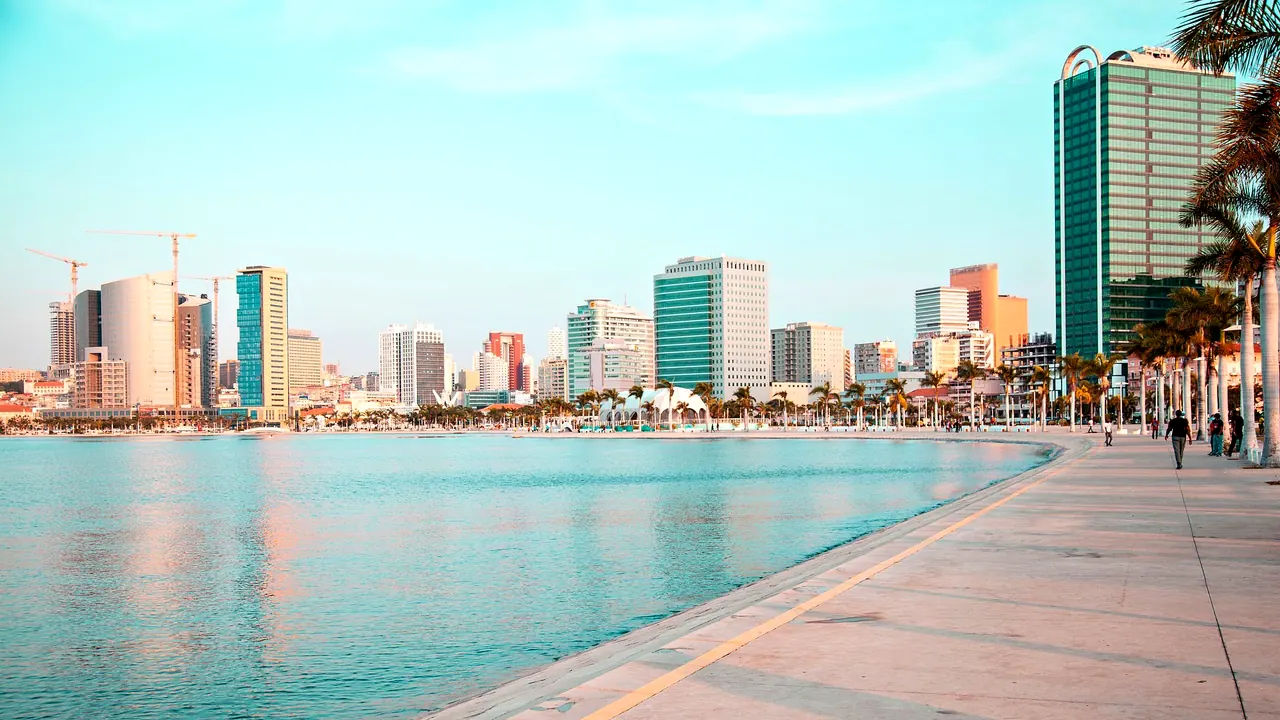

Photos: Luanda by Dm Photography DM, Pexels License; Nairobi by Lmwangi, CC BY-SA 3.0, cropped.
Luanda or Nairobi?
Our verdict in twelve categories, each scored against the same fixed benchmark cities, and the climate month by month, so you can choose for your trip.
Choose Luanda for
- beaches
- culture and sights
Luanda is the choice for a trip built around the Atlantic: weekends of grilled prawns and beach bars on the Ilha, a boat across the lagoon to the calm bay water of Mussulo, and nights dancing to kizomba and semba in the city that created them. It suits a traveller who is already going for work or has local friends to open doors, because it is expensive, hard to get around and thin on sights and day trips.
Choose Nairobi for
- nature and the outdoors
- families
- prices
Nairobi suits anyone who wants wildlife and open country close at hand. Lions and rhinos graze in the national park at the city's edge, the Rift Valley lakes and gorges are a short drive away, and the giraffe and elephant centres make it far easier with children. It also costs less, has better craft shopping and a more local night out in Westlands, but there is no sea at all.
Scoreboard
Twelve categories on one fixed scale from 0 to 100. The shaded stretch is the gap between the two.
Your match
Pick a travel style or drag the sliders, and both match scores follow your weighting.
Wins on beaches and culture and sights with your weighting.
Wins on nature and the outdoors and families with your weighting.
What matters to you?
Category by category
What the scores mean for a trip.
Beaches & swimming
Only Luanda offers a beach at all. The Ilha is where the city goes to eat and drink by the ocean at weekends, though the water there is not clean enough for serious swimming. Mussulo, a short boat ride across the lagoon, is the place for calm bay water and palms, and Cabo Ledo further south has surf.
Nairobi is hundreds of kilometres inland, so swimming means a hotel or club pool. If you want sand on a Kenya trip, you have to add separate days on the coast.
Food & drink
The two are about level, but the eating is quite different. In Luanda the best meals are grilled fish and prawns by the water on the Ilha, along with Angolan stews like muamba de galinha with funge and a strong Portuguese thread of bacalhau and custard tarts. Beyond the seafood, the choice narrows quickly to expensive hotel dining.
Nairobi's food is about meat and range. Nyama choma afternoons around the charcoal are a social ritual, Indian and Ethiopian cooking are easy to find, and the cafés of Westlands and Karen serve coffee grown just outside the city.
Culture & sights
Neither city takes more than a day or two of sightseeing, and they tell very different stories. Luanda is the older city, with the Fortaleza de São Miguel above the bay, colonial churches in the Baixa and the sobering slavery museum on the coast, all of it tied to four centuries of Portuguese rule and the Atlantic trade.
Nairobi only dates from a railway depot in 1899, so its interest lies in museums rather than streets. The National Museum's early human fossils and the Karen Blixen farmhouse are the highlights.
Nightlife
Nairobi has the slightly easier night out for a visitor. Westlands gathers rooftop bars and clubs playing Afrobeats and amapiano in one district, and the crowd is local rather than an expatriate set.
Luanda's nights revolve around dancing. This is the home of kizomba and kuduro, and beach bars on the Ilha run until dawn. But the venues are scattered and often aimed at a moneyed crowd, so the city rewards those who go with Angolan friends. In both cities you travel between venues by car.
Nature & outdoors
This is where the two differ most. Nairobi has a real safari park on its southern edge, forest trails in Karura and ridge walks in the Ngong Hills. The Rift Valley, with cycling among zebras in Hell's Gate and hippos on Lake Naivasha, is about two hours away.
Luanda's landscapes are coastal and take a full day each: the eroded red cliffs of the Miradouro da Lua, the mangroves where the Kwanza meets the sea, and Kissama's baobab savannah, where the game is sparse compared with what Nairobi offers.
Day trips
Neither city is a base for exploring other towns, though Nairobi has a little more within reach: lunch among the Limuru tea estates and the stone hand axes at Olorgesailie.
From Luanda, outings mean beach and landscape rather than places, and its historic towns such as Benguela and Lobito need a flight and an overnight stay.
Good for families
Nairobi is much better with children, mainly because of its animals. The Giraffe Centre, the Sheldrick elephant orphanage and a short morning game drive are hard to match, and staying in Karen or Langata keeps them close.
Luanda has little made for children, long hot drives and a year-round need for malaria precautions. A day at Mussulo or a seafood lunch among Angolan families on the Ilha is the main pleasure.
Getting around
Both cities are hard going without a driver, with some of the worst traffic in Africa and informal minibuses that a newcomer cannot work out. In Nairobi the matatus are at least a colourful sight, ride-hailing is cheap and the airport expressway helps.
In Luanda, the candongueiros and a railway that misses the visitor areas leave you depending on a hired car. You can only walk on the Marginal and in the Baixa, and only by day.
Shopping & style
Nairobi gives a shopper more to do. The Maasai Market moves around the city through the week with beadwork, soapstone and kiondo baskets, and in the Karen workshops you can watch glass and ceramic beads being made. Kenyan coffee and tea also make easy gifts to carry home.
Luanda's one real outing is the Benfica craft market for Chokwe masks, Pensador figures and wax-print cloth. Otherwise it is malls.
Affordability
Nairobi is clearly easier on the budget. Ride-hailing, local food, beer and coffee are cheap, although park fees for non-residents and game-drive vehicles add up.
Luanda is one of the dearer cities a visitor can choose. Hotels are priced for the oil trade, mid-range rooms are scarce, and the driver you need adds cost to every day.
Live music & performing arts
The two are much alike: the living music is the draw and formal performance is thin. Luanda's speciality is semba played live in bars to older couples dancing, with kizomba and kuduro alongside.
Nairobi has more variety to plan around. It has benga, rumba and jazz nights, traditional dances from across Kenya at Bomas of Kenya, plays in English and Swahili at the National Theatre, and a spoken-word and comedy scene.
Wellness & relaxation
Neither city is restful, but Luanda has nowhere calm to retreat to without leaving it. Downtime in town means a hotel pool between outings, and real quiet means taking the boat across the lagoon to Mussulo for a weekend away from the traffic.
Nairobi keeps its quiet inside the city. Karen and Langata are green and slow-paced, a long way in feel from the jammed roads of the centre, and the cool highland air makes an unhurried morning there restful.
When should you go?
Pick your month. The climate figures are measured averages, not a forecast.
Luanda in July
Nairobi in July
Daytime high, °C
Rainfall in the month, mm
Temperature and rainfall are climate normals, averaged over the years shown. Luanda: 1963-2025, 15 years observed (rainfall 1971-2000) normals, Luanda (3.9 km from centre). Nairobi: 1991-2020 normals, Nairobi ACC/FIC/RCC/MET/COM/ (13.3 km from centre).
Luanda is hot from December to May, with highs around 31°C, and the sea is at its warmest in February and March at 28°C, which makes these the beach months. They are also the wettest, with heavy downpours in March and April. From June to September the cacimbo brings dry, grey, cooler days and the sea drops to about 20°C. That suits walking the Baixa and the Marginal better, but it is poor for swimming.
Nairobi's highland climate stays mild all year, with highs in the mid-20s, so it is never too hot to be out. Its rain falls in two spells: the long rains of April and May, peaking at 126mm in April, and the short rains of November and December. January and February are the sunniest months, and the dry season from June to September is cool and often overcast but good for game drives.
Which traveller are you?
On a beach and sun trip, Luanda is the obvious pick. Nairobi lies on an inland plateau with nothing but hotel pools, while Luanda has the Ilha's seafront restaurants and the palm-lined sand of Mussulo just across the lagoon.
For an outdoors trip, Nairobi wins easily. Game drives start at the city's edge, Karura Forest has trails within town, and Hell's Gate, Lake Naivasha and Mount Longonot are within two hours. Luanda's cliffs and Kissama mean long days in traffic.
On a family trip with children, Nairobi is the easier city by far. Children can feed giraffes in Langata and watch baby elephants being bottle-fed at the orphanage. Luanda offers little beyond a day on the sand at Mussulo and a hotel pool.
Before you go
| Measure | Luanda | Nairobi |
|---|---|---|
| Official language | Portuguese | English, Swahili |
| Currency | Kwanza (AOA) | Kenyan Shilling (KES) |
| Sockets | C220 V, 50 Hz | G240 V, 50 Hz |
| Driving side | Right | Left |
| Time zone | UTC+1 | UTC+3 |
| Emergency number | Police 113, ambulance 116, fire 115 | Police 112/999, ambulance 112/999, fire 112/999 |
| Elevation | 6 m | 1,661 m |
| Main airport | Quatro de Fevereiro International Airport (LAD)5 km from centre | Jomo Kenyatta International Airport (NBO)13 km from centre60 non-stop destinations |
| Public holidays this year | 14 days | 10 days |
By the numbers
| Measure | Luanda | Nairobi |
|---|---|---|
| Population | 2,487,444 | 5,545,000 |
| People per km² | 22,013 | 7,967 |
| Museums within 10 km | 4 | 4 |
| UNESCO World Heritage sites within 50 km | 0 | 0 |
| Swim season, months above 21 °C | 11 months | - |
Where else could you go?
Every comparison below shares a destination with this one, so you can follow Luanda or Nairobi somewhere new.
- Arushavs Nairobi
- Benguelavs Luanda
- Mombasavs Nairobi
- Pointe-Noirevs Luanda
- Kampalavs Nairobi
- Stone Townvs Nairobi