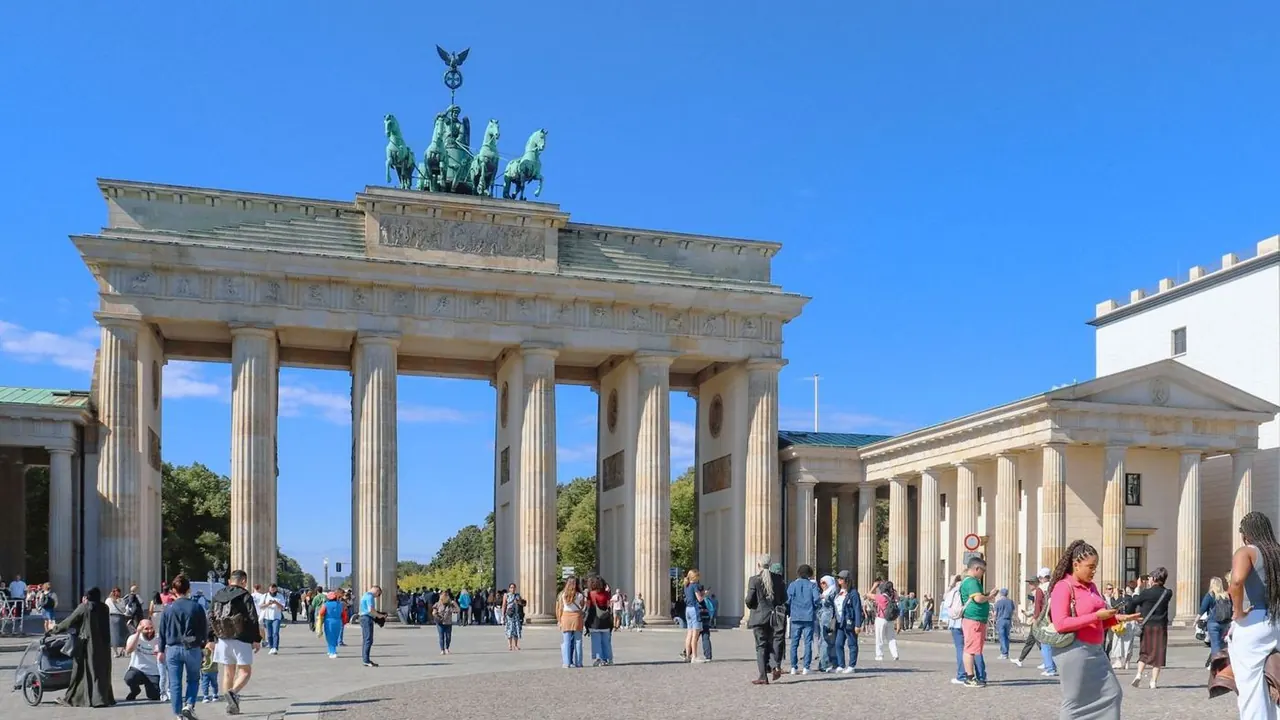
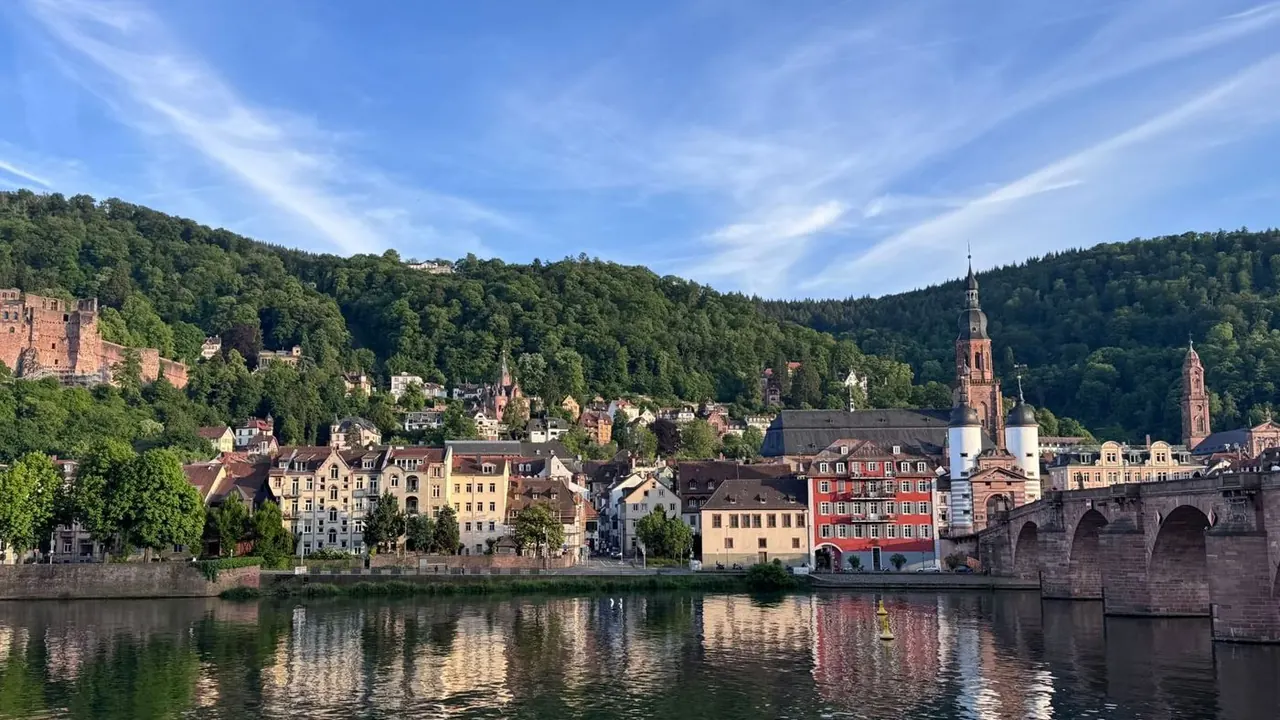
Photos: Berlin by Claudia Solano, Pexels License; Heidelberg by Kuanling Chen, Pexels License.
Berlin or Heidelberg?
Our verdict in twelve categories, each scored against the same fixed benchmark cities, and the climate month by month, so you can choose for your trip.
Choose Berlin for
- nightlife
- live music and the arts
- beaches
Berlin is the choice for travellers who want a big city with a lot going on. It has world-class museums, the sites where the twentieth century happened, three opera houses and a club scene people fly in for. The food is broad and cheap to eat your way through, the flea markets and independent shops reward a slow wander, and the lakes give a summer trip a swim on hot afternoons. Stay a week and you will still be finding things.
Choose Heidelberg for
- day trips
- nature and the outdoors
Heidelberg suits a slower, smaller trip. The castle ruin, the old town on the Neckar and the university can be seen on foot in a day or two, with forest paths starting right behind the rooftops. The town comes into its own as a base: Speyer, Schwetzingen, Worms and the Palatinate wine villages are all close, and local Riesling with a walk in the hills makes a better evening here than any night out.
Scoreboard
Twelve categories on one fixed scale from 0 to 100. The shaded stretch is the gap between the two.
Your match
Pick a travel style or drag the sliders, and both match scores follow your weighting.
Wins on nightlife and live music and the arts with your weighting.
Wins on day trips and nature and the outdoors with your weighting.
What matters to you?
Category by category
What the scores mean for a trip.
Beaches & swimming
Neither has a coast, but Berlin makes a proper summer pastime of lake bathing. The sandy lido at Wannsee, the Müggelsee and forest lakes such as Schlachtensee are all reachable by public transport, and they are warm enough to swim in July and August.
Heidelberg offers much less. The Neckar is not for swimming, so on hot days you choose between the town's outdoor pools and gravel-pit lakes on the Rhine plain, about half an hour away.
Food & drink
Berlin eats more widely. Its strength is variety rather than local cooking: döner and Turkish bakeries, good Vietnamese and Levantine food, street-food nights in the market halls and a serious fine-dining scene, all of it casual.
Heidelberg's appeal is regional and narrower: Maultaschen, Flammkuchen, spring asparagus and above all wine from the Bergstrasse and the Palatinate. Around the castle many places cater to day-trippers, so the better meals are in the side streets, in Neuenheim and in the wine villages nearby.
Culture & sights
Berlin is in another league for sightseeing. Museum Island's five museums, the old masters of the Gemäldegalerie and Charlottenburg Palace would be enough for a trip on their own, and on top of that the Reichstag, the Holocaust memorial and Bernauer Strasse tell Germany's twentieth century where it happened. What it lacks is a pretty, intact old town.
Heidelberg has exactly that: a Romantic castle ruin above a well-preserved baroque Altstadt, the Old Bridge and Germany's oldest university with its graffiti-covered Student Prison. It is beautiful and easy to take in, but a day or two covers it.
Nightlife
Berlin is one of the world's great club cities. Techno nights in old power stations and warehouses run from Saturday into Monday behind strict doors, and away from the clubs there are smoky Kneipen in Neukölln, cocktail bars in Mitte and canal-side beers in summer.
Heidelberg's nights belong to its students. The Untere Strasse fills with small bars in term time, and the old student taverns have real character. On weeknights and out of term the town goes to bed early, and anyone after a big club night takes the train to Mannheim or Frankfurt.
Nature & outdoors
Heidelberg has the countryside right on its doorstep. The Odenwald forest starts at the edge of the old town, the Philosophers' Walk and the Königstuhl funicular lead to hours of woodland trails, and the Neckar valley and Bergstrasse vineyards are good for cycling and walking.
Berlin's outdoors is flat and needs more effort: the Tiergarten, the Tempelhof runways, the Grunewald and the Havel lakes for sailing, plus the Wall Trail for an easy ride. It is green and pleasant, but there are no hills to climb.
Day trips
Heidelberg sits among a dense cluster of excursions. Speyer's Romanesque cathedral and the palace gardens at Schwetzingen are half an hour away, while Worms, Lorsch, Maulbronn, the castle villages up the Neckar and the Palatinate wine villages fill several more days. Strasbourg is possible at a push.
Berlin has Potsdam, whose Sanssouci palaces are as good a day out as any in Germany, plus Wittenberg, Leipzig and the Spreewald. Dresden makes for a long day, and after that the choices thin out quickly across the flat Brandenburg countryside.
Good for families
Berlin gives children more to do. Two large zoos, a dinosaur skeleton at the Natural History Museum and the hands-on trains and planes of the Museum of Technology can fill several days. The flat streets make pushchairs easy and the trains manage them well, though some of the historic sights are too heavy for young children.
Heidelberg is smaller and calmer. Its highlights are the funicular, a little fairy-tale park on the Königstuhl and river boat trips, and the Speyer technology museum and a theme park are within easy reach. The cobbled, sloping Altstadt is hard work with a pushchair.
Getting around
Berlin's U-Bahn, S-Bahn and trams link a large city quickly and run all night at weekends. The flat streets and bike lanes make cycling easy. You will still ride a lot, because Mitte, Kreuzberg and Charlottenburg are separate centres.
Heidelberg is the opposite problem in miniature. The Altstadt is one long walkable strip, but the station is a tram ride away and the castle approach is steep. The regional fare system makes the surrounding towns easy to reach without a car.
Shopping & style
Berlin is the better shopping city, mostly for independent and second-hand finds. Concept stores around Hackescher Markt, vinyl and vintage shops in Kreuzberg and the Sunday flea markets at Mauerpark and Boxhagener Platz are the highlights, with KaDeWe and the Kurfürstendamm for brands.
Heidelberg's shopping is essentially one long street, the Hauptstrasse, with chains at one end and steins, cuckoo clocks and Studentenkuss chocolates at the other. A bottle of Bergstrasse wine is the best thing to take home.
Affordability
The two cost much the same, with Berlin a little easier on the wallet. Its hotels are good value for a capital, and döner, Vietnamese canteens and Kneipe beer keep daily costs down, though museums and fine dining soon add up.
In Heidelberg the strain is beds: the town has few rooms for the number of visitors, so many people stay in Mannheim and come in by train. Meals in student cafés and taverns stay cheap, and the castle's entry fee is modest.
Live music & performing arts
Berlin has a schedule few cities match: three opera houses, the Berlin Philharmonic in Scharoun's Philharmonie, the Konzerthaus and famous theatre companies such as the Berliner Ensemble. Visitors who don't speak German can stick to opera, dance and the Friedrichstadt-Palast revue, or go to the jazz cellars.
Heidelberg does well for its size. One municipal theatre covers opera, drama and dance, the Heidelberger Frühling brings chamber music in spring, and summer shows are staged in the castle courtyard. For anything bigger, Mannheim's house is twenty minutes away.
Wellness & relaxation
Berlin's wellness is German sauna culture inside the city: large clothes-free sauna complexes with infusion rituals, and the columned halls of the Stadtbad Neukölln. Lazy Sundays in café gardens complete the picture.
Heidelberg has little in town beyond hotel spas, but it is quieter by nature. Evenings on the Neckar meadows and forest paths above the Philosophers' Walk calm you down, and the Kraichgau thermal baths and Baden-Baden are close for real spring water.
When should you go?
Pick your month. The climate figures are measured averages, not a forecast.
Berlin in July
Heidelberg in July
Daytime high, °C
Rainfall in the month, mm
Temperature and rainfall are climate normals, averaged over the years shown. Berlin: 1991-2020 normals, Berlin / Alexanderplatz (0.9 km from centre). Heidelberg: 1991-2020 normals, Heidelberg (4.5 km from centre).
Berlin and Heidelberg follow the same central European pattern: cold, grey winters and warm summers that peak in July and August, when Berlin reaches about 25°C and Heidelberg a degree more. Heidelberg warms a little sooner, so March is already milder for walking its old town and the Bergstrasse, but by April the two are almost level. High summer is the only time for swimming in either, which in Berlin means the lakes and in Heidelberg the outdoor pools. Neither gets too hot for sightseeing.
Rain is the bigger difference. Berlin is fairly dry, especially in April, with about 29mm. Heidelberg is wetter in most months, and from October to December it gets over 60mm a month against Berlin's 40mm or so. Sunshine is almost level month by month. For both, May to September is the best time, and late spring and early autumn are ideal for long walks.
Which traveller are you?
For a food and nightlife trip, Berlin wins easily. Turkish grill houses in Kreuzberg and Neukölln, market-hall evenings and natural wine bars come before techno clubs that run all weekend. Heidelberg offers wine taverns and a student pub lane that goes quiet out of term.
On an outdoors trip, Heidelberg is the better pick. Forest trails climb from the old town to the Königstuhl, the Neckar cycle path runs upriver past castles, and the Palatinate Forest is an hour away. Berlin's parks and lakes are pleasant but entirely flat.
For a culture and arts trip, choose Berlin. Museum Island, the Gemäldegalerie, the Wall memorials and the Berlin Philharmonic make up a far bigger programme than Heidelberg's castle, university and municipal theatre, which most visitors finish in a couple of days.
Before you go
| Measure | Berlin | Heidelberg |
|---|---|---|
| Official language | German | German |
| Currency | Euro (EUR) | Euro (EUR) |
| Sockets | CF230 V, 50 Hz | CF230 V, 50 Hz |
| Driving side | Right | Right |
| Time zone | UTC+1, UTC+2 in summer | UTC+1, UTC+2 in summer |
| Emergency number | 112 | 112 |
| Elevation | 34 m | 114 m |
| Main airport | Berlin Brandenburg Airport (BER)19 km from centre162 non-stop destinations | Frankfurt Main Airport (FRA)69 km from centre296 non-stop destinations |
| Public holidays this year | 10 days | 12 days |
By the numbers
| Measure | Berlin | Heidelberg |
|---|---|---|
| City population | 3,700,577 | 156,092 |
| People per km² | 4,153 | 1,433 |
| Museums within 10 km | 157 | 17 |
| UNESCO World Heritage sites within 50 km | 4 | 4 |
Where else could you go?
Every comparison below shares a destination with this one, so you can follow Berlin or Heidelberg somewhere new.