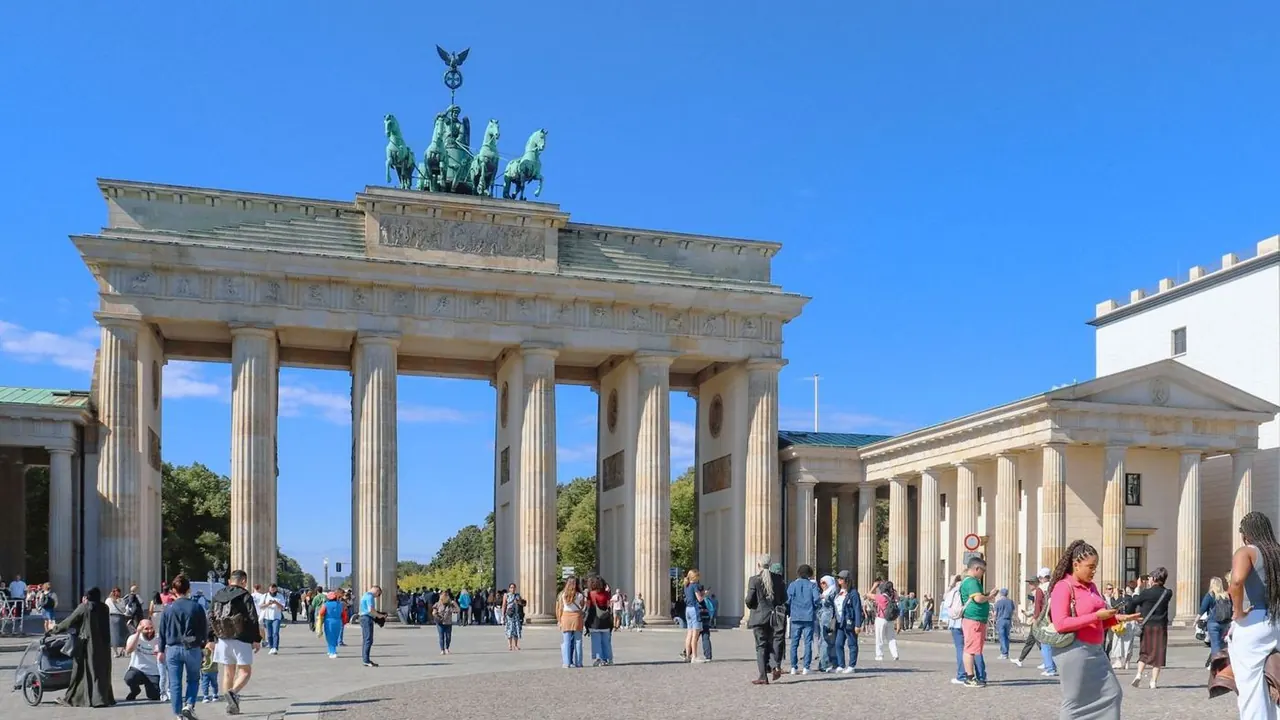
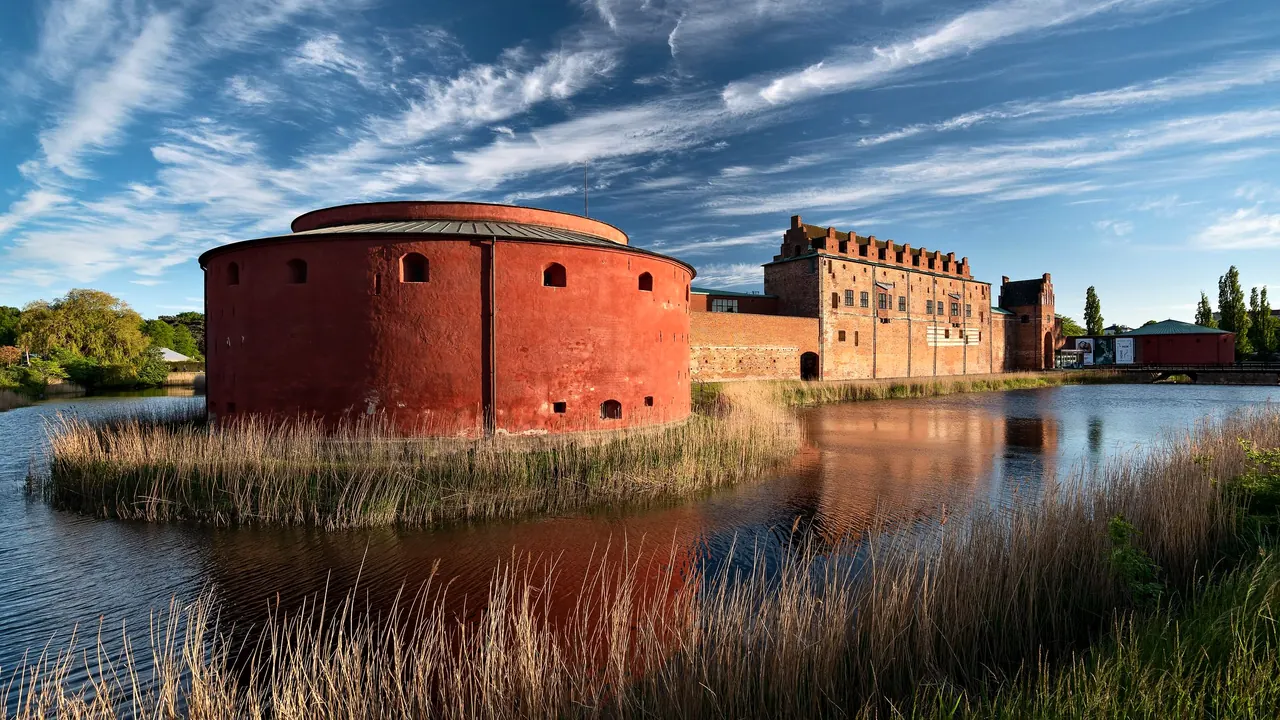
Photos: Berlin by Claudia Solano, Pexels License; Malmo by Kateryna Baiduzha, CC BY-SA 4.0, cropped.
Berlin or Malmo?
Our verdict in twelve categories, each scored against the same fixed benchmark cities, and the climate month by month, so you can choose for your trip.
Choose Berlin for
- nightlife
- culture and sights
- live music and the arts
Berlin is the better choice for a full city trip with plenty of evenings out. It has world-class museums, places where twentieth-century history actually happened, three opera houses and a club scene people fly in for. It is also the easier city to fill a week in with children, and the cheaper of the two once you sit down to eat or drink.
Choose Malmo for
- day trips
- nature and the outdoors
- wellness
Malmo is for a slower, smaller trip, best treated as a base for the region. The centre is easy to walk or cycle, the sea and a sauna bathhouse are close to the squares, and Copenhagen, Lund and the Skåne coast are all an easy day out. Choose it if you would rather have a calm base than a city that keeps you busy every night.
Scoreboard
Twelve categories on one fixed scale from 0 to 100. The shaded stretch is the gap between the two.
Your match
Pick a travel style or drag the sliders, and both match scores follow your weighting.
Wins on nightlife and culture and sights with your weighting.
Wins on day trips and nature and the outdoors with your weighting.
What matters to you?
Category by category
What the scores mean for a trip.
Beaches & swimming
Neither city is a beach destination, and both get only a few weeks of swimming each summer. What differs is the water. Berlin swims in lakes: the sandy lido at Wannsee, the Müggelsee and small forest lakes such as Schlachtensee, all reached by S-Bahn and a little warmer in high summer.
Malmo has the sea, with Ribersborg's sand and dunes a short cycle from the centre and the Öresund Bridge on the horizon. The shallow, calm water suits small children, but it stays cool, and the finer, quieter sands at Skanör and Falsterbo are half an hour away.
Food & drink
Berlin gives you more choice and more depth. Turkish grill houses and bakeries in Kreuzberg and Neukölln, good Vietnamese and Levantine cooking, Markthalle Neun's street-food evenings and a serious fine-dining tier mean you can eat somewhere different every meal.
Malmo has a narrower range, but some of it is local in a way Berlin's is not. There is falafel around Möllevångstorget, Skåne produce such as smoked eel and goose, and the daily fika ritual. Ambitious kitchens are fewer, and dinner out costs noticeably more.
Culture & sights
Berlin is one of Europe's great cities for sightseeing. Museum Island has Nefertiti and the Pergamon collections, and the Gemäldegalerie and Charlottenburg Palace are close by. Berlin also lets you follow the twentieth century on foot, from the Reichstag dome to the Wall Memorial on Bernauer Strasse and the East Side Gallery.
Malmo's sights take a day or two. You can see Stortorget and the half-timbered houses of Lilla Torg, St Petri Church, the moated Malmöhus with its museums, and the Turning Torso out in the Western Harbour. It is a pleasant setting, but it will not fill a week built around culture.
Nightlife
Berlin is one of the world's great places for a night out. There are techno clubs in old power stations with no closing time, deep bar districts in Friedrichshain and Kreuzberg, and canal-side drinking on summer nights.
Malmo is low-key by comparison. Möllevången's bars and small clubs fill at weekends and Lilla Torg's terraces are pleasant on summer evenings, but weeknights are quiet and drink prices keep things restrained. Locals who want a big night tend to go to Copenhagen.
Nature & outdoors
Both cities are flat and green, with gentle landscapes rather than dramatic ones. They differ in what that greenery is. Berlin's is inland and inside the city: the Tiergarten, the runways of Tempelhof, the Grunewald forest and the Havel and Müggelsee lakes for sailing and paddling, with Brandenburg's canoe country beyond.
Malmo's outdoors is about the coast. You get a seafront promenade for sunset cycling and, within an hour, the wooded ravine of Söderåsen and Kullaberg's sea cliffs and kayaking. Birdwatchers have the bonus of the autumn raptor migration over Falsterbo.
Day trips
Malmo has the better day trips because a second capital is just across the bridge. Copenhagen is about thirty-five minutes by train, Lund's cathedral is ten minutes away, and Kronborg, the Louisiana museum, Roskilde, Ystad and Ales Stenar give you days of variety on both sides of the Öresund.
Berlin has one outstanding trip, Potsdam's Sanssouci palaces, plus Wittenberg, Leipzig, the Spreewald and Sachsenhausen. Dresden is a long but rewarding day. Beyond those, the list is short.
Good for families
Berlin has far more to keep children busy. It has two large zoos, an aquarium, the dinosaur skeleton at the Natural History Museum and the trains and planes of the German Museum of Technology, with lakes and playgrounds in between. Some of the history sites are heavy going for young children.
Malmo is calm and welcoming with children but has little built for them. Its highlights are the shallow city beach, the small aquarium in Malmöhus and the submarine at the technology and maritime museum. Families with older children may run short of ideas after a few days.
Getting around
Berlin has the fuller network. U-Bahn, S-Bahn, trams and buses share one ticket and run all night at weekends, which matters because Mitte, Kreuzberg, Prenzlauer Berg and Charlottenburg are separate centres you will travel between.
Malmo is small enough that you rarely need much transport. The squares, the castle park and the beach are all a walk or short cycle apart, and buses cover the rest since there is no metro or tram. Its underground rail link to Lund and Copenhagen is what makes day trips so easy.
Shopping & style
Berlin is the better city for shopping, mostly because of its independent and second-hand shops. Its Sunday flea markets at Mauerpark and Boxhagener Platz are full of vinyl and East German curios, Kreuzberg has vintage and record shops, and young designers sell from concept stores around Hackescher Markt. In the west, the Kurfürstendamm has the big brands and KaDeWe, the century-old department store, has its famous food hall.
Malmo's shopping is practical but not a reason to go. Södergatan has the high-street chains, the lanes around Lilla Torg and Gamla Väster have Swedish homeware and design boutiques, and there is a large mall at Hyllie. Serious shoppers tend to save their time for Copenhagen.
Affordability
Berlin goes further on the same budget, especially in the evening. Döner, Vietnamese canteens and Kneipe beer stay cheap, and hotels undercut most big capitals.
Malmo is gentle by Nordic standards and good value by day, thanks to falafel counters, the weekday set lunch and inexpensive museums. Dinners, drinks and taxis cost well above Berlin's, and heavy alcohol taxes mean nights out are where a Malmo budget goes.
Live music & performing arts
Berlin has one of the deepest stage calendars anywhere. There are three opera houses, the Berlin Philharmonic in Scharoun's Philharmonie, the Konzerthaus, the Friedrichstadt-Palast revue, and jazz cellars and experimental venues most nights.
Malmo does well for its size. Malmö Opera is one of Scandinavia's largest stages, the symphony orchestra plays in Malmö Live, and the August festival brings free concerts to the streets. Theatre in both cities is mostly in the local language, but in Berlin opera and dance give visitors plenty to choose from instead.
Wellness & relaxation
Both cities have a sauna culture and no thermal tradition of their own, so the difference is in setting. Berlin has large clothes-free sauna complexes with ritual infusions, and the columned halls of the Stadtbad Neukölln. Spring-water resorts are an hour out in Brandenburg.
Malmo's version is simpler and more elemental: a wooden 1890s bathhouse on a pier, where you go from wood-fired saunas straight into the sea in any season. Afterwards there is a calm stroll home along the waterfront.
When should you go?
Pick your month. The climate figures are measured averages, not a forecast.
Berlin in July
Malmo in July
Daytime high, °C
Rainfall in the month, mm
Where the figures come from
Malmo's temperatures are measured 27 km from the centre, at Falsterbo.
Malmo has no rain gauge within 25 km of the centre, so its rainfall comes from a gridded climate dataset read at the city rather than from a gauge further away.
Temperature and rainfall are climate normals, averaged over the years shown. Berlin: 1991-2020 normals, Berlin / Alexanderplatz (0.9 km from centre). Malmo: 1991-2020 normals, Falsterbo (27.3 km from centre).
Both cities are at their best from late May to early September, but Berlin is clearly the warmer of the two. Highs reach about 25°C in July and August, and the long sunny days are what make the parks and lakes worth it. July is the wettest month, with around 76mm, usually as heavy showers. May, June and September are the most comfortable months for long days on foot between museums. From November to February Berlin is cold and grey, with little sun.
Malmo is cooler all year and peaks at about 21°C in high summer. The sea only gets warm enough for a bracing swim in July and August, when it reaches about 18°C. The rain is heaviest from late summer into autumn. In winter the two cities are about equally cold, but Malmo is windier and darker. If you want warm weather for sightseeing, Berlin has the longer season. Malmo's summer is good for walking and cycling, not for heat.
Which traveller are you?
For a culture and arts trip, Berlin is the obvious choice. Museum Island, the Gemäldegalerie, the Wall sites and memorials, three opera houses and the Berlin Philharmonic give you weeks of material. Malmo's old squares and castle museum take only a couple of days.
On a food and nightlife trip, Berlin wins easily. You can eat your way through Turkish grills, Vietnamese canteens and market halls, then go on to bars and techno clubs that stay open into Monday. Malmo's evenings are quieter, pricier and over sooner.
For a relaxing and wellness trip, Malmo has the gentler pace and a ritual Berlin lacks. You alternate the wood-fired saunas of the old pier bathhouse with dips in the sea, then walk the flat seafront at dusk, all within cycling distance of the centre.
Before you go
| Measure | Berlin | Malmo |
|---|---|---|
| Official language | German | Swedish |
| Currency | Euro (EUR) | Swedish Krona (SEK) |
| Sockets | CF230 V, 50 Hz | CF230 V, 50 Hz |
| Driving side | Right | Right |
| Time zone | UTC+1, UTC+2 in summer | UTC+1, UTC+2 in summer |
| Emergency number | 112 | 112 |
| Elevation | 34 m | 12 m |
| Main airport | Berlin Brandenburg Airport (BER)19 km from centre161 non-stop destinations | Copenhagen Kastrup Airport (CPH)22 km from centre196 non-stop destinations |
| Public holidays this year | 10 days | 16 days |
By the numbers
| Measure | Berlin | Malmo |
|---|---|---|
| City population | 3,700,577 | 339,316 |
| People per km² | 4,153 | 4,205 |
| Museums within 10 km | 157 | 24 |
| UNESCO World Heritage sites within 50 km | 4 | 2 |
| Swim season, months above 21 °C | - | None |
Where else could you go?
Every comparison below shares a destination with this one, so you can follow Berlin or Malmo somewhere new.