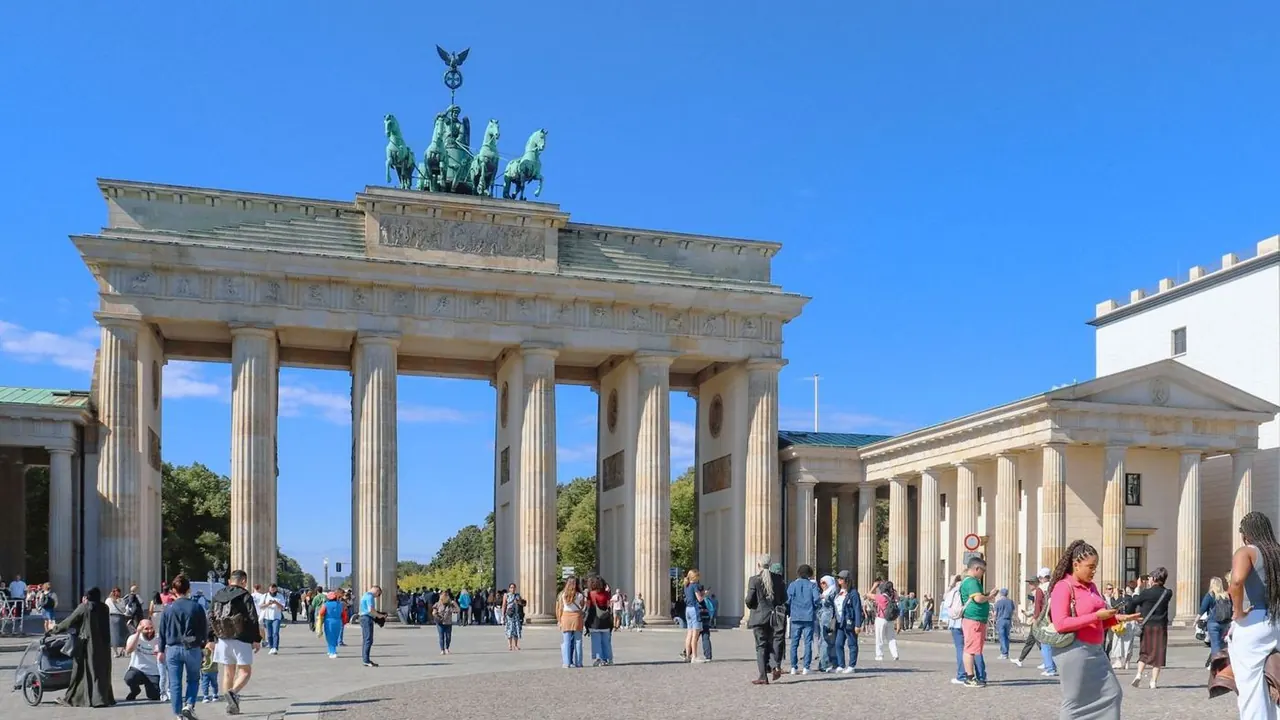
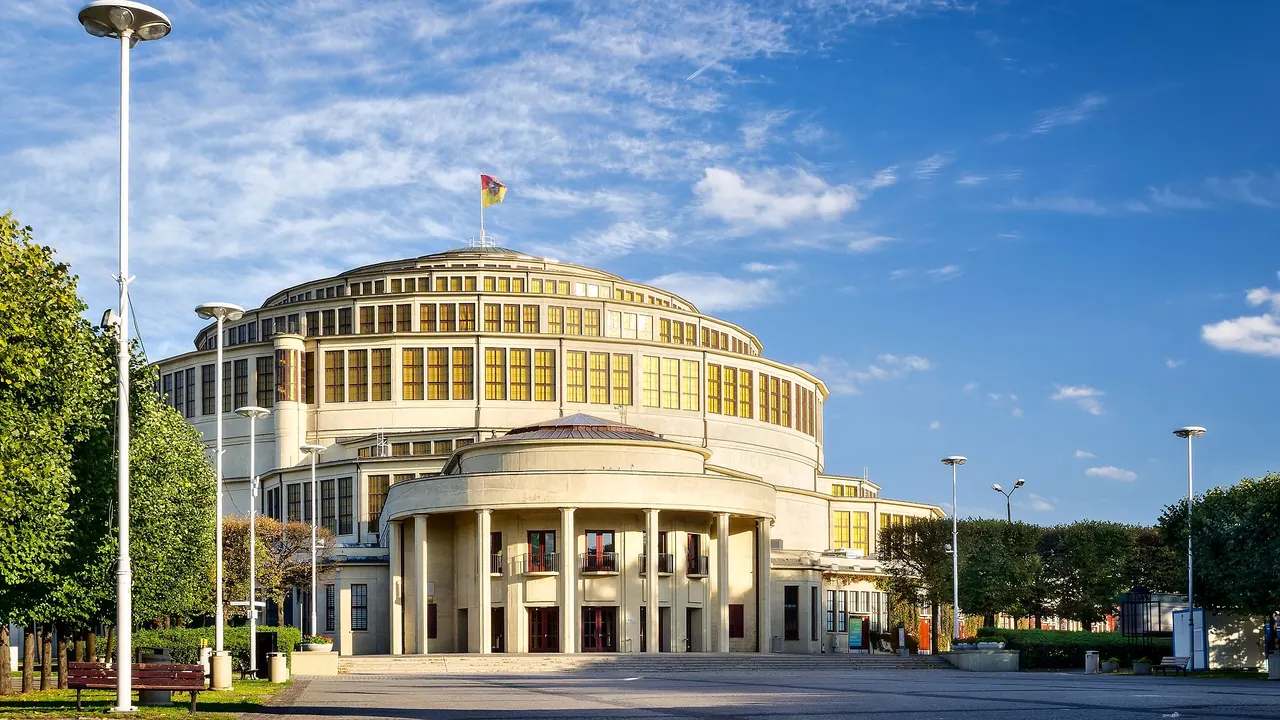
Photos: Berlin by Claudia Solano, Pexels License; Wroclaw by Jar.ciurus, CC BY-SA 3.0 PL, cropped.
Berlin or Wroclaw?
Our verdict in twelve categories, each scored against the same fixed benchmark cities, and the climate month by month, so you can choose for your trip.
Choose Berlin for
- nightlife
- live music and the arts
- beaches
Choose Berlin if the evenings matter as much as the days. Its techno clubs, three opera houses and the Berlin Philharmonic are in a different league, its museums and Cold War sites could fill a week, and the food runs from Turkish grill houses to fine dining. It also suits families and shoppers better, as long as you accept a large city where you ride trains between separate districts.
Choose Wroclaw for
- prices
- nature and the outdoors
Wroclaw is the better pick for a cheaper, slower trip built around one beautiful old town. The Market Square, the cathedral island and the riverside sit close together on foot, rooms and meals cost far less, and the castles, spa towns and hills of Lower Silesia make good outings, especially with a hire car.
Scoreboard
Twelve categories on one fixed scale from 0 to 100. The shaded stretch is the gap between the two.
Your match
Pick a travel style or drag the sliders, and both match scores follow your weighting.
Wins on nightlife and live music and the arts with your weighting.
Wins on prices and nature and the outdoors with your weighting.
What matters to you?
Category by category
What the scores mean for a trip.
Beaches & swimming
Neither city has a sea, and the Baltic is a long way from both. Lake swimming makes the difference: Berlin has real bathing lakes inside the city, from the long sandy shore of the Wannsee lido to Schlachtensee and Plötzensee, all reachable by S-Bahn and pleasant to swim in during high summer.
Wroclaw's Oder beaches are deckchairs and drinks stands by the river, made for lounging rather than swimming, so a dip means an outdoor pool or a trip out to a reservoir in the countryside.
Food & drink
Berlin wins on range. Turkish bakeries and grill houses in Kreuzberg and Neukölln, good Vietnamese and Korean cooking, street-food evenings in the market halls and a serious fine-dining tier mean you can eat something different every night.
Wroclaw is narrower and more traditional: pierogi, żurek in its bread bowl, roast duck and cheap canteen lunches in the milk bars, with brewpubs in old cellars as the best of the drinking. It is hearty and satisfying, but you eat Polish for most of the trip, and the Market Square terraces are better for the view than the plate.
Culture & sights
Berlin has far more to see. The five museums of Museum Island, with Nefertiti and the Pergamon collections, the old masters of the Gemäldegalerie, and the twentieth century told on the spot at the Reichstag, the Holocaust memorial and the Wall on Bernauer Strasse could fill a week. What it lacks is a handsome old core.
That is exactly where Wroclaw is strong. The great Market Square with its Gothic town hall, the brick lanes of Ostrów Tumski at lamplighting time and the gilded Aula Leopoldina make a beautiful walk, and the Centennial Hall and the Racławice Panorama add more. But it is a city of two or three days for sights, where Berlin keeps going much longer.
Nightlife
Berlin is in another class. Its techno clubs in old power stations and factories, with strict doors and parties running from Saturday night into Monday, are the reason many people visit at all, and the corner Kneipen of Neukölln and the bars of Friedrichshain and Kreuzberg are just as deep.
Wroclaw offers a good student night out instead: drifting between the small bars in the courtyard passage off Ruska Street and the cellars around the square until after 2am. Its clubs are modest, though, and the town goes quiet between university terms.
Nature & outdoors
Both are flat cities with plenty of green, so the difference lies in what surrounds them. Berlin's outdoors is water and woodland: sailing on the Havel lakes, walks in the Grunewald, paddling on the Müggelsee, the long Berlin Wall Trail by bike and cycling on the old Tempelhof runways.
Wroclaw has its river islands and Szczytnicki Park with the Japanese Garden in town, but its advantage is hills within reach. Ślęża is a half-day climb, and the Karkonosze and the sandstone Table Mountains, about two hours away, offer real hiking and winter skiing that Berlin cannot match.
Day trips
Berlin edges it, mainly thanks to Potsdam: the Sanssouci palaces and gardens are half an hour away by train and fill a whole day. Fast trains also make Wittenberg, Leipzig and even Dresden easy outings without a car.
Wroclaw's trips are more rural and romantic: Książ castle above its wooded gorge, the wooden Churches of Peace at Świdnica and Jawor, and the Baroque abbey at Krzeszów. They are rewarding, but spread out, so a hire car helps if you want to combine several in one day.
Good for families
Berlin gives children more to do. Two large zoos, the towering dinosaur in the Natural History Museum, the trains and planes of the Museum of Technology and dedicated children's museums can fill a week, and prams cope easily on the flat streets and trains.
Wroclaw is easy and safe with children, and hunting for the bronze dwarfs, the shark tunnel in the Afrykarium and the summer fountain shows by the Centennial Hall are real treats. After a few days, though, the list runs short.
Getting around
Berlin's U-Bahn, S-Bahn, trams and buses cross a big city quickly on one ticket, with trains through the night at weekends, and you will use them, because Mitte, Kreuzberg and Charlottenburg are separate centres some way apart.
Wroclaw works the other way round. Most sights sit in a compact, partly pedestrianised centre you can cover on foot, but the trams beyond it are slow at rush hour, and the castles and mountain villages are much easier by car.
Shopping & style
Berlin has much more to browse. The big brands of the Kurfürstendamm, the KaDeWe food hall, young designers around Hackescher Markt and the Sunday flea markets at Mauerpark and Boxhagener Platz, good for vinyl and East German curios, make shopping a real part of the trip.
Wroclaw is mostly malls, though the 1930s Renoma building is worth seeing for its ceramic facade. Its better finds are things to take home: Bolesławiec blue-and-white stoneware, Baltic amber and little dwarf figurines.
Affordability
Wroclaw is clearly the cheaper trip. Central hotels cost a fraction of Western capital rates, a milk bar lunch and a beer are very cheap, and trams, museums and the zoo are modestly priced; only the terraces on the square charge more.
Berlin is reasonable for a capital, and döner, Vietnamese canteens and corner bars keep everyday meals cheap. Museum tickets, fine dining and hotel rates during trade fairs add up much faster, though.
Live music & performing arts
Berlin is one of the great stage cities: three opera houses, the Berlin Philharmonic in Scharoun's Philharmonie, the Konzerthaus on the Gendarmenmarkt and the Friedrichstadt-Palast revue, with jazz cellars and experimental venues on top.
Wroclaw does well for its size, with a full concert season at the National Forum of Music, an opera house by the moat and festivals such as Wratislavia Cantans and Jazz on the Oder. In both cities most theatre is in the local language, so music and opera are the easiest way in for visitors.
Wellness & relaxation
Berlin has a real sauna culture, with large clothes-free sauna complexes offering infusion rituals and quiet rest rooms, and the columned halls of the Stadtbad Neukölln for an atmospheric swim. Slow Sunday mornings in café gardens are part of local life.
Wroclaw has hotel spas and an aquapark with saunas, but no bathing tradition of its own. Both have spring-water resorts about an hour out; Wroclaw's are the old Lower Silesian spa towns such as Szczawno-Zdrój, with pump rooms and spa parks in the Central European style.
When should you go?
Pick your month. The climate figures are measured averages, not a forecast.
Berlin in July
Wroclaw in July
Daytime high, °C
Rainfall in the month, mm
Temperature and rainfall are climate normals, averaged over the years shown. Berlin: 1991-2020 normals, Berlin / Alexanderplatz (0.9 km from centre). Wroclaw: 1991-2020 (rainfall 1961-1990) normals, Wroclaw Copernicus Airport (10.5 km from centre).
The two cities have almost the same temperatures through the year. Winters are cold and grey, with highs around 4°C and little sun, so December to February suits museums more than strolling. May and September are pleasant for walking the streets, and summer highs reach about 25°C, warm but never too hot for sightseeing. July and August are also the only months when Berlin's lakes are warm enough for a proper swim.
The difference is rain and sun. Berlin's rain is spread fairly evenly across the year, with July the wettest month at 76mm. Wroclaw is drier than Berlin in winter but wetter from May to August, with summer months around 80mm, although it also gets a little more sunshine. For both, late spring and early autumn give the most comfortable balance.
Which traveller are you?
On a food and nightlife trip, Berlin is the clear choice. Its warehouse techno clubs run from Saturday into Monday, the Kneipen and canal bars fill the gaps, and Turkish, Vietnamese and market-hall food keeps late nights well fed.
For a culture and arts trip, Berlin again. Museum Island, the Gemäldegalerie and the Wall memorials give it the deeper sights, and three opera houses plus the Berlin Philharmonic mean a serious performance is on almost every night of your stay.
On a trip with a tight budget, Wroclaw goes much further. Central rooms cost a fraction of Western capital rates, milk bar lunches and beer are very cheap, and since the old town is walkable you spend little on transport.
Before you go
| Measure | Berlin | Wroclaw |
|---|---|---|
| Official language | German | Polish |
| Currency | Euro (EUR) | Zloty (PLN) |
| Sockets | CF230 V, 50 Hz | CE50 Hz |
| Driving side | Right | Right |
| Time zone | UTC+1, UTC+2 in summer | UTC+1, UTC+2 in summer |
| Emergency number | 112 | 112 |
| Elevation | 34 m | 111 m |
| Main airport | Berlin Brandenburg Airport (BER)19 km from centre161 non-stop destinations | Copernicus Wrocław Airport (WRO)11 km from centre84 non-stop destinations |
| Public holidays this year | 10 days | 14 days |
By the numbers
| Measure | Berlin | Wroclaw |
|---|---|---|
| City population | 3,700,577 | 673,531 |
| People per km² | 4,153 | 2,299 |
| Museums within 10 km | 157 | 42 |
| UNESCO World Heritage sites within 50 km | 4 | 2 |
Where else could you go?
Every comparison below shares a destination with this one, so you can follow Berlin or Wroclaw somewhere new.