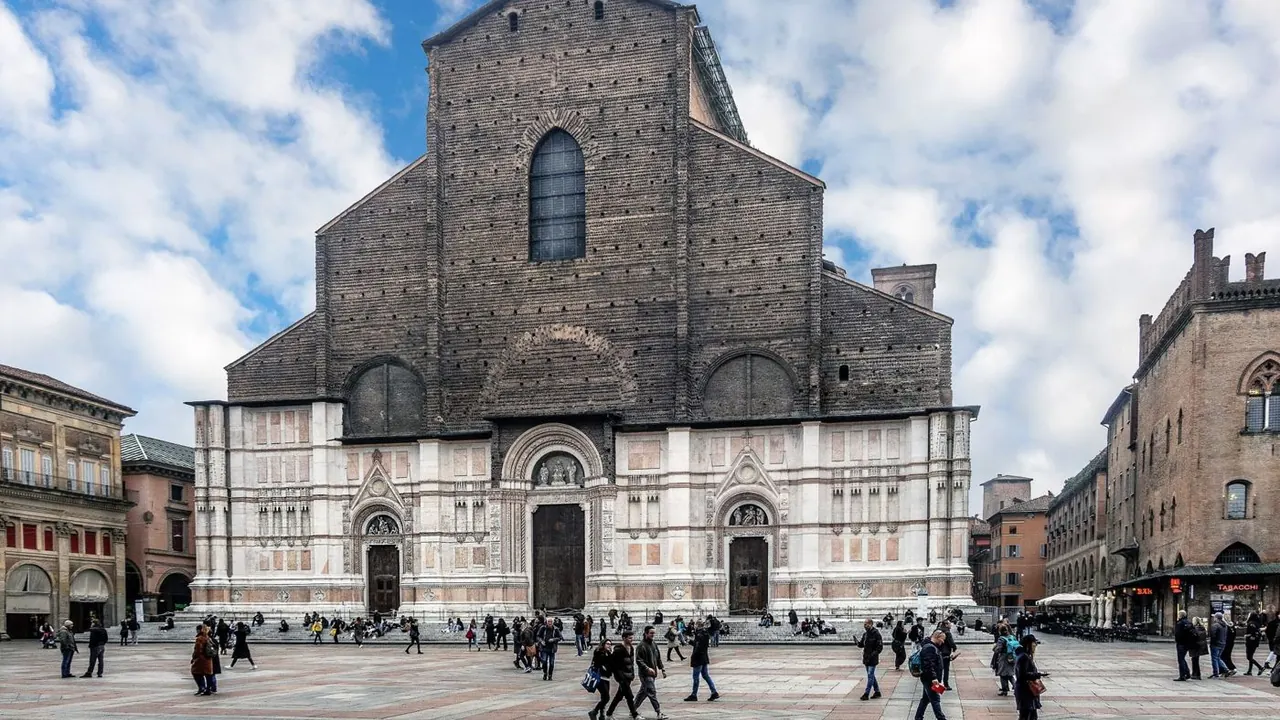
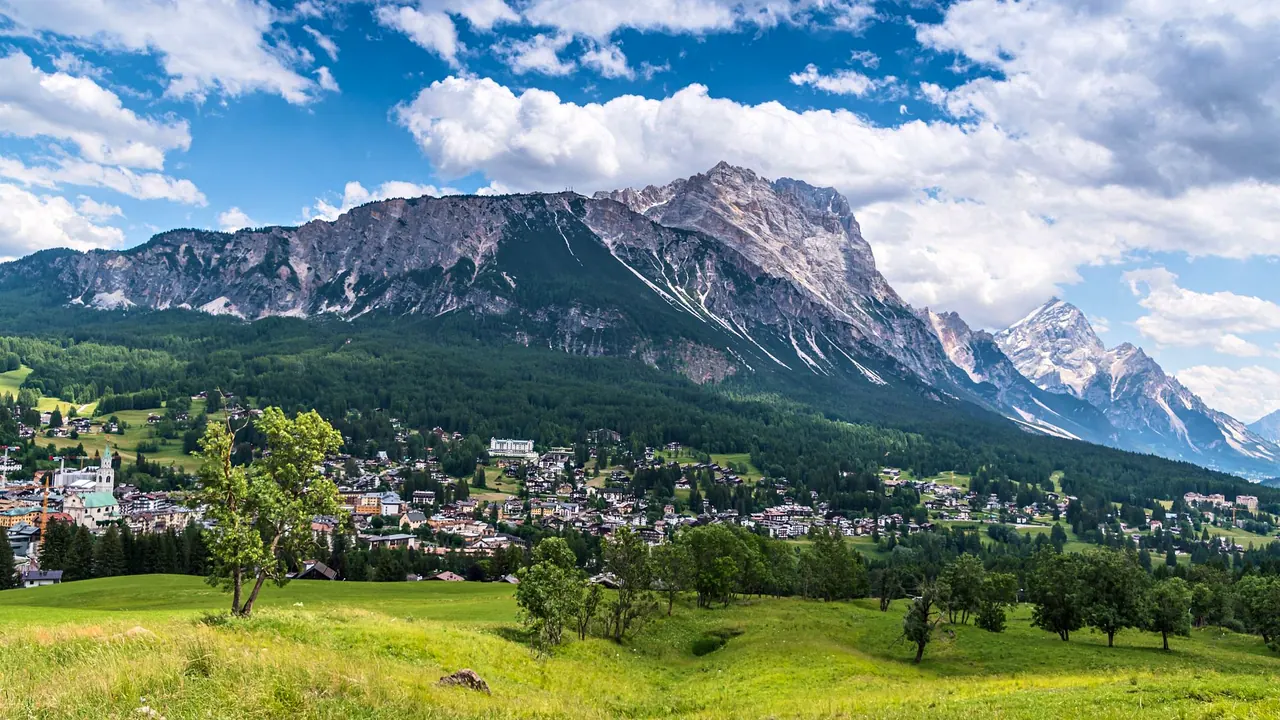
Photos: Bologna by Vanni Lazzari, CC BY-SA 4.0, cropped; Cortina d'Ampezzo by Andreas Neubauer, Pexels License.
Bologna or Cortina d'Ampezzo?
Our verdict in twelve categories, each scored against the same fixed benchmark cities, and the climate month by month, so you can choose for your trip.
Choose Bologna for
- culture and sights
- day trips
- live music and the arts
Bologna suits travellers who want a city to live in for a few days: long lunches of fresh pasta, evenings among students, a medieval centre of brick arcades to wander, and fast trains to Florence, Ravenna, Verona or Venice. It is the better choice for food, history and day trips, it costs far less, and you need neither a car nor any particular fitness to enjoy it.
Choose Cortina d'Ampezzo for
- nature and the outdoors
- wellness
Cortina is for people who come for the mountains and are happy to pay for them. The Dolomites rise straight from the edge of town, with lifts onto the peaks, the Tre Cime close by, hut-to-hut trails and via ferrata in summer and a huge linked ski area in winter. Evenings are quiet and there is little to visit in town, so it rewards skiers, hikers and climbers rather than sightseers.
Scoreboard
Twelve categories on one fixed scale from 0 to 100. The shaded stretch is the gap between the two.
Your match
Pick a travel style or drag the sliders, and both match scores follow your weighting.
Wins on culture and sights and day trips with your weighting.
Wins on nature and the outdoors and wellness with your weighting.
What matters to you?
Category by category
What the scores mean for a trip.
Beaches & swimming
Neither city is a place for a beach vacation, but Bologna at least has the sea within reach. Rimini and the Romagna lidos are about an hour away by train, a fair escape on a hot August day, with shallow Adriatic water around 25°C.
Cortina is more than two hours' drive from the coast, and its alpine lakes such as Ghedina stay cold all summer, so swimming there usually means the hotel pool.
Food & drink
Bologna is one of Italy's great places to eat. Hand-rolled tagliatelle, tortellini in brodo, mortadella and Parmigiano from towns nearby are served in osterie and sold in the market lanes of the Quadrilatero, and eating can easily be the main point of the trip.
Cortina eats well for a small mountain town, with casunziei, polenta with game and long lunches on rifugio terraces among the peaks. But the choice in the valley is narrow and expensive, and it cannot compete with Bologna's depth.
Culture & sights
Here the gap is wide. Bologna's whole medieval centre is the attraction: kilometres of brick porticoes, San Petronio, the Two Towers, the seven churches of Santo Stefano and the old university palaces, enough for two or three full days.
Cortina's sights fill a rainy afternoon: the basilica and its bell tower, the 1956 Olympic ice stadium and the small Rimoldi art collection. Its most moving history, the First World War tunnels on Lagazuoi, takes a mountain day to reach.
Nightlife
Bologna's students keep the city out late. There are cheap bars spilling onto Piazza Verdi, small taverns along Via del Pratello and wine bars after aperitivo, though it is casual rather than smart and goes quiet in August.
Cortina's evenings are après-ski drinks, a stroll on the Corso Italia and long dinners. A few glamorous bars stay open in the peak winter weeks, but most of the year the town is asleep early.
Nature & outdoors
Cortina is the obvious choice for anyone who wants landscape. The Tofane, Cristallo and Cinque Torri ring the valley, Lago di Misurina and the Tre Cime are under an hour away, and summer and winter both offer serious mountain sport straight from town.
Bologna has pleasant green edges: the arcaded climb to San Luca, the Colli Bolognesi paths and the start of the Via degli Dei to Florence. It makes a good walking base in spring and autumn, but it is hill country next to Cortina's high peaks.
Day trips
Bologna's station puts half of northern Italy within a day. Florence is barely half an hour away, Ravenna's mosaics, Ferrara, Modena and Parma are all close, and Venice, Verona and Padua are possible without a car.
From Cortina, most outings go up rather than out. The South Tyrol towns of San Candido, Brunico and Bolzano are pleasant drives, but Venice takes a long coach ride each way, so the mountains themselves remain the main excursion.
Good for families
Both work for families, in very different ways. Bologna's flat, mostly car-free centre and shady arcades make it easy to get around with a pushchair, and pasta and gelato keep meals simple, but the sights are made for adults and the summer heat is tiring for small children.
Cortina suits active families: ski schools and beginner slopes at Socrepes, skating at the Olympic stadium, and easy walks to huts with meadows in summer. Rainy days drag there, and the bills add up quickly.
Getting around
Bologna is far easier. The compact centre is best on foot under the porticoes, buses reach the hills, and the main station at the edge of the old town connects you to the rest of the north.
Cortina has had no railway since 1964, so arriving means a coach from Venice or a long drive. The town centre is walkable, but buses to the passes and the Tre Cime are limited, and many visitors end up hiring a car.
Shopping & style
Bologna offers more variety. Delicatessen food to take home is the highlight, and there are high-street chains on Via dell'Indipendenza, luxury houses around the Galleria Cavour, and markets and vintage shops in the university quarter.
Cortina's shopping is a single polished street. The Corso Italia has furriers, jewellers and upmarket mountain wear, anchored by the old Cooperativa di Cortina, but there is little beyond it.
Affordability
Neither is cheap, but Bologna is far easier on the wallet. Hotels in the old town are pricey, especially during trade fairs, yet trattoria meals, aperitivo and free churches keep daily spending moderate.
Cortina is among Italy's most expensive resorts, with high prices for rooms and restaurants in the winter peak and August, plus lift passes and equipment hire. Rifugio lunches and the shoulder months soften the cost only a little.
Live music & performing arts
Bologna has a real musical life. The historic Teatro Comunale stages opera, ballet and concerts, basement jazz clubs play most nights, and summer brings outdoor concerts and films to Piazza Maggiore.
Cortina has no theatre season or regular venue. Its music comes from summer chamber festivals in churches and the occasional mountain-top concert, which is lovely if your dates match and otherwise absent.
Wellness & relaxation
Neither city has bathing traditions of its own, so the difference is in setting. Bologna relaxes through long lunches under the arches and half days at the spring-fed pools of Castel San Pietro Terme or the old spa town of Porretta Terme.
Cortina's calm comes from Alpine hotel spas with saunas and hay baths, clear air and quiet hut terraces in June and September. The peak weeks bring traffic that takes much of that calm away.
When should you go?
Pick your month. The climate figures are measured averages, not a forecast.
Bologna in July
Cortina d'Ampezzo in July
Daytime high, °C
Rainfall in the month, mm
Where the figures come from
Bologna has no rain gauge within 25 km of the centre, so its rainfall comes from a gridded climate dataset read at the city rather than from a gauge further away.
Bologna's sunshine is measured 82 km from the centre, at Cervia.
Temperature and rainfall are climate normals, averaged over the years shown. Bologna: 1991-2020, 14 years observed normals, Bologna / Borgo Panigale (5.5 km from centre). Cortina d'Ampezzo: 1991-2020 normals, Dobbiaco (22.5 km from centre).
Bologna is at its best in May and in late September to early October, when days are warm and good for walking. July and August reach 32°C, which is heavy going in the streets, though they are also the sunniest months and the time for a train to the Rimini coast. October and November are the wettest months, around 95mm in November, and winter is cold, grey and short of sun.
Cortina runs the other way. Summer highs of about 22°C are ideal for hiking just when Bologna is too hot, though July is also the wettest month in the valley at 130mm. Winter is cold, with January highs near 0°C, and fairly dry, which suits the ski season. June and September are the gentler months between the two.
Which traveller are you?
For a culture and arts trip, Bologna wins clearly. Its UNESCO-listed porticoes, Piazza Maggiore, the Archiginnasio's anatomical theatre and the Pinacoteca fill several days, the Teatro Comunale puts on opera, and Florence and Ravenna are both easy day trips.
On an outdoors trip, Cortina is in a different league. Lifts rise from town into the Dolomites, the Alta Via 1 and old via ferrata routes start nearby, and the ski runs of the Dolomiti Superski area cover the winter. Bologna offers only gentle hill walks.
For a food and nightlife trip, choose Bologna. Tagliatelle al ragù and tortellini in the trattorias, aperitivo in the Quadrilatero and late student bars around Piazza Verdi and Via del Pratello outdo Cortina's hut lunches and short après-ski evenings.
Before you go
| Measure | Bologna | Cortina d'Ampezzo |
|---|---|---|
| Official language | Italian | Italian |
| Currency | Euro (EUR) | Euro (EUR) |
| Sockets | CFL230 V, 50 Hz | CFL230 V, 50 Hz |
| Driving side | Right | Right |
| Time zone | UTC+1, UTC+2 in summer | UTC+1, UTC+2 in summer |
| Emergency number | 112 | 112 |
| Elevation | 54 m | 1,224 m |
| Main airport | Bologna Guglielmo Marconi Airport (BLQ)6 km from centre98 non-stop destinations | Venice Marco Polo Airport (VCE)116 km from centre103 non-stop destinations |
| Public holidays this year | 13 days | 13 days |
By the numbers
| Measure | Bologna | Cortina d'Ampezzo |
|---|---|---|
| City population | 387,971 | 5,546 |
| People per km² | 2,754 | 22 |
| Museums within 10 km | 68 | 3 |
| UNESCO World Heritage sites within 50 km | 3 | 1 |
Where else could you go?
Every comparison below shares a destination with this one, so you can follow Bologna or Cortina d'Ampezzo somewhere new.
- Florencevs Bologna
- Luccavs Bologna
- Innsbruckvs Cortina d'Ampezzo
- Veronavs Bologna
- Pisavs Bologna
- Venicevs Cortina d'Ampezzo