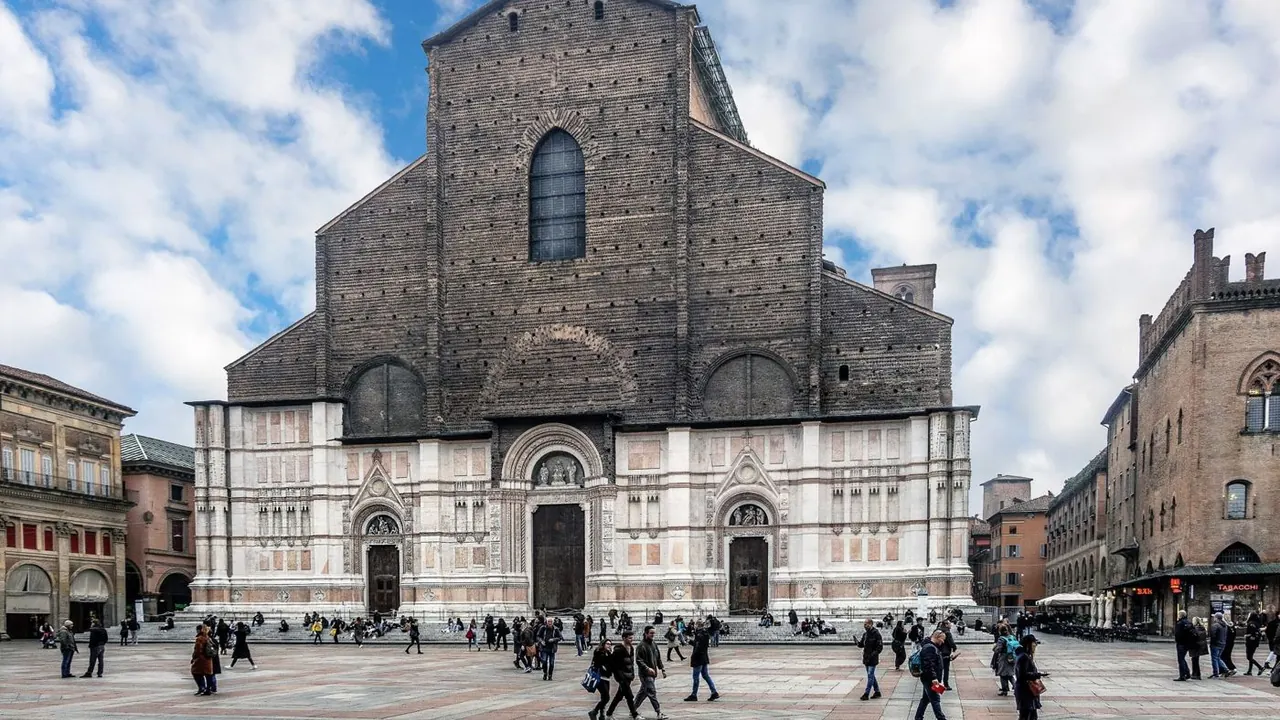
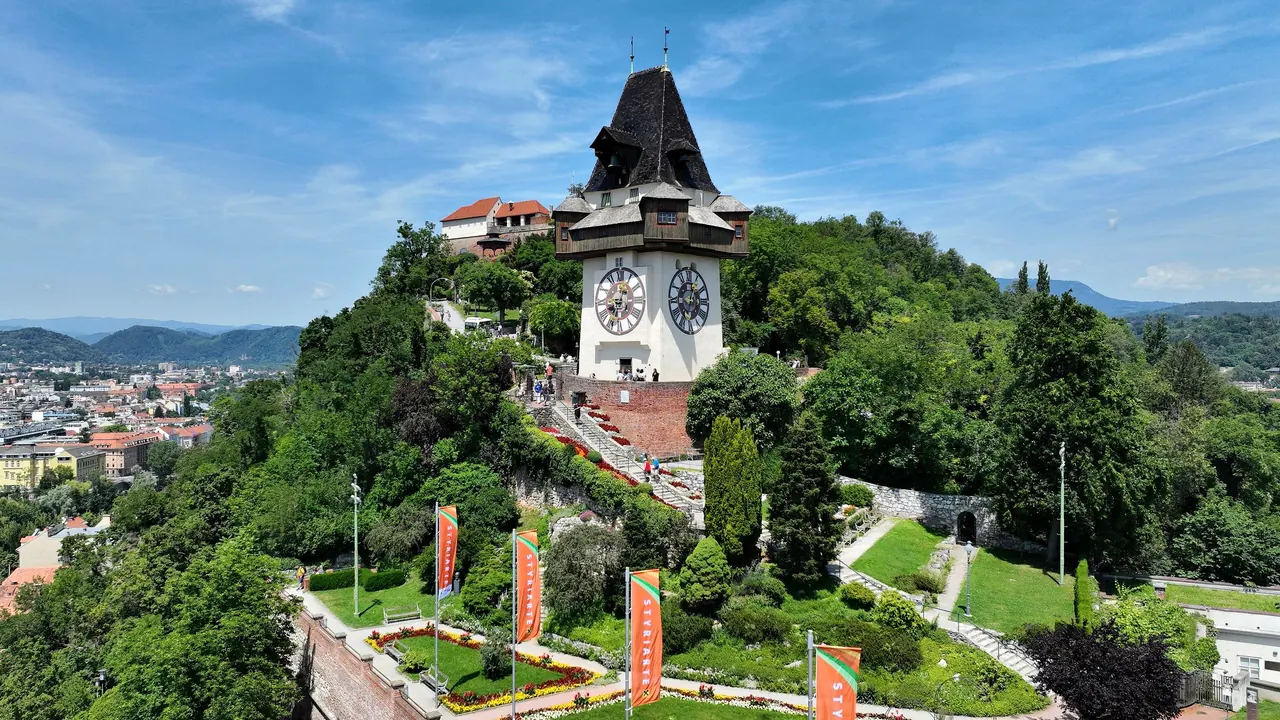
Photos: Bologna by Vanni Lazzari, CC BY-SA 4.0, cropped; Graz by C.Stadler/Bwag, CC BY-SA 4.0, cropped.
Bologna or Graz?
Our verdict in twelve categories, each scored against the same fixed benchmark cities, and the climate month by month, so you can choose for your trip.
Choose Bologna for
- day trips
- food and drink
- beaches
Bologna is the choice for travellers who plan their days around the table and the train timetable. Its brick and portico centre is the grander sight, the cooking is among the richest in Italy, and the student quarter keeps evenings lively. Above all it is a superb base: Florence, Ravenna, Ferrara, Modena and even Venice are easy day trips, so a week here can take in half of northern Italy without moving hotel.
Choose Graz for
- nature and the outdoors
- families
- wellness
Graz rewards a slower, greener trip. Its old town is smaller in scale but beautifully kept, and the hills, gorges and wine country start at the edge of town, so walkers, cyclists and anyone who likes a long lunch at a vineyard tavern will feel at home. Families get more here too, from the slide inside the Schlossberg to calm parks, and the thermal villages to the east make a restful extra.
Scoreboard
Twelve categories on one fixed scale from 0 to 100. The shaded stretch is the gap between the two.
Your match
Pick a travel style or drag the sliders, and both match scores follow your weighting.
Wins on day trips and food and drink with your weighting.
Wins on nature and the outdoors and families with your weighting.
What matters to you?
Category by category
What the scores mean for a trip.
Beaches & swimming
Neither city is a beach destination, but Bologna at least has the sea within reach. Rimini and the Romagna Riviera are about an hour away by train, with warm, shallow Adriatic water lined with organised lidos, a workable escape on a hot summer day.
Graz has no coast at all. Its swimming means the former gravel pits south of town, such as the Schwarzlsee, with grassy banks and jetties, good for a cooling afternoon but nothing more.
Food & drink
Bologna is in another league here. This is the home of ragù, tortellini and lasagne verdi, with Parmigiano, Parma ham and balsamic vinegar made less than an hour away, and the Quadrilatero lanes and Mercato delle Erbe make browsing for food a sight in itself.
Graz eats well in a narrower, rustic register: pumpkin seed oil on almost everything, cold fried chicken salad and crisp Sauvignon Blanc from the southern hills, best enjoyed at a Buschenschank tavern. Both cities stick closely to their own region, but Bologna gives the food lover far more reason to travel.
Culture & sights
Bologna has the bigger and more striking historic centre: a whole medieval city in red brick, with its UNESCO-listed porticoes, the Two Towers, San Petronio, the Santo Stefano churches and the anatomical theatre of Europe's oldest university.
Graz is more compact and quieter, with Renaissance courtyards, the Schlossberg clock tower and two real standouts in the Landeszeughaus armoury and Schloss Eggenberg. Its modern Kunsthaus and Murinsel add a contemporary edge that Bologna lacks, but for sheer depth of history, Bologna leads.
Nightlife
Both are university towns, but Bologna goes out harder. The crowds outside cheap bars around Piazza Verdi, the late taverns of Via del Pratello and the aperitivo-to-wine-bar evenings near the Quadrilatero give it a busier, longer night.
Graz offers a gentler version, with the Bermuda Triangle lanes in the old town and artier bars in Lend. Neither suits serious clubbing, and both go quiet in summer when the students leave, which in Bologna means August in particular.
Nature & outdoors
Graz is the greener base. The Schöckl rises right above the city with trails and paragliding, wooded hills are a short bus ride out, and proper alpine hiking in the Gesäuse and Hochschwab lies within about two hours, with the South Styrian wine hills for gentle autumn walks.
Bologna offers easy hill walks to San Luca and through the Colli Bolognesi, the gypsum caves of the Parco dei Gessi and the start of the Via degli Dei to Florence. Beyond that the Apennines are further off and the plain to the north is flat and unscenic.
Day trips
This is Bologna's strongest card. As northern Italy's main rail junction it puts Florence barely half an hour away, Ravenna's mosaics and Ferrara's walls about an hour, and Modena, Parma, Verona, Padua and Venice all within easy reach by train, no car needed.
Graz's outings are lovely but more rural: the South Styrian Wine Road, Riegersburg on its volcanic crag, the Lipizzaners at Piber, Admont Abbey's library and Maribor across the Slovenian border. Most of them are much easier with a hire car.
Good for families
Graz is the friendlier city for children. The Schlossberg alone fills a day, with the glass lift, the underground slide and the little train through fairytale tunnels, and there are playgrounds in the Stadtpark and Augarten, a children's museum and toboggan runs on the Schöckl.
Bologna is pleasant and easy with children, flat and shaded under its arches, with gelato and pasta to keep meals simple, but little is made for them. Families usually head out to a large theme park near Ravenna or the Rimini beaches, and the city's summer heat is harder on small children.
Getting around
Both centres are small, flat and largely closed to cars, so on foot there is little to choose between them. In Bologna the porticoes are the real help, letting you cross most of the old town in shade or out of the rain. Beyond walking it has no metro and relies on buses, with a shuttle from the airport, and the station sits right at the edge of the old town.
Graz adds trams that run through the heart of town to the station and Eggenberg on one simple ticket, plus a lift and funicular up the Schlossberg, which helps with tired legs or a buggy. The catch comes once you leave the city, where buses thin out and a car is the easier way to reach the hills and vineyards.
Shopping & style
Bologna has the slight edge, mostly thanks to its food shops: the Quadrilatero delicatessens send visitors home with Parmigiano, mortadella and balsamic vinegar, and Via Farini and the Galleria Cavour hold a small cluster of luxury fashion. Weekend antiques in Piazza Santo Stefano add some browsing.
Graz is about historic streets such as the Herrengasse and Sporgasse, a grand old department store with a rooftop terrace, design shops in Lend, and loden and traditional costume. The edible souvenirs here are pumpkin seed oil, Schilcher rosé and apple brandy.
Affordability
The two cost much the same overall, but the money goes in different places. In Bologna eating is the bargain, with honest trattorias and aperitivo that includes food, while old-town hotels are pricey and become scarce during trade fairs.
Graz is the reverse: rooms are reasonable for Austria, but sit-down dinners and wine cost the usual Austrian amounts, so student lunch menus and bakeries are where to save. In both, free squares and walkable centres keep the rest of the budget low.
Live music & performing arts
The two are evenly matched, each with a historic opera house and a strong jazz tradition. Bologna's Teatro Comunale and its UNESCO City of Music standing go with basement jazz clubs, student gigs and free summer concerts and films in Piazza Maggiore.
Graz has Austria's second-largest opera house, the Musikverein's concerts and a jazz scene fed by its music university. Its two festivals, Styriarte for early and classical music in early summer and steirischer herbst for avant-garde work in autumn, give it more of a calendar to plan around. In both, spoken theatre is in the local language.
Wellness & relaxation
Graz is the better choice for a restful trip. Its unhurried coffee houses and the shady Schlossberg paths set a calm tone, and Styria's thermal villages, from Hundertwasser's Bad Blumau to Loipersdorf, are about an hour east with large pools and saunas for day visitors.
Bologna's relaxation is mostly a long lunch under the arches. Its noisy student quarter and heavy summer heat work against it, though the spring-fed pools at Castel San Pietro Terme and the green valley spa town of Porretta Terme make a pleasant half day.
When should you go?
Pick your month. The climate figures are measured averages, not a forecast.
Bologna in July
Graz in July
Daytime high, °C
Rainfall in the month, mm
Where the figures come from
Bologna has no rain gauge within 25 km of the centre, so its rainfall comes from a gridded climate dataset read at the city rather than from a gauge further away.
Bologna's sunshine is measured 82 km from the centre, at Cervia.
Temperature and rainfall are climate normals, averaged over the years shown. Bologna: 1991-2020, 14 years observed normals, Bologna / Borgo Panigale (5.5 km from centre). Graz: 1991-2020 normals, Graz Airport (7.9 km from centre).
Bologna has the hotter, sunnier summer, and that is not always a blessing. July and August reach about 32°C under a humid sky, which makes daytime sightseeing tiring, though the porticoes help. May, June and September are the sweet spot, warm and bright with moderate rain, and October and November are the wettest months, at up to 95mm. Winters are grey and chilly but rarely harsh.
Graz is milder in summer, peaking at about 27°C, so June to August is pleasant for walking the old town and lake swimming in the afternoon. The catch is rain: summer is its wettest stretch, at roughly 125mm a month, much of it in thundery showers. Late spring and September give the most settled hill walking, and its winters are colder than Bologna's but drier and often sunnier in midwinter.
Which traveller are you?
For a food and nightlife trip, Bologna wins easily. Hand-rolled tagliatelle, mortadella and tortellini in old osterie, an aperitivo ritual with Lambrusco, then the student bars of Piazza Verdi and Via del Pratello make a far fuller evening than Graz offers.
On an outdoors trip, Graz is the better base. The Schöckl, the Mur cycle path, the Bärenschützklamm gorge and the alpine walls of the Gesäuse all lie within reach, while Bologna's hills are gentler and its northern plain is flat farmland.
On a family trip with children, Graz is easier and more fun. Trams take buggies, the Schlossberg has a lift, a funicular, an underground slide and a fairytale train, and there is a children's museum, whereas Bologna's sights are mostly churches and museums for adults.
Before you go
| Measure | Bologna | Graz |
|---|---|---|
| Official language | Italian | German, Austrian Sign Language |
| Currency | Euro (EUR) | Euro (EUR) |
| Sockets | CFL230 V, 50 Hz | CF230 V, 50 Hz |
| Driving side | Right | Right |
| Time zone | UTC+1, UTC+2 in summer | UTC+1, UTC+2 in summer |
| Emergency number | 112 | 112 |
| Elevation | 54 m | 353 m |
| Main airport | Bologna Guglielmo Marconi Airport (BLQ)6 km from centre98 non-stop destinations | Graz Airport (GRZ)9 km from centre26 non-stop destinations |
| Public holidays this year | 13 days | 16 days |
By the numbers
| Measure | Bologna | Graz |
|---|---|---|
| City population | 387,971 | 306,971 |
| People per km² | 2,754 | 2,406 |
| Museums within 10 km | 68 | 29 |
| UNESCO World Heritage sites within 50 km | 3 | 1 |
Where else could you go?
Every comparison below shares a destination with this one, so you can follow Bologna or Graz somewhere new.