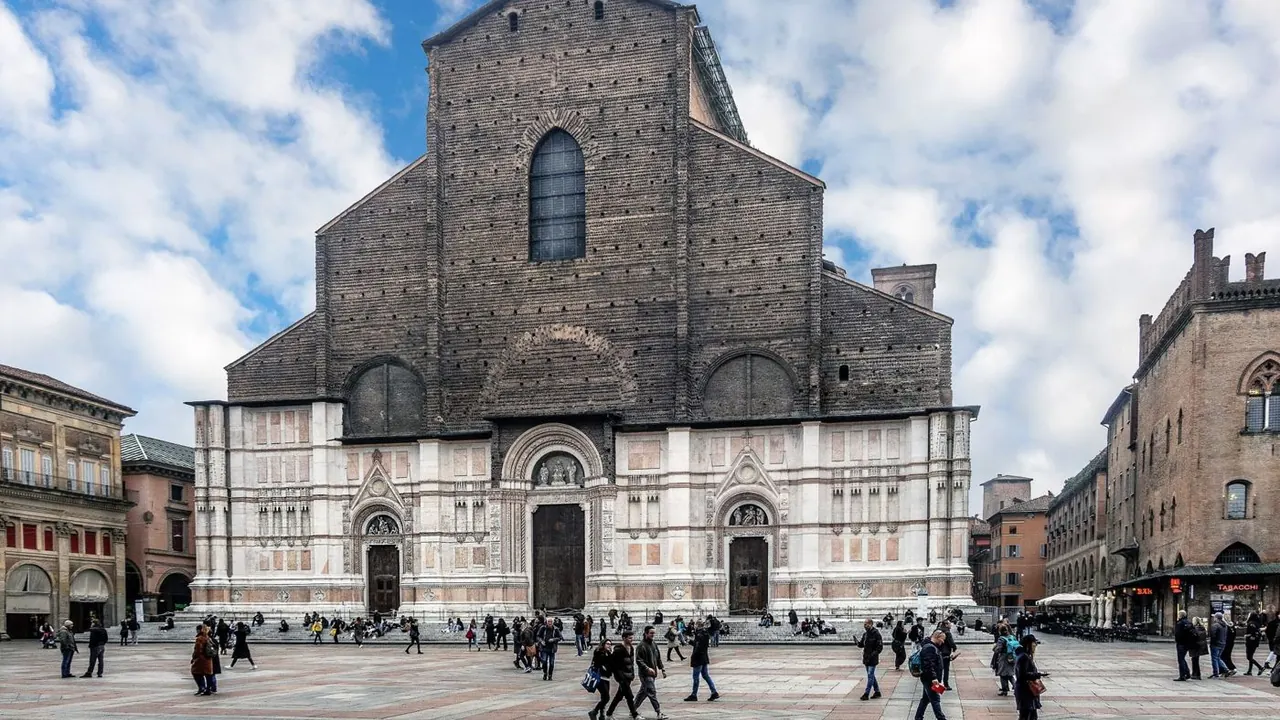
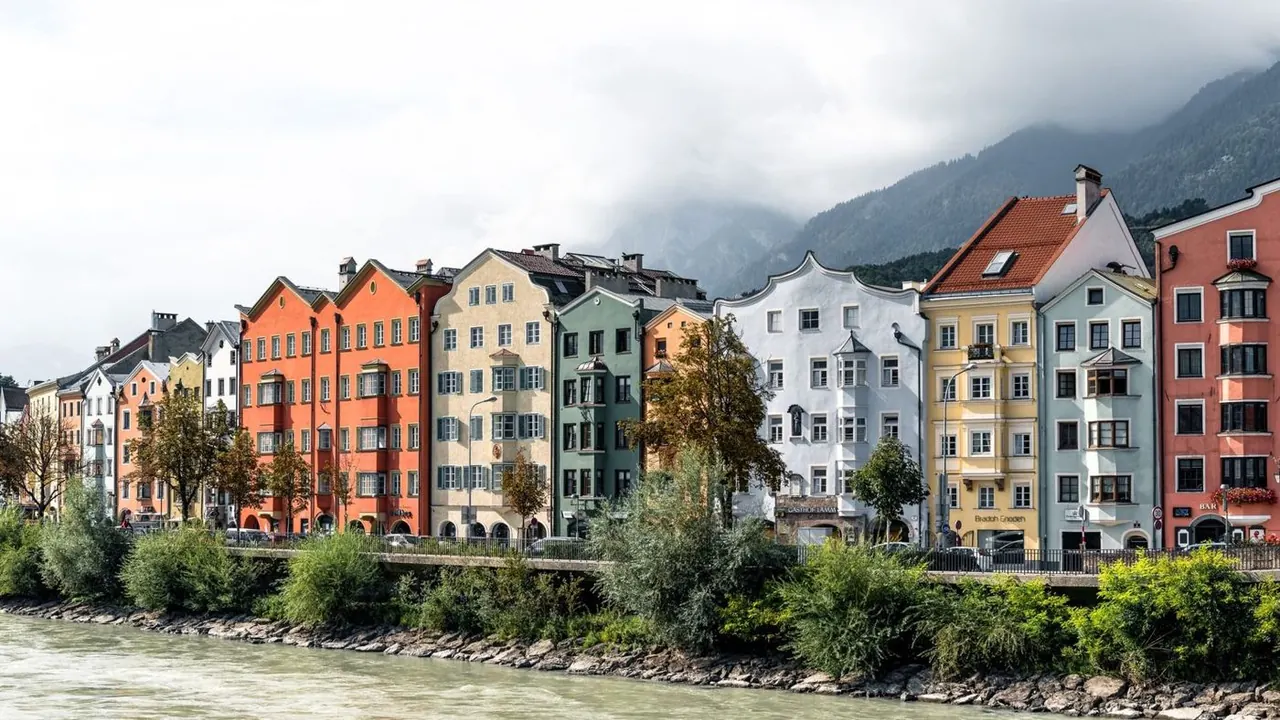
Photos: Bologna by Vanni Lazzari, CC BY-SA 4.0, cropped; Innsbruck by Wolfgang Weiser, Pexels License.
Bologna or Innsbruck?
Our verdict in twelve categories, each scored against the same fixed benchmark cities, and the climate month by month, so you can choose for your trip.
Choose Bologna for
- food and drink
- day trips
- nightlife
Bologna suits travellers who plan their days around the table and the street. You get some of Italy's best cooking in old osterie and the Quadrilatero, a whole medieval centre under brick porticoes, student bars that stay busy late, and a station that puts Florence, Ravenna, Ferrara and Venice within an easy day. Go here for a slow, flat, urban trip where the town itself is the main sight.
Choose Innsbruck for
- nature and the outdoors
- families
- wellness
Innsbruck is for people who would rather spend the day above the rooftops. The Nordkette ridge is under half an hour from the old town, the Karwendel starts behind it, and ski areas, glaciers and hut-to-hut trails fill the valleys around it. The Habsburg sights are worth a day or two and families get on well here, but the mountains are the reason to come. The meals and the nights out are simpler than in Bologna.
Scoreboard
Twelve categories on one fixed scale from 0 to 100. The shaded stretch is the gap between the two.
Your match
Pick a travel style or drag the sliders, and both match scores follow your weighting.
Wins on food and drink and day trips with your weighting.
Wins on nature and the outdoors and families with your weighting.
What matters to you?
Category by category
What the scores mean for a trip.
Beaches & swimming
Neither city is a place to swim. Bologna has the more practical option, though: Rimini is about an hour away by train, and the Adriatic there is warm and shallow in August, even if the shore is a long line of rented sunbeds and organised lidos.
Innsbruck has lakes, not a coast. The small Lanser See and Natterer See on the plateaus warm up enough for a summer afternoon, and the Achensee is beautiful but too cold for most people. The season is short.
Food & drink
Bologna is one of Italy's great places to eat, and it leaves Innsbruck far behind. The menu is tagliatelle al ragù, tortellini in brodo and lasagne verdi in family trattorias, fresh pasta rolled in shop windows, and the Quadrilatero's delicatessens and the Mercato delle Erbe for browsing. Parma ham and Parmigiano come from towns less than an hour away. Its one weakness is a lack of variety beyond Emilian cooking.
Innsbruck offers filling Tyrolean food such as Gröstl, Kaspressknödel and Kaiserschmarrn, and these taste best at a mountain hut after a hike. The town has coffee houses and a few fine-dining places, but there is no market culture or street food, and the restaurants by the Golden Roof mostly serve tour groups.
Culture & sights
Bologna has more to see, and most of it is the city itself: a large red-brick medieval centre, nearly 40km of porticoes, the Two Towers, San Petronio and the seven churches of Santo Stefano. Europe's oldest university adds the Archiginnasio and its wooden anatomical theatre, and the Pinacoteca covers Bolognese painting.
Innsbruck's Habsburg heritage is more compact. The Golden Roof, the Hofburg and the Hofkirche, with Maximilian's ring of bronze figures, all stand within a few streets, and Ambras Castle's cabinet of curiosities justifies the trip to the edge of town. It makes a rewarding two days, but there is less of it.
Nightlife
Bologna's student population gives it the busier nights. Crowds stand outside cheap bars around Piazza Verdi and Via Petroni, the taverns along Via del Pratello stay open late, and the Quadrilatero runs from aperitivo to wine bars. The one exception is August, when the students leave and the city goes quiet.
Innsbruck's scene is small and friendly. It centres on the bars and little clubs in the brick arches under the railway viaduct, which are busiest at weekends. In winter much of the partying moves out to après-ski in the resorts.
Nature & outdoors
Innsbruck is one of the few cities with high Alpine terrain right on its doorstep. The Nordkette cable cars start near the old town, the Karwendel nature park lies behind the ridge, and the Patscherkofel and the Stubai and Wipp valleys add glaciers and summits across the valley. You can ski for most of the year on the Stubai Glacier, and summer brings hut-to-hut hiking, via ferratas, mountain biking and rafting.
Bologna's countryside is gentler. There is the arcaded climb to San Luca, the Colli Bolognesi, the gypsum caves of the Parco dei Gessi and the Via degli Dei trail to Florence, with modest skiing at Corno alle Scale about an hour and a half away.
Day trips
Both cities are well placed for day trips, but Bologna's rail junction is hard to beat. Florence is barely half an hour away, Ferrara, Ravenna, Modena and Parma are all close, and Venice, Verona and Padua take about an hour and a half. That is a run of famous Italian cities you can see without changing hotels.
Innsbruck's trips cover more countries. Hall in Tirol and Rattenberg are in the valley, Munich and Salzburg are just under two hours away, and Bolzano and Merano lie over the Brenner. With a car you can also reach Neuschwanstein.
Good for families
Innsbruck works better with children because the outdoors is so easy to reach. The Alpenzoo, with its ibex, bears and wolves, is on the funicular line, and the mountains add adventure trails, playgrounds by the huts, plateau lakes for swimming and ski schools in winter. Rainy days still need some planning.
Bologna is pleasant for families in a quieter way. The centre is flat, largely car-free and shaded by porticoes, and pasta and gelato make meals easy. The sights are mostly aimed at adults, though, so families tend to head out to Mirabilandia or the beach at Rimini, and the summer heat can wear small children out.
Getting around
Both cities are easy without a car, but in different ways. In Bologna you walk nearly everywhere. The flat medieval centre is mostly closed to traffic, the porticoes keep you out of sun and rain, and buses fill the gaps since there is no metro. Its real advantage is the station on the edge of the old town.
Innsbruck has trams as well as buses, and they reach Igls and the Stubai valley. Its standout is the funicular from the old town, which links to the Nordkette cable cars, with ski buses taking over in winter. A car only helps for the remoter valleys and lakes.
Shopping & style
Bologna offers more, though most of what people buy is food. Mortadella, aged Parmigiano and balsamic vinegar from the Quadrilatero fill suitcases, Via Farini and the Galleria Cavour have a small cluster of luxury fashion, and the university quarter has bookshops and vintage stores.
Innsbruck is narrower but has its own specialities: loden jackets, dirndls, woodcarving, Speck and schnapps, and some excellent outdoor and ski shops. There is no fashion district.
Affordability
Bologna is the easier of the two on the budget, mostly because eating out is good value. Trattorias, aperitivo with food included and local wine by the glass all cost less than you would expect, and most churches and squares are free. Hotel rooms are the expensive part, especially during the big trade fairs.
Innsbruck adds an Alpine resort premium on top of normal Western European prices, especially in ski season and at Christmas. The inns are not cheap, and cable car tickets soon add up on an active trip, though city cards that bundle lifts and transport help.
Live music & performing arts
Bologna has the deeper musical tradition. The historic Teatro Comunale stages opera, ballet and concerts, the city is a UNESCO City of Music, basement jazz clubs play most nights, and in summer there are concerts and films in Piazza Maggiore.
Innsbruck's programme is solid for a regional city. The Landestheater and the Tyrolean Symphony Orchestra provide the season, and its standout is the summer Festival of Early Music in settings like Ambras Castle's Spanish Hall. Folk evenings with yodelling and brass give it a local flavour.
Wellness & relaxation
Neither city is a spa destination, and they relax you in different ways. Near Bologna there are real thermal springs at Castel San Pietro Terme and in the green valley at Porretta Terme. In town, though, rest mostly means a long lunch, and the university quarter and the summer heat work against it.
Innsbruck is calmer. Its wellness is Alpine: hotel saunas with mountain views in Igls and the plateau villages, quiet walks, and the large thermal complexes of the Ötztal and Zillertal about an hour away.
When should you go?
Pick your month. The climate figures are measured averages, not a forecast.
Bologna in July
Innsbruck in July
Daytime high, °C
Rainfall in the month, mm
Where the figures come from
Bologna has no rain gauge within 25 km of the centre, so its rainfall comes from a gridded climate dataset read at the city rather than from a gauge further away.
Bologna's sunshine is measured 82 km from the centre, at Cervia.
Temperature and rainfall are climate normals, averaged over the years shown. Bologna: 1991-2020 normals, Bologna / Borgo Panigale (5.5 km from centre). Innsbruck: 1991-2020 normals, Innsbruck-Flughafen (3.3 km from centre).
Bologna is at its best in May and June, when the days are warm, the rain is light and there is plenty of sun for long walks under the arches. July and August reach about 32°C on the humid plain, which makes sightseeing hard going in the middle of the day. September is still warm and sunny and a good month to come, but it starts the wetter season: September and October each bring around 91mm, the most of the year. Winters are cold and often dull, though still fine for a trip built around food and museums.
Innsbruck is cooler all year, at about 26°C in July, so summer is comfortable for hiking and walking around town. It is also the wettest part of the year there, with about 144mm in August, so expect showers over the peaks. Spring and early autumn are mild and drier. In winter the valley stays around 4°C by day, and Innsbruck gets more winter sunshine than Bologna, which suits a ski trip.
Which traveller are you?
On a food and nightlife trip, Bologna is the clear choice. Hand-rolled tortellini, mortadella and Lambrusco at aperitivo come first, and then the student crowds around Piazza Verdi and the taverns of Via del Pratello carry the evening on. Innsbruck's dumplings and viaduct bars cannot match that.
For an outdoors trip, Innsbruck has the advantage. A funicular from the old town meets cable cars to a 2,300m ridge, and from there you have the Karwendel, via ferratas, paragliding, rafting and skiing on several areas around the city. Bologna's San Luca walk and the Apennine foothills are gentle by comparison.
On a culture and arts trip, Bologna goes deeper. You can spend days in its UNESCO-listed porticoes, the Archiginnasio's anatomical theatre, Santo Stefano and the Pinacoteca, then end with opera at the Teatro Comunale. Innsbruck's Hofkirche and Ambras Castle are fine, but the city has less to offer overall.
Before you go
| Measure | Bologna | Innsbruck |
|---|---|---|
| Official language | Italian | German, Austrian Sign Language |
| Currency | Euro (EUR) | Euro (EUR) |
| Sockets | CFL230 V, 50 Hz | CF230 V, 50 Hz |
| Driving side | Right | Right |
| Time zone | UTC+1, UTC+2 in summer | UTC+1, UTC+2 in summer |
| Emergency number | 112 | 112 |
| Elevation | 54 m | 574 m |
| Main airport | Bologna Guglielmo Marconi Airport (BLQ)6 km from centre98 non-stop destinations | Innsbruck Airport (INN)4 km from centre40 non-stop destinations |
| Public holidays this year | 13 days | 16 days |
By the numbers
| Measure | Bologna | Innsbruck |
|---|---|---|
| City population | 387,971 | 132,499 |
| People per km² | 2,754 | 1,263 |
| Museums within 10 km | 68 | 28 |
| UNESCO World Heritage sites within 50 km | 3 | 1 |
Where else could you go?
Every comparison below shares a destination with this one, so you can follow Bologna or Innsbruck somewhere new.