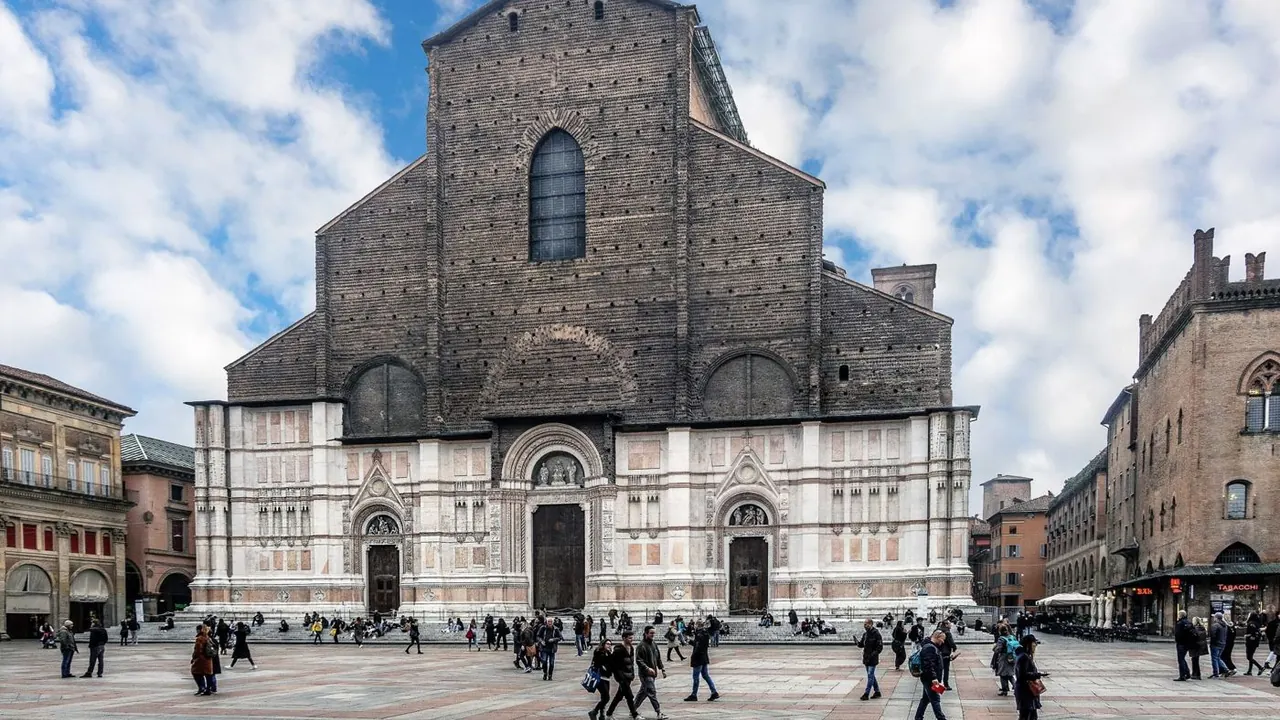
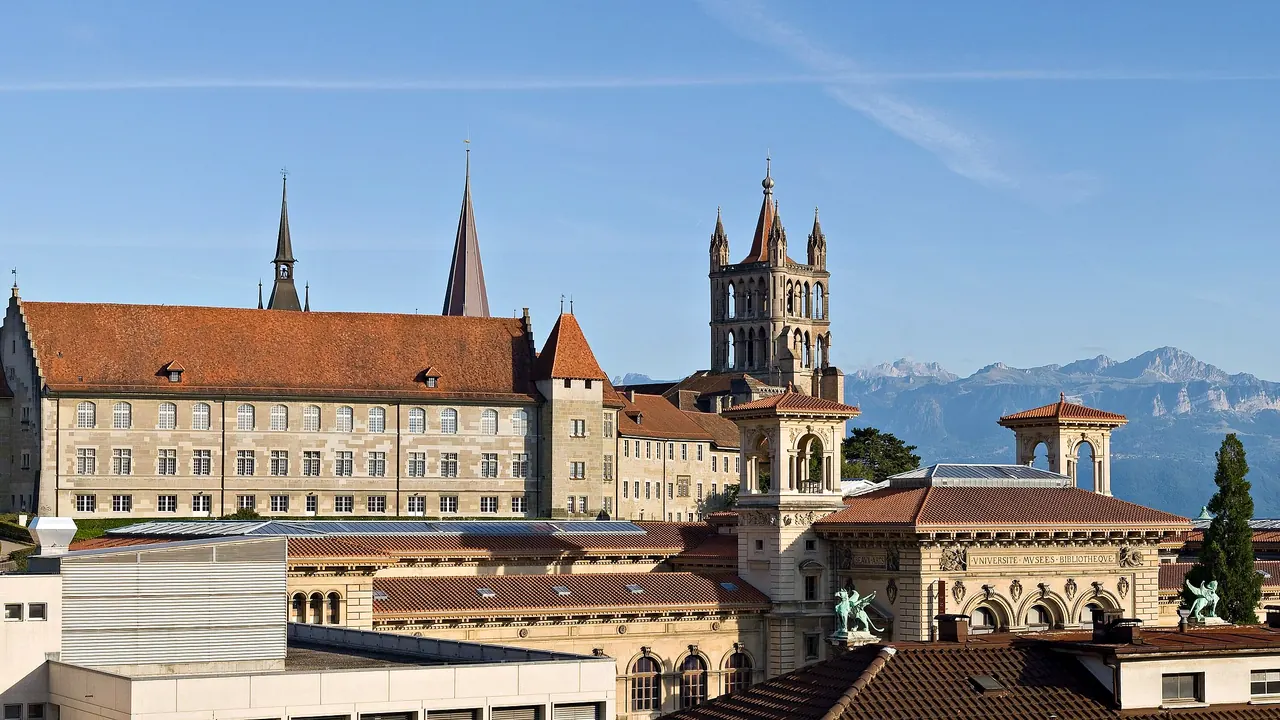
Photos: Bologna by Vanni Lazzari, CC BY-SA 4.0, cropped; Lausanne by Christian Mehlführer, CC BY-SA 3.0, cropped.
Bologna or Lausanne?
Our verdict in twelve categories, each scored against the same fixed benchmark cities, and the climate month by month, so you can choose for your trip.
Choose Bologna for
- prices
- food and drink
- culture and sights
Bologna suits travellers who plan their days around the table and the train timetable. Its brick-and-arcade centre, its Emilian cooking and its student evenings fill a long weekend, and Florence, Ravenna, Ferrara and Venice all lie within easy rail reach. It is also far kinder to the wallet, which makes it the better choice for anyone who wants to eat out twice a day without counting.
Choose Lausanne for
- nature and the outdoors
- families
- beaches
Lausanne is for people who want the landscape to do the work. The Alps rise across the lake, the Lavaux terraces are a short walk east of town, and the mountains, the Jura and the lake steamers are all close. Families get more aimed at them here, and the lakeside gives a calmer pace, but it costs a great deal more than Bologna, so it rewards travellers whose budget can stretch.
Scoreboard
Twelve categories on one fixed scale from 0 to 100. The shaded stretch is the gap between the two.
Your match
Pick a travel style or drag the sliders, and both match scores follow your weighting.
Wins on prices and food and drink with your weighting.
Wins on nature and the outdoors and families with your weighting.
What matters to you?
Category by category
What the scores mean for a trip.
Beaches & swimming
Neither city is a place for a beach vacation, but Lausanne at least lets you swim without leaving town. In summer locals swim in Lake Geneva from the lawns at Bellerive, Vidy and Pully, with mountain views. The season is short, though, and the shores are grass, steps and shingle.
From Bologna, swimming means a train of about an hour to the Adriatic at Rimini or Cervia. There the sea is warm and shallow but lined with rows of rented sunbeds. It works as a day out from the heat rather than as part of the city stay.
Food & drink
Eating is one of the main reasons to choose Bologna, and the gap with Lausanne is wide. Tagliatelle al ragù, tortellini in brodo and lasagne verdi come from family trattorias, and the Quadrilatero lanes are lined with delicatessens. Parmigiano, Parma ham and balsamic vinegar are made within the hour.
Lausanne's strength is narrower. It has lake perch, papet vaudois and winter fondue, plus Chasselas poured straight from the Lavaux growers' caveaux and a handful of celebrated top-end tables. Between those, ordinary meals are unremarkable and cheap eating is hard to find, which never happens in Bologna.
Culture & sights
Bologna's appeal is the whole old city: kilometres of UNESCO-listed porticoes, Piazza Maggiore with San Petronio, the Two Towers, and the anatomical theatre of Europe's oldest university. You take it in mainly by walking the streets.
Lausanne turns that around. Its old town is small and steep, with the Gothic cathedral and its night watchman as the highlight, so the museums carry more of the weight. These are the Olympic Museum at Ouchy, the cluster at Plateforme 10 and the strange, memorable Collection de l'Art Brut. Both need two or three days, but Bologna gives you more history to walk through.
Nightlife
Students set the tone of Bologna's evenings, and they go out most nights of the week. Crowds stand outside cheap bars around Piazza Verdi and along Via del Pratello on ordinary weeknights, after an aperitivo around the Quadrilatero. It is informal and cheap rather than polished. August is the exception, when the students leave and the city goes quiet.
Lausanne packs its nightlife into the Flon, a former warehouse valley where clubs and late bars sit in old industrial buildings, and that gives it more proper clubbing in the centre than Bologna has. Summer evenings spill out along the waterfront at Ouchy. It is busy at weekends and hushed midweek, and drinks cost far more.
Nature & outdoors
Lausanne's setting is one of its main attractions. The French Alps rise straight out of Lake Geneva opposite the city, and the vineyard paths between Lutry and Saint-Saphorin are a fine walk. Sailing, glacier trips at Glacier 3000 and skiing at Villars or Les Diablerets are all within about an hour.
Bologna has pleasant walking in the Colli Bolognesi, the gypsum caves of the Parco dei Gessi, and the Via degli Dei trail to Florence starting in Piazza Maggiore. Beyond that the Apennines are modest, and the plain to the north is flat farmland.
Day trips
Both are excellent bases, but Bologna's rail junction puts more great towns within reach. Florence is barely half an hour away. Ravenna's mosaics, Ferrara, Modena and Parma are all short rides, and Venice, Verona and Padua are within about an hour and a half.
Lausanne's outings lean towards lakes and castles. Vevey, Montreux and Chillon are just along the shore, and Gruyères, Bern and Geneva are each about an hour away. Boats cross the water to Évian. These trips mix scenery with towns, where Bologna's are mostly art cities.
Good for families
Lausanne has more aimed at children. There is the hands-on Olympic Museum, the aquarium-vivarium, and the animal park, pedal boats and lookout tower in the Sauvabelin woods. Summer adds paddle steamers and lakeside pools. The steep streets and the cost of meals out are the main drawbacks.
Bologna is easy with children, being flat, mostly closed to traffic and well supplied with gelato. The sights are adult ones, though, so families usually head out to Mirabilandia or the beach at Rimini. The summer heat also wears small children out.
Getting around
Bologna is a flat city you cross on foot, while Lausanne is a steep hillside you go up by metro. In Bologna the porticoes give shade in summer and keep you dry when it rains. There is no metro, so buses cover the hills, and a car only gets in the way in the traffic-free centre.
Lausanne climbs in layers from the lake to the cathedral, so walking means stairs, bridges and real climbs. The m2 metro takes most of the strain, running up from Ouchy through the station and the Flon to the upper town, and lake boats link the towns along the shore.
Shopping & style
Bologna has the edge, mostly because of what you can carry home to eat: aged Parmigiano, mortadella, fresh tortellini and balsamic vinegar from the Quadrilatero. It also has a compact luxury cluster around Via Farini and Galleria Cavour, the Montagnola market, and vintage shops and bookshops in the university quarter.
In Lausanne the souvenirs are chocolate, Swiss watches and Lavaux wine, sold along Rue de Bourg and around Place Saint-François. The choice of independent shops is thin.
Affordability
The gap is large. Bologna is mid-priced for Western Europe, with honest trattoria meals, aperitivo with food, free churches and a centre you can walk across. Rooms are the main cost, especially during trade fairs.
Lausanne is very expensive in every respect, from hotels and lunches to wine and taxis. Even a careful visitor ends up picnicking by the lake and keeping restaurant meals for special occasions. The same budget buys noticeably more days in Bologna.
Live music & performing arts
The two are on a par, with different strengths. Bologna's is music: the historic Teatro Comunale for opera and symphonic concerts, a long jazz tradition in basement clubs, and free summer concerts and films in Piazza Maggiore.
Lausanne leads in dance and contemporary theatre, as home to the Béjart Ballet and the Prix de Lausanne, with the Théâtre de Vidy staging work that tours Europe. In July the Montreux Jazz Festival is a short train ride along the lake.
Wellness & relaxation
Lausanne is the easier place to unwind. It has lakeside promenades at Ouchy and Vidy, quiet lanes through the vines, grand hotel spas, and warm springs at Yverdon-les-Bains and Lavey-les-Bains within an hour.
Bologna has thermal pools nearby at Castel San Pietro Terme and in the old valley spa of Porretta Terme. In town, though, relaxing mostly means a long lunch under the arches, between a noisy university quarter and heavy summer heat.
When should you go?
Pick your month. The climate figures are measured averages, not a forecast.
Bologna in July
Lausanne in July
Daytime high, °C
Rainfall in the month, mm
Where the figures come from
Bologna has no rain gauge within 25 km of the centre, so its rainfall comes from a gridded climate dataset read at the city rather than from a gauge further away.
Bologna's sunshine is measured 82 km from the centre, at Cervia.
Lausanne's temperatures are measured 40 km from the centre, at Payerne.
Lausanne has no rain gauge within 25 km of the centre, so its rainfall comes from a gridded climate dataset read at the city rather than from a gauge further away.
Temperature and rainfall are climate normals, averaged over the years shown. Bologna: 1991-2020, 14 years observed normals, Bologna / Borgo Panigale (5.5 km from centre). Lausanne: 1991-2020 (sunshine 1961-1990) normals, Payerne (39.7 km from centre).
Bologna has the hotter summers and the milder winters. July and August reach about 32°C on the Po plain, too hot and humid for long days of sightseeing, though they are the sunniest months and the time for a day on the Adriatic. The best walking months are May, June, September and early October, when the arcades and the climb to San Luca are pleasant. Rain comes mostly in autumn, peaking at around 95mm in November, and winter days are cool and grey.
Lausanne is cooler than Bologna in every month. Its summers top out around 26°C, comfortable for walking the vineyards, and July and August are warm enough for swimming in the lake. Winters are colder than Bologna's, with highs of about 4°C in December and January and little sun. It is also wetter all year, with more than 100mm in each summer month, so June to early September is still the time to go, with a waterproof in the bag.
Which traveller are you?
On a food and nightlife trip, Bologna wins clearly. You get hand-rolled pasta, mortadella and Lambrusco in old osterie, an aperitivo ritual every evening, and student crowds on Via del Pratello and Piazza Verdi late into the night. Lausanne's evenings are quieter and much dearer.
For an outdoors trip, Lausanne is the obvious pick. It has the Lavaux terrace paths, sailing and paddleboarding on Lake Geneva, and the Vaud Alps and Jura ridges about an hour away for hiking or skiing. Bologna offers only gentle Apennine foothills and flat farmland.
On a trip on a tight budget, Bologna goes much further. Trattoria meals, aperitivo with food and the free churches and squares keep daily costs modest. In Lausanne even a simple lunch adds up, and many visitors end up picnicking from supermarkets.
Before you go
| Measure | Bologna | Lausanne |
|---|---|---|
| Official language | Italian | French, German, Italian, Romansh |
| Currency | Euro (EUR) | Swiss Franc (CHF) |
| Sockets | CFL230 V, 50 Hz | CJ230 V, 50 Hz |
| Driving side | Right | Right |
| Time zone | UTC+1, UTC+2 in summer | UTC+1, UTC+2 in summer |
| Emergency number | 112 | 112 |
| Elevation | 54 m | 495 m |
| Main airport | Bologna Guglielmo Marconi Airport (BLQ)6 km from centre98 non-stop destinations | Geneva International Airport (GVA)52 km from centre150 non-stop destinations |
| Public holidays this year | 13 days | 9 days |
By the numbers
| Measure | Bologna | Lausanne |
|---|---|---|
| City population | 387,971 | 144,873 |
| People per km² | 2,754 | 3,499 |
| Museums within 10 km | 68 | 31 |
| UNESCO World Heritage sites within 50 km | 3 | 3 |
Where else could you go?
Every comparison below shares a destination with this one, so you can follow Bologna or Lausanne somewhere new.
- Genevavs Lausanne
- Chamonixvs Lausanne
- Bernvs Lausanne
- Annecyvs Lausanne
- Florencevs Bologna
- Interlakenvs Lausanne