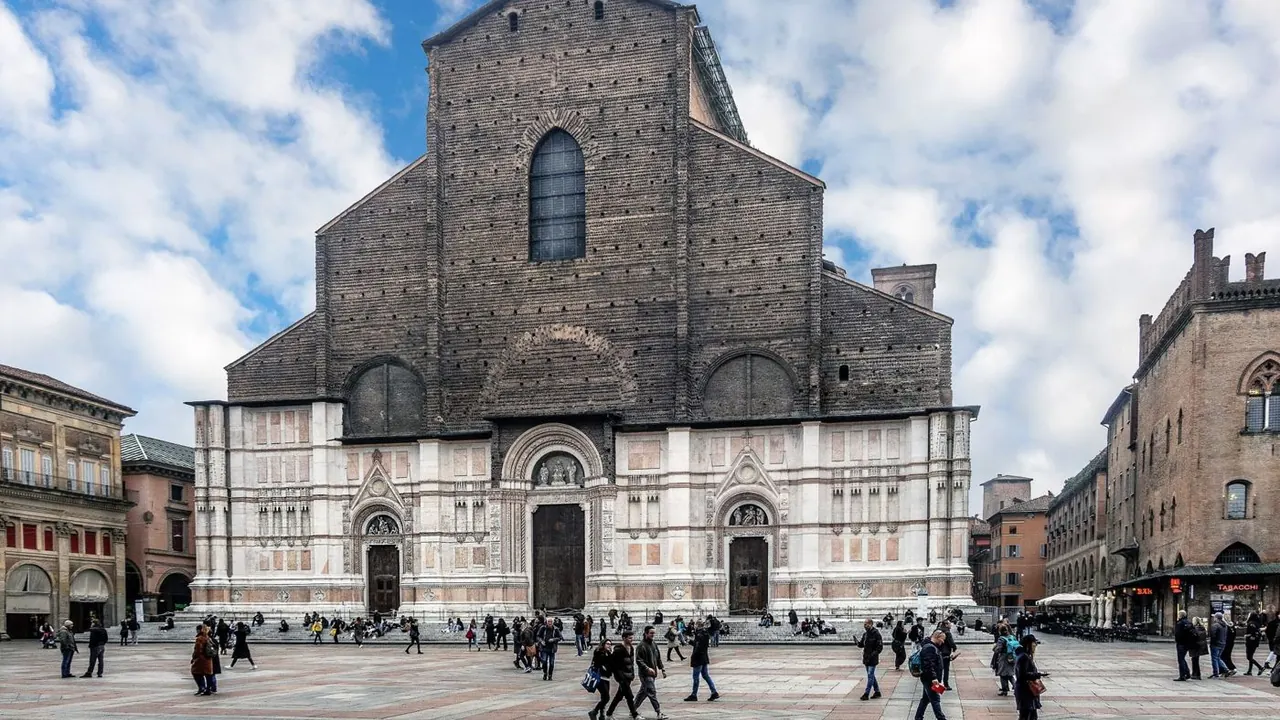
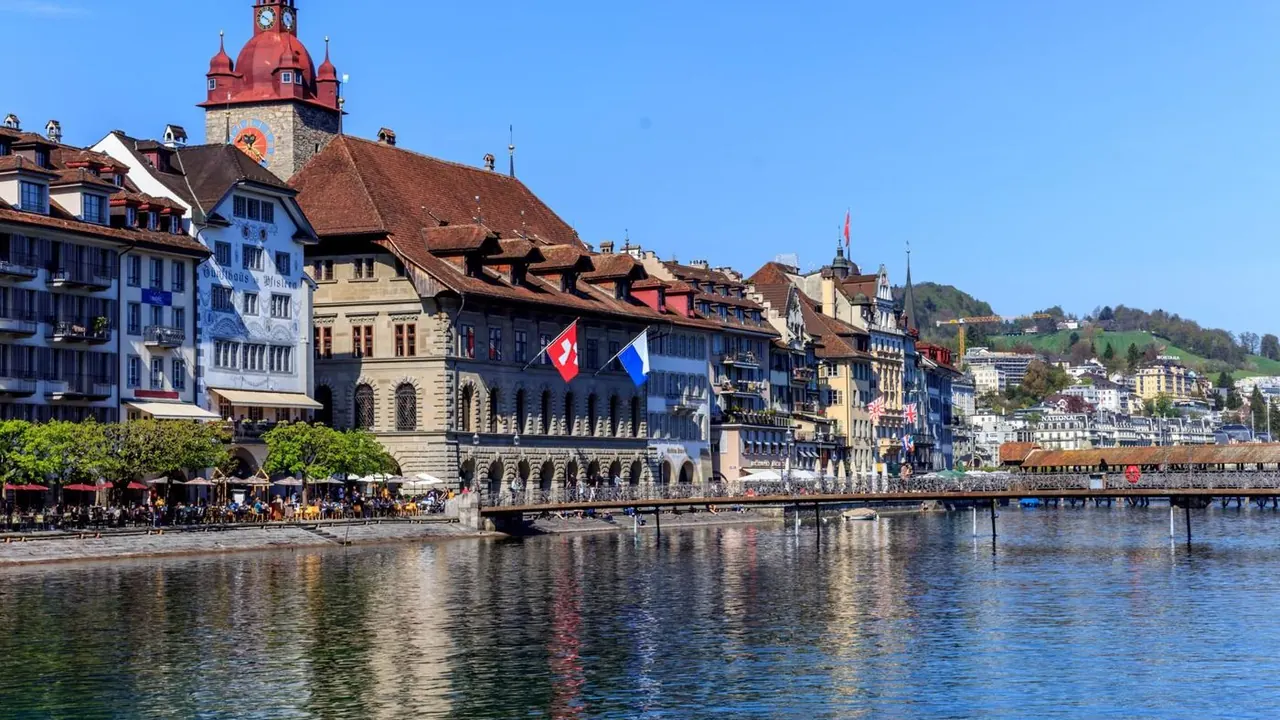
Photos: Bologna by Vanni Lazzari, CC BY-SA 4.0, cropped; Lucerne by ILOVESwitzerland, Pexels License.
Bologna or Lucerne?
Our verdict in twelve categories, each scored against the same fixed benchmark cities, and the climate month by month, so you can choose for your trip.
Choose Bologna for
- food and drink
- prices
- nightlife
Bologna is the trip for people who travel to eat, walk and see a lot. Its medieval brick centre and porticoes repay two or three days on foot, the trattorias and the Quadrilatero make every meal part of the point, and the student quarter keeps the evenings going late. Add the best rail connections in northern Italy, with Florence, Ravenna and Venice all within day-trip range, and a far gentler bill than Switzerland, and it suits a curious traveller who wants a lot packed into each day.
Choose Lucerne for
- nature and the outdoors
- families
- getting around
Choose Lucerne if the trip is really about mountains and water. Lake steamers, cogwheel railways and cable cars leave from beside the station, and Pilatus, Rigi and Titlis are close enough for a different summit each day. It is calmer and easier with children, and in festival weeks its concert hall draws the world's best orchestras. The food is plain, the nights are short and the costs are steep, but for scenery it is in a different league.
Scoreboard
Twelve categories on one fixed scale from 0 to 100. The shaded stretch is the gap between the two.
Your match
Pick a travel style or drag the sliders, and both match scores follow your weighting.
Wins on food and drink and prices with your weighting.
Wins on nature and the outdoors and families with your weighting.
What matters to you?
Category by category
What the scores mean for a trip.
Beaches & swimming
Neither city is a beach destination, but swimming works differently in each. In Bologna a swim means a day out, an hour by train to Rimini or Cervia, where the Adriatic is warm and shallow but lined with rows of rented sunbeds.
Lucerne keeps its swimming on the doorstep: the Lido, the old wooden lake baths and the lawns at Ufschötti, with clean, cool water and mountains behind. The season is short and there is no sand, but it fits easily between excursions.
Food & drink
Food is a main reason to go to Bologna and only a sideline in Lucerne. Bologna is the home of tagliatelle al ragù, tortellini and mortadella, the Quadrilatero lanes are stacked with delicatessens, and Parmigiano, Parma ham and balsamic vinegar are made less than an hour away.
Lucerne serves good, hearty Swiss cooking, such as Chügelipastete, fondue, rösti and lake perch, in old guild houses, but the choice is narrow and many tables near the Chapel Bridge cater to coach tours. You will eat well enough there, but in Bologna you plan the day around meals.
Culture & sights
Bologna has more to see and needs more time for it. Its large brick medieval centre, nearly 40km of UNESCO-listed porticoes, San Petronio, the Two Towers, Santo Stefano and the Archiginnasio's anatomical theatre fill two or three days, with the Pinacoteca adding serious painting.
Lucerne's sights are fewer but famous: the Chapel Bridge and Water Tower, the Musegg towers, the Lion Monument and the Picasso and Klee of the Rosengart Collection. A day or two covers them, which suits a trip where the mountains take up the rest of the time.
Nightlife
Bologna goes out far more. Its large student population fills the bars around Piazza Verdi and Via Petroni, Via del Pratello stays lively until late, and the evening often starts with aperitivo in the Quadrilatero. The one quiet spell is August, when the students leave.
Lucerne's evenings are a drink by the river or lake, a few cocktail bars in the Neustadt, and an empty lakefront by midnight. Fasnacht is the dramatic exception, when the whole town stays out in costume until dawn.
Nature & outdoors
This is where Lucerne pulls well ahead. The lake winds between mountains, and Pilatus with its steep cogwheel railway, Rigi's ridge walks and Titlis's glacier are all day trips by boat and rail, with skiing and sledging in winter.
Bologna has pleasant, gentler outdoors: the arcaded climb to San Luca, the Colli Bolognesi, the gypsum caves of the Parco dei Gessi and the start of the Via degli Dei to Florence. The higher Apennines are an hour and a half away, but nothing there compares with Lucerne's alpine scenery.
Day trips
Both are rail hubs, but Bologna's range of trips is exceptional. Florence is about half an hour away, Ravenna's mosaics and Ferrara's castle about an hour or less, Modena and Parma a short ride along the Via Emilia, and Venice, Verona and Padua within reach for a full day.
Lucerne puts Zurich, Bern and Basel within an hour, and the lake itself makes an outing, by steamer to Vitznau, Brunnen and the Rütli meadow of the Swiss founding story. It is a good choice, but Bologna gives you more great cities in easy reach.
Good for families
Lucerne is the easier place with children. The Swiss Museum of Transport fills a whole day, and the paddle steamers, cogwheel trains and summer toboggan run on Pilatus turn travel into the entertainment, though they depend on the weather and the costs add up.
Bologna is flat, traffic-free and easy at mealtimes, and older children enjoy climbing the Asinelli tower, but the sights are aimed at adults. Families usually head out to Mirabilandia or the beach at Rimini, and the summer heat is tough on small children.
Getting around
Both centres are compact and best on foot, and neither needs a car. Bologna's porticoes give shade and shelter, buses cover the hills, and the central station at the edge of the old town is the key to everything beyond.
Lucerne comes out ahead because the excursions run on the same system as the city. Station, boat piers and Old Town sit together on the lakefront, and integrated tickets carry you from bus to steamer to cable car without a break.
Shopping & style
Bologna offers a little more, and mostly it is edible. Mortadella, aged Parmigiano and fresh tortellini from the Quadrilatero are what people carry home, with high-street chains on Via dell'Indipendenza, a small luxury cluster around Galleria Cavour and vintage shops in the university quarter.
Lucerne's shopping centres on watches, with the big houses around Schwanenplatz alongside army knives, chocolate and cuckoo clocks. Beyond that the streets are short and fashion is thin.
Affordability
The cost gap is large. Bologna is mid-priced for Western Europe: trattoria meals, aperitivo with food and local wine cost less than in Italy's tourist hotspots, and most sights are free. Hotels are the main expense, especially during trade fairs.
Lucerne is very expensive in every respect, from rooms and simple meals to the mountain railways that are the reason for going. A Swiss travel pass and lakeside picnics soften it, but a budget trip there is not realistic.
Live music & performing arts
Lucerne edges ahead thanks to the Lucerne Festival, which brings the world's leading orchestras to Jean Nouvel's lakefront hall, an acoustic showpiece with a year-round programme. Outside festival weeks, though, there is little live music on most nights.
Bologna's scene is broader and more everyday: opera and ballet at the historic Teatro Comunale, jazz in basement clubs most nights, student indie gigs and summer concerts in Piazza Maggiore. Pick Lucerne for one great concert, and Bologna for music on any evening.
Wellness & relaxation
Neither has a bathing tradition of its own. Lucerne is slightly the more restful, with quiet evenings, lakeside promenades, slow steamer afternoons and Mario Botta's mineral bath high on the Rigi with mountain views.
Bologna's calm comes from long lunches under the porticoes, though the university quarter is noisy and summer is heavy. For a soak, Castel San Pietro Terme is twenty minutes away and Porretta Terme an hour into the Apennines.
When should you go?
Pick your month. The climate figures are measured averages, not a forecast.
Bologna in July
Lucerne in July
Daytime high, °C
Rainfall in the month, mm
Where the figures come from
Bologna has no rain gauge within 25 km of the centre, so its rainfall comes from a gridded climate dataset read at the city rather than from a gauge further away.
Bologna's sunshine is measured 82 km from the centre, at Cervia.
Lucerne has no rain gauge within 25 km of the centre, so its rainfall comes from a gridded climate dataset read at the city rather than from a gauge further away.
Lucerne's sunshine is measured 42 km from the centre, at Zurich Town / Ville..
Temperature and rainfall are climate normals, averaged over the years shown. Bologna: 1991-2020 normals, Bologna / Borgo Panigale (5.5 km from centre). Lucerne: 2005-2025 (sunshine 1991-2020, rainfall 1991-2020) normals, Emmen (4.2 km from centre).
Bologna is hot in high summer, with July and August reaching 32°C under long, sunny days, which makes midday sightseeing hard work even with the porticoes for shade. May, June and September are the most comfortable months for walking the streets and the hills. Autumn brings the wettest stretch, around 86mm a month from September to November, and winters are cold and grey, though rarely very wet.
Lucerne runs much cooler, with summer highs of about 24°C, ideal for hiking, but summer is also its wettest season, at well over 100mm a month from May to August, so cloud and showers can close in on the peaks. July and August are the only months warm enough for a lake swim. September often gives the best balance of drier weather and clear views. Winter is cold, around 4°C in the city, and suits skiing and sledging rather than strolling. Overall, Bologna is the warmer, sunnier and drier city, while Lucerne is the one to pick if you want to escape the heat.
Which traveller are you?
On a food and nightlife trip, Bologna wins easily. Hand-made tortellini, ragù and mortadella in old osterie, an aperitivo ritual with Lambrusco, and a student crowd filling Piazza Verdi and Via del Pratello late into the night. Lucerne's evenings end early.
For an outdoors trip, Lucerne is the clear choice. Pilatus, Rigi, the Stanserhorn and glacier-topped Titlis are all within reach by boat, cogwheel train and cable car, and summer hiking and winter skiing are on the doorstep. Bologna offers gentle hill walks and the Via degli Dei.
On a tight budget, Bologna is far kinder. Trattoria meals, aperitivo with food included and free churches and squares keep daily costs down. In Lucerne, rooms, meals and the mountain railways that make a visit worthwhile all come at Swiss prices.
Before you go
| Measure | Bologna | Lucerne |
|---|---|---|
| Official language | Italian | French, German, Italian, Romansh |
| Currency | Euro (EUR) | Swiss Franc (CHF) |
| Sockets | CFL230 V, 50 Hz | CJ230 V, 50 Hz |
| Driving side | Right | Right |
| Time zone | UTC+1, UTC+2 in summer | UTC+1, UTC+2 in summer |
| Emergency number | 112 | 112 |
| Elevation | 54 m | 436 m |
| Main airport | Bologna Guglielmo Marconi Airport (BLQ)6 km from centre98 non-stop destinations | Zürich Airport (ZRH)49 km from centre226 non-stop destinations |
| Public holidays this year | 13 days | 12 days |
By the numbers
| Measure | Bologna | Lucerne |
|---|---|---|
| City population | 387,971 | 86,234 |
| People per km² | 2,754 | 2,963 |
| Museums within 10 km | 68 | 14 |
| UNESCO World Heritage sites within 50 km | 3 | 1 |
Where else could you go?
Every comparison below shares a destination with this one, so you can follow Bologna or Lucerne somewhere new.