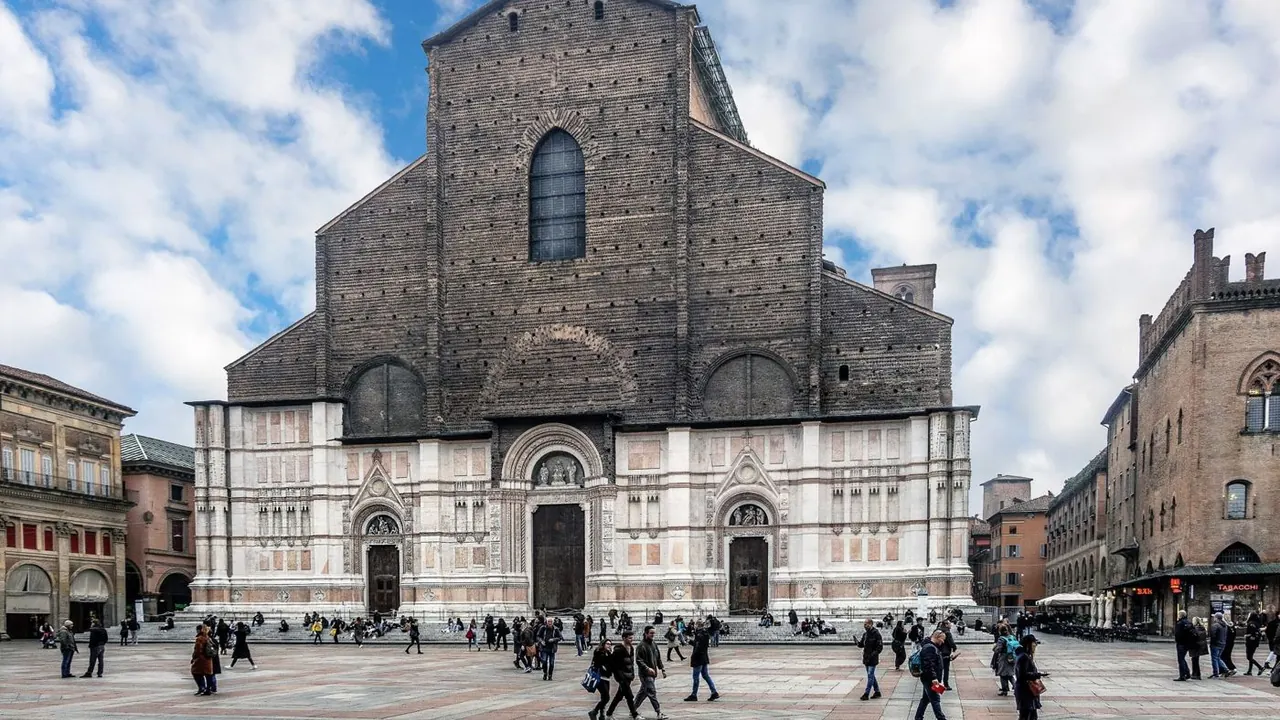
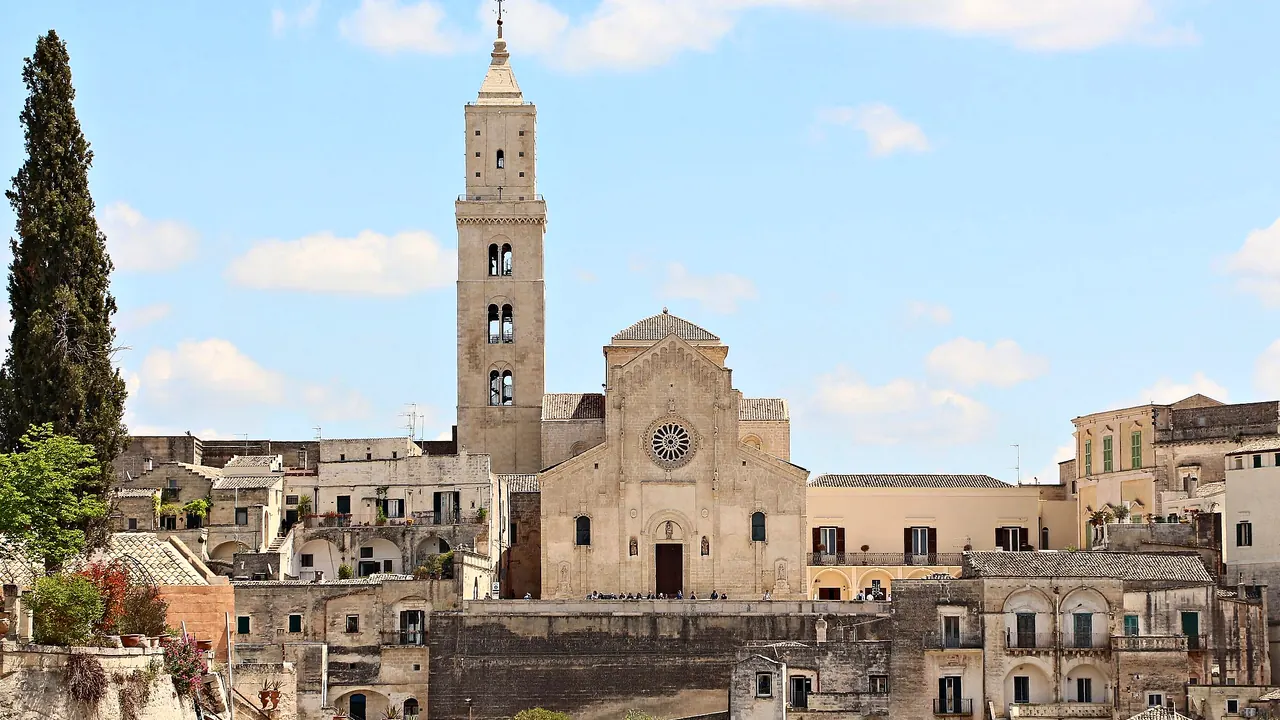
Photos: Bologna by Vanni Lazzari, CC BY-SA 4.0, cropped; Matera by Bernard Gagnon, CC BY 4.0, cropped.
Bologna or Matera?
Our verdict in twelve categories, each scored against the same fixed benchmark cities, and the climate month by month, so you can choose for your trip.
Choose Bologna for
- live music and the arts
- nightlife
- food and drink
Bologna suits travellers who want to eat well, go out in the evening and keep moving. It is the stronger table of the two by a distance, it has a real student night scene and a proper opera house, and its central station puts Florence, Ravenna, Verona and Venice within easy reach without a car. Choose it for a food-led city break or as a rail base for a wider tour of northern Italy.
Choose Matera for
- beaches
- nature and the outdoors
- prices
Matera is for the traveller who wants one extraordinary place and the landscape around it. The cave districts of the Sassi above the Gravina gorge are unlike anything in Bologna, the walking in the Murgia starts at the edge of town, and the quiet evenings are part of the point. It rewards a car, a slower pace and a short stay built around dusk views, rock churches and drives into Puglia and Basilicata.
Scoreboard
Twelve categories on one fixed scale from 0 to 100. The shaded stretch is the gap between the two.
Your match
Pick a travel style or drag the sliders, and both match scores follow your weighting.
Wins on live music and the arts and nightlife with your weighting.
Wins on beaches and nature and the outdoors with your weighting.
What matters to you?
Category by category
What the scores mean for a trip.
Beaches & swimming
Neither city is a beach destination, but Matera gives the better seaside day. The Ionian shore at Metaponto and Policoro has broad sandy beaches backed by pine woods, with shallow, calm water that suits children, though you need a car to get there.
Bologna's sea is the Romagna Riviera, about an hour away by train at Rimini. Getting there is easier, but you arrive at rows of rented sunbeds in organised lidos, and the Adriatic there is often greenish rather than clear.
Food & drink
Bologna is one of the reasons people travel to Italy at all. Tagliatelle al ragù, tortellini in brodo and lasagne verdi are cooked in old osterie, the Quadrilatero lanes and Mercato delle Erbe give it a real market culture, and Parma ham and Parmigiano come from just down the Via Emilia.
Matera eats well in a plainer register: crusty pane di Matera, fave e cicoria, cavatelli and crackling peperoni cruschi, with Aglianico to drink. It is honest regional cooking, but it has neither markets nor street food, and after a few dinners the menus start to repeat.
Culture & sights
Bologna comes out ahead on breadth. Its arcaded medieval centre, San Petronio, the Two Towers, the Archiginnasio's anatomical theatre and the Pinacoteca make a full two or three days, and they amount to the record of a major university city.
Matera has fewer sights, but they are stranger. Cave houses and frescoed rock churches like Santa Maria de Idris, the walk-through Palombaro Lungo cistern and the Sassi lit up at dusk give it an atmosphere that brick porticoes can't match, even if the list of things to see is shorter.
Nightlife
Bologna is the only one of the two with a night out. Thousands of students crowd Piazza Verdi and the taverns of Via del Pratello, and the aperitivo crowd around Via San Vitale moves on to wine bars, though the clubs are out on the edge of town and August goes quiet.
Matera's evening is a passeggiata along Via del Corso, a long dinner and a drink on a terrace above the Sassi. It is lovely for couples, but there are no clubs, and outside summer the town is asleep soon after dinner.
Nature & outdoors
Matera has the wilder landscape right on its doorstep. The Gravina gorge drops away beneath the Sassi, and across it the stony Murgia plateau has trails past abandoned rock churches and Neolithic sites, with kestrels on the cliffs. The Lucanian Dolomites and the forests of Pollino are within a day's drive.
Bologna's outdoors is gentler: easy walks in the Colli Bolognesi, the gypsum caves of the Parco dei Gessi, and the Via degli Dei for anyone ready to walk for several days to Florence. To the north lies flat farmland that is good for cycling and dull to look at.
Day trips
Bologna is the stronger base by some way, because the rail network does the work. Florence is about half an hour away by fast train. Ravenna's mosaics, Ferrara, Modena and Parma are short hops, and Verona, Padua and Venice are close enough for a day.
Matera has fine outings too, including the trulli of Alberobello, the white towns of the Valle d'Itria, Castel del Monte and the ghost town of Craco. Almost all of them need a hire car, though, and they are mostly small towns and countryside rather than great art cities like Florence or Venice.
Good for families
Bologna is the easier city with children, though it does little for them on purpose. Its flat centre is mostly closed to traffic and shaded by porticoes, and gelato and pasta make meals simple. A climb up the Asinelli tower or a day at Mirabilandia near Ravenna fills the gaps.
Matera's caves and gorge appeal to older children, but the Sassi are made of steep, uneven steps where a pushchair is no use, and there is little shade on summer afternoons. It works best as a short stay with a baby carrier and a car for the Ionian beaches.
Getting around
Both centres are best on foot, but Bologna is far easier once you want to go further. Its old town is flat and sheltered by porticoes, and the central station at its edge connects to most of northern Italy.
Within Matera you walk too, but the stairways down into the Sassi tire the legs. Beyond the town it is cut off: Matera is not on the national rail network, the narrow-gauge line to Bari is slow and buses are sparse, so a car is close to essential.
Shopping & style
Bologna has more to browse. There are the delis of the Quadrilatero, high-street chains on Via dell'Indipendenza, a small luxury cluster in the Galleria Cavour, and the Montagnola market and Santo Stefano antiques fair besides.
Matera's shops are small and mostly aimed at visitors: painted cuccù whistles, tufa carvings of the Sassi and ceramics. The best things to take home from either city are edible, though, whether that means mortadella and Parmigiano or dried peppers and Aglianico.
Affordability
Matera goes a little further on a modest budget. Simple trattorias in the upper town are cheap, guesthouses in the newer town cost far less than the cave hotels a short walk below, and walking the Sassi and the Murgia costs nothing. The Sassi themselves are where the price goes up.
In Bologna the meals and aperitivo are fair, but rooms in the old town carry northern Italian prices, and they become scarce and costly during the big trade fairs.
Live music & performing arts
Bologna has a performing arts life all year. The Teatro Comunale stages opera, ballet and concerts, small basement jazz clubs play most nights, and in summer there are concerts and films in Piazza Maggiore.
Matera has almost nothing on a regular basis beyond conservatory concerts and a summer jazz festival set against the Sassi. Its one great night is the Festa della Bruna, the patron feast that ends with the papier-mâché float being torn apart.
Wellness & relaxation
Neither city has a bathing tradition, so relaxation works differently in each. Bologna's spa water is out of town, in the spring-fed pools at Castel San Pietro Terme and the old valley spa of Porretta Terme. Matera keeps its calm closer to home, with candlelit hotel spas in rock-cut rooms and quiet mornings in the Sassi, while Bologna's noisy university quarter makes the city itself less restful.
When should you go?
Pick your month. The climate figures are measured averages, not a forecast.
Bologna in July
Matera in July
Daytime high, °C
Rainfall in the month, mm
Where the figures come from
Bologna has no rain gauge within 25 km of the centre, so its rainfall comes from a gridded climate dataset read at the city rather than from a gauge further away.
Bologna's sunshine is measured 82 km from the centre, at Cervia.
Matera has no rain gauge within 25 km of the centre, so its rainfall comes from a gridded climate dataset read at the city rather than from a gauge further away.
Temperature and rainfall are climate normals, averaged over the years shown. Bologna: 1991-2020, 14 years observed normals, Bologna / Borgo Panigale (5.5 km from centre). Matera: 2005-2025, 10 years observed (rainfall 1991-2020) normals, Matera / Martella (4.8 km from centre).
Both cities are at their best in May, June and September. These months are warm enough to eat outside in the evening, and the streets are not yet a trial. July and August reach about 32°C in each. Bologna's brick centre turns humid and heavy, and the porticoes give the only real shade, so its hills are best left for spring and autumn. In Matera the bare plateau and the stone steps of the Sassi are hard going in the afternoon, so walking there means early starts. Matera does offer a summer swim, though, because the Ionian sea below it warms to about 26°C in August.
Winter is where they part. Bologna turns cold and grey, with highs near 7°C in January and little sunshine, and its wettest months are October and November. Matera stays milder, with highs of 10°C to 12°C through the winter. Its rain is heaviest from October to December, though the months either side are not much drier. For a winter visit Matera is the gentler of the two. Bologna is brightest in high summer, when the long, sunny days suit an early morning in the streets and a slow lunch under the arches.
Which traveller are you?
On a food and nightlife trip, Bologna wins easily. Hand-rolled pasta, mortadella and the Quadrilatero's market lanes outclass Matera's narrower peasant cooking, and the student bars of Piazza Verdi stay busy long after Matera has gone quiet after dinner.
For an outdoors trip, Bologna's hill walks are gentle, a pleasant afternoon rather than a reason to come. Matera wins here: gorge and plateau start where the old town ends, and a car puts Basilicata's mountains and forests within a day.
On a culture and arts trip, Bologna has more range: towers, palaces, a fine picture gallery and the old university by day, opera or jazz by night. Matera is one extraordinary world of caves and rock churches, with little on stage after dark.
Before you go
| Measure | Bologna | Matera |
|---|---|---|
| Official language | Italian | Italian |
| Currency | Euro (EUR) | Euro (EUR) |
| Sockets | CFL230 V, 50 Hz | CFL230 V, 50 Hz |
| Driving side | Right | Right |
| Time zone | UTC+1, UTC+2 in summer | UTC+1, UTC+2 in summer |
| Emergency number | 112 | 112 |
| Elevation | 54 m | 401 m |
| Main airport | Bologna Guglielmo Marconi Airport (BLQ)6 km from centre98 non-stop destinations | Bari Karol Wojtyła International Airport (BRI)54 km from centre104 non-stop destinations |
| Public holidays this year | 13 days | 13 days |
By the numbers
| Measure | Bologna | Matera |
|---|---|---|
| City population | 387,971 | 59,685 |
| People per km² | 2,754 | 152 |
| Museums within 10 km | 68 | 8 |
| UNESCO World Heritage sites within 50 km | 3 | 1 |
| Swim season, months above 21 °C | - | 5 months |
Where else could you go?
Every comparison below shares a destination with this one, so you can follow Bologna or Matera somewhere new.