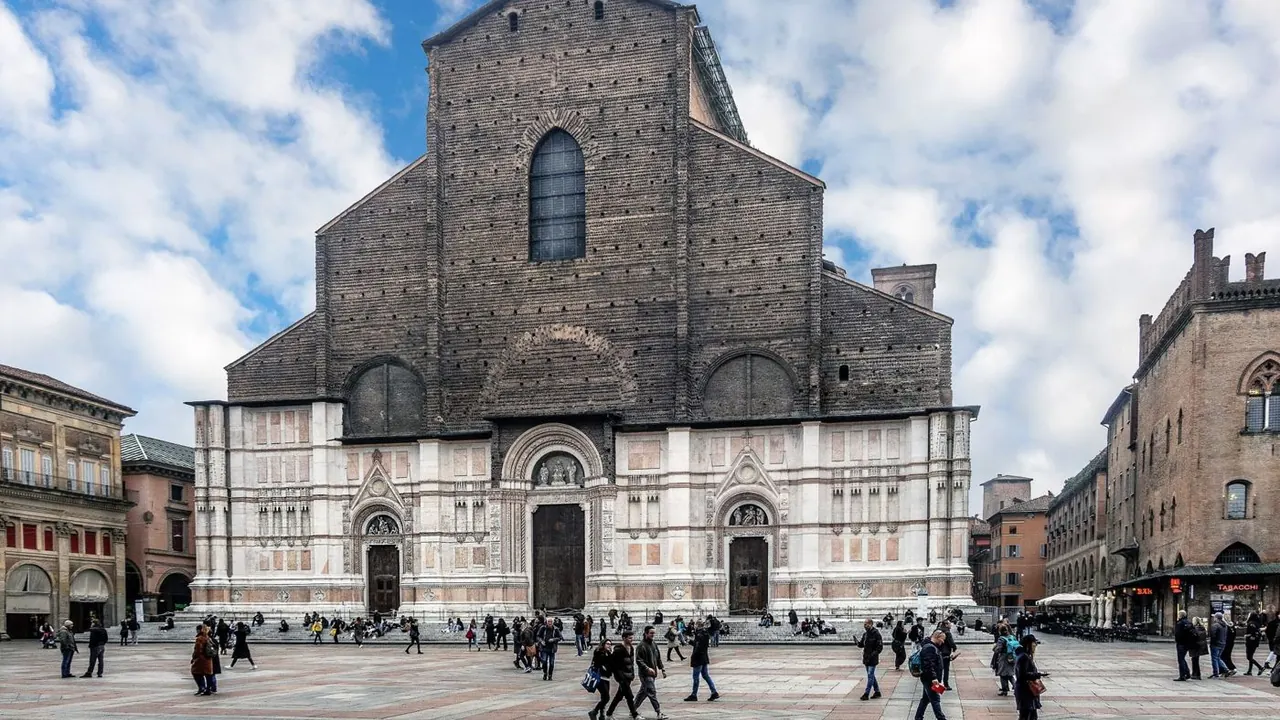
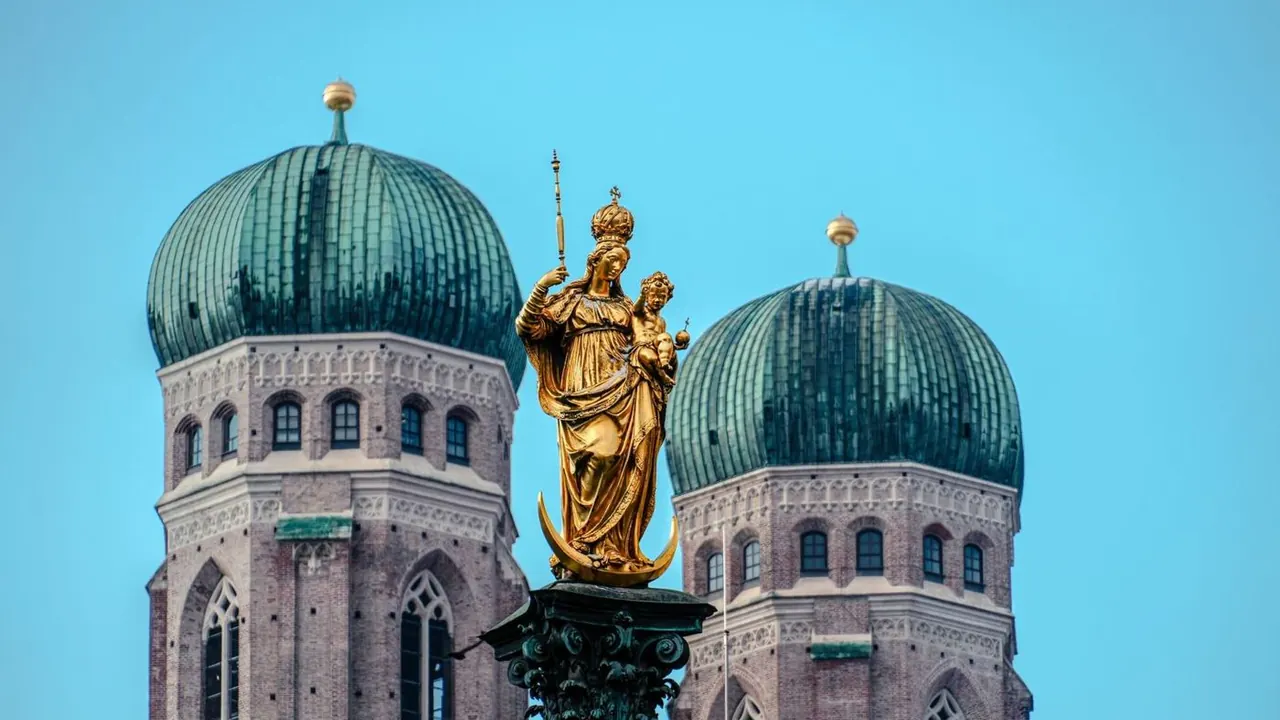
Photos: Bologna by Vanni Lazzari, CC BY-SA 4.0, cropped; Munich by 0xd1ma, Pexels License.
Bologna or Munich?
Our verdict in twelve categories, each scored against the same fixed benchmark cities, and the climate month by month, so you can choose for your trip.
Choose Bologna for
- food and drink
- prices
- day trips
Bologna is the pick for travellers who plan their days around the table: fresh pasta rolled by hand in shop windows, the delicatessens of the Quadrilatero and an aperitivo with Lambrusco before dinner. It also suits anyone who wants to move on each morning, with Florence, Ravenna, Ferrara, Parma and even Venice within easy reach by train, and it costs less to eat and stay in than Munich.
Choose Munich for
- nature and the outdoors
- families
- live music and the arts
Munich rewards those who want more from the setting than from the plate. The Alps and the lakes are close enough for a day of hiking or swimming, the opera house and orchestras are among the best in Europe, and children are far better catered for, with a big zoo, hands-on museums and beer gardens with playgrounds. Expect a higher bill, especially for rooms.
Scoreboard
Twelve categories on one fixed scale from 0 to 100. The shaded stretch is the gap between the two.
Your match
Pick a travel style or drag the sliders, and both match scores follow your weighting.
Wins on food and drink and prices with your weighting.
Wins on nature and the outdoors and families with your weighting.
What matters to you?
Category by category
What the scores mean for a trip.
Beaches & swimming
Neither is a beach destination, and the difference lies in what kind of water is within reach. From Bologna it is an hour by train to Rimini and the Romagna Riviera, where the Adriatic is warm and shallow in August but the shore is lined with rented umbrellas in organised lidos.
Munich keeps its swimming closer and cooler: gravel banks on the Isar inside the city, and the Starnberger See and Ammersee by S-Bahn, with clear alpine-fed water that stays fresh even in high summer. Bologna offers warm sea, Munich offers cleaner, cooler lakes.
Food & drink
Food is one of the clearest reasons to choose Bologna. This is the home of tagliatelle al ragù, tortellini in brodo and mortadella, cooked in old osterie, with Parmigiano and Parma ham made less than an hour away and the lanes of the Quadrilatero full of delicatessens.
Munich's eating is built around the beer hall and the beer garden: roast pork, white sausage, pretzels and a litre of Helles under chestnut trees, with the Viktualienmarkt for snacks. It is sociable and enjoyable, but a simpler and narrower table than Bologna's, even though neither city offers much depth beyond its own regional cooking.
Culture & sights
The two are evenly matched for sightseeing, but they give you different things. In Bologna the city is the sight: a near-intact medieval centre of red brick and UNESCO-listed porticoes, the Two Towers, Santo Stefano and the anatomical theatre of Europe's oldest university, all seen on foot in two or three days.
Munich's strength lies indoors, in royal collections: the Alte Pinakothek and the rest of the Kunstareal, the Residenz, Nymphenburg and the vast Deutsches Museum. Its old town is handsome but much of it was rebuilt after the war, so choose Bologna for the streetscape and Munich for the museums.
Nightlife
Evenings out are similar in energy but not in style. Bologna's nights belong to its students, standing outside cheap bars around Piazza Verdi or moving along the taverns of Via del Pratello, though August goes very quiet. Munich is tidier and more prosperous: the evening often stays in the beer hall, with cocktail and gay bars around Gärtnerplatz and a few serious techno clubs in town for dancing until morning, where Bologna sends you out to the edge of the city.
Nature & outdoors
Munich is far better placed for the outdoors. The Alps rise about an hour south, with hiking around Garmisch and the Zugspitze in summer and skiing in winter, the Five Lakes are made for sailing and cycling, and the English Garden and the Isar paths give the city real green space, down to surfers on the Eisbach wave.
Bologna offers gentler ground: hill walks in the Colli Bolognesi, the gypsum caves of the Parco dei Gessi and the long Via degli Dei trail to Florence. Its Apennines are lower and further off than Munich's Alps, and hot summers limit outdoor days to spring and autumn.
Day trips
Both are excellent bases, but Bologna has the edge for the sheer number of great towns nearby. Florence is barely half an hour away, Ravenna's mosaics, Ferrara, Modena and Parma are short regional rides, and Verona, Padua and Venice are also within a day's reach.
Munich's list is long too, from Augsburg and Nuremberg to Salzburg and Regensburg, but the classic outing to Neuschwanstein takes around two hours each way. Its excursions mix historic towns with alpine lakes and castles, where Bologna's are mostly art cities and food producers.
Good for families
Munich is the easier choice with children. It has a large zoo along the Isar meadows, the hands-on sections of the Deutsches Museum, an aquarium in the Olympic Park, lake beaches and beer gardens with playgrounds, all reached on transport that takes pushchairs.
Bologna is welcoming, and its car-free centre and shady porticoes are easy to walk, but little is aimed at children beyond climbing the Asinelli tower, so families tend to head out to Mirabilandia or Rimini. Its summer heat is also harder on small children than Munich's milder summers.
Getting around
Both have compact, largely car-free old towns, so the difference shows once you leave the centre. Munich's U-Bahn, S-Bahn, trams and buses run as one clean network out to Nymphenburg, the Olympic Park, the airport and the lakes.
Bologna has no metro and relies on buses, but almost everything a visitor wants lies within walking distance under the porticoes, and the central station sits at the edge of the old town. It works well on foot, while Munich reaches further with less effort.
Shopping & style
Munich is the stronger shopping city. Maximilianstrasse has the luxury houses and Kaufingerstrasse the department stores. The distinctive buy is Tracht, the dirndls and lederhosen of Bavarian costume made by specialist tailors, which Bologna has nothing to match. In December the Christmas markets add craft stalls.
In Bologna the best buys are things to eat: mortadella, aged Parmigiano and balsamic vinegar from the Quadrilatero. Its fashion streets are pleasant but small. The Montagnola market and the antiques in Piazza Santo Stefano cover something Munich, with few flea markets, does not.
Affordability
Bologna is the gentler city on the wallet, mainly at the table: trattoria meals, aperitivo with food included and local wine by the glass cost noticeably less than in Munich, and most sights are churches and squares that are free to enter. In both cities, rooms become scarce and costly during the big trade fairs.
Munich is Germany's most expensive city, with hotels dear all year and restaurants charging what you would pay in a Western European capital. The savings there come from beer-hall food, picnics in beer gardens, free parks and lakes, and token museum entry on Sundays.
Live music & performing arts
Munich is one of Europe's great music cities, and the gap here is wide. The Bavarian State Opera in the National Theatre, three orchestras of real standing, the rococo Cuvilliés Theatre and a long-established summer opera festival make it worth planning a trip around a performance.
Bologna has a genuine tradition of its own, with the historic Teatro Comunale, its UNESCO City of Music title, jazz in small basement clubs and summer concerts in Piazza Maggiore. It makes for a good evening out rather than a reason to travel, and in both cities spoken theatre is mostly in the local language.
Wellness & relaxation
Munich has a bathing culture that Bologna lacks. The Art Nouveau Müller'sches Volksbad, German public saunas with their infusion rituals and the huge thermal complex at Erding, about forty minutes out, give real options for a slow day.
In Bologna, relaxing mostly means a long lunch under the porticoes or a hotel spa, with the spring-fed pools of Castel San Pietro Terme and the old spa town of Porretta Terme for a calm half day. Munich's English Garden and quiet Sundays also make it easier to unwind than in Bologna's noisy university quarter in the summer heat.
When should you go?
Pick your month. The climate figures are measured averages, not a forecast.
Bologna in July
Munich in July
Daytime high, °C
Rainfall in the month, mm
Where the figures come from
Bologna has no rain gauge within 25 km of the centre, so its rainfall comes from a gridded climate dataset read at the city rather than from a gauge further away.
Bologna's sunshine is measured 82 km from the centre, at Cervia.
Temperature and rainfall are climate normals, averaged over the years shown. Bologna: 1991-2020 normals, Bologna / Borgo Panigale (5.5 km from centre). Munich: 1991-2020 normals, München (1.9 km from centre).
Bologna is at its most comfortable in May, warm at around 24°C and still fairly dry. Late September is also pleasant for walking, but the autumn rain is setting in by then. From June to August the city is hot and humid, reaching 32°C by day in July and August. That makes long walks through the streets tiring, but it is the right weather for a day on the Adriatic at Rimini, and these three summer months are also the sunniest of the year. October and November are the wettest months at about 91mm and 95mm, December is drier, and winters are cool and grey.
Munich stays cooler all year. Summer highs near 25°C are pleasant for walking the city and swimming in the lakes, but May to August is also its wettest stretch, with well over 100mm of rain a month, so expect showers on a summer visit. September is drier than the summer and still mild, a good month for the mountains. Winter is colder than in Bologna and best spent in the snowy Alps rather than in the grey city streets.
Which traveller are you?
For a food and nightlife trip, Bologna is the stronger choice. Its cooking is among Italy's richest, the Quadrilatero is a market district to graze through, and the aperitivo leads on to student bars around Piazza Verdi and late taverns on Via del Pratello.
On a family trip with children, Munich makes the days easier to fill. Children get places in town that are made for them, not an afternoon squeezed between adult sights, whereas families in Bologna usually travel out to a theme park or the coast.
On an outdoors trip, Munich is the clear choice. Proper mountain days, walking in summer or skiing in winter, fit around a city stay without a hire car. Bologna's gentler hills are good for an afternoon's walk but not for a week of them.
Before you go
| Measure | Bologna | Munich |
|---|---|---|
| Official language | Italian | German |
| Currency | Euro (EUR) | Euro (EUR) |
| Sockets | CFL230 V, 50 Hz | CF230 V, 50 Hz |
| Driving side | Right | Right |
| Time zone | UTC+1, UTC+2 in summer | UTC+1, UTC+2 in summer |
| Emergency number | 112 | 112 |
| Elevation | 54 m | 519 m |
| Main airport | Bologna Guglielmo Marconi Airport (BLQ)6 km from centre98 non-stop destinations | Munich Airport (MUC)29 km from centre210 non-stop destinations |
| Public holidays this year | 13 days | 12 days |
By the numbers
| Measure | Bologna | Munich |
|---|---|---|
| City population | 387,971 | 1,505,036 |
| People per km² | 2,754 | 4,844 |
| Museums within 10 km | 68 | 74 |
| UNESCO World Heritage sites within 50 km | 3 | 1 |
Where else could you go?
Every comparison below shares a destination with this one, so you can follow Bologna or Munich somewhere new.