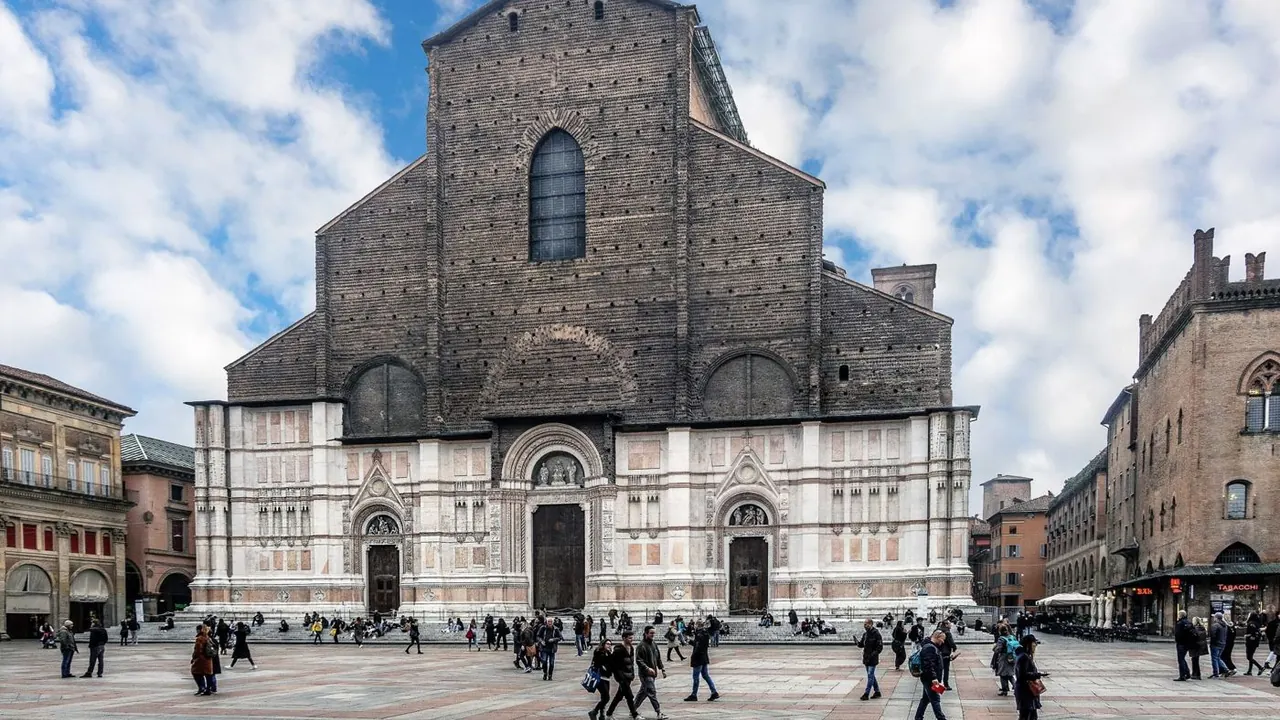
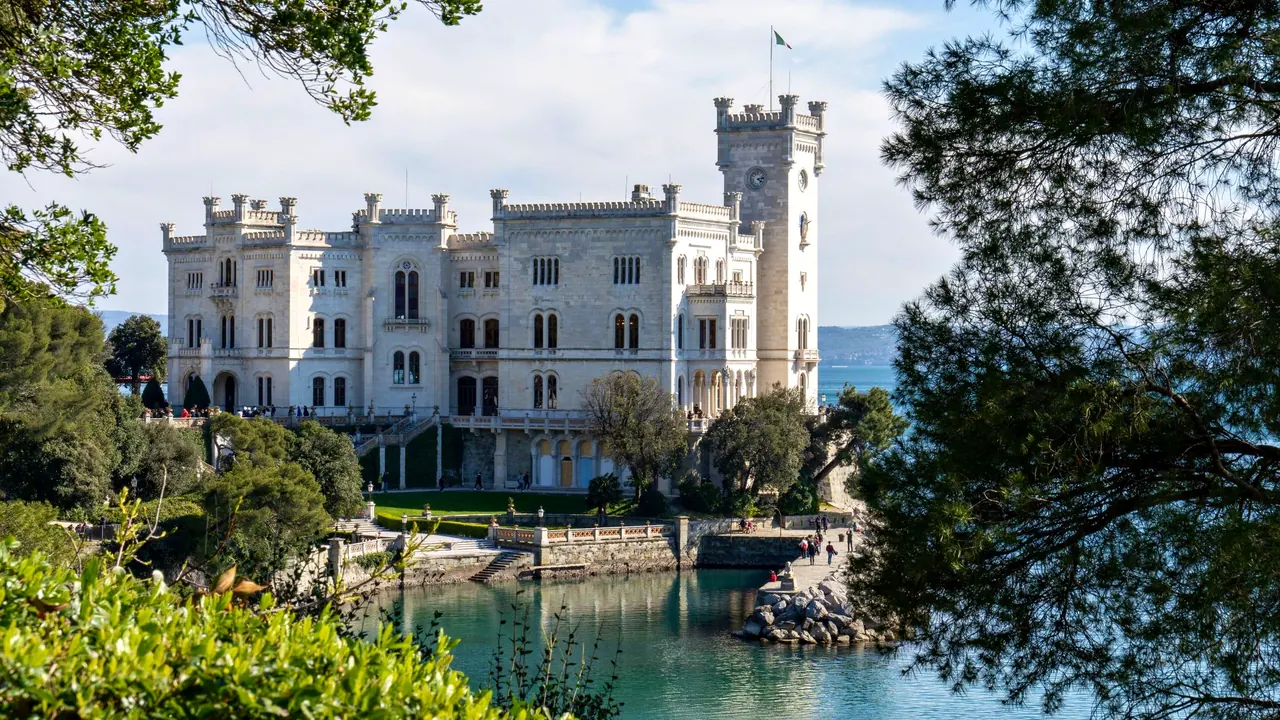
Photos: Bologna by Vanni Lazzari, CC BY-SA 4.0, cropped; Trieste by Tibor Szabo, Pexels License.
Bologna or Trieste?
Our verdict in twelve categories, each scored against the same fixed benchmark cities, and the climate month by month, so you can choose for your trip.
Choose Bologna for
- nightlife
- food and drink
- shopping
Bologna is the pick for travellers who plan their days around the table and the train timetable. Emilian cooking is at its source here, the arcaded medieval centre rewards two or three days of walking, students keep the evenings lively, and Florence, Ravenna, Ferrara and Parma are all easy to visit and be back by evening from the central station.
Choose Trieste for
- beaches
- nature and the outdoors
- prices
Trieste suits a slower trip with the sea in it. Swimming off the Barcola promenade is part of summer life, the Karst plateau and its caves start right behind the city, and the Habsburg coffee houses and waterfront squares set an unhurried pace. It is quieter after dark and a little gentler on the budget, with Slovenia and Friuli close at hand.
Scoreboard
Twelve categories on one fixed scale from 0 to 100. The shaded stretch is the gap between the two.
Your match
Pick a travel style or drag the sliders, and both match scores follow your weighting.
Wins on nightlife and food and drink with your weighting.
Wins on beaches and nature and the outdoors with your weighting.
What matters to you?
Category by category
What the scores mean for a trip.
Beaches & swimming
Bologna is inland, so a swim means a day out to the Romagna Riviera at Rimini or Cervia, an hour or so away by train. The shore there is a row of organised lidos with rented umbrellas, and the water is often greenish. It works as an escape from the city heat, not as part of the stay.
Trieste has the sea in the city itself. There is almost no sand, but the clear water off the Barcola promenade, the old bathing establishments near the centre and the pebble coves at Sistiana and Duino make swimming a daily habit from June to September for anyone happy to climb down a ladder.
Food & drink
Bologna is one of Italy's great food cities. It is the home of tagliatelle al ragù, tortellini and mortadella, Parmigiano and Parma ham are made less than an hour away, and pasta is still rolled by hand in shop windows. Eating well is easy at every level, as long as you want Emilian cooking.
Trieste is more unusual than refined: boiled pork carved at buffet counters, jota, sardoni and Austrian pastries, plus a coffee culture with its own vocabulary and the seasonal osmize on the Karst. It is a fascinating mix, but there are fewer good restaurants to choose from than in Bologna.
Culture & sights
Bologna's draw is a large, intact medieval centre of brick towers and arcaded streets. San Petronio, the seven churches of Santo Stefano, the anatomical theatre in the Archiginnasio and a strong Pinacoteca are enough to fill two or three full days.
Trieste belongs to a later era: the Habsburg port of Piazza Unità facing the sea, the Borgo Teresiano and the white Miramare Castle, with the mosaics of San Giusto and the Risiera memorial adding depth. It has plenty of atmosphere, but fewer major sights than Bologna.
Nightlife
Bologna's students give it a real night scene. Crowds gather outside cheap bars around Piazza Verdi, the taverns along Via del Pratello stay open late, and aperitivo leads on to wine bars. For clubs you need a taxi out of town, and in August the city goes quiet.
In Trieste an evening out means a spritz on Piazza Unità or along the Canal Grande and, in summer, the kiosks on the Barcola seafront. The population is older and there are few clubs, so it suits a drink by the water rather than a late night.
Nature & outdoors
Trieste has the more dramatic outdoors. The Karst rises straight behind the city, with the Strada Napoleonica above the gulf, the Rilke Path on the Duino cliffs, the Val Rosandra gorge and huge caves on both sides of the Slovenian border. The gulf adds sailing, kayaking and snorkelling in the Miramare reserve.
Bologna's countryside is gentler: easy walks up to San Luca and through the Colli Bolognesi, the gypsum ridges of the Parco dei Gessi and the start of the Via degli Dei to Florence. For higher Apennine hiking you have to travel further, and the plain to the north is flat.
Day trips
Both make good bases, but Bologna is exceptional. Florence is about half an hour away by fast train, Ravenna, Ferrara, Modena and Parma are all short hops, and even Verona, Padua and Venice fit into a day.
Trieste's outings cross borders instead: Aquileia, Cividale and Palmanova in Friuli, Piran and Ljubljana in Slovenia, and Istria by car. They are rewarding, but the journeys are longer, and Venice takes a full day rather than an easy one.
Good for families
Neither city is built around children, and they come out about even. Bologna offers a flat, car-free centre with shaded porticoes and simple meals of pasta and gelato, with Mirabilandia or the beach at Rimini for a day out, though the summer heat is tough on little ones.
Trieste has more for curious older children, with the Grotta Gigante, the Miramare gardens, a small aquarium and summer days at Barcola. The steps above the waterfront and the swimming off rocks make it harder going with toddlers.
Getting around
Both are cities to walk, with no metro and buses for everything else. Bologna has the edge: the centre is compact and flat, the porticoes keep you out of the sun and rain, and the main station on the edge of the old town opens up the whole of northern Italy.
Trieste's waterfront core is just as easy, but San Giusto and the districts behind it mean steep streets and long stairways. In return it has passenger boats across the bay to Muggia and buses up onto the Karst.
Shopping & style
Bologna has more to browse. There is food from the Quadrilatero delis, high-street chains on Via dell'Indipendenza, a small luxury cluster on Via Farini and in the Galleria Cavour, and the Montagnola and Santo Stefano markets.
Trieste is low-key, with ordinary clothing shops and no luxury scene. The antique and second-hand shops in the old town have character, though, and coffee, Karst wine and presnitz make good things to take home.
Affordability
Trieste is the easier of the two on the wallet. Rooms are reasonable for most of the year, buses are cheap, and much of the best of the city, from swimming at Barcola to walks on the Karst, costs nothing.
Bologna is cheap for eating out by northern Italian standards, and its trattorias and aperitivo spreads are good value. Hotels in the old town, though, are priced like the rest of the prosperous north, and trade fairs push room prices up across the city.
Live music & performing arts
The two are close here, and each is built around a historic opera house. Next to its Teatro Comunale, Bologna has a long jazz tradition, with basement clubs playing most nights, and a run of student indie gigs, so there is music beyond the formal stage.
Trieste's strengths are the Teatro Verdi on the waterfront and a love of operetta that is rare in Italy, along with a Slovenian-language theatre. Away from the theatres, there is little live music.
Wellness & relaxation
Neither city is a spa destination, and both rely on hotel spas. The difference is what each adds. From Bologna you can reach real thermal pools at Castel San Pietro Terme and Porretta Terme. Trieste has no thermal water but a slower pace, with long sittings in old coffee houses and sunset walks on the Molo Audace.
When should you go?
Pick your month. The climate figures are measured averages, not a forecast.
Bologna in July
Trieste in July
Daytime high, °C
Rainfall in the month, mm
Where the figures come from
Bologna has no rain gauge within 25 km of the centre, so its rainfall comes from a gridded climate dataset read at the city rather than from a gauge further away.
Bologna's sunshine is measured 82 km from the centre, at Cervia.
Temperature and rainfall are climate normals, averaged over the years shown. Bologna: 1991-2020, 14 years observed normals, Bologna / Borgo Panigale (5.5 km from centre). Trieste: 1991-2020 normals, Trieste (1.6 km from centre).
Bologna sits on the Po plain and its summer is hard work. July and August reach 32°C in humid air, which makes midday sightseeing heavy even with the porticoes for shade. Late April to early June and September are the comfortable months for walking, with long sunny days, and the wettest stretch comes in October and November. Winters are cold and grey, with highs in single figures.
Trieste is milder at both ends of the year, peaking around 29°C in summer. The sea is warm enough for swimming from June to September and touches 25°C in high summer. It is the wetter of the two, with autumn rain building to about 125mm in November, and the Bora can make winter days raw. For a summer trip Trieste is the easier city to be in. In spring and early autumn Bologna is drier and sunnier.
Which traveller are you?
On a food and nightlife trip, Bologna wins clearly. Fresh pasta, mortadella and Lambrusco are local here, the Quadrilatero is a market district to graze through, and the student bars of Piazza Verdi and Via del Pratello keep going long after Trieste has gone quiet.
For a beach and sun trip, Trieste is the only real option of the two. You can swim every day from the Barcola platforms or the coves at Sistiana and Duino. From Bologna, the sea means an hour's train ride to Rimini's rows of sunbeds.
On an outdoors trip, Trieste puts the landscape on the doorstep, with cliff paths above the gulf, the Val Rosandra gorge, the Grotta Gigante and snorkelling at Miramare. Bologna has gentle hill walks and the Via degli Dei trail, but the plain beyond is flat farmland.
Before you go
| Measure | Bologna | Trieste |
|---|---|---|
| Official language | Italian | Italian |
| Currency | Euro (EUR) | Euro (EUR) |
| Sockets | CFL230 V, 50 Hz | CFL230 V, 50 Hz |
| Driving side | Right | Right |
| Time zone | UTC+1, UTC+2 in summer | UTC+1, UTC+2 in summer |
| Emergency number | 112 | 112 |
| Elevation | 54 m | 2 m |
| Main airport | Bologna Guglielmo Marconi Airport (BLQ)6 km from centre98 non-stop destinations | Trieste Airport (TRS)31 km from centre32 non-stop destinations |
| Public holidays this year | 13 days | 13 days |
By the numbers
| Measure | Bologna | Trieste |
|---|---|---|
| City population | 387,971 | 198,417 |
| People per km² | 2,754 | 2,332 |
| Museums within 10 km | 68 | 33 |
| UNESCO World Heritage sites within 50 km | 3 | 5 |
| Swim season, months above 21 °C | - | 4 months |
Where else could you go?
Every comparison below shares a destination with this one, so you can follow Bologna or Trieste somewhere new.