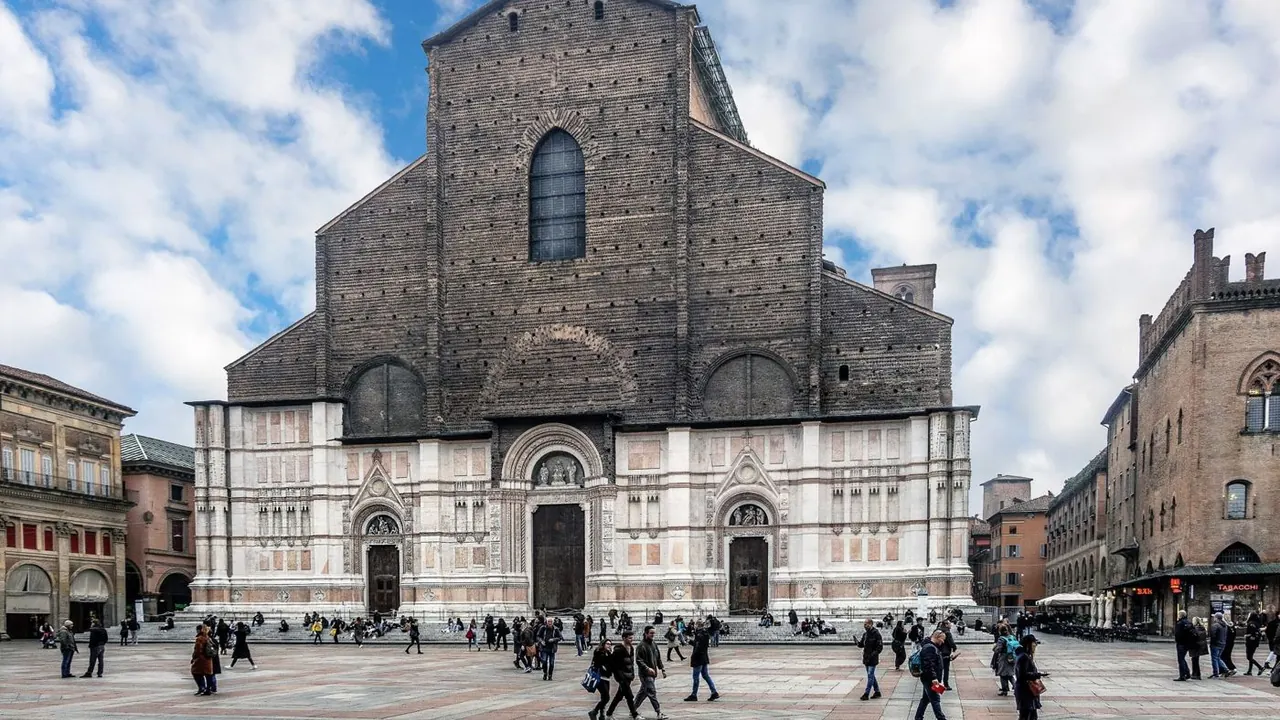
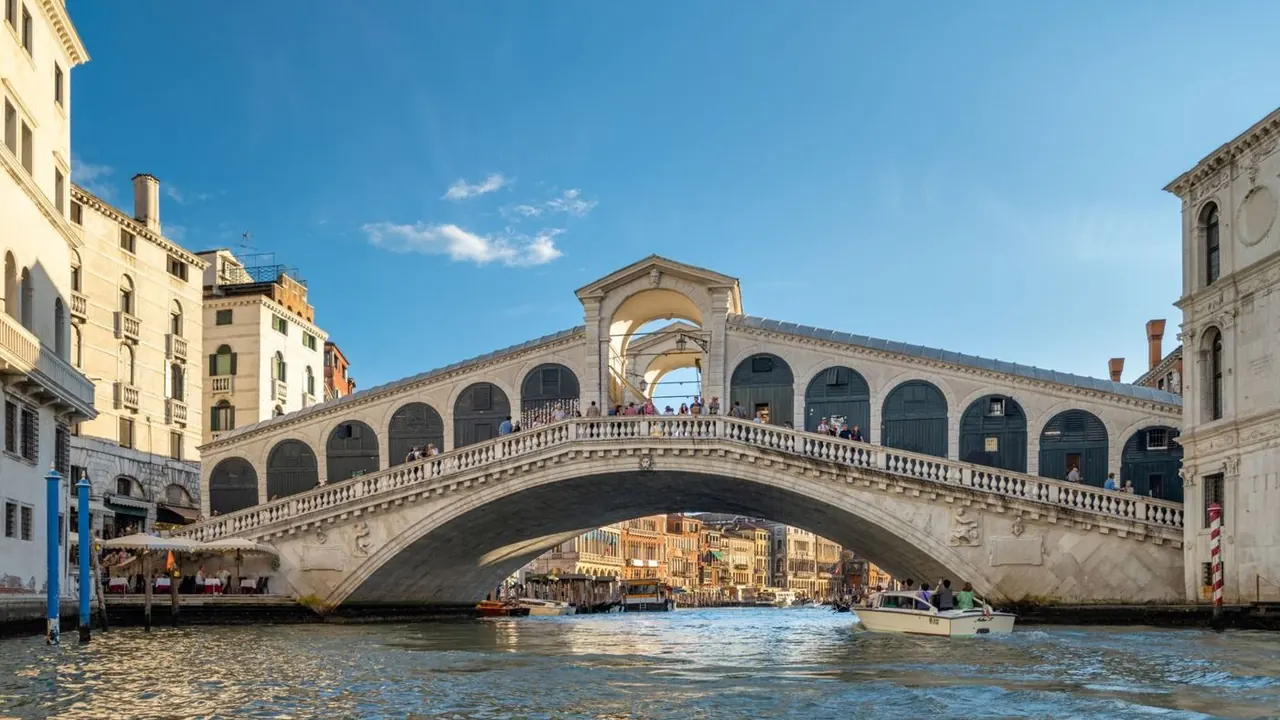
Photos: Bologna by Vanni Lazzari, CC BY-SA 4.0, cropped; Venice by David Vives, Pexels License.
Bologna or Venice?
Our verdict in twelve categories, each scored against the same fixed benchmark cities, and the climate month by month, so you can choose for your trip.
Choose Bologna for
- nightlife
- prices
- food and drink
Bologna is for travellers who plan their days around the table and like to keep moving. The cooking is richer and more rooted, the student quarter keeps the evenings going, and the central station puts Florence, Ravenna, Ferrara and Parma a short train ride away. Rooms and meals cost noticeably less, and the flat, arcaded centre is easy to settle into for a longer stay.
Choose Venice for
- beaches
- culture and sights
- shopping
Choose Venice when the place itself is the reason for the trip. Its art and architecture go much deeper, from the mosaics of San Marco to Titian and Tintoretto in the churches they were painted for, and no other city stands on water like this. In return you pay heavily, the nights are quiet, and you get a real sandy beach on the Lido if you want a swim.
Scoreboard
Twelve categories on one fixed scale from 0 to 100. The shaded stretch is the gap between the two.
Your match
Pick a travel style or drag the sliders, and both match scores follow your weighting.
Wins on nightlife and prices with your weighting.
Wins on beaches and culture and sights with your weighting.
What matters to you?
Category by category
What the scores mean for a trip.
Beaches & swimming
Venice has a beach of its own: the Lido, a short vaporetto ride from San Marco, with kilometres of fine sand on the open Adriatic and quieter stretches out towards Pellestrina. It is mostly rows of cabanas, and the water is greenish, but you can easily fit a hot afternoon there into a city stay.
Bologna is inland, so a swim means a train of about an hour to Rimini or Cervia. There you find the same warm, shallow, greenish sea, lined with rented umbrellas. It works for one day out of the heat, not as part of everyday life.
Food & drink
Bologna is the stronger city for eating, and for many visitors it is the reason to go. Tagliatelle al ragù, tortellini in brodo and mortadella are cooked in family trattorias, pasta is rolled in shop windows, and Parmigiano and Parma ham come from towns close by. The Quadrilatero market lanes are a treat to wander.
Venice eats differently, standing at the counter of a bacaro with cicchetti and a spritz, and the Rialto market supplies lagoon dishes such as cuttlefish risotto. The trouble is the many poor restaurants on the routes around San Marco, so a good meal takes some searching. Neither city offers much beyond its own regional cooking.
Culture & sights
Venice is in another league. The whole city is a monument on water, and behind the Basilica and the Grand Canal lies a huge body of art: Venetian painting at the Accademia, Titian in the Frari, Tintoretto at San Rocco, and modern collections at the Guggenheim and Punta della Dogana.
Bologna's appeal is a large, intact medieval centre in red brick, with UNESCO-listed porticoes, the Two Towers, Santo Stefano and the anatomical theatre of Europe's oldest university. It is rewarding but compact, and two or three days cover it.
Nightlife
Bologna's students give it a proper night out. Piazza Verdi fills with crowds outside cheap bars, and Via del Pratello's taverns stay busy late, though real clubbing means a taxi out of the centre and August goes quiet.
In Venice the best of the evening is the aperitivo along the Misericordia canal and around the Rialto. After that only Campo Santa Margherita stays busy for long, and by midnight the canals are dark and silent.
Nature & outdoors
Bologna has more ground to walk on. The arcaded path up to San Luca and the trails of the Colli Bolognesi start from the edge of town, the Via degli Dei sets off for Florence from Piazza Maggiore, and the Apennines reach 2,000m within a couple of hours.
In Venice the outdoors is flat and watery. Kayaking or Venetian rowing in the northern lagoon around Torcello brings herons and flamingos, and you can cycle the sea walls of Pellestrina, but real hills mean a trip to the Euganean Hills or beyond.
Day trips
Both cities make superb bases, and Bologna has the edge thanks to its rail junction. Florence is barely half an hour by fast train, and Ravenna's mosaics, Ferrara, Modena and Parma are all close, with Verona and Venice itself within reach.
Venice looks towards the Veneto instead: Padua's Scrovegni Chapel, Palladio's Vicenza, Verona and the Brenta villas. It also has trips that need no train at all, to the glass furnaces of Murano, the painted houses of Burano and lonely Torcello.
Good for families
Both are manageable with children rather than built for them, but in different ways. Bologna is flat, mostly free of traffic and shaded by its porticoes. It has few attractions for children, so families tend to add Mirabilandia or the beach at Rimini.
Venice has more magic: boat rides, glass-blowing on Murano and the shallow Lido beach. On the other hand, its stepped bridges make pushchairs a constant struggle, which makes it better for older children on a short stay.
Getting around
Bologna is the easier city to get around. The centre is small and flat, the porticoes keep you in the shade or out of the rain, buses cover the hills, and the station sits right on the edge of the old town.
Venice is also a city for walking, but it is harder going. Alleys twist and stop dead at canals, hundreds of bridges have steps that wheeled luggage hates, and the vaporetto is slow and crowded on the main lines.
Shopping & style
Neither city is a shopping destination, and what you take home differs. In Bologna it is food: mortadella, aged Parmigiano and balsamic vinegar from the Quadrilatero, plus a small luxury cluster on Via Farini and weekend antiques in Piazza Santo Stefano.
In Venice it is craft: Murano glass, Burano lace, papier-mâché masks and marbled paper. Look for workshops where you can see the work being done, because the main routes are full of cheap imports.
Affordability
Bologna is clearly the cheaper stay. Good trattoria meals and generous aperitivo cost less than in Italy's tourist hubs, and the sights are mostly free. Rooms are the expense, especially during trade fairs.
Venice is among the dearest cities in Italy. Hotel rooms, entry to the main sights and boat travel all cost a lot. Eating cicchetti at the counter, staying in Cannaregio or Mestre, and coming in late autumn or winter all help.
Live music & performing arts
Both have a historic opera house at the centre of the scene, the Teatro Comunale in Bologna and La Fenice in Venice, each with full seasons of opera, ballet and concerts. Around that they differ. Bologna, a UNESCO City of Music, adds basement jazz clubs, student indie gigs and summer concerts in Piazza Maggiore.
Venice offers baroque Vivaldi in churches and scuole grandi, plus the Biennale's festivals of contemporary music, theatre and dance. It has little in the way of jazz or rock.
Wellness & relaxation
Neither city has its own bathing culture, and both rely on hotel spas and nearby thermal towns. Bologna's spa is closer, with the pools of Castel San Pietro Terme about twenty minutes away and Porretta Terme in an Apennine valley.
Venice's thermal option is Abano Terme, about an hour away, known for its mud treatments. The city's real calm is the silence of a place without traffic, best found early or late in Castello or on Giudecca.
When should you go?
Pick your month. The climate figures are measured averages, not a forecast.
Bologna in July
Venice in July
Daytime high, °C
Rainfall in the month, mm
Where the figures come from
Bologna has no rain gauge within 25 km of the centre, so its rainfall comes from a gridded climate dataset read at the city rather than from a gauge further away.
Bologna's sunshine is measured 82 km from the centre, at Cervia.
Venice has no rain gauge within 25 km of the centre, so its rainfall comes from a gridded climate dataset read at the city rather than from a gauge further away.
Venice's sunshine is measured 26 km from the centre, at Treviso / S. Angelo.
Temperature and rainfall are climate normals, averaged over the years shown. Bologna: 1991-2020 normals, Bologna / Borgo Panigale (5.5 km from centre). Venice: 1991-2020 normals, Venezia / Tessera (6.7 km from centre).
The two cities share a calendar. Both are cold and grey in winter, pleasant for walking in April, May, late September and October, and hot from June to August. Bologna gets the harsher summer, peaking around 32°C in the humid plain, with long sunny days. Venice tops out nearer 30°C, and the Adriatic off the Lido reaches 26°C in August, so July and August are the months for a swim there.
Rain is where they part. Bologna stays fairly dry through spring and summer and only turns wet in autumn. Venice is damper through much of summer and wettest in October, at around 87mm, with November not far behind. For a dry spring trip Bologna is the safer choice. In winter Venice actually gets a little more sun.
Which traveller are you?
On a culture and arts trip, Venice is the one to pick. The Accademia, the Frari, San Rocco and the Doge's Palace could fill a week, and the Biennale adds modern art. Bologna's brick centre and porticoes are fine, but you will have seen them in a few days.
For a food and nightlife trip, Bologna wins easily. You get handmade tortellini and ragù in old osterie, aperitivo with Lambrusco, and then student bars around Piazza Verdi and Via del Pratello late into the night. Venice's cicchetti are lovely, but the city goes quiet around midnight.
On a trip on a tight budget, Bologna goes much further. Trattoria meals and aperitivo with food included are cheap, most sights are free churches and squares, and you walk everywhere. In Venice the hotels, entry fees and water transport add up fast.
Before you go
| Measure | Bologna | Venice |
|---|---|---|
| Official language | Italian | Italian |
| Currency | Euro (EUR) | Euro (EUR) |
| Sockets | CFL230 V, 50 Hz | CFL230 V, 50 Hz |
| Driving side | Right | Right |
| Time zone | UTC+1, UTC+2 in summer | UTC+1, UTC+2 in summer |
| Emergency number | 112 | 112 |
| Elevation | 54 m | 2 m |
| Main airport | Bologna Guglielmo Marconi Airport (BLQ)6 km from centre98 non-stop destinations | Venice Marco Polo Airport (VCE)7 km from centre103 non-stop destinations |
| Public holidays this year | 13 days | 13 days |
By the numbers
| Measure | Bologna | Venice |
|---|---|---|
| City population | 387,971 | 250,369 |
| People per km² | 2,754 | 602 |
| Museums within 10 km | 68 | 52 |
| UNESCO World Heritage sites within 50 km | 3 | 5 |
| Swim season, months above 21 °C | - | 4 months |
Where else could you go?
Every comparison below shares a destination with this one, so you can follow Bologna or Venice somewhere new.