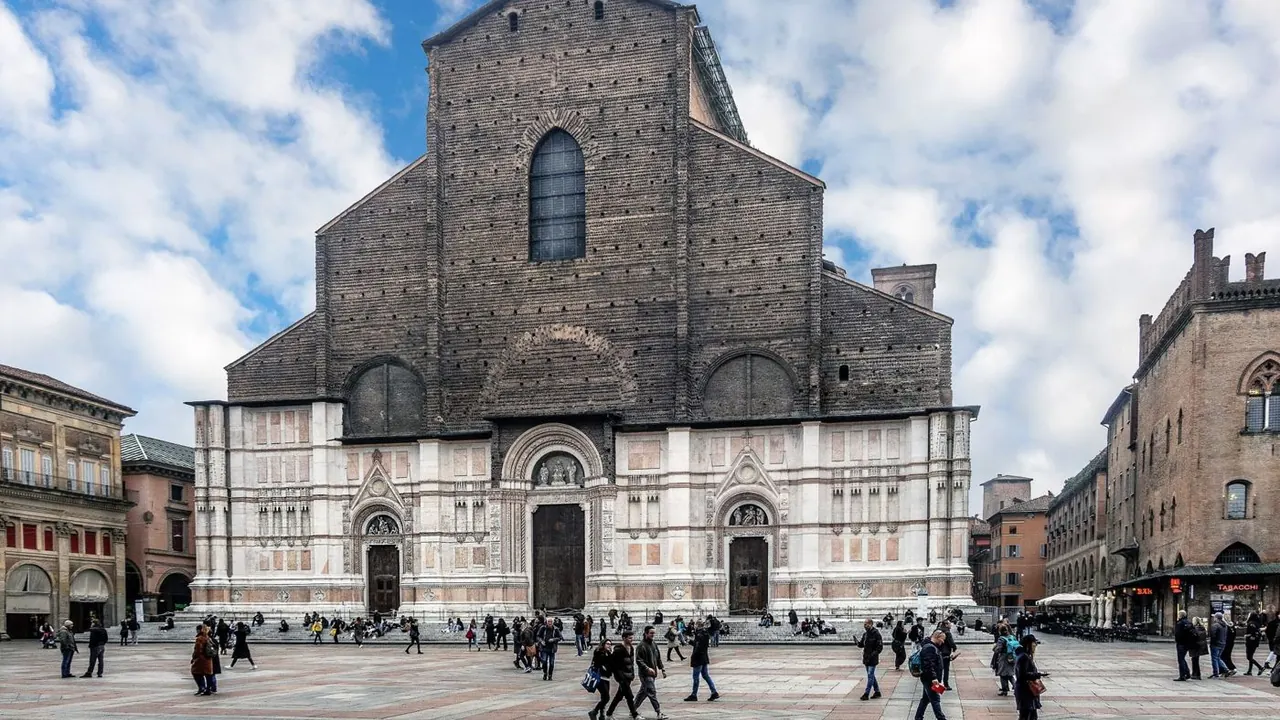
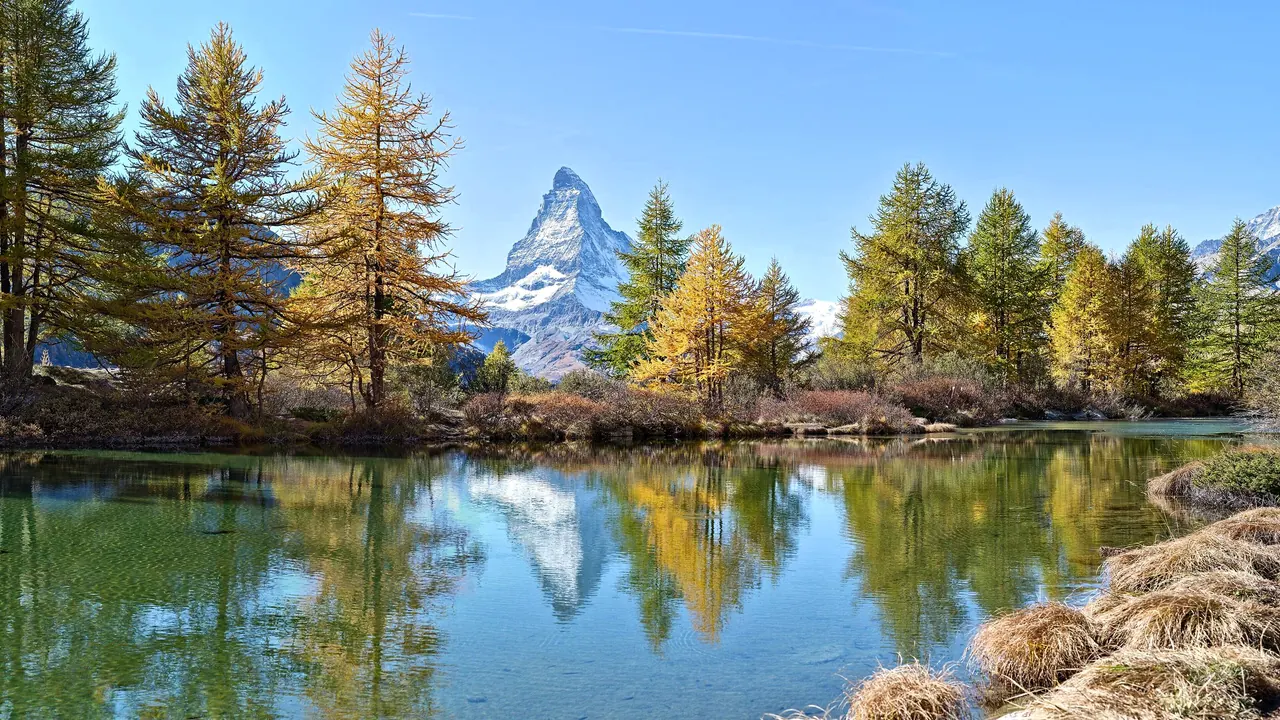
Photos: Bologna by Vanni Lazzari, CC BY-SA 4.0, cropped; Zermatt by Roy Egloff, CC BY-SA 4.0, cropped.
Bologna or Zermatt?
Our verdict in twelve categories, each scored against the same fixed benchmark cities, and the climate month by month, so you can choose for your trip.
Choose Bologna for
- day trips
- culture and sights
- prices
Bologna is for travellers who want a city to eat, walk and look at. Its brick medieval centre and arcaded porticoes, the Quadrilatero food lanes and a student night scene fill several days. It also has one of the best rail positions in Europe, with Florence, Ravenna, Parma and Venice all easy outings. It costs far less than Zermatt and suits a culture-and-food vacation or a base for touring northern Italy.
Choose Zermatt for
- nature and the outdoors
- wellness
- getting around
Zermatt makes sense if the mountains are the whole point. The Matterhorn stands above a car-free village, lifts and cog railways reach glaciers and four-thousand-metre peaks, and the skiing and summer hiking are among the best in the Alps. Its hotel spas round off the active days well. In return you pay very high prices and get little culture, a short list of outings and evenings that mostly end after dinner.
Scoreboard
Twelve categories on one fixed scale from 0 to 100. The shaded stretch is the gap between the two.
Your match
Pick a travel style or drag the sliders, and both match scores follow your weighting.
Wins on day trips and culture and sights with your weighting.
Wins on nature and the outdoors and wellness with your weighting.
What matters to you?
Category by category
What the scores mean for a trip.
Beaches & swimming
Neither city is a place for a beach vacation, but from Bologna you can at least reach the sea on a day out. Rimini and the Romagna Riviera are about an hour away by train, with shallow, warm Adriatic water and long rows of organised lidos.
Zermatt has nothing like that. Its mountain tarns are fed by meltwater and are for photographing with the Matterhorn reflected in them, not for swimming. The only swimming there is in a hotel pool.
Food & drink
Food is one of the main reasons to choose Bologna. This is where tagliatelle al ragù, tortellini in brodo and mortadella come from, served in old osterie and sold in the delicatessens of the Quadrilatero. Parma ham, Parmigiano and balsamic vinegar are made less than an hour away.
Zermatt's best eating is up on the mountain, at long terrace lunches in chalets around Findeln and Zum See with raclette, air-dried beef and good Valais wine. In the village the choice is narrower, cheap meals are hard to find, and many kitchens close between seasons.
Culture & sights
Bologna's red-brick medieval centre is a sight in itself. It has kilometres of porticoes, Piazza Maggiore with the unfinished San Petronio, the leaning Two Towers, the seven churches of Santo Stefano and the anatomical theatre of Europe's oldest university. Seeing it properly takes two or three days.
Zermatt's heritage is about mountaineering: the underground Matterhorn Museum, the climbers' graves by the parish church and the larch-wood granaries of the Hinterdorf. It is moving, but it fits into a morning.
Nightlife
Bologna's tens of thousands of students keep its nights busy. Crowds gather outside the bars of Piazza Verdi, Via del Pratello has small taverns that stay open late, and the evening often starts with aperitivo in the wine bars around the Quadrilatero. In August, when the students leave, it goes quiet.
Zermatt's nightlife is winter après-ski: slope-side bars full of ski boots, then a few bars and small clubs on the main street. It is cheerful and costly. In summer the hikers have early starts and are in bed after dinner.
Nature & outdoors
Zermatt offers some of the most dramatic high-mountain country in Europe. The Matterhorn rises straight above the streets, dozens of four-thousand-metre peaks surround the valley, and lifts climb to the Gornergrat and the Glacier Paradise. That means skiing across into Italy in winter and hundreds of kilometres of trails, marmots and ibex in summer.
Bologna's outdoors is gentler. You can walk up to San Luca, explore the Colli Bolognesi and the gypsum caves of the Parco dei Gessi, or set off on the Via degli Dei to Florence. For bigger mountains you have to travel an hour and a half to Corno alle Scale.
Day trips
Bologna sits at the main rail junction of northern Italy, which makes day trips one of its great strengths. Florence is barely half an hour away. Ferrara, Modena, Parma and Ravenna are short regional rides, and Verona, Padua and Venice all make comfortable days out.
From Zermatt, every outing starts with the long narrow-gauge train down to the Rhône valley. Sion's castle hills and Brig's Stockalper Palace are worthwhile, but most visitors sensibly spend their spare days higher up in the mountains instead.
Good for families
Both are easy with children, but in different ways. In Bologna, the flat, largely traffic-free centre and the shaded porticoes make walking simple, pasta and gelato make mealtimes easy, and climbing the Asinelli tower is a small adventure. For more, families head to Mirabilandia or the beach at Rimini. The summer heat is hard on little ones.
Zermatt has no cars at all, plus ski schools and nursery slopes at Sunnegga, marmots to spot and cog railways to ride. On the other hand, rainy days are hard to fill and the thin air at the top viewpoints can be too much for small children.
Getting around
In both places you leave the car behind and walk. Bologna's compact centre is flat and largely closed to traffic, with no metro but buses up into the hills. The main station sits at the edge of the old town, with fast trains across northern Italy.
Zermatt is closed to ordinary cars altogether: you park in Täsch and take the shuttle train up. Once there, electric taxis, a funicular, the cog railway and gondolas do the rest. Hotels up on the slopes mean a steep walk with luggage, and leaving the valley takes over an hour.
Shopping & style
In Bologna the best things to take home are edible: aged Parmigiano, mortadella and balsamic vinegar from the Quadrilatero. Via Farini and the Galleria Cavour gather the luxury fashion houses, and there is browsing at the Montagnola market, the Santo Stefano antiques fair and the bookshops of the university quarter.
Zermatt's single main street sells Swiss watches, jewellery and Matterhorn souvenirs. It also has good ski and climbing outfitters, but no market and almost no independent shops.
Affordability
Bologna is mid-priced for Western Europe. Eating out costs less than in Italy's main tourist cities, aperitivo often includes food, and most churches and squares are free. Hotel rooms are the expensive part, especially during the big trade fairs.
Zermatt is expensive even by Alpine standards. Plain hotels, terrace meals and the lift passes every visitor needs all cost a lot. Self-catering, picnics and staying down in Täsch help, but they will not turn it into a budget vacation.
Live music & performing arts
Bologna offers far more to hear and see. The Teatro Comunale stages opera, ballet and symphonic concerts, small basement clubs play jazz most nights, and students fill small venues for indie and rock gigs. Summer brings open-air concerts and film screenings to Piazza Maggiore, and the city is a UNESCO City of Music.
Zermatt has no theatre or concert hall. Its calendar depends on two festivals: Zermatt Unplugged in spring and a late-summer chamber music festival in the village church. The rest of the year, live music means an après-ski band.
Wellness & relaxation
Zermatt is the better place to unwind, thanks to a large number of excellent hotel spas with pools, saunas and mountain views. Some of them sell day passes, and the car-free streets and clear air make the village feel calm outside the peak weeks.
Bologna's relaxation is a long lunch under the arcades. For thermal water you go out of town, to the spring-fed pools of Castel San Pietro Terme or the old spa town of Porretta Terme. The noisy student quarter and the heavy summer heat work against a slow stay.
When should you go?
Pick your month. The climate figures are measured averages, not a forecast.
Bologna in July
Zermatt in July
Daytime high, °C
Rainfall in the month, mm
Where the figures come from
Bologna has no rain gauge within 25 km of the centre, so its rainfall comes from a gridded climate dataset read at the city rather than from a gauge further away.
Bologna's sunshine is measured 82 km from the centre, at Cervia.
Zermatt has no weather station within reach, so its figures come from a gridded climate model rather than a measured record, and read a broad area rather than the city itself.
Temperature and rainfall are climate normals, averaged over the years shown. Bologna: 1991-2020, 14 years observed normals, Bologna / Borgo Panigale (5.5 km from centre). Zermatt: 1991-2020 normals, TerraClimate 4 km grid at the town, no weather station within 90 km.
Bologna is at its best from April to June and again in September and early October, when the days are warm enough for long walks under the porticoes without the heat wearing you down. July and August reach 32°C, sunny and humid, which makes them better for an early morning and a long lunch than for a full day of sightseeing. Autumn brings the rain, with October and November the wettest months at around 95mm. Winter is cold and often grey, but the arcades keep you dry.
Zermatt runs on the opposite calendar. From December to March daytime highs stay around freezing or just below, and that is the ski season. In July and August highs reach 14°C, with June and September a few degrees cooler but still good for hiking. So the Alpine summer arrives just as Bologna gets too hot for comfortable walking. November is the wettest month, at about 130mm, and falls between the two seasons, so it is the month to avoid. Spring is also changeable up in the valley.
Which traveller are you?
On an outdoors trip, Zermatt is the clear choice. You get the Matterhorn, glacier lifts above 3,800m, the Five Lakes walk and the Europaweg in summer, and high-Alpine skiing in winter. Bologna's hill paths and the Via degli Dei are pleasant, but on a much smaller scale.
For a culture and arts trip, choose Bologna. It has the UNESCO-listed porticoes, San Petronio, the Archiginnasio's anatomical theatre, the Pinacoteca and an opera season at the Teatro Comunale. Ravenna's mosaics and Florence are short train rides away. Zermatt's heritage fills a single morning.
On a trip on a tight budget, Bologna is the realistic choice. Trattorias, aperitivo with food and free churches keep daily costs reasonable. In Zermatt, rooms, meals and lift tickets are all very expensive, and even self-catering only softens the bill.
Before you go
| Measure | Bologna | Zermatt |
|---|---|---|
| Official language | Italian | French, German, Italian, Romansh |
| Currency | Euro (EUR) | Swiss Franc (CHF) |
| Sockets | CFL230 V, 50 Hz | CJ230 V, 50 Hz |
| Driving side | Right | Right |
| Time zone | UTC+1, UTC+2 in summer | UTC+1, UTC+2 in summer |
| Emergency number | 112 | 112 |
| Elevation | 54 m | 1,624 m |
| Main airport | Bologna Guglielmo Marconi Airport (BLQ)6 km from centre98 non-stop destinations | Geneva International Airport (GVA)128 km from centre150 non-stop destinations |
| Public holidays this year | 13 days | 9 days |
By the numbers
| Measure | Bologna | Zermatt |
|---|---|---|
| City population | 387,971 | 6,023 |
| People per km² | 2,754 | 25 |
| Museums within 10 km | 68 | 2 |
| UNESCO World Heritage sites within 50 km | 3 | 2 |
Where else could you go?
Every comparison below shares a destination with this one, so you can follow Bologna or Zermatt somewhere new.
- Chamonixvs Zermatt
- Interlakenvs Zermatt
- Florencevs Bologna
- Luganovs Zermatt
- Luccavs Bologna
- Lausannevs Zermatt