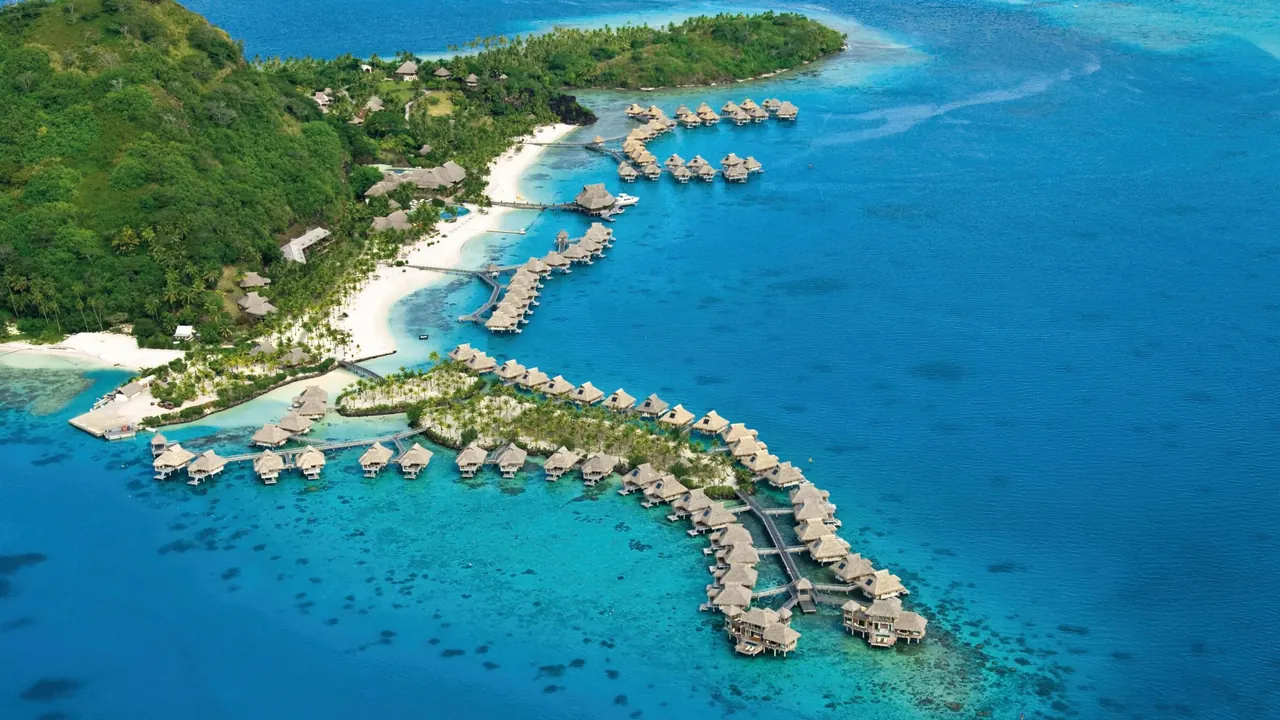
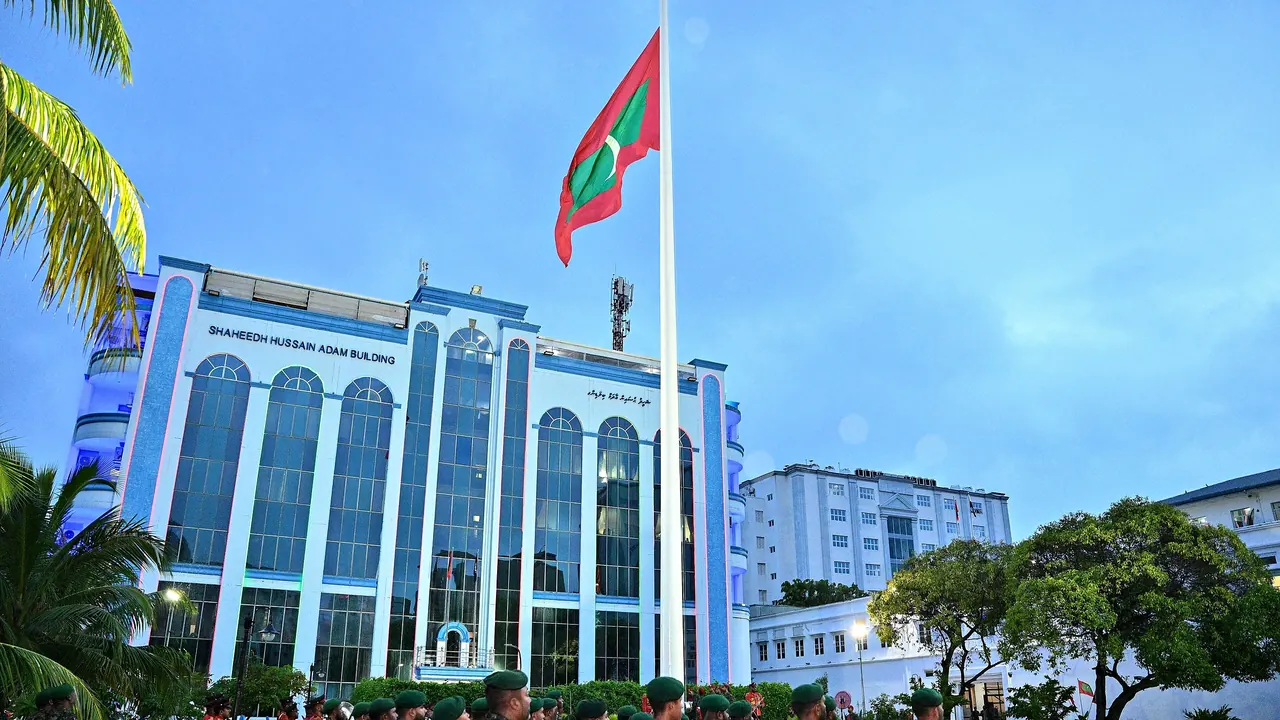
Photos: Bora Bora by Mauro Soares, CC BY-SA 3.0, cropped; Malé by The President's Office of the Republic of Maldives, CC BY 4.0, cropped.
Bora Bora or Malé?
Our verdict in twelve categories, each scored against the same fixed benchmark cities, and the climate month by month, so you can choose for your trip.
Choose Bora Bora for
- wellness
- beaches
- nature and the outdoors
Bora Bora is for the trip where the lagoon is the whole point. It suits a couple who want to swim off the deck, snorkel with rays and reef sharks below Mount Otemanu, and spend afternoons in a resort spa with nothing else planned. In return you give up sights, day trips and any kind of night out, and the trip costs a great deal.
Choose Malé for
- prices
- getting around
- culture and sights
Malé suits a traveller who wants the Maldives without resort prices, or a few days in a real Maldivian town before heading out to the atolls. You eat in tea shops, walk to the coral-stone Old Friday Mosque and take boats to dive sites and village islands. The good beaches and the quiet are a ferry or speedboat away rather than at your door, and the city itself is crowded, dry and noisy.
Scoreboard
Twelve categories on one fixed scale from 0 to 100. The shaded stretch is the gap between the two.
Your match
Pick a travel style or drag the sliders, and both match scores follow your weighting.
Too close to call, 1 point apart
Wins on wellness and beaches with your weighting.
Wins on prices and getting around with your weighting.
What matters to you?
Category by category
What the scores mean for a trip.
Beaches & swimming
Bora Bora is built around one of the great lagoons. You swim straight off a bungalow deck or the sand of a motu, the reef keeps the water calm, and at Matira Point the shallows run so far out that you can wade a long way.
Malé has the same warm, clear sea but almost no sand of its own, only a small artificial beach and a surf break off the seawall. The good beaches are at Hulhumalé and Villimalé, where you swim modestly dressed. For bikinis and sandbanks you need a speedboat to an island such as Maafushi, or a resort day pass.
Food & drink
Neither is a place to travel for food, and the difference is in kind. On Bora Bora you eat mostly in resort dining rooms: French cooking with tuna, vanilla and coconut, with wine on the table. The local taste is poisson cru from the snack counters around Vaitape.
Malé gives you everyday Maldivian food in tea shops, from mas huni with roshi at breakfast to cabinets of hedhikaa, and the fish market on the waterfront is worth a look. It is more local and much cheaper, but the city is dry, so no meal comes with a glass of wine.
Culture & sights
Malé has more to see, though it still fills only a morning or an afternoon. The coral-stone Old Friday Mosque with its carved headstones, the Mulee-aage palace and the National Museum's Buddhist-era carvings give a real sense of the islands' past. On Bora Bora, a few restored marae and wartime coastal guns take a few hours on an island tour, and that is all.
Nightlife
Both go quiet after dinner, for opposite reasons. Bora Bora's evenings are sunset cocktails at resort bars looking over the lagoon, then an early night, with no clubs at all. Malé serves no alcohol anywhere, so evenings are spent in late cafés and juice bars or walking the promenade among local families, and anyone who wants a drink has to go to a resort island.
Nature & outdoors
Bora Bora has the more striking setting. The jagged green peak of Mount Otemanu rises over a lagoon ringed by motu, with stingrays and blacktip sharks in the shallows and manta rays in the reef passes. On land there are 4x4 tracks and a guided climb up Mount Pahia.
Malé has nothing on land, but its diving is serious. Day trips from the city reach channel drifts with grey reef sharks, manta cleaning stations and wrecks in the North and South Malé atolls. With surfing on the outer reefs and sunset dolphin cruises as well, it makes a good base for a week spent mostly under the water.
Day trips
Malé is easier to leave behind for a day. Hulhumalé and Villimalé are minutes away, and village islands such as Maafushi, Huraa and Thulusdhoo are under an hour by speedboat, though they are much alike.
From Bora Bora, a day away means a flight or a boat to Tahaa's vanilla and pearl farms, Raiatea's sacred Taputapuatea or quiet Maupiti. All of these need planning, so most visitors stay on the island.
Good for families
With children, Bora Bora is the gentler of the two, mainly because of the water. Matira's long shallows suit toddlers, and older children can snorkel easily in the calm lagoon. Even so, the resorts are designed for couples, overwater bungalows can be dangerous for children who cannot swim, and the flight is very long.
Malé is harder going, with scooter-packed lanes, little shade and only small playgrounds and Sultan Park for children. Hulhumalé's wider streets and calm lagoon are easier, but most families just pass through on the way to a resort.
Getting around
Malé is about two kilometres across, so you walk or take a flat-fare taxi. Buses cross the bridge to Hulhumalé and ferries go to Villimalé, though the pavements are cramped and the scooters never stop.
On Bora Bora, one 32km coast road is easy by bicycle or scooter. If your resort is on a motu, though, every trip depends on the hotel boat, and most lagoon outings are organised tours.
Shopping & style
Neither is worth the trip for shopping. Bora Bora has one real draw, Tahitian black pearls in the Vaitape showrooms, plus pareos and monoi oil at the quay stalls, and that takes a single morning. Malé's shopping is more practical: everyday goods along Majeedhee Magu and smoked tuna paste and chillies at the harbour market, with lacquered boxes and woven mats for those who search them out.
Affordability
This is where the two differ most. Bora Bora is among the most expensive places anywhere: overwater bungalows, food that is nearly all shipped in, boat transfers and lagoon tours all add up. Guesthouses and the grocery stores in Vaitape only soften the cost.
Malé is the affordable side of a costly country, with tea-shop meals, city taxis, public ferries and modest guesthouses at moderate cost. The bill climbs with speedboats, diving and resort day passes, so a stay based in the city and on local islands is the way to keep it reasonable.
Live music & performing arts
Bora Bora has a little more. Resort dinner shows bring drumming, fire dancing and ori tahiti, and in July the Heiva fills Vaitape with dance and singing contests. Malé has bodu beru drumming, heard mostly at national celebrations, at Eid or at resorts, with nothing on a regular programme. Neither has a theatre or concert hall.
Wellness & relaxation
On Bora Bora the spa is usually a few minutes' walk from your room, and the island is quiet without you having to go looking for it. Where it falls short is variety. There are no public baths and no retreat programmes, so on a long stay you keep going back to the same treatment rooms.
In Malé you have to travel to find rest. The city's massage rooms are few and small, and outside their doors is concrete and noise, so a proper resort spa means a speedboat ride and a day pass. If you want quiet evenings between outings, Hulhumalé, across the bridge, is the calmer place to stay.
When should you go?
Pick your month. The climate figures are measured averages, not a forecast.
Bora Bora in July
Malé in July
Daytime high, °C
Rainfall in the month, mm
Temperature and rainfall are climate normals, averaged over the years shown. Bora Bora: 1991-2020 (sunshine 1981-2010) normals, Bora-Bora / Faanui (6.1 km from centre). Malé: 1991-2020 normals, Male (3.9 km from centre).
Both are hot all year, with daytime highs of around 30°C, and the sea is warm enough to swim in every month at both. The real difference is the rain, and their seasons run almost opposite. Bora Bora is driest from June to September, with under 100mm a month and steady sunshine. Those months are also a touch less hot, which helps on the 4x4 tracks or when cycling the coast road. From December to February the rain is at its heaviest, at more than twice that amount.
Malé is at its best from January to March, its driest and sunniest stretch, with only about 44mm in February and March. From April the rain sets in and stays heavy right through to December. In any month, the midday heat in its narrow, shadeless streets makes walking best left to the morning and evening.
Which traveller are you?
On a beach and sun trip, Bora Bora is the clear choice. The sheltered lagoon starts at your bungalow or on a resort motu, and Matira Point has soft public sand. In Malé the beaches are across a bridge or a boat ride away, and on inhabited islands you swim modestly dressed.
On a trip on a tight budget, Malé is the only realistic choice of the two. Tea-shop meals, flat-fare taxis, public ferries and Hulhumalé guesthouses keep daily costs moderate if you limit speedboat outings. Bora Bora stays expensive even with guesthouses and self-catering.
For a relaxing and wellness trip, Bora Bora wins easily. Resort spas, some built over the lagoon, use monoi oil and tiare, and with no traffic or nightlife the days slow right down. Malé is packed and loud, with scooters into the night and only a few small day spas.
Before you go
| Measure | Bora Bora | Malé |
|---|---|---|
| Official language | French | Maldivian |
| Currency | CFP Franc (XPF) | Rufiyaa (MVR) |
| Sockets | - | ACGJKL230 V, 50 Hz |
| Driving side | Right | Left |
| Time zone | UTC-10 | UTC+5 |
| Emergency number | 112 | Police 119, ambulance 102, fire 118 |
| Elevation | - | 2 m |
| Main airport | Bora Bora Airport (BOB)9 non-stop destinations | Velana International Airport (MLE)3 km from centre50 non-stop destinations |
| Public holidays this year | 16 days | - |
By the numbers
| Measure | Bora Bora | Malé |
|---|---|---|
| Population | 10,605 | 133,019 |
| People per km² | 347 | 22,934 |
| Museums within 10 km | - | 1 |
| UNESCO World Heritage sites within 50 km | - | 0 |
| Swim season, months above 21 °C | 12 months | 12 months |
Where else could you go?
Every comparison below shares a destination with this one, so you can follow Bora Bora or Malé somewhere new.
- Mooreavs Bora Bora
- Tahitivs Bora Bora
- Colombovs Malé
- Aitutakivs Bora Bora
- Cook Islandsvs Bora Bora
- Phuketvs Malé