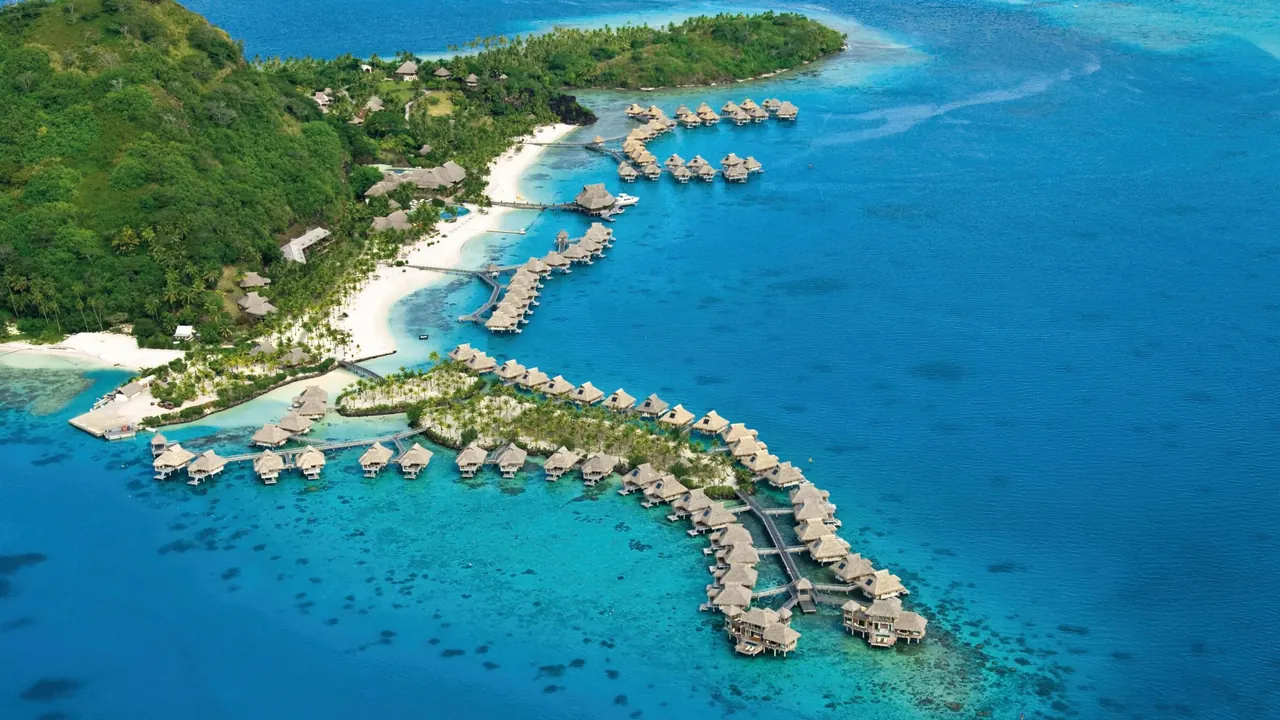
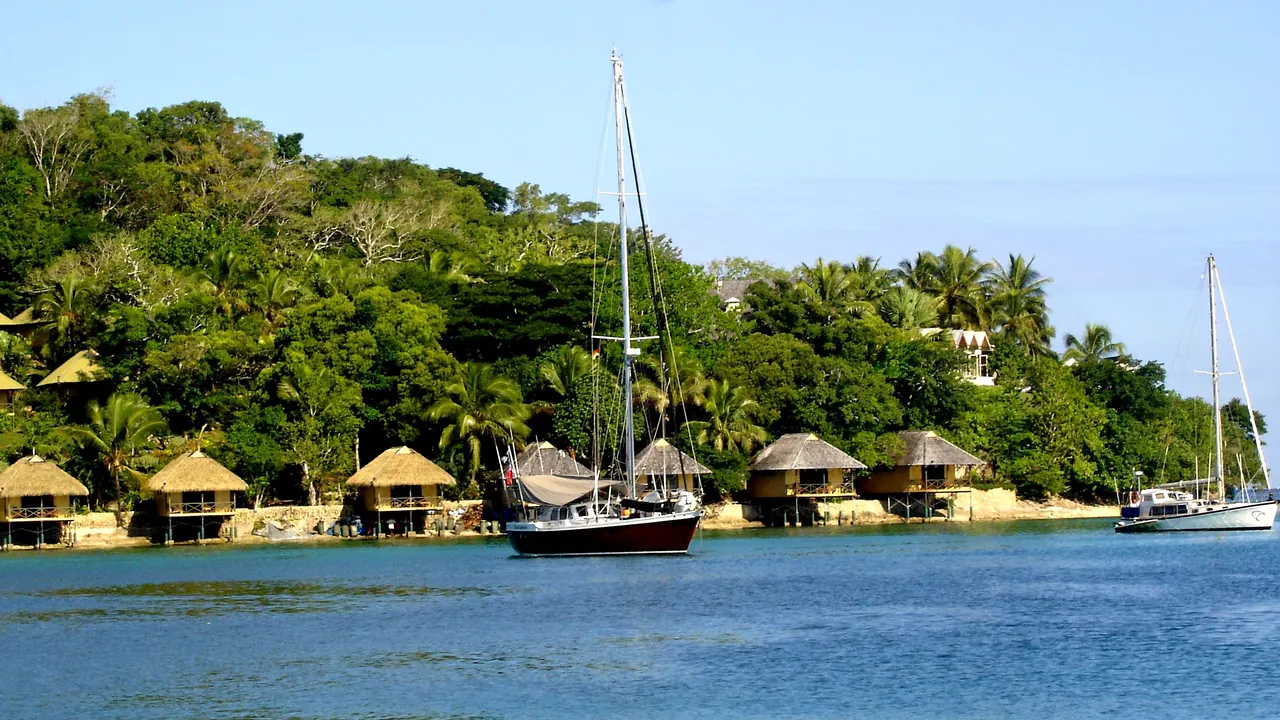
Photos: Bora Bora by Mauro Soares, CC BY-SA 3.0, cropped; Port Vila by Phillip Capper from Wellington, New Zealand, CC BY 2.0, cropped.
Bora Bora or Port Vila?
Our verdict in twelve categories, each scored against the same fixed benchmark cities, and the climate month by month, so you can choose for your trip.
Choose Bora Bora for
- beaches
- nature and the outdoors
- wellness
Bora Bora is the one for a couple who want the lagoon to be the whole point. The water is clearer and the scenery is more striking, with Mount Otemanu rising over a ring of palm-covered motu. You swim straight off the deck of an overwater bungalow and finish the day at a resort spa. It is a splurge, and you give up almost everything else: there is little to see, almost nothing to do after dark, and nearly every meal is eaten in a resort.
Choose Port Vila for
- prices
- nightlife
- food and drink
Choose Port Vila if you want a real town as well as the sea. There is a harbour market, French bakeries, kava at dusk and a national museum, and shared minibuses get you around town for very little. The beaches are smaller and the views less dramatic, but it costs far less than Bora Bora, works better for families and has more to fill the days on land. That includes Chief Roi Mata's Domain up the coast and the island villages a short boat ride offshore.
Scoreboard
Twelve categories on one fixed scale from 0 to 100. The shaded stretch is the gap between the two.
Your match
Pick a travel style or drag the sliders, and both match scores follow your weighting.
Wins on beaches and nature and the outdoors with your weighting.
Wins on prices and nightlife with your weighting.
What matters to you?
Category by category
What the scores mean for a trip.
Beaches & swimming
Bora Bora is better for swimming. Its reef-protected lagoon is clearer and calmer, and most visitors step into it from a bungalow deck or the sand of a resort motu. Matira Point has a long curve of soft white sand where you can wade a long way out, which Efate cannot match.
Port Vila has no beach on its harbour front. You take a boat to Iririki or Erakor, or swim at the marine reserve off Hideaway Island. The beaches are narrow coves with coral underfoot in places, so the swimming is good but rarely the long white sand people picture.
Food & drink
Port Vila has more to eat and drink. Bakeries sell baguettes in the morning, the harbour market is full of taro and pawpaw, and you can find lap lap at the market food stalls and Tanna coffee in town. At dusk there is kava. The waterfront restaurants serve reef fish, lobster and Santo beef. Even so, a week is about as long as the choice lasts.
Bora Bora's food is French-Polynesian and often good, but on a resort stay you eat in the same few dining rooms. For something different, go to the snack counters and food trucks around Vaitape for poisson cru, raw fish in lime and coconut milk.
Culture & sights
Neither is a place for sightseeing, but Port Vila has more. The Vanuatu Cultural Centre and National Museum has slit drums, masks and sand-drawing displays, and it is the best introduction to the islands. The custom villages outside town add culture you can meet in person.
On Bora Bora the history comes down to a few restored marae, Second World War coastal guns above the lagoon and the church at Vaitape. All of it fits into a few hours on an island tour.
Nightlife
Port Vila has a little more going on after dark. Locals sit quietly in kava nakamals at sunset. Expatriates and yachties gather in a few waterfront bars, and there is a casino and a couple of dance spots that are busy at weekends. Bora Bora has sunset cocktails at the resort bar and a couple of bar-restaurants on the main island, and that is all. Neither is worth choosing for a night out.
Nature & outdoors
Bora Bora has the more spectacular scenery and the better time in the water. Its jagged volcanic peak rises from a lagoon in every shade of blue. In the shallows you swim with stingrays and blacktip reef sharks, and dives in the reef passes find lemon sharks and manta rays. On land you are limited to 4x4 tracks and a guided climb up Mount Pahia.
Efate offers more variety but less drama. You can dive drop-offs and wrecks, kayak in sheltered lagoons, walk up the Mele Cascades through rainforest and swim in the clear freshwater pools near Eton. Tanna's active volcano is a domestic flight away.
Day trips
Port Vila has the easier outings. Chief Roi Mata's Domain, a UNESCO-listed chiefly landscape, is about forty minutes' drive up the coast. Small boats go to the villages of Pele, Nguna and Lelepa without much planning.
From Bora Bora, every day trip means a boat or a flight to another of the Leeward Islands. You can see the vanilla and pearl farms on Tahaa, the sacred marae of Taputapuatea on Raiatea, or quiet Maupiti. The trips are worthwhile, but they take organising, and most visitors never leave the island.
Good for families
Bora Bora gives small children one great asset, the shallows at Matira, where toddlers can paddle a long way out. The island is safe and calm, but the very long flight and the cost weigh heavily on a family. It pays off mainly for older children who will snorkel all day, ideally at a resort with a pool.
Port Vila suits children better. Ni-Vanuatu people are warm towards them, the town is small and easy, and outings to the Mele Cascades or a village break up the days in the water. There is no zoo or aquarium, medical care is basic, mosquitoes need taking seriously, and the drier winter is easier going than the wet summer.
Getting around
Port Vila is the easier place to get around, mainly because you are not tied to a hotel boat. On Bora Bora, many resorts are on the outer motu, so every trip to Vaitape or Matira Point has to fit the shuttle times, and most time on the lagoon is spent on organised tours. Once you are on the main island, the coast road is short enough to cycle or ride a scooter all the way round, but buses and taxis are hard to find.
In Port Vila you can walk to the road, wave down a minibus whenever you like and be dropped where you ask. A trip to the harbour market, a lagoon resort or the Pango coast needs no planning. You only need to organise things in advance for the boats to the offshore islands or a full day's drive round Efate, while on Bora Bora almost every outing works like that.
Shopping & style
Both offer about one morning of shopping, but what you buy differs. Bora Bora is mainly about Tahitian black pearls in showrooms around Vaitape, plus pareos and monoi oil from the quay stalls. Port Vila has woven pandanus baskets and carvings from across the islands, a few duty-free stores, and edible things to take home such as Tanna coffee and kava powder.
Affordability
Port Vila is far cheaper, though not a bargain, since imported goods keep restaurant and grocery bills close to Australian levels. The savings are real if you skip the resort. Minibus fares, plates from the market food stalls and evenings in a nakamal all cost very little.
Bora Bora is among the most expensive places to visit anywhere. Overwater bungalows, shipped-in food, boat transfers and lagoon tours all add up. A family-run guesthouse and self-catering from Vaitape's grocery stores help, but you cannot make it cheap.
Live music & performing arts
Neither has theatres or concert halls, so the difference is in the sound. Bora Bora has Polynesian dance: drumming, fire dancing and ori tahiti at resort dinner shows, and at its best during the Heiva contests in Vaitape in July. Port Vila has string bands playing guitar and ukulele at markets and church events, custom dances in nearby villages and a long-running annual music festival.
Wellness & relaxation
Bora Bora is better for a spa stay. The large motu resorts have polished spas, some with treatment rooms over the lagoon, using monoi oil, coconut and tiare flowers. With no traffic and nothing to do at night, it is easy to do very little.
Port Vila offers calm more than treatments. There are resort spas and a few day spas in town giving coconut-oil massages. Sundays are almost silent, and a hammock followed by a sunset kava does much of the work.
When should you go?
Pick your month. The climate figures are measured averages, not a forecast.
Bora Bora in July
Port Vila in July
Daytime high, °C
Rainfall in the month, mm
Temperature and rainfall are climate normals, averaged over the years shown. Bora Bora: 1991-2020 (sunshine 1981-2010) normals, Bora-Bora / Faanui (6.1 km from centre). Port Vila: 1991-2020 normals, Bauerfield Efate (4.1 km from centre).
Both are warm all year, so the real choice is about rain. On Bora Bora the wettest months are December and January, with around 260mm a month. From June to September the rain drops below 100mm and the highs ease to 29°C. Sunshine stays fairly steady all year and is lowest in December. The lagoon stays warm enough for long swims in every month.
Port Vila is wetter, and the wet season lasts longer. March is the peak at 334mm, and April and May are still very wet, while on Bora Bora the rain is already easing by then. July to September is the driest and most comfortable stretch, with highs of about 27°C. That is the easiest weather for walking the hilly town. The sea cools to around 26°C at that time of year, slightly cooler than at Bora Bora but still pleasant. For both, the southern winter is the best time to go.
Which traveller are you?
On a beach and sun trip, Bora Bora is the better choice. You get a protected turquoise lagoon off your own deck and the long soft sand at Matira Point. Port Vila has small coves and narrow strips of sand where reef shoes help.
On a family trip with children, Port Vila works better. Its lagoon resorts have kayaks and kids' clubs, and Hideaway Island is easy snorkelling for children. Bora Bora's resorts are built for couples, and some overwater bungalows are not safe for small children.
For a trip on a tight budget, go to Port Vila. Shared minibuses, market food stalls and evenings in a kava nakamal cost very little. On Bora Bora even guesthouses and self-catering from Vaitape's grocery stores still leave the trip very expensive.
Before you go
| Measure | Bora Bora | Port Vila |
|---|---|---|
| Official language | French | French, English, Bislama |
| Currency | CFP Franc (XPF) | Vatu (VUV) |
| Sockets | - | CGI220 V, 50 Hz |
| Driving side | Right | Right |
| Time zone | UTC-10 | UTC+11 |
| Emergency number | 112 | 112 |
| Elevation | - | 59 m |
| Main airport | Bora Bora Airport (BOB)9 non-stop destinations | Bauerfield International Airport (VLI)4 km from centre9 non-stop destinations |
| Public holidays this year | 16 days | 14 days |
By the numbers
| Measure | Bora Bora | Port Vila |
|---|---|---|
| Population | 10,605 | 49,034 |
| People per km² | 347 | 2,078 |
| Museums within 10 km | - | 2 |
| UNESCO World Heritage sites within 50 km | - | 1 |
| Swim season, months above 21 °C | 12 months | 12 months |
Where else could you go?
Every comparison below shares a destination with this one, so you can follow Bora Bora or Port Vila somewhere new.
- Mooreavs Bora Bora
- Tahitivs Bora Bora
- New Caledoniavs Port Vila
- Aitutakivs Bora Bora
- Mamanuca Islandsvs Port Vila
- Cook Islandsvs Bora Bora