Photos: Bordeaux by Gzen92, CC BY-SA 4.0, cropped; Strasbourg by Edoardo Colombo, Pexels License.
Bordeaux or Strasbourg?
Our verdict in twelve categories, each scored against the same fixed benchmark cities, and the climate month by month, so you can choose for your trip.
Choose Bordeaux for
- beaches
- food and drink
- nightlife
Bordeaux is the pick for a trip built around wine, long meals and the Atlantic. Its cellars and oyster counters, the château country of the Médoc and Saint-Émilion, and the surf beaches and calm Arcachon basin an hour west give it a summer seaside side that Strasbourg lacks. Its evenings also run later.
Choose Strasbourg for
- wellness
- families
- nature and the outdoors
Families and travellers who want rest should lean towards Strasbourg. The compact island centre, boat trips through Petite France, storks in the Orangerie and a big theme park over the border make it easy with children. Walkers get the Vosges and the Black Forest, and spa-goers get the thermal baths of Baden-Baden, which is more than Bordeaux's flat vineyards can offer either of them.
Scoreboard
Twelve categories on one fixed scale from 0 to 100. The shaded stretch is the gap between the two.
Your match
Pick a travel style or drag the sliders, and both match scores follow your weighting.
Too close to call, 2 points apart
Wins on beaches and food and drink with your weighting.
Wins on wellness and families with your weighting.
What matters to you?
Category by category
What the scores mean for a trip.
Beaches & swimming
This is the widest gap between the two. Bordeaux has two kinds of coast about an hour away. One is the long surf beaches of Lacanau and the Médoc, backed by pines and dunes, where the currents demand respect. The other is the sheltered Arcachon basin, warmer and calm enough for small children, with Cap Ferret and the Dune du Pilat close by.
Strasbourg has no sea at all. In summer people swim in old gravel-pit lakes such as the Baggersee, which you can reach by tram and which has grassy banks and fresh water. It is pleasant on a hot afternoon, but not a reason to travel.
Food & drink
Both are wine cities, but in Bordeaux food and drink are the point of the trip. You can work through Médoc, Saint-Émilion, Graves and Sauternes by the glass, eat Arcachon oysters at the Marché des Capucins and entrecôte grilled over vine cuttings, and find serious bistros in Chartrons and Saint-Michel.
Strasbourg's food is heartier and half-German: choucroute, baeckeoffe and tarte flambée in wood-panelled winstubs, with a pichet of Riesling. It has good fine dining as well, but the tourist menus around the cathedral are best avoided, and the rich cooking suits a cold evening better than a July lunch.
Culture & sights
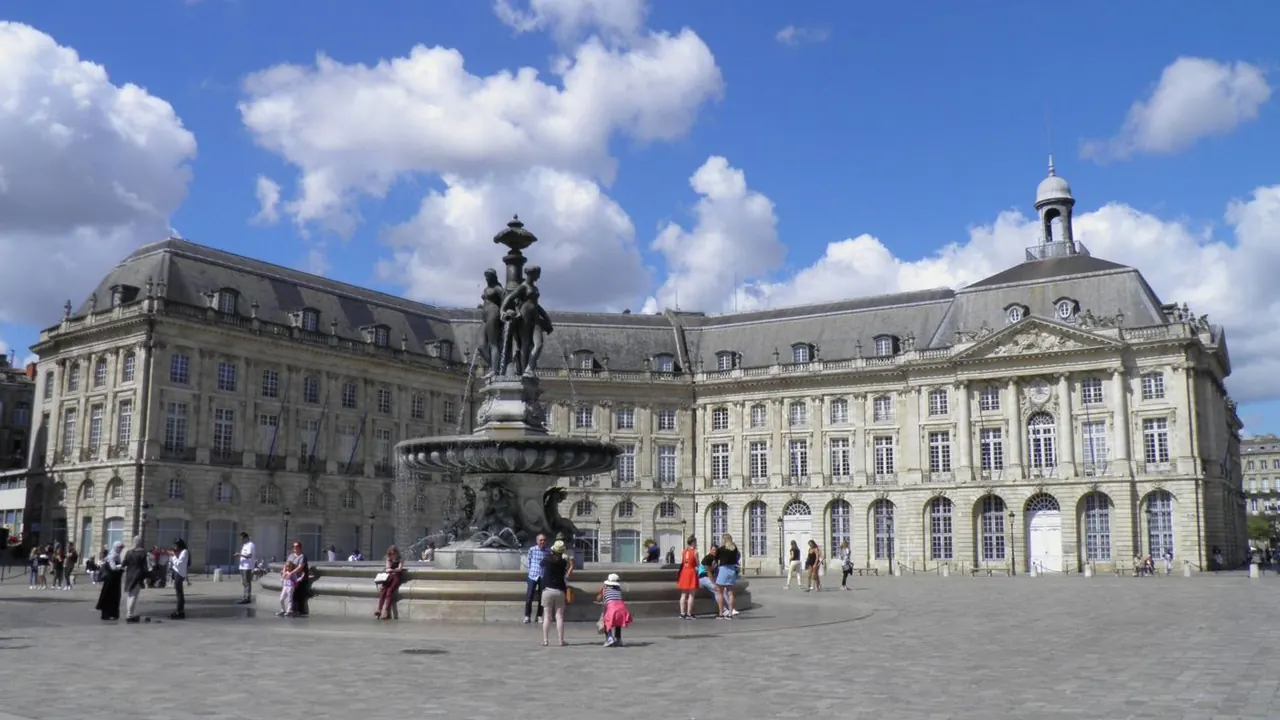
The two are close, and both centres are UNESCO-listed, but they look and feel very different. Bordeaux is an 18th-century classical city of pale limestone, best seen on foot along the curve of the Garonne, past the Place de la Bourse, the Miroir d'eau and the Grand Théâtre. Its museums are sound rather than famous.
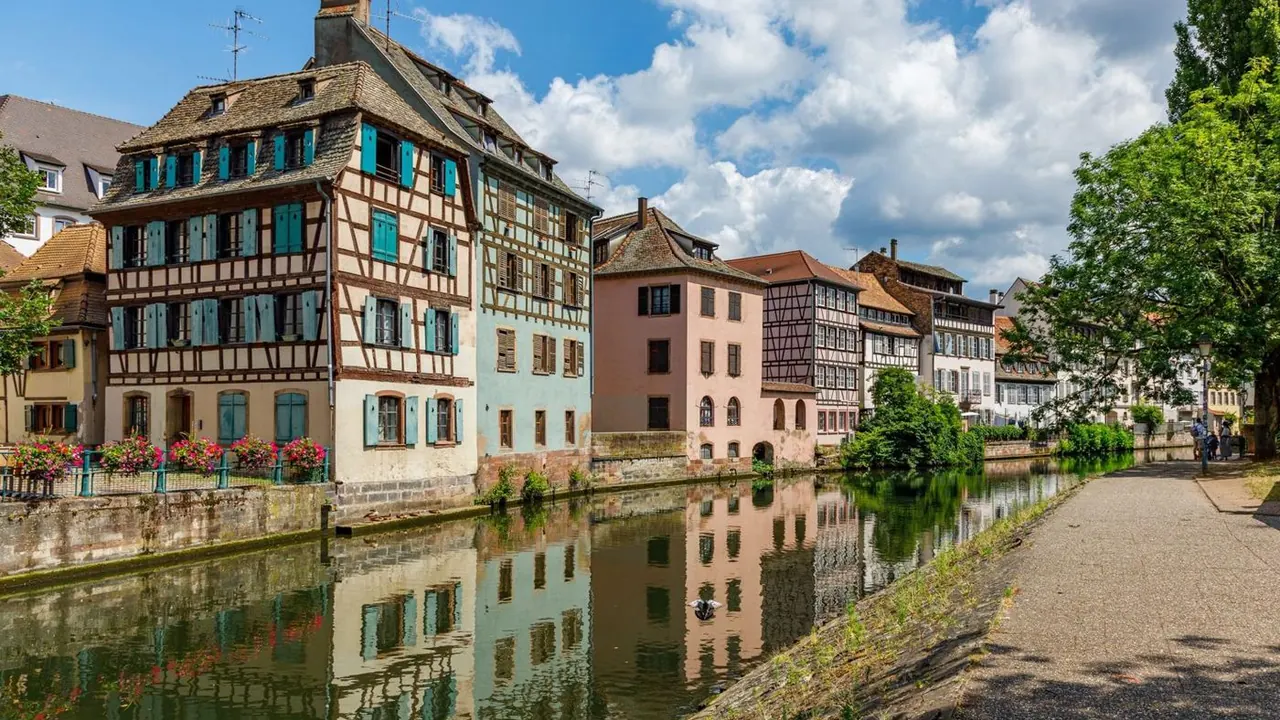
Strasbourg is medieval and half-timbered, built around its pink sandstone cathedral and astronomical clock, with Petite France, the covered bridges and the German-built Neustadt. It has more museums, three of them in the Palais Rohan alone, and the European institutions give it a modern side that Bordeaux has nothing to match.
Nightlife
Bordeaux stays out later. In both cities a night starts with dinner and moves on to bars, but Bordeaux also has a real club strip on the Quai de Paludate that runs until morning. Place de la Victoire is the cheap student end of town, and there are bars on boats along the Garonne.
In Strasbourg, going out means bars, beer cellars and summer terraces in Krutenau and around Place Saint-Étienne. There are only a handful of clubs, and on weeknights the city is mostly quiet by midnight.
Nature & outdoors
Neither city has much wild country on its doorstep. The difference is the kind of outdoors you find an hour away. Around Bordeaux it is coast and sand: the Dune du Pilat, birdwatching and kayaking among the oyster beds of the Arcachon basin, surfing at Lacanau and flat greenways through the vineyards, but no hills to walk.
Strasbourg looks to the hills. The Vosges have forest trails, castle ruins and the ridge walk at Mont Sainte-Odile, and the Black Forest across the Rhine has tougher hiking. The Rhine plain itself is good cycling country, with storks and beavers along the way.
Day trips
Both are excellent bases, and wine villages are at the heart of each. From Bordeaux the trips are mostly about vineyards and estates. Saint-Émilion is forty minutes by train, but the châteaux of the Médoc and Sauternes really need a car or a tour, and Arcachon and Cognac are the other big outings.
Strasbourg has the wider choice because it sits on a border. Colmar and the Alsace wine route lie to the south. Across the Rhine are Baden-Baden, Freiburg and Heidelberg, and Basel and Nancy are also within reach by train.
Good for families
Strasbourg is the better bet with children. Both centres are flat, car-free and served by trams, but Strasbourg adds boat trips around the Grande Ile, rowing boats and nesting storks in the Orangerie, the Le Vaisseau science centre, and one of Europe's largest theme parks about an hour away.
Bordeaux has the Miroir d'eau to splash in, the puppet theatre in the Jardin Public and Cap Sciences. Its best family days are on the coast, though: climbing the Dune du Pilat or paddling in the Arcachon basin. A long stay built around wine and meals can feel slow to older children.
Getting around
Both are easy without a car: flat, largely pedestrianised and covered by simple tram networks.
The difference is in their shape. Bordeaux strings its sights along a few kilometres of the left bank, from Chartrons to Saint-Michel. Strasbourg's island centre is small enough to cross in twenty minutes, its separated bike lanes make cycling the quickest way about, and one tram line even crosses into Germany.
Shopping & style
Neither is a shopping destination in itself, and in both the best buys are regional. Bordeaux is stronger on fashion and antiques, with luxury labels in the Triangle d'Or and dealers along Rue Notre-Dame in Chartrons. Its wine cellars will ship anything from an everyday Bordeaux to an old vintage.
Strasbourg is more about crafts: Soufflenheim pottery, printed linens, kougelhopf moulds and gingerbread. December's Christmas market is the peak season, though many of the stalls sell mass-produced goods.
Affordability
Costs are much the same. Both are prosperous French regional cities, cheaper than Paris but not cheap. In Bordeaux the set lunch menu is the way to eat well for less, and the money goes on château tastings, wine tours and a good bottle at dinner.
In Strasbourg, winstub meals and wine by the pichet are good value. The thing to watch is hotel rooms during the Christmas market and the weeks when the European Parliament sits, so your dates matter more there.
Live music & performing arts
The two are evenly matched, each with opera and a full orchestra season, but their strengths differ. Bordeaux's is one outstanding stage, the gilded Grand Théâtre of 1780, home to its opera and ballet, with jazz and world music on the right bank.
Strasbourg leans towards drama and new music. The Théâtre National de Strasbourg is one of France's leading stages, and the Musica festival has made the city a centre for contemporary music. In both cities, plan around the season rather than expecting to come across live music in the street.
Wellness & relaxation
Strasbourg is the better choice for a restful stay. It has its own bathing tradition in the tiled pools, hammam and saunas of the Bains municipaux, and the thermal baths of Baden-Baden and the Black Forest spa towns are under an hour away.
Bordeaux has no bathing culture of its own. What it offers instead is vinotherapy at spa hotels among the vineyards, along with long lunches and evening walks on the quays. For real thermal water you have to go to Dax, about an hour and a half south.
When should you go?
Pick your month. The climate figures are measured averages, not a forecast.
Bordeaux in July
Strasbourg in July
Daytime high, °C
Rainfall in the month, mm
Temperature and rainfall are climate normals, averaged over the years shown. Bordeaux: 1991-2020 normals, Bordeaux / Merignac (9.5 km from centre). Strasbourg: 1991-2020 normals, Strasbourg (9.1 km from centre).
Bordeaux has the milder year. Winter days stay around 11°C, so you can walk the streets even in January, though November and December are the wettest and greyest months. Summer is warm and sunny, peaking near 28°C in August, and July and August are the only months that are really warm enough for days on the Atlantic beaches and the Arcachon basin. May, June and September are the easiest months for wine country and long walks through the city.
Strasbourg is more continental. Winters are cold and dark, with highs of about 5°C in January and little sunshine, though they are fairly dry. Most of the rain falls in late spring and summer, with May the wettest month at 77mm. Summers reach about 26°C, which is comfortable for walking and cycling, and the lakes are for July and August. Spring and autumn are noticeably cooler than in Bordeaux, so the comfortable season is shorter, running from about April to September.
Which traveller are you?
On a beach and sun trip, Bordeaux is the clear choice. Lacanau's surf beaches and the calmer, warmer water of the Arcachon basin are about an hour away, while Strasbourg's only swimming is in lifeguarded gravel-pit lakes on the edge of town.
For a food and nightlife trip, Bordeaux has the edge. Wine bars pour everything from Médoc to Sauternes, the oysters come straight from Arcachon, and after dinner the clubs on the Quai de Paludate run until morning. Strasbourg's evenings mostly end around midnight.
On a relaxing and wellness trip, Strasbourg does more. Locals use the tiled pools and hammam of the Bains municipaux, and Baden-Baden's thermal baths are under an hour away. Bordeaux offers vinotherapy at vineyard spa hotels and little else.
Before you go
| Measure | Bordeaux | Strasbourg |
|---|---|---|
| Official language | French | French |
| Currency | Euro (EUR) | Euro (EUR) |
| Sockets | CE230 V, 50 Hz | CE230 V, 50 Hz |
| Driving side | Right | Right |
| Time zone | UTC+1, UTC+2 in summer | UTC+1, UTC+2 in summer |
| Emergency number | 112 | 112 |
| Elevation | 1 m | 132 m |
| Main airport | Bordeaux–Mérignac Airport (BOD)11 km from centre95 non-stop destinations | Strasbourg Airport (SXB)10 km from centre43 non-stop destinations |
| Public holidays this year | 11 days | 11 days |
By the numbers
| Measure | Bordeaux | Strasbourg |
|---|---|---|
| City population | 267,991 | 293,771 |
| People per km² | 5,425 | 3,752 |
| Museums within 10 km | 18 | 21 |
| UNESCO World Heritage sites within 50 km | 4 | 1 |
Where else could you go?
Every comparison below shares a destination with this one, so you can follow Bordeaux or Strasbourg somewhere new.