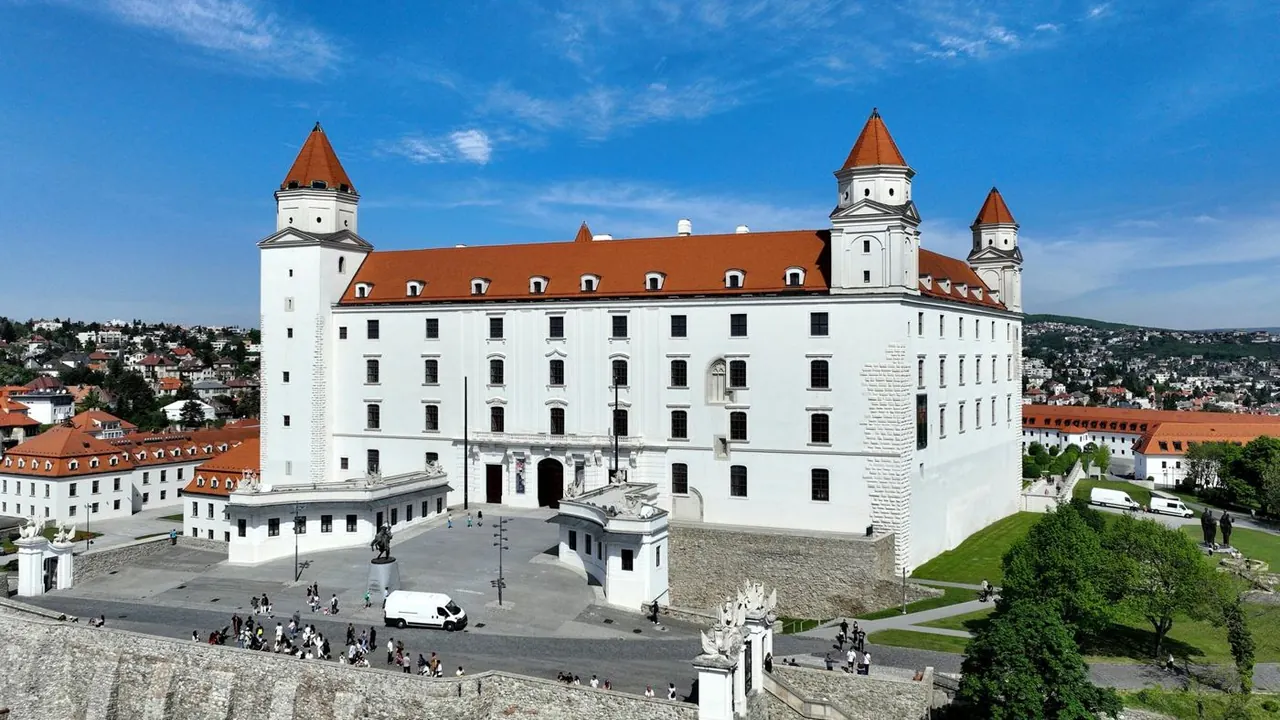
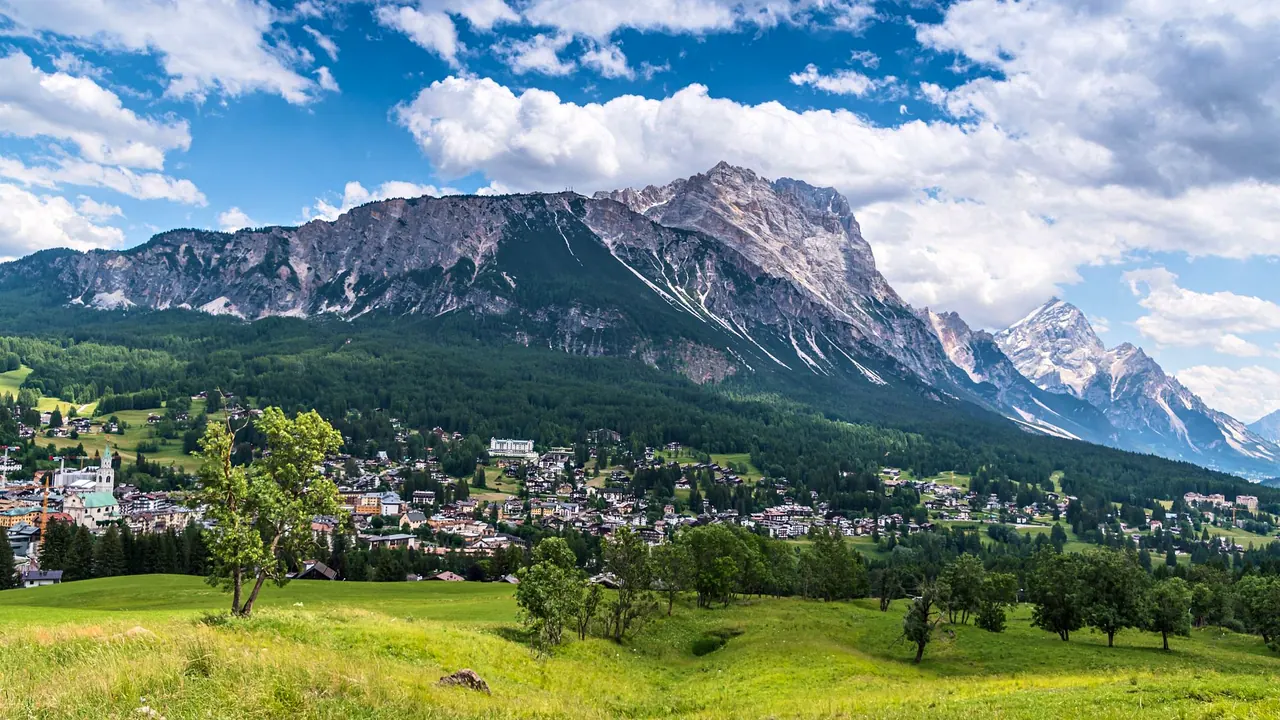
Photos: Bratislava by C.Stadler/Bwag, CC BY-SA 4.0, cropped; Cortina d'Ampezzo by Andreas Neubauer, Pexels License.
Bratislava or Cortina d'Ampezzo?
Our verdict in twelve categories, each scored against the same fixed benchmark cities, and the climate month by month, so you can choose for your trip.
Choose Bratislava for
- prices
- live music and the arts
- day trips
Bratislava suits a traveller who wants a compact, affordable capital with plenty to do in the evenings and a lot within reach by train. The coronation town below the castle, an opera house where tickets are easy to get, wine from vineyards at the city's edge, and Vienna an hour away make it a strong base for a few days of streets, sights and outings across three borders.
Choose Cortina d'Ampezzo for
- nature and the outdoors
- families
- wellness
Cortina d'Ampezzo is for people who travel for the mountains and can pay for them. The Dolomites rise straight from the valley, with lifts to the peaks, the Dolomiti Superski area in winter and hut-to-hut trails and via ferrata in summer. Evenings are calm, the sights are few, the bills are high and a car helps, but as a setting for skiing or hiking it is in another league.
Scoreboard
Twelve categories on one fixed scale from 0 to 100. The shaded stretch is the gap between the two.
Your match
Pick a travel style or drag the sliders, and both match scores follow your weighting.
Wins on prices and live music and the arts with your weighting.
Wins on nature and the outdoors and families with your weighting.
What matters to you?
Category by category
What the scores mean for a trip.
Beaches & swimming
Neither place is for a beach trip, but Bratislava at least gives you somewhere to swim in summer. The sandy lake shore at Zlate piesky is a tram ride from town and the Senec lakes are close by, both warm in July and August.
Cortina's lakes, Ghedina and Pianozes, are fed by snowmelt and stay cold even in midsummer, so they are for walking round, not swimming in. In practice a swim there means the hotel pool, and the Adriatic is a long drive away.
Food & drink
The two are about level, with very different tables. Bratislava means hearty Slovak pub food such as bryndzove halusky and roast duck with lokse, beer brewed on the premises and, best of all, Small Carpathian wines that rarely leave the country, at everyday prices.
Cortina cooks Ampezzan mountain food with a Venetian touch, like casunziei and polenta with game, and its best meals are on rifugio terraces among the peaks. It has more ambitious kitchens than its size suggests, but it costs more and has almost nothing cheap or casual.
Culture & sights
Bratislava gives a sightseer far more. Its Old Town centres on St Martin's Cathedral, where Hungarian monarchs were crowned for nearly three centuries, and the Primate's Palace, the Blue Church, the castle museum and the ruins of Devin add a full day or two of history.
Cortina has a pleasant centre, a basilica with a tall bell tower, the 1956 Olympic ice stadium and three small museums, enough for a rainy afternoon. Its most powerful heritage is the First World War tunnels and trenches on Lagazuoi and the Cinque Torri, but those are a mountain day out, not a stroll.
Nightlife
Bratislava is the livelier choice after dark. On weekends the Old Town fills with pubs, wine bars and cocktail bars open until late, though it is a pub crawl rather than a club scene, and weeknights are much quieter.
Cortina's evenings are après-ski drinks, a walk along the Corso Italia and a long dinner. Only in the peak winter weeks do a few smart bars and clubs stay open late, and in summer the town goes quiet early.
Nature & outdoors
Cortina's setting is far grander. The pale Dolomite peaks of the Tofane, Cristallo and Cinque Torri ring the valley, lifts climb from town, and the Tre Cime and Lago di Misurina are under an hour away. It offers world-class skiing in winter and hut-to-hut hiking, via ferrata and climbing in summer.
Bratislava's outdoors are gentler and easier to reach. There are beech-wood trails up to Kamzik in the Little Carpathians, steppe meadows on Devinska Kobyla, Danube floodplain forests and a flat cycle route into Austria. It is good for a half-day walk or ride, not a mountain vacation.
Day trips
Bratislava is by far the better base for outings. Vienna is about an hour by train, the wine villages of Svaty Jur, Pezinok and Modra are close, and Roman Carnuntum, Lake Neusiedl and Lednice-Valtice put Austria and the Czech Republic within a day.
From Cortina most excursions lead deeper into the mountains. The towns of South Tyrol, such as San Candido, Brunico and Bolzano with its Iceman, are attractive, but they take longer by road, and Venice is a long day by coach.
Good for families
Cortina works better for families who ski or hike. It has ski schools and beginner slopes at Socrepes, public skating at the Olympic stadium, a forest rope park and easy trails to huts with meadows. Rainy days drag, though, and costs mount quickly.
Bratislava is calm and safe, with a pedestrian Old Town, bronze statues to spot, the Kamzik forest park with its chairlift, a hillside zoo and the Senec water park. It suits a short stay well but runs out of ideas after a few days.
Getting around
Bratislava is much easier. The Old Town, castle and riverfront are all within walking distance, and trams and buses on one ticket reach Kamzik, the zoo and Devin. There is no metro, but you rarely need a car, and the train station is close to the centre.
Cortina's centre takes minutes to walk, and in winter the ski buses work well. The trouble is getting there and beyond. There has been no railway since 1964, the coach from Venice is long, and buses to the passes are infrequent, so many visitors hire a car.
Shopping & style
Cortina has a little more to offer, all on one polished street. The Corso Italia has luxury fashion, jewellers and upmarket mountain wear, anchored by the Cooperativa di Cortina, which has traded since 1893.
Bratislava is more modest. Its malls carry international chains, and the most distinctive buys are Modra majolica and blue-print cloth from the folk-craft centre, plus a bottle of Small Carpathian wine. For serious fashion, people take the train to Vienna.
Affordability
This is the widest gap between the two. Bratislava is good value by Western standards, with cheap transport, museums and local drinks and reasonably priced central rooms. Only the main squares and the glossy riverside complexes charge more.
Cortina charges luxury-resort prices for hotels and restaurants in winter and August, and lift passes and equipment hire add to the bill. Rifugio meals and the shoulder weeks of June and late September help, but it is never cheap.
Live music & performing arts
Bratislava has a real season. The Slovak National Theatre stages opera and ballet in its ornate house on Hviezdoslav Square, the Philharmonic plays in the Reduta, and the autumn music festival and a jazz festival add highlights. Tickets are easy to find.
Cortina has no theatre and no regular venue. Its live music comes from summer chamber festivals in churches and occasionally on the mountainsides, plus a few concerts around New Year.
Wellness & relaxation
Cortina is the better place to unwind, though neither has thermal springs. Its hotels have Alpine spas with saunas, hay baths and indoor pools, and in June or September an afternoon on a hut terrace in clear mountain air is restful in itself. In the peak weeks the crowds take some of that away.
Bratislava offers hotel spas, café afternoons and quiet forest paths. For proper bathing, you would go out of town to the Senec water park or the old spa town of Piestany, about an hour away by train.
When should you go?
Pick your month. The climate figures are measured averages, not a forecast.
Bratislava in July
Cortina d'Ampezzo in July
Daytime high, °C
Rainfall in the month, mm
Where the figures come from
Bratislava has no rain gauge within 25 km of the centre, so its rainfall comes from a gridded climate dataset read at the city rather than from a gauge further away.
Bratislava's sunshine is measured 56 km from the centre, at Wien / Hohe Warte.
Temperature and rainfall are climate normals, averaged over the years shown. Bratislava: 1991-2020 normals, Bratislava Ivanka (8.6 km from centre). Cortina d'Ampezzo: 1991-2020 normals, Dobbiaco (22.5 km from centre).
Bratislava has a warm Central European summer, peaking around 27°C in July and August with long sunny days. That is when the lakes at Zlate piesky and Senec are warm enough for swimming. Summer is also its wettest stretch, though the rain mostly comes in short bursts. May, June and September are the most comfortable months for walking the Old Town and the forest trails. Winters are cold and grey, only a few degrees above freezing with little sunshine, so that is the season for the opera and indoor sightseeing.
Cortina, high in the mountains, is cooler all year. Summer highs reach only about 22°C, which is ideal for hiking, though July is the wettest month at around 130mm. The ski season runs roughly from December to March. Midwinter highs sit near 0°C and there is little rain or snow, and March brings milder days with the slopes still open. June and September are mild and less wet than high summer. April to May and October to November fall in between: past or before the snow and too unsettled for the high trails. In those months Bratislava is the more pleasant of the two for walking the streets.
Which traveller are you?
On a culture and arts trip, Bratislava is the clear choice. It has the coronation cathedral, baroque palaces, the castle museum and national gallery, plus opera, ballet and the Philharmonic most of the year, while Cortina offers a few small museums and summer concerts.
For a trip on a tight budget, Bratislava wins easily. Cheap local beer and wine, low-cost transport and hearty weekday lunches make a central stay comfortable on modest means. Cortina is among Italy's priciest resorts, and budget visitors often sleep in other valleys.
On an outdoors trip, Cortina is in another league. Lifts rise from town into the Dolomites, with world-class skiing in winter and the Alta Via 1, via ferrata and climbing in summer. Bratislava's gentle wooded hills and Danube cycle route are pleasant but modest.
Before you go
| Measure | Bratislava | Cortina d'Ampezzo |
|---|---|---|
| Official language | Slovak | Italian |
| Currency | Euro (EUR) | Euro (EUR) |
| Sockets | CE230 V, 50 Hz | CFL230 V, 50 Hz |
| Driving side | Right | Right |
| Time zone | UTC+1, UTC+2 in summer | UTC+1, UTC+2 in summer |
| Emergency number | 112 | 112 |
| Elevation | 152 m | 1,224 m |
| Main airport | M. R. Štefánik Airport (BTS)8 km from centre68 non-stop destinations | Venice Marco Polo Airport (VCE)116 km from centre103 non-stop destinations |
| Public holidays this year | 15 days | 13 days |
By the numbers
| Measure | Bratislava | Cortina d'Ampezzo |
|---|---|---|
| City population | 480,902 | 5,546 |
| People per km² | 1,308 | 22 |
| Museums within 10 km | 22 | 3 |
| UNESCO World Heritage sites within 50 km | 2 | 1 |
Where else could you go?
Every comparison below shares a destination with this one, so you can follow Bratislava or Cortina d'Ampezzo somewhere new.
- Viennavs Bratislava
- Innsbruckvs Cortina d'Ampezzo
- Venicevs Cortina d'Ampezzo
- Veronavs Cortina d'Ampezzo
- Bledvs Cortina d'Ampezzo
- Salzburgvs Cortina d'Ampezzo