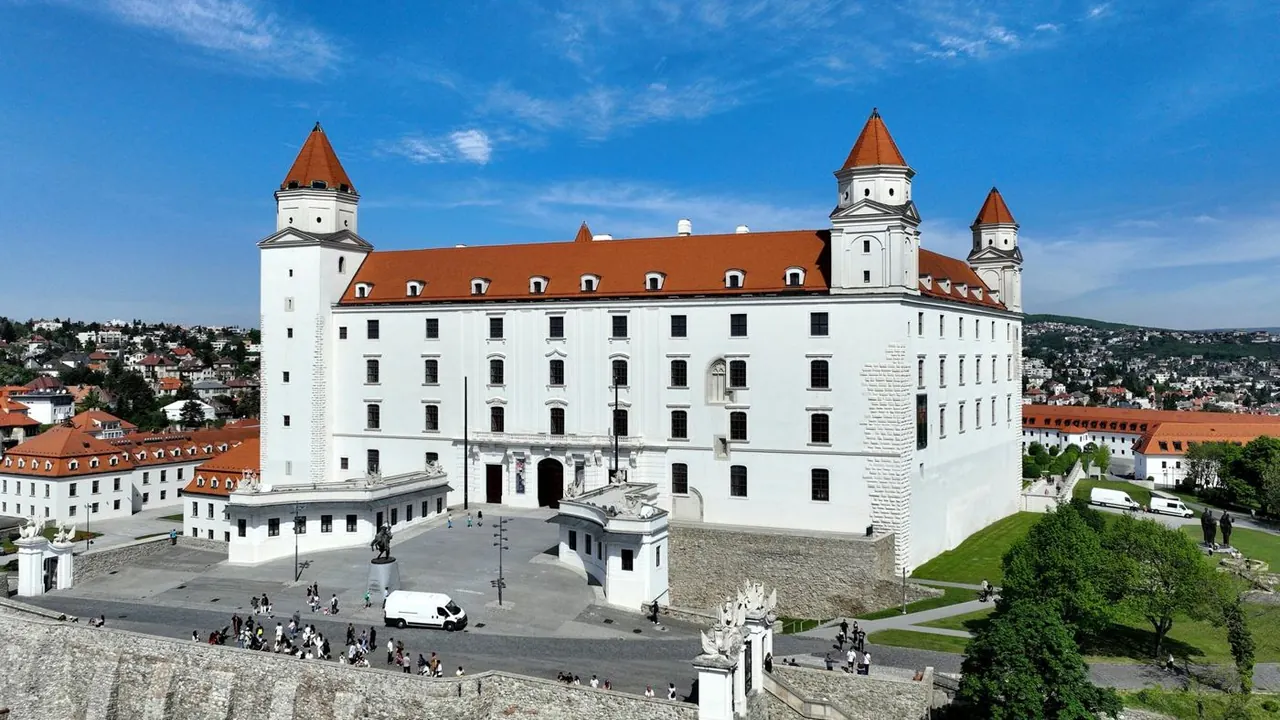
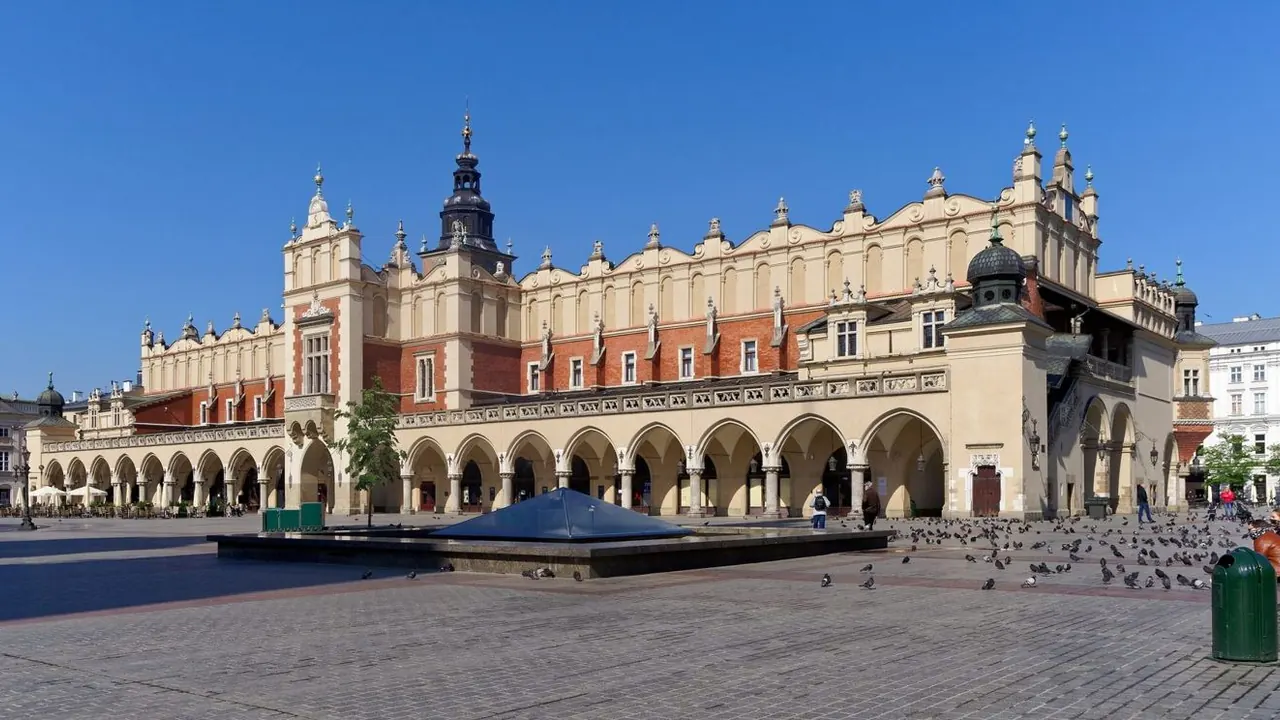
Photos: Bratislava by C.Stadler/Bwag, CC BY-SA 4.0, cropped; Krakow by Jakub Hałun, CC BY-SA 4.0, cropped.
Bratislava or Krakow?
Our verdict in twelve categories, each scored against the same fixed benchmark cities, and the climate month by month, so you can choose for your trip.
Choose Bratislava for
- beaches
- day trips
Bratislava suits a calm, compact stay with a strong pull outward. Its Old Town can be seen in a day or two, the Small Carpathian vineyards begin at the edge of town, and Vienna is close enough to fold into the same trip. Travellers who like wine, forest walks and a quiet capital that works as a base for three countries will get the most from it.
Choose Krakow for
- culture and sights
- nightlife
- families
Krakow is the richer city in its own right. The sights run deeper, from Wawel and the Main Market Square to Kazimierz, evenings out are livelier, and money goes further. For a first trip to Central Europe built around history, cellar bars and cheap, filling food, or a family stay with more to keep children busy, it is the stronger choice.
Scoreboard
Twelve categories on one fixed scale from 0 to 100. The shaded stretch is the gap between the two.
Your match
Pick a travel style or drag the sliders, and both match scores follow your weighting.
Wins on beaches and day trips with your weighting.
Wins on culture and sights and nightlife with your weighting.
What matters to you?
Category by category
What the scores mean for a trip.
Beaches & swimming
Neither city is a swimming destination, and both send bathers to inland water in high summer. Bratislava has a little more of it: the sandy shore at Zlate piesky on a tram line and the larger Senec lakes for a weekend afternoon.
Krakow's version is the Zakrzowek quarry, striking with its turquoise water and cliffs but swimmable only in fenced areas, so most visitors fall back on pools and the indoor water park.
Food & drink
Both cook hearty farm food built on dumplings, cabbage, roast duck and potato pancakes, but Krakow eats better on the whole. Its pierogi, zurek in a bread bowl, cheap milk-bar lunches, street-cart obwarzanek and late-night zapiekanki at Plac Nowy give a visitor more to explore, and a craft beer scene and flavoured vodkas fill out the drinking.
Bratislava's strength is narrower but real: Veltliner, Riesling and Frankovka from vineyards at the city edge, poured in wine bars and rarely found abroad. Beyond bryndzove halusky and the old bakeries' poppy-seed rolls, the choice thins, and finding a good meal takes more effort.
Culture & sights
Krakow is in a different league here. Its medieval centre survived the war almost intact, and Wawel, the vast Main Market Square, St Mary's Basilica, Kazimierz, the Schindler Factory museum and Leonardo's Lady with an Ermine add up to two or three full days.
Bratislava's Old Town is attractive but small: the coronation cathedral of St Martin, the Primate's Palace, the Blue Church, the castle museum and the ruins of Devin. It is a pleasant day or two rather than a reason to travel on its own.
Nightlife
Krakow goes out harder and on more nights of the week. Brick cellar bars under the Old Town run past midnight, and Kazimierz adds shabby-chic bars, vodka bars and crowded courtyards with plenty of character.
Bratislava's scene is a handful of Old Town streets of pubs, wine bars and cocktail bars, loud on Fridays and Saturdays but quiet midweek. Both draw stag groups at weekends; in Krakow they are easier to escape by crossing to Kazimierz or Podgorze.
Nature & outdoors
Krakow has the wider reach: Ojcow's limestone pinnacles and caves half an hour north, and real alpine hiking in the Tatras or rafting the Dunajec gorge about two hours away. Close to town, the Planty, Blonia meadow and Wolski Forest are gentle.
Bratislava's outdoors start closer to the door, with beech-wood trails from Koliba up to Kamzik, steppe meadows on Devinska Kobyla, Danube floodplain forests and a flat cycle route into Austria. The hills stay modest and the mountains are far off.
Day trips
Both are excellent bases, but in different ways. Bratislava's draw is breadth across borders: Vienna about an hour away, the Small Carpathian wine villages and Cerveny Kamen close by, and Carnuntum, Lake Neusiedl, Lednice-Valtice and Pannonhalma in Austria, the Czech Republic and Hungary.
Krakow's is two landmark visits that many people come to Poland for: the Wieliczka salt mine and the Auschwitz-Birkenau memorial. Zakopane, Wadowice, Czestochowa and the wooden churches of the countryside add more, all within Poland.
Good for families
Bratislava's quirky bronze statues on Old Town corners turn a stroll into a spotting game, and the forest park around Kamzik adds playgrounds, a chairlift and a tower. The hillside zoo, the Zlate piesky lake in summer and the Senec water park fill the rest, in a city that is calm and safe but used up within two or three days.
Krakow keeps children busy for longer. Below Wawel a metal dragon breathes fire by the Vistula, the Dragon's Den cave can be explored, and the car-free Main Square has horse carriages and street performers, with an indoor water park open all year. The salt mine suits older children, and Energylandia is about an hour away by car. The drawbacks are cobbles that are hard on pushchairs and several major sights whose subjects are too heavy for younger children.
Getting around
Both are walkable cities with no metro, where trams do the longer hops. Krakow has the edge: the Old Town, Wawel, Kazimierz and Podgorze link up on foot through a largely traffic-free centre, a train runs to the airport, and the big day trips are easy by public transport.
Bratislava's sights sit within a twenty-minute walk, with a short steep climb to the castle, but trips across the river feel slow, and the wine villages are easier with a car.
Shopping & style
Krakow gives a shopper more to do. The medieval Cloth Hall still sells amber, lace and carved boxes, Boleslawiec stoneware makes a classic souvenir, and Kazimierz adds vintage and antique shops and a weekend flea market.
Bratislava's best finds are at the folk-craft centre, with Modra majolica, blue-print cloth and painted eggs, plus a bottle of local wine. Otherwise it means malls, and serious fashion lies in Vienna.
Affordability
In Bratislava a weekday pub lunch, a glass of local wine, a tram ride and a museum ticket all cost little, so a modest budget covers good meals and a central room. The exceptions are restaurants on the main Old Town squares and in the glass complexes along the Danube, which charge closer to Western prices, and rooms that get dearer on busy summer weekends.
Krakow is cheaper still. Milk-bar canteen lunches, pierogi places, inexpensive beer and vodka, and cheap trams and city museums keep the daily spend lower, and moving a few streets off the Main Square or into Kazimierz and Podgorze brings it down again. Costs climb mainly with organised tours to the salt mine and Auschwitz, which cost much more than going on your own by train or bus.
Live music & performing arts
Krakow offers more evenings of music. Alongside the Philharmonic and the opera there are Chopin recitals in churches and palaces most nights, jazz in brick cellars through the week and klezmer in Kazimierz, though its strong theatre is nearly all in Polish.
Bratislava's offer centres on the Slovak National Theatre's opera and ballet and the Philharmonic in the Reduta, solid and easy to book, with Vienna close by for a bigger programme.
Wellness & relaxation
Neither city has thermal baths of its own, so unwinding in both means hotel spas, cafés and riverside walks. The difference is in what lies beyond.
Bratislava has the Senec water park half an hour out and the historic spa town of Piestany about an hour by train. Krakow has salt-air therapy deep in the Wieliczka mine and the naturally hot pools of Podhale, about two hours south.
When should you go?
Pick your month. The climate figures are measured averages, not a forecast.
Bratislava in July
Krakow in July
Daytime high, °C
Rainfall in the month, mm
Where the figures come from
Bratislava has no rain gauge within 25 km of the centre, so its rainfall comes from a gridded climate dataset read at the city rather than from a gauge further away.
Bratislava's sunshine is measured 56 km from the centre, at Wien / Hohe Warte.
Temperature and rainfall are climate normals, averaged over the years shown. Bratislava: 1991-2020 normals, Bratislava Ivanka (8.6 km from centre). Krakow: 1991-2020 normals, Krakow (10.1 km from centre).
The two share a Central European rhythm, but Bratislava runs a little warmer all year. Both are best for walking from May to September, when afternoons are mild to warm and the lake swimming at Zlate piesky or Zakrzowek is possible in July and August. Bratislava peaks around 27°C in midsummer with long, sunny days of about 271 hours of sunshine in July, while Krakow stays a couple of degrees cooler and takes its heaviest rain in July, around 100mm, so summer showers are more of a factor there.
Spring and autumn are pleasant in both for sightseeing, with Bratislava reaching comfortable warmth a few weeks earlier in April. From November to March both turn cold, with daytime highs near freezing in January, so winter visits are about cafés, concerts and Christmas markets rather than time outdoors.
Which traveller are you?
On a culture and arts trip, Krakow is the clear pick. Wawel's castle and cathedral, St Mary's altarpiece, the Cloth Hall and Kazimierz's synagogues fill two or three days, and evening Chopin recitals and cellar jazz add more than Bratislava's smaller set.
For a food and nightlife trip, Krakow again. Pierogi, milk bars and late zapiekanki on Plac Nowy lead into a night of vaulted cellar bars and Kazimierz courtyards, where Bratislava offers a shorter weekend pub crawl and fewer places to eat well.
For a short city break, Bratislava works neatly. Its whole Old Town, castle and riverfront sit within a short walk, the main sights take a day or two, and wine bars pouring Small Carpathian whites round off a relaxed weekend without rushing.
Before you go
| Measure | Bratislava | Krakow |
|---|---|---|
| Official language | Slovak | Polish |
| Currency | Euro (EUR) | Zloty (PLN) |
| Sockets | CE230 V, 50 Hz | CE50 Hz |
| Driving side | Right | Right |
| Time zone | UTC+1, UTC+2 in summer | UTC+1, UTC+2 in summer |
| Emergency number | 112 | 112 |
| Elevation | 152 m | 219 m |
| Main airport | M. R. Štefánik Airport (BTS)8 km from centre68 non-stop destinations | Kraków John Paul II International Airport (KRK)11 km from centre132 non-stop destinations |
| Public holidays this year | 15 days | 14 days |
By the numbers
| Measure | Bratislava | Krakow |
|---|---|---|
| City population | 480,902 | 804,237 |
| People per km² | 1,308 | 2,459 |
| Museums within 10 km | 22 | 113 |
| UNESCO World Heritage sites within 50 km | 2 | 4 |
Where else could you go?
Every comparison below shares a destination with this one, so you can follow Bratislava or Krakow somewhere new.