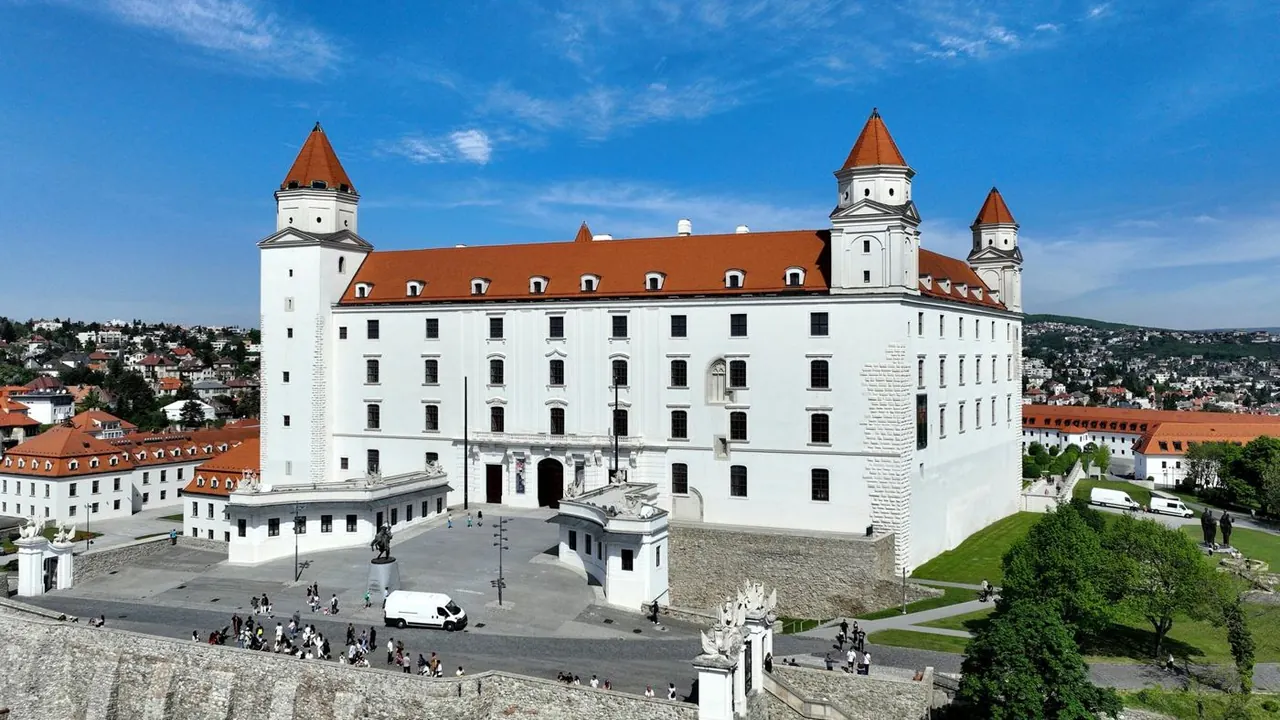
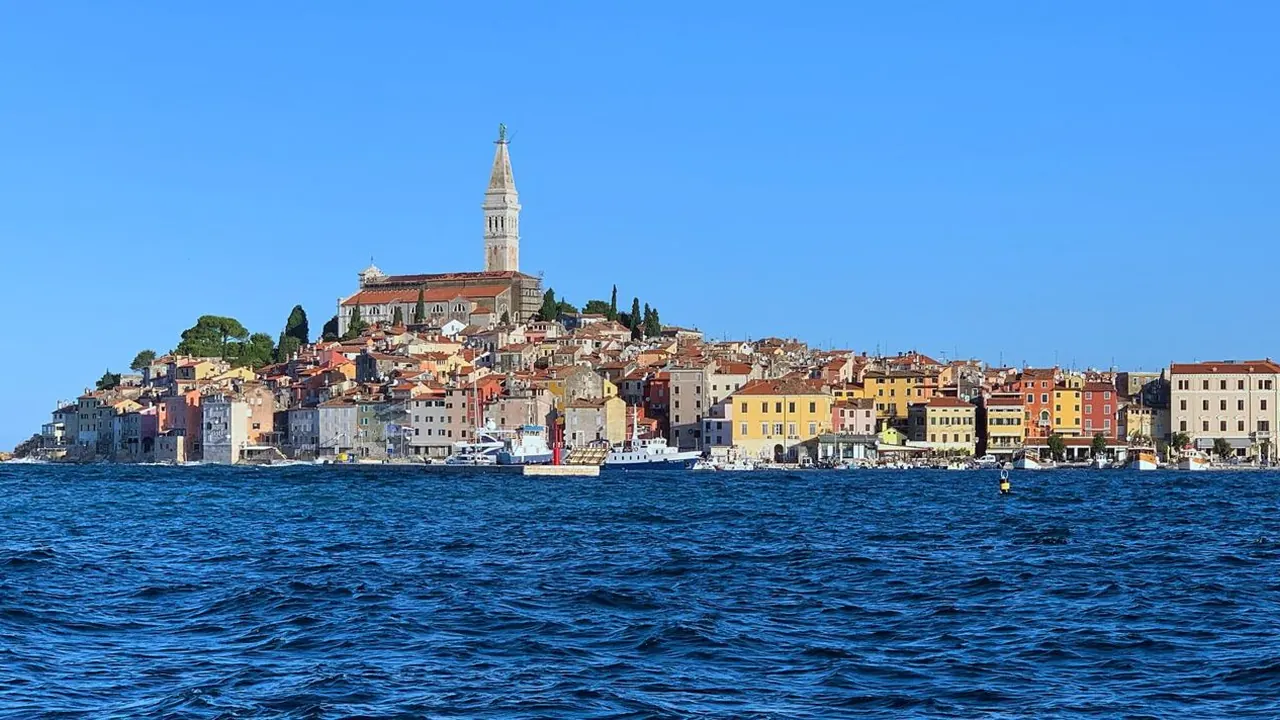
Photos: Bratislava by C.Stadler/Bwag, CC BY-SA 4.0, cropped; Rovinj by Vyacheslav Bukharov, CC BY-SA 4.0, cropped.
Bratislava or Rovinj?
Our verdict in twelve categories, each scored against the same fixed benchmark cities, and the climate month by month, so you can choose for your trip.
Choose Bratislava for
- live music and the arts
- prices
- nightlife
Bratislava suits a short, busy city break: a walk along the coronation route, an evening at the opera, a pub crawl through the Old Town and a day out in Vienna, all on a modest budget. It is compact and easy to get around by tram and on foot, and with three countries within a train ride it makes a good base for travellers who like to keep moving.
Choose Rovinj for
- beaches
- families
- food and drink
Rovinj is the place for a slow summer by the sea, with clear Adriatic water off the rocks, long fish dinners on the harbour and evening walks under the pines of the Golden Cape. It costs more and goes to bed early, but couples and families who want to swim every day and eat well will find on the Istrian coast what a landlocked capital cannot offer.
Scoreboard
Twelve categories on one fixed scale from 0 to 100. The shaded stretch is the gap between the two.
Your match
Pick a travel style or drag the sliders, and both match scores follow your weighting.
Too close to call, 2 points apart
Wins on live music and the arts and prices with your weighting.
Wins on beaches and families with your weighting.
What matters to you?
Category by category
What the scores mean for a trip.
Beaches & swimming
This is the widest gap between the two. Bratislava has no sea and nobody swims in the Danube, so on a hot day you take the tram to the sandy lake shore at Zlate piesky or go out to the Senec lakes. Both are crowded at weekends, and the season is short.
Rovinj has the clear Adriatic right at the foot of the old town walls. You swim from limestone ledges, pebble coves and concrete platforms along the Golden Cape, and taxi boats go to quieter coves on St Catherine and Red Island. Sand is the one thing it lacks, so oddly the only sandy shore between the two is Bratislava's lake.
Food & drink
Rovinj has the edge, thanks to the sea and the Istrian hinterland: grilled fish, scampi buzara, truffle pasta, peppery olive oil and Malvazija in the glass. Bratislava's cooking is heavier inland food, built on bryndzove halusky, roast duck with lokse and the poppy-seed rolls from its old bakeries.
Both share the same weakness. The most central streets lean towards tourist menus, and neither offers much beyond its own region. Bratislava's strongest card is drink: Small Carpathian Veltliner and Frankovka in the wine bars, and beer brewed on the premises in Old Town pubs.
Culture & sights
Bratislava has more to see and more layers of history. The coronation route of the Hungarian kings runs from St Martin's Cathedral past baroque palaces to Michael's Gate. The castle holds a historical museum, and the Slovak National Gallery, the saucer-topped Most SNP bridge and the ruins of Devin carry the story further. All of it fills a day or two.
In Rovinj the main sight is the old town itself, with Venetian houses climbing to St Euphemia, whose bell tower you can climb for the view. Add the Batana House and its fishing-boat story and you have seen it all. It is lovelier to wander, but you are done in an afternoon.
Nightlife
Neither is a club destination, but Bratislava has far more going on after dark. On Friday and Saturday nights the Old Town fills with students and weekend groups, stag parties included, moving between pubs, wine bars and cocktail bars until late.
In Rovinj the evening is a long dinner and then a drink on the rocks at sunset, with a few waterfront bars and a couple of places to dance in high season. Most of the old town is quiet by midnight and barely stirs outside summer. That suits couples better than groups.
Nature & outdoors
Both have green country at the edge of town, so the difference is land against water. Bratislava's outdoors is the Little Carpathians, with beech-wood trails from Koliba up to Kamzik and along the vineyard ridges. Beyond them lie the Danube floodplain forests, the flat cycle route into Austria and whitewater rafting at Cunovo.
Rovinj looks to the sea. There are pine and cedar paths on the Golden Cape, kayaking, paddleboarding and diving around the archipelago, and boat trips along the steep green Lim Fjord. Neither offers real mountains.
Day trips
Bratislava's trump card is Vienna, an hour away by train. The Small Carpathian wine villages, Trnava, Roman Carnuntum and the Lednice-Valtice chateaux are close too, and most of them can be reached without a car.
Rovinj's region is rich as well, with Pula's amphitheatre, the mosaics of the Euphrasian Basilica in Porec and the hill towns of Motovun and Groznjan. But nearly all of it needs a car, and the big names across the border, Trieste and Piran, are further away than Vienna is from Bratislava.
Good for families
Rovinj works better with children over a full week. There are boat trips, gelato, flat paths in the Golden Cape park that suit pushchairs and bikes, and resorts and campsites built for families, with pools and playgrounds. The catches are the rocky shore, which means water shoes, and the steep, polished cobbles of the old town.
Bratislava is safe and calm. The Old Town is mostly pedestrian, with bronze statues to spot, and there are playgrounds and a chairlift at Kamzik, a hillside zoo and the Senec water park as a treat. That keeps children busy for two or three days, and then the options run out.
Getting around
Both centres are easy on foot, but Bratislava is far easier once you leave the centre. Trams, trolleybuses and buses on one ticket reach Kamzik, the zoo, the lake and Devin, and the railway makes day trips possible without a car. With no metro, though, longer journeys across the river are slow.
In Rovinj you walk everywhere in the car-free old town and along the promenade, and taxi boats serve the islands. Beyond that there is no railway, buses link only the bigger towns, and you really need a hire car for the hill towns and wineries.
Shopping & style
Bratislava gives a shopper more to work with, though not much of it is local. The riverside malls carry international chains, the state folk-craft centre is the place for Modra majolica, lace and blue-print cloth, and Vienna's fashion streets are a short train ride away.
Rovinj's shopping is small and follows the season. The best buys are in the galleries and artists' studios along Grisia and in regional food such as truffle products, olive oil and Malvazija, and the choice thins once summer ends.
Affordability
Bratislava is clearly the cheaper stay. Beer, wine, transport and museums cost little, weekday pub lunches are filling, and central rooms are fairly priced for most of the year. Only the main squares and the glass-fronted complexes along the river charge Western prices.
Rovinj in July and August costs what a popular Mediterranean resort costs, and fish sold by weight makes dinner on the harbour expensive. Private apartments, campsites and lunches from the bakery help, and so does coming in late spring or September.
Live music & performing arts
The gap is wide. Bratislava has a real season: opera and ballet at the Slovak National Theatre on Hviezdoslav Square, the Slovak Philharmonic in the Reduta, and a music festival every autumn. Tickets are easy to get, and Vienna is close if you want more.
Rovinj offers summer concerts in St Euphemia, music on the squares and the occasional performance of bitinada singing. After the season there is very little, and for a big show you drive to Pula's Roman arena.
Wellness & relaxation
Neither has thermal baths of its own, and Rovinj is slightly the better place to unwind. The resort hotels along the Golden Cape have pools, saunas and treatments that outside guests can use. In May, June and September there are late swims and quiet walks in the pines, though in high summer the centre is crowded.
In Bratislava the options are hotel spas, slow afternoons in cafes and forest paths that are empty on weekdays. For proper bathing you go out to the Senec water park or to Piestany, a spa town known for its mud and sulphur cures, an hour away by train.
When should you go?
Pick your month. The climate figures are measured averages, not a forecast.
Bratislava in July
Rovinj in July
Daytime high, °C
Rainfall in the month, mm
Where the figures come from
Bratislava has no rain gauge within 25 km of the centre, so its rainfall comes from a gridded climate dataset read at the city rather than from a gauge further away.
Bratislava's sunshine is measured 56 km from the centre, at Wien / Hohe Warte.
Rovinj's temperatures are measured 64 km from the centre, at Trieste.
Rovinj has no rain gauge within 25 km of the centre, so its rainfall comes from a gridded climate dataset read at the city rather than from a gauge further away.
Temperature and rainfall are climate normals, averaged over the years shown. Bratislava: 1991-2020 normals, Bratislava Ivanka (8.6 km from centre). Rovinj: 1991-2020 normals, Trieste (63.7 km from centre).
Bratislava's summer is short and warm. July and August reach about 27°C, which is the only time its lakes are pleasant for a swim, though these months also bring some of the year's heaviest showers. From November to February the city is cold and grey, with January highs near 3°C and little sunshine. Late spring and September are the best months for walking the Old Town and the forest trails.
Rovinj is milder all year, and its calendar is set by the sea. The water is warm enough for swimming from June to September and reaches 26°C in August, when the air is hot and sunny. Rain comes in autumn and builds to a wet November of about 102mm. Winter highs of around 10°C are kinder than Bratislava's, but the sea is cold then. June and September give the best balance of warm water, sunshine and comfortable walking. May is bright and pleasant on land, but the sea is still cool.
Which traveller are you?
For a beach and sun trip, Rovinj is the clear choice. The Adriatic is clear and warm through summer, and you can swim off the rocks below the old town or take a taxi boat to the islands. In Bratislava swimming means crowded lakes on hot weekends.
On a culture and arts trip, Bratislava gives you more to fill the days. The coronation history, the castle museum and the national gallery take a couple of days, and evenings can go to opera, ballet or the Philharmonic. Rovinj's lovely old town cannot match that.
On a tight budget, Bratislava makes the money go further. Beer, wine, trams and museums are cheap, pub lunches are hearty and central rooms are fairly priced. Rovinj in high summer charges resort prices, and fish dinners on the harbour add up quickly.
Before you go
| Measure | Bratislava | Rovinj |
|---|---|---|
| Official language | Slovak | Croatian |
| Currency | Euro (EUR) | Euro (EUR) |
| Sockets | CE230 V, 50 Hz | CF230 V, 50 Hz |
| Driving side | Right | Right |
| Time zone | UTC+1, UTC+2 in summer | UTC+1, UTC+2 in summer |
| Emergency number | 112 | 112 |
| Elevation | 152 m | 0 m |
| Main airport | M. R. Štefánik Airport (BTS)8 km from centre70 non-stop destinations | Pula Airport (PUY)31 km from centre34 non-stop destinations |
| Public holidays this year | 15 days | 14 days |
By the numbers
| Measure | Bratislava | Rovinj |
|---|---|---|
| City population | 480,902 | 12,968 |
| People per km² | 1,308 | - |
| Museums within 10 km | 22 | 1 |
| UNESCO World Heritage sites within 50 km | 2 | 1 |
| Swim season, months above 21 °C | - | 4 months |
Where else could you go?
Every comparison below shares a destination with this one, so you can follow Bratislava or Rovinj somewhere new.