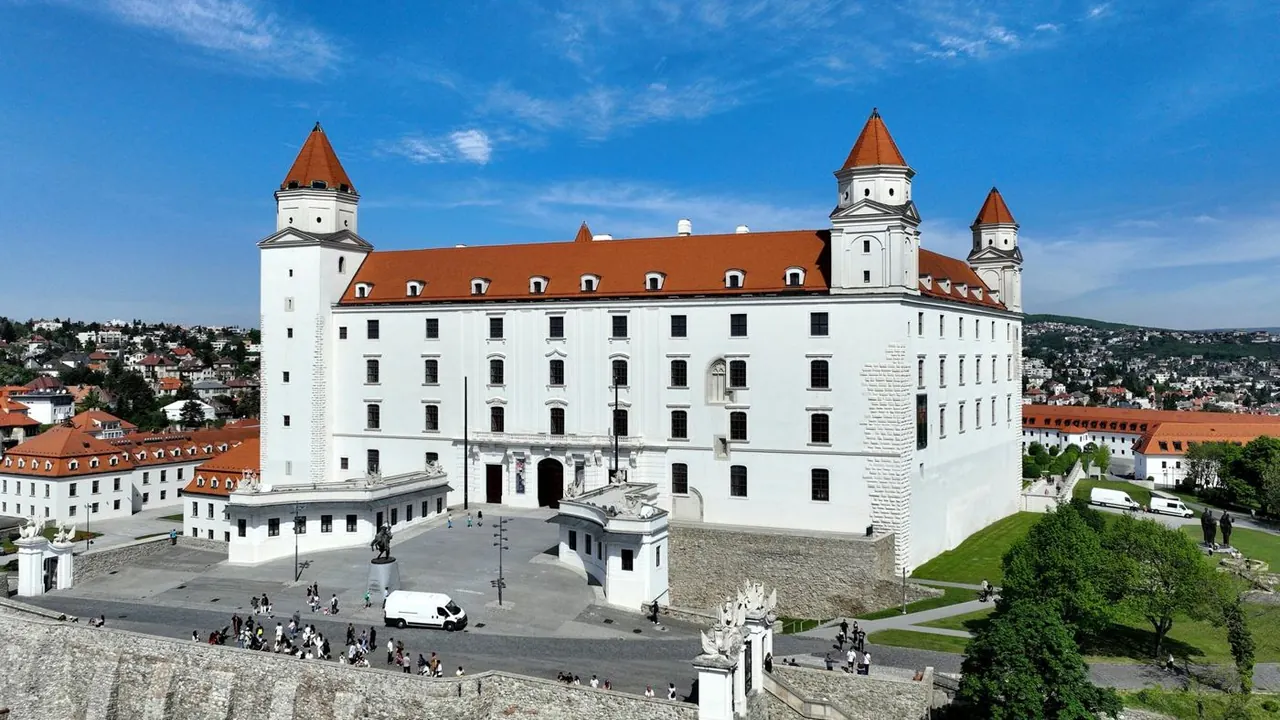
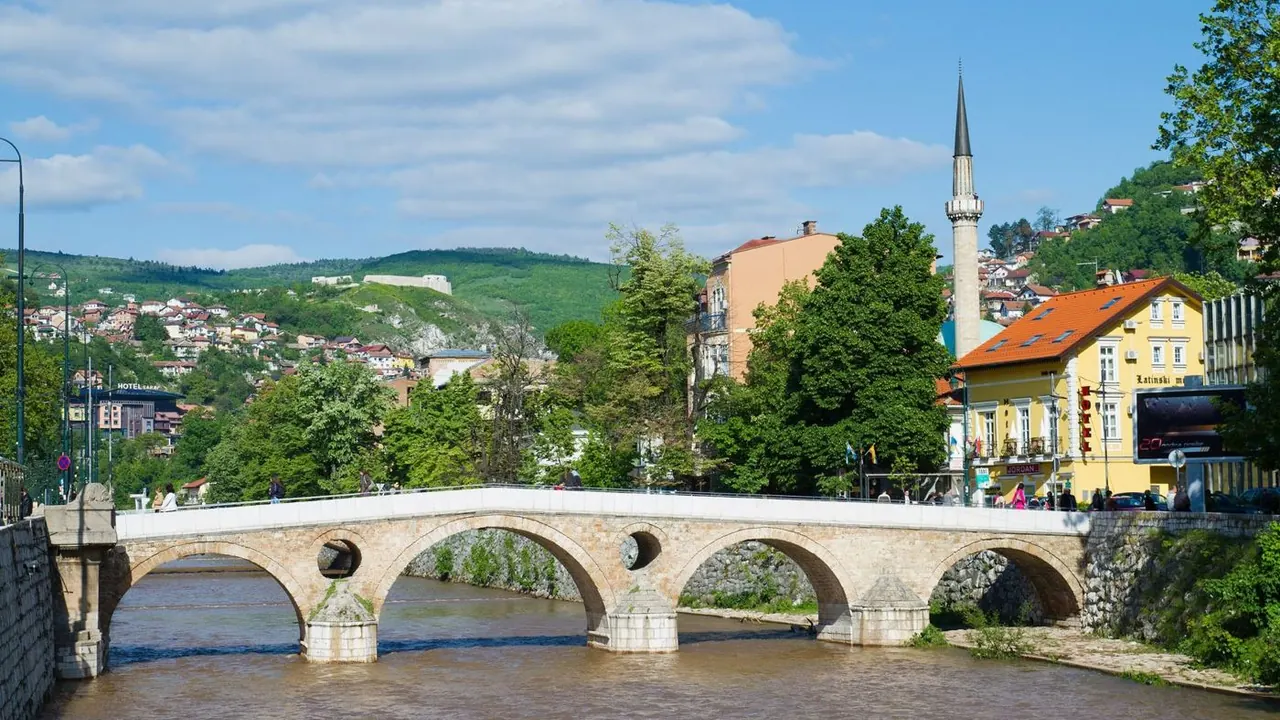
Photos: Bratislava by C.Stadler/Bwag, CC BY-SA 4.0, cropped; Sarajevo by Tumi-1983, CC0.
Bratislava or Sarajevo?
Our verdict in twelve categories, each scored against the same fixed benchmark cities, and the climate month by month, so you can choose for your trip.
Choose Bratislava for
- day trips
- beaches
- getting around
Bratislava suits a relaxed, well-connected few days rather than a deep exploration. Its compact baroque Old Town takes a day or two, and from there you can easily get to Vienna, the Small Carpathian wine villages and castles in three countries. Choose it if you like an evening at the opera, a glass of local Veltliner and a different place to visit each day, with good transport doing the work.
Choose Sarajevo for
- nature and the outdoors
- culture and sights
- food and drink
Sarajevo is the stronger pick if you want a city with a story and mountains on its doorstep. Ottoman bazaar lanes, Austro-Hungarian avenues and the memory of the 1914 assassination and the 1990s siege make for a more moving visit. A cable car climbs from the Old Town to the forests of Trebević, and the Olympic ski slopes are under an hour away. It also costs less and feeds you better, as long as you're happy with slow roads and a narrower range of comforts.
Scoreboard
Twelve categories on one fixed scale from 0 to 100. The shaded stretch is the gap between the two.
Your match
Pick a travel style or drag the sliders, and both match scores follow your weighting.
Wins on day trips and beaches with your weighting.
Wins on nature and the outdoors and culture and sights with your weighting.
What matters to you?
Category by category
What the scores mean for a trip.
Beaches & swimming
Neither city is a swimming destination, but Bratislava at least has somewhere to cool off in summer. Zlate piesky has a sandy lake shore you can reach by tram, and the larger Senec lakes are half an hour away. Both are warm enough in July and August.
Sarajevo offers less. The swimming spots are cold mountain rivers, the Jablanica lake on the road south, and pools. The Adriatic is three hours away, so it's better as an add-on stay on the coast than as a day out.
Food & drink
Sarajevo is the place to eat well. Its Ottoman-Balkan cooking has a clear identity: ćevapi in somun bread from the Baščaršija grills, pita bakeries selling burek by weight, lamb cooked under a metal lid, and the slow ritual of Bosnian coffee with rahat lokum. It's narrow, but it's done with care.
Bratislava's hearty dumplings, roast duck and poppy-seed rolls are satisfying rather than memorable, and the central squares lean towards tourist menus. Its real advantage is in the glass: Small Carpathian Veltliner, Riesling and Frankovka from vineyards at the city's edge, plus microbreweries. If wine matters more to you than food, Bratislava wins that part.
Culture & sights
Sarajevo has the richer and more moving set of sights. In a few hundred metres you pass from the bazaar, the Gazi Husrev-beg Mosque and its madrasa to Austro-Hungarian avenues with Orthodox and Catholic cathedrals and the Old Synagogue. The Latin Bridge, the Tunnel of Hope and the War Childhood Museum tell the city's twentieth century in a way few places can match.
Bratislava's Old Town is pretty and well kept: baroque palaces, St Martin's Cathedral with its coronation crowns set in the pavement, and the castle on its hill. But it comes across as charming rather than profound, and most visitors finish it in a day or two.
Nightlife
The two are broadly level, and neither is a club city. Bratislava's nights are a pub and wine-bar crawl through a few Old Town streets. They get loud and full on Fridays and Saturdays, with weekend groups and stag parties from abroad, and go quiet during the week.
Sarajevo's evenings grow out of café-bars that fill from the afternoon, then move on to cellar bars and small clubs kept going by students. The mood is more sociable than rowdy, and nights often end over rakija.
Nature & outdoors
Sarajevo has much the stronger outdoors. Real mountains rise on every side: the cable car to Trebević and its overgrown Olympic bobsleigh track, ski runs and grassy hiking ridges on Jahorina and Bjelašnica, and the shepherds' village of Lukomir above the Rakitnica canyon. Trails are lightly marked, so it suits confident walkers.
Bratislava's countryside is gentler and easier. Beech-wood paths climb from Koliba to the Kamzik tower, Devinska Kobyla has steppe meadows above the meeting of two rivers, and the flat Danube cycle route runs along the dykes into Austria. For mountains, you'd have to travel a full day to the Tatras.
Day trips
Bratislava is the better base for day trips, mainly because of geography. Vienna is about an hour away by train or a scenic boat trip up the Danube. Austria, Hungary and Czechia are all close, so Carnuntum, Lake Neusiedl, Lednice-Valtice and Pannonhalma are easy outings, along with the wine villages of Modra and Pezinok.
Sarajevo's best day out is Mostar, on a beautiful train ride down the Neretva gorge, with Konjic, Blagaj and Počitelj along the same route. Travnik and the bridge at Višegrad are rewarding too, but the roads are slow and winding, and most trips need a car or a tour.
Good for families
Both are manageable with children for a few days, and neither is really built for them. Bratislava is calm and largely pedestrian, with bronze statues to spot, the Kamzik forest park with its chairlift, a hillside zoo and the thermal water park at Senec.
Sarajevo welcomes children warmly and has the Trebević cable car, carriage rides to the streams of Vrelo Bosne and gentle winter skiing. However, its main sights are about war and its hillside streets are steep. Grill smoke and winter smog also make it harder going with small children.
Getting around
Bratislava is the easier of the two. Most of what you'll want, including the castle, riverfront and theatre squares, is within a twenty-minute walk. A single ticket covers trams, trolleybuses and buses out to Kamzik, the zoo and Devin. There is no metro, so trips across the river take a little longer.
Sarajevo is easy to understand because it follows a narrow valley, and its centre is flat. Away from the single tram line from Baščaršija to Ilidža, though, the routes are harder for a visitor to follow and the slopes are steep. Taxis are cheap and plentiful, and you'll need them for the airport, the Tunnel of Hope and the mountains.
Shopping & style
Neither city is a shopping destination, but Sarajevo's bazaar gives it more character. On Kazandžiluk you can still hear coppersmiths hammering coffee sets. The Bezistan and the lanes around it sell kilims, slippers and filigree, though much of it is souvenir stock.
Bratislava's best finds are Modra majolica and blue-print cloth at the state folk-craft centre, and a few bottles of Small Carpathian wine. For serious fashion, take the train to Vienna.
Affordability
Sarajevo is the cheaper city, and noticeably so. Street food, sit-down meals with drinks, taxis, museums and central guesthouses all cost well below Western levels. Prices rise only a little in the Old Town.
Bratislava is good value too. Beer, wine, transport and weekday pub lunches are cheap. But restaurants on the main squares and in the riverside complexes charge closer to Western prices, and rooms cost more on busy summer weekends. A modest budget goes a long way there, just less far than in Sarajevo.
Live music & performing arts
Bratislava gives you the better evenings out. The Slovak National Theatre stages opera and ballet in its ornate building on Hviezdoslav Square, and the Philharmonic plays in the Reduta across the square. Tickets are easy to get, and the autumn music festival adds highlights. For anything bigger, Vienna is an hour away.
Sarajevo's National Theatre and Philharmonic offer a smaller regular programme. Its festivals carry more weight: MESS for international theatre in autumn and the jazz festival in November. Its most distinctive sound is sevdah, the melancholy love songs you may hear in traditional restaurants.
Wellness & relaxation
Sarajevo has the slight edge because its thermal water is within the city. A tram ride takes you to the sulphur springs and spa pools of Ilidža, which have been used since Roman times, with a calm walk to Vrelo Bosne nearby. Winter smog takes away some of the calm.
Bratislava has no baths of its own, only hotel spas and quiet afternoons by the Danube. Proper bathing means a day out to the water park at Senec, or about an hour by train to the historic mud and sulphur cures of Piestany.
When should you go?
Pick your month. The climate figures are measured averages, not a forecast.
Bratislava in July
Sarajevo in July
Daytime high, °C
Rainfall in the month, mm
Where the figures come from
Bratislava has no rain gauge within 25 km of the centre, so its rainfall comes from a gridded climate dataset read at the city rather than from a gauge further away.
Bratislava's sunshine is measured 56 km from the centre, at Wien / Hohe Warte.
Temperature and rainfall are climate normals, averaged over the years shown. Bratislava: 1991-2020 normals, Bratislava Ivanka (8.6 km from centre). Sarajevo: 1991-2020 normals, Sarajevo-Bejelave (2 km from centre).
The two cities follow almost the same temperature curve through the year. In both, winter highs stay only a few degrees above freezing from December to February, so walking the streets is brisk and short. Spring warms up from April, and July and August peak at about 27°C in Bratislava and 28°C in Sarajevo. That is warm, but rarely too hot for sightseeing. Those two months are also the only ones warm enough for Bratislava's lake shores at Zlate piesky and Senec. In both cities, May, June and September are the most comfortable months for walking.
The differences are in the light and the autumn rain. From May to August, Bratislava has the longer sunny days, so it is the brighter choice for a summer trip. From October to March it stays fairly dry, at about 39mm a month or less, which makes a crisp autumn visit a safe bet. Sarajevo's rain is steadier through the year and heaviest in autumn and early winter, at close to 90mm a month. Even so, it gets a little more sun than Bratislava from October to January. Its winter gloom comes from smog settling in the valley, not from a lack of sunshine.
Which traveller are you?
On an outdoors trip, Sarajevo is the clear choice. Real mountains surround it: Trebević is a cable-car ride from the bazaar, and Jahorina and Bjelašnica offer skiing in winter and ridge hiking in summer. Bratislava's wooded Little Carpathians are pleasant, but they are gentle hills.
On a trip with a tight budget, Sarajevo goes further. Ćevapi, burek, coffee in the bazaar, trams, taxis and central guesthouses all cost very little. Bratislava is good value by Western standards, but its main squares and riverside complexes push prices closer to Western levels.
For a short city break, Bratislava is the easier fit. The castle, cathedral and riverfront are all within a short walk, an opera night is simple to arrange, and an extra day can go to Vienna or the wine villages by train, with no car needed.
Before you go
| Measure | Bratislava | Sarajevo |
|---|---|---|
| Official language | Slovak | Croatian, Serbian, Bosnian |
| Currency | Euro (EUR) | Convertible Mark (BAM) |
| Sockets | CE230 V, 50 Hz | CF230 V, 50 Hz |
| Driving side | Right | Right |
| Time zone | UTC+1, UTC+2 in summer | UTC+1, UTC+2 in summer |
| Emergency number | 112 | 112 |
| Elevation | 152 m | 518 m |
| Main airport | M. R. Štefánik Airport (BTS)8 km from centre68 non-stop destinations | Sarajevo International Airport (SJJ)7 km from centre38 non-stop destinations |
| Public holidays this year | 15 days | 8 days |
By the numbers
| Measure | Bratislava | Sarajevo |
|---|---|---|
| City population | 480,902 | 275,524 |
| People per km² | 1,308 | 1,947 |
| Museums within 10 km | 22 | 25 |
| UNESCO World Heritage sites within 50 km | 2 | 1 |
Where else could you go?
Every comparison below shares a destination with this one, so you can follow Bratislava or Sarajevo somewhere new.