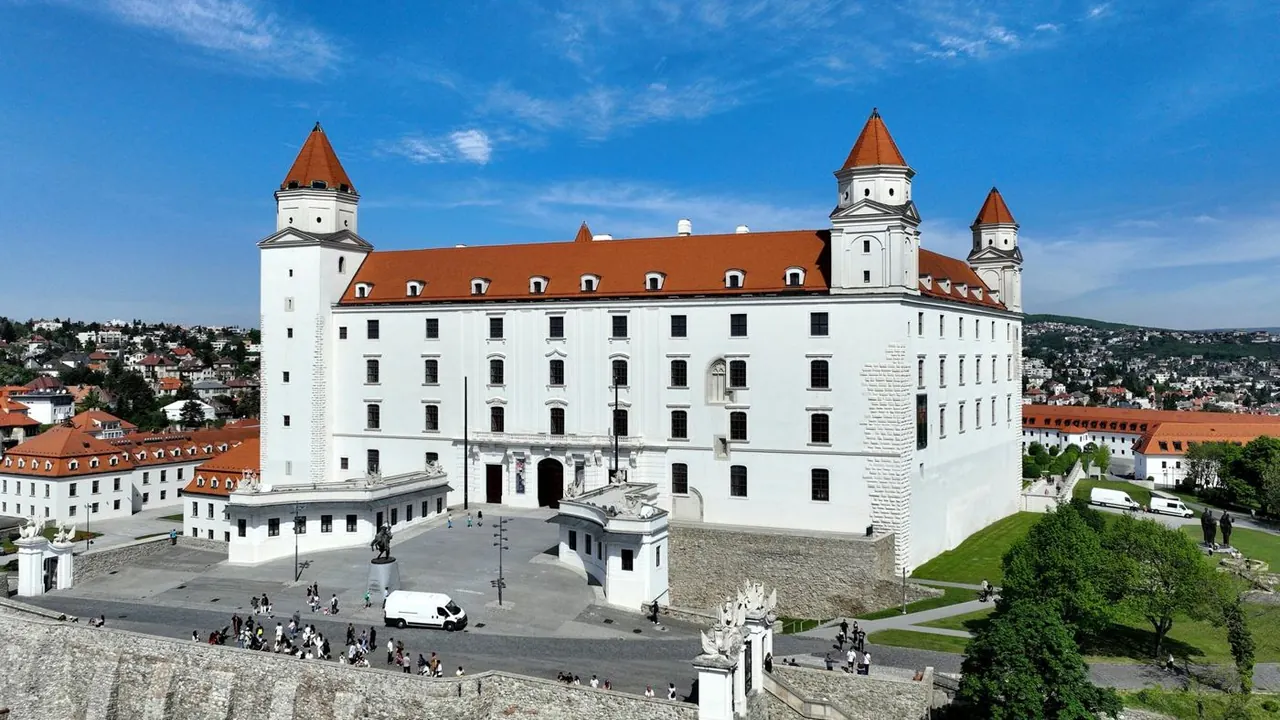
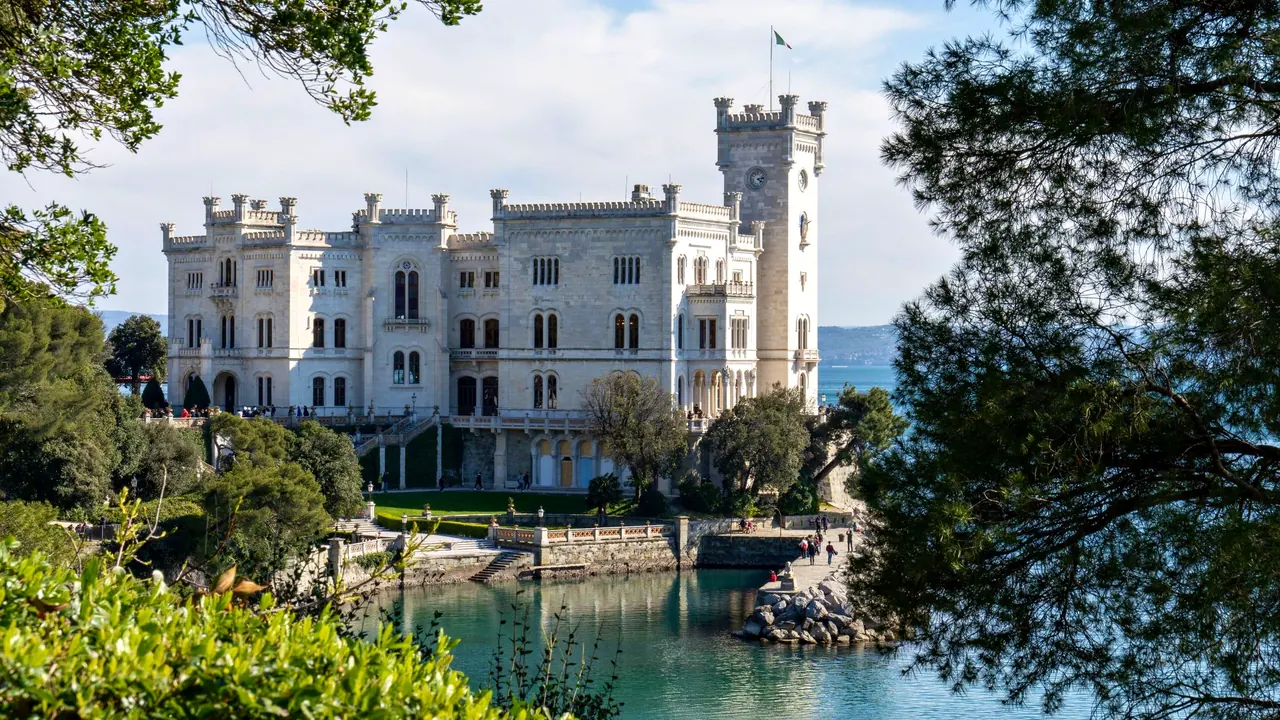
Photos: Bratislava by C.Stadler/Bwag, CC BY-SA 4.0, cropped; Trieste by Tibor Szabo, Pexels License.
Bratislava or Trieste?
Our verdict in twelve categories, each scored against the same fixed benchmark cities, and the climate month by month, so you can choose for your trip.
Choose Bratislava for
- nightlife
- prices
Bratislava is the better pick for a cheap, sociable few days in Central Europe. The Old Town is small and easy to walk, its weekend pubs and wine bars are livelier than anything Trieste offers after dark, and everyday costs stay low. Its real strength is position: Vienna is close enough for a day out, and the Small Carpathian wine villages start at the edge of town. It suits travellers who want an easy base and a lively pub crawl more than a destination in its own right.
Choose Trieste for
- beaches
- food and drink
- culture and sights
Choose Trieste if you want a seaside city with more to do once you arrive. It has the Adriatic for swimming off Barcola's platforms, a grand Habsburg waterfront and San Giusto hill to explore, buffets and coffee houses with a food culture all their own, and the Karst plateau climbing straight up behind the streets. It costs a little more and goes to bed earlier, but for a slow week of sea, sights, cliff walks and opera it gives far more.
Scoreboard
Twelve categories on one fixed scale from 0 to 100. The shaded stretch is the gap between the two.
Your match
Pick a travel style or drag the sliders, and both match scores follow your weighting.
Wins on nightlife and prices with your weighting.
Wins on beaches and food and drink with your weighting.
What matters to you?
Category by category
What the scores mean for a trip.
Beaches & swimming
For swimming there is no contest. Bratislava has no sea, and the Danube is off limits because of its current and barge traffic. Summer bathing means the sandy lake at Zlate piesky or the Senec lakes, both pleasant on a hot afternoon but packed at weekends.
Trieste has the Adriatic on its doorstep, warm and clear in high summer. Locals swim off the concrete steps and lawns at Barcola, and the pebble coves at Sistiana, Duino and Grignano are prettier. There is almost no sand, so anyone who wants soft beaches should know it is rocks and ladders, but it is real sea swimming every day from June to September.
Food & drink
Bratislava offers hearty farm cooking: bryndzove halusky, roast duck with lokse and Bratislava rolls, served with lager from small brewpubs. The best part is the Small Carpathian wine poured in its wine bars. Beyond that, choice thins and the central squares lean towards tourist menus.
Trieste has a much stronger food identity. Its buffets carve boiled pork from steaming pots, jota sits beside fried sardoni, and the coffee house culture comes with its own vocabulary. In season, the osmize on the Karst sell farm wine and cured meats straight from the source. Neither city is strong on fine dining, but Trieste gives a visitor more to seek out.
Culture & sights
Bratislava's sights are pleasant and compact: the coronation route to St Martin's Cathedral, the Primate's Palace, the Blue Church, the white castle above, and the ruins of Devin on their cliff. It all fits into a day or two.
Trieste has more weight and more variety. Piazza Unità opens grandly onto the sea, the Borgo Teresiano lines the Canal Grande, and San Giusto combines a mosaic cathedral, a castle and a Roman theatre. Add Miramare Castle, the large synagogue and the Risiera memorial, and the city fills several days with layers of Habsburg, Italian and Slavic history.
Nightlife
Neither is a club city, but Bratislava is the livelier of the two. On Friday and Saturday its Old Town streets of pubs, wine bars and cocktail bars stay loud until late, helped by students, low drink prices and weekend groups from abroad. Weeknights are far calmer.
Trieste's evenings are built around the aperitivo: spritz and local white wine on Piazza Unità or along the Canal Grande, and in summer drinks at the kiosks on Barcola. The streets empty early in winter, so it suits a long dinner by the sea more than a late night.
Nature & outdoors
Bratislava has gentle green spaces on its edge. Beech-wood trails climb from Koliba to Kamzik, Devinska Kobyla looks over the meeting of the Morava and Danube, and the flat Danube cycle route runs past floodplain forest into Austria. Rafting at Cunovo adds some action, but there are no real mountains nearby.
Trieste's setting is more dramatic and more varied. The Karst rises right behind the city, with the Strada Napoleonica high above the gulf, the Rilke Path along the Duino cliffs, Val Rosandra for climbing, and huge caves such as Grotta Gigante. On the water, the gulf is good for sailing, and the Miramare reserve is good for snorkelling and kayaking.
Day trips
Both are excellent bases with three countries in reach. The difference is in what's on offer. Bratislava's trump card is Vienna about an hour away. It also has the Small Carpathian wine villages of Pezinok and Modra, Lednice-Valtice and Carnuntum, all easy by train or boat.
Trieste looks towards Roman Aquileia, star-shaped Palmanova, Collio wine country and the lagoon at Grado. Across the border are Piran, Ljubljana and the Postojna cave, and Venice is about two hours away by train. You get more seaside and Venetian towns from Trieste, and from Bratislava an imperial capital and wine villages.
Good for families
Children run through Bratislava in two or three days. Trieste, with its caves, castle gardens and sea, keeps them busy for longer. In Bratislava the fun is spotting the bronze statues around the pedestrian Old Town, riding the chairlift up to the tower at Kamzik and visiting the hillside zoo. In summer there is also the lake at Zlate piesky or the thermal water park at Senec as a treat.
Trieste adds the gardens around Miramare Castle and the Grotta Gigante, a cave so vast that older children are usually stunned. In town there are a small aquarium and a hands-on science centre, and in summer there are seaside days among local families at Barcola. Swimming off rocks and the steep, stepped streets behind the waterfront make it better for older children than for toddlers.
Getting around
In Bratislava you get about by tram and trolleybus. In Trieste it is buses, boats and a good deal of stair-climbing. Bratislava's Old Town, castle and riverfront sit within a twenty-minute walk, and one ticket covers rides out to Kamzik, the zoo and Devin. Without a metro, though, trips across the river or out to the suburbs take longer than the map suggests.
Trieste's centre is flat and compact along the sea, so Piazza Unità, the Canal Grande and the museums are an easy stroll apart. The effort comes behind them, where long flights of steps lead up to San Giusto. Buses run along the coast to Miramare and up onto the Karst, and passenger boats cross the bay to Muggia.
Shopping & style
Neither city is a shopping destination. The best things to take home from both are local food and drink. In Bratislava, that means Small Carpathian wine and folk crafts such as Modra majolica and blue-print cloth from the state craft centre, while the malls stock the usual chains and Vienna is the place for luxury.
Trieste's high streets have ordinary Italian clothing and shoe shops. Browsing is more interesting in the old town's antique and second-hand shops, and the best souvenirs are coffee from local roasters, Karst wine and presnitz.
Affordability
Bratislava is the cheaper stay. Beer, wine, transport and museums cost little, and weekday pub lunches are a bargain. Only the main squares and the glossy riverside complexes charge Western prices, and a short walk brings them down again.
Trieste is good value for northern Italy, with cheap bar coffee, cheap buffet meals and free pleasures like Barcola and the Karst walks. Seafood dinners and better hotels, though, cost what they do in other Italian cities, so a week there takes a larger budget.
Live music & performing arts
Both cities offer a good night at the opera, and Trieste's stage life is a little richer. In Bratislava, the Slovak National Theatre on Hviezdoslav Square and the Philharmonic in the Reduta give solid performances, with easy tickets from autumn to spring. For bigger programmes, people take the train to Vienna.
Trieste's Teatro Verdi runs a full opera and ballet season, and the city keeps up a Habsburg love of operetta that is rare in Italy. The Politeama Rossetti and the Slovenian-language theatre add range, and summer brings concerts in the castle courtyard on San Giusto.
Wellness & relaxation
Neither city has thermal baths of its own, so both mean hotel spas or a trip out. From Bratislava, the Senec water park and the spa town of Piestany are within easy reach. Trieste makes up for it with the sea.
The way each city unwinds differs too. Bratislava offers quiet forest paths and Danube cafés, while Trieste offers long sittings in old coffee houses, a swim and a sunset walk along the Molo Audace.
When should you go?
Pick your month. The climate figures are measured averages, not a forecast.
Bratislava in July
Trieste in July
Daytime high, °C
Rainfall in the month, mm
Where the figures come from
Bratislava has no rain gauge within 25 km of the centre, so its rainfall comes from a gridded climate dataset read at the city rather than from a gauge further away.
Bratislava's sunshine is measured 56 km from the centre, at Wien / Hohe Warte.
Temperature and rainfall are climate normals, averaged over the years shown. Bratislava: 1991-2020 normals, Bratislava Ivanka (8.6 km from centre). Trieste: 1991-2020 normals, Trieste (1.6 km from centre).
Bratislava has a proper continental year. Winters are cold and grey, with daytime highs around 3°C in January and little sun, so the months from November to February suit the opera and cafés more than long walks. Spring warms quickly, and May and September are the most comfortable months for sightseeing and the hills. Summer reaches about 27°C in July and August, warm enough for the lakes, though this is also the wettest stretch, mostly in short showers.
Trieste is milder all year and warmer in summer, at around 29°C in July and August, with the sea at about 25°C. The swimming season runs from June to September. Its rain comes the other way round from Bratislava's: autumn is the wet season, up to 125mm in November, and the Bora can make winter days raw even though they are never as cold as on the Danube. Late May, June and early September are the best months for combining the sea with walking.
Which traveller are you?
On a beach and sun trip, Trieste is the clear choice. You can swim in the clear Adriatic from Barcola or the coves at Sistiana and Duino all summer. Bratislava has only crowded lakes like Zlate piesky and Senec, with a short season.
For a trip on a tight budget, Bratislava goes further. Weekday pub lunches, local beer and wine, transport and museums are all cheap, and you can eat well by stepping off the main squares. Trieste is fairly priced, but seafood and smarter hotels cost what they do in any Italian city.
On a culture and arts trip, Trieste has more to give. You get Piazza Unità, the Borgo Teresiano, San Giusto's mosaics, Miramare and a serious opera house. Bratislava's coronation town and castle take only a day or two, though Vienna is close by.
Before you go
| Measure | Bratislava | Trieste |
|---|---|---|
| Official language | Slovak | Italian |
| Currency | Euro (EUR) | Euro (EUR) |
| Sockets | CE230 V, 50 Hz | CFL230 V, 50 Hz |
| Driving side | Right | Right |
| Time zone | UTC+1, UTC+2 in summer | UTC+1, UTC+2 in summer |
| Emergency number | 112 | 112 |
| Elevation | 152 m | 2 m |
| Main airport | M. R. Štefánik Airport (BTS)8 km from centre68 non-stop destinations | Trieste Airport (TRS)31 km from centre32 non-stop destinations |
| Public holidays this year | 15 days | 13 days |
By the numbers
| Measure | Bratislava | Trieste |
|---|---|---|
| City population | 480,902 | 198,417 |
| People per km² | 1,308 | 2,332 |
| Museums within 10 km | 22 | 33 |
| UNESCO World Heritage sites within 50 km | 2 | 5 |
| Swim season, months above 21 °C | - | 4 months |
Where else could you go?
Every comparison below shares a destination with this one, so you can follow Bratislava or Trieste somewhere new.
- Viennavs Bratislava
- Rovinjvs Trieste
- Ljubljanavs Trieste
- Bledvs Trieste
- Venicevs Trieste
- Cortina d'Ampezzovs Trieste