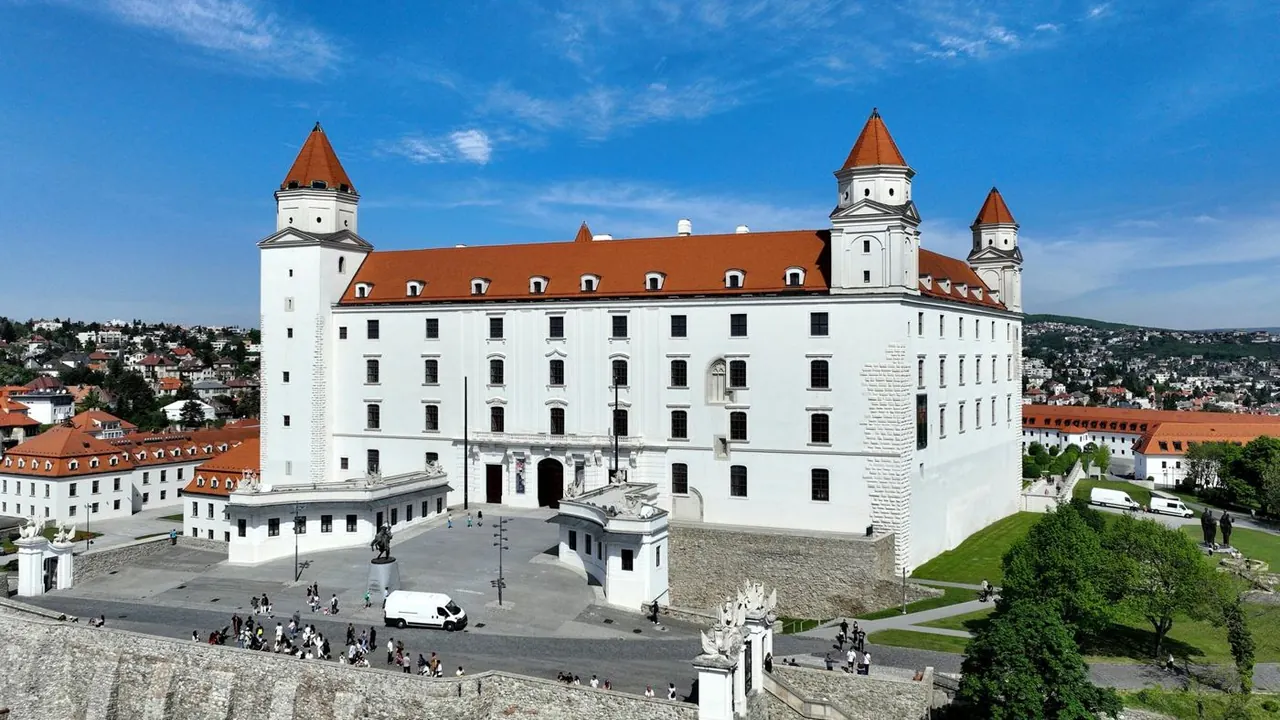
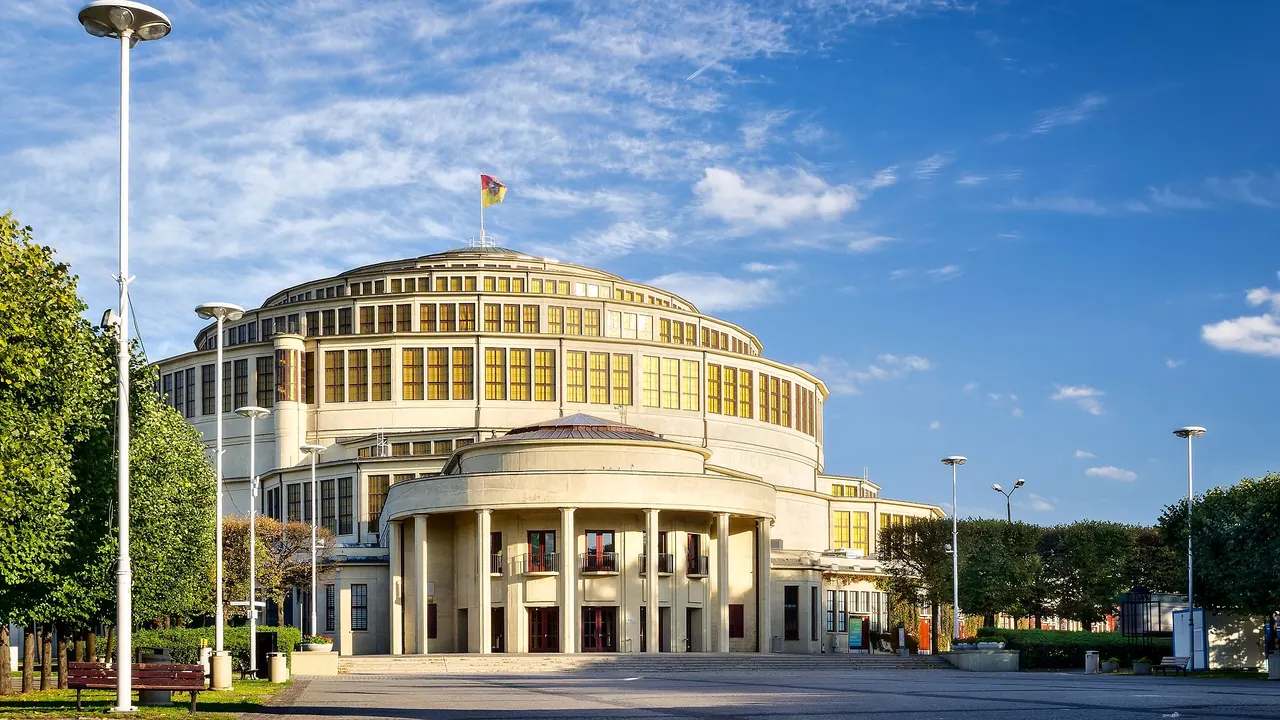
Photos: Bratislava by C.Stadler/Bwag, CC BY-SA 4.0, cropped; Wroclaw by Jar.ciurus, CC BY-SA 3.0 PL, cropped.
Bratislava or Wroclaw?
Our verdict in twelve categories, each scored against the same fixed benchmark cities, and the climate month by month, so you can choose for your trip.
Choose Bratislava for
- day trips
- beaches
- wellness
Bratislava makes most sense as a base for exploring rather than as a destination in its own right. Its Old Town takes a day or two, and then it opens out: Vienna is an easy train or boat ride, the Small Carpathian wine villages start at the edge of town, and Austria and Hungary are close enough for a day out. Pick it if you want a calm, compact capital with local wine, forest trails you can reach by tram, and three countries within reach.
Choose Wroclaw for
- culture and sights
- families
- nightlife
Wroclaw gives you more to do without leaving town. The Market Square and the cathedral island are grander, the museums and concert halls run deeper, and the student bar scene keeps weekends going late. Children are better looked after, with a big zoo and aquarium among other things, and daily costs are lower. Choose it if you want to settle into one city for several days and fill them with sights, music and long evenings.
Scoreboard
Twelve categories on one fixed scale from 0 to 100. The shaded stretch is the gap between the two.
Your match
Pick a travel style or drag the sliders, and both match scores follow your weighting.
Wins on day trips and beaches with your weighting.
Wins on culture and sights and families with your weighting.
What matters to you?
Category by category
What the scores mean for a trip.
Beaches & swimming
Neither city is a place to swim, but Bratislava is the better of the two for a dip on a hot day. Zlate piesky, a sandy lake you can reach by tram, and the larger Senec lakes half an hour away both have warm water in July and August.
Wroclaw's summer beaches along the Oder are places to sit in a deckchair with a drink. They are not for swimming. For a swim there, you would need an outdoor pool or a reservoir out in the countryside.
Food & drink
These are two hearty Central European kitchens, but each has its own way of drinking. Bratislava's strength is wine: Veltliner, Riesling and Frankovka from vineyards at the edge of town, drunk alongside sheep's-cheese dumplings and poppy-seed rolls. Wroclaw is a beer city, with brewpubs in old cellars and plenty of Polish craft taps.
Wroclaw has a slightly wider choice of food. It has cheap milk-bar canteens, and the side streets have modern bistros that cook Polish dishes with a lighter touch. Bratislava's choice thins out faster beyond its own cooking. In both cities, the main squares are where you pay for the view rather than the meal.
Culture & sights
Wroclaw has the more substantial old centre. Its huge Market Square, the red-brick churches of Ostrów Tumski, the gilded Aula Leopoldina, the Centennial Hall, which is a UNESCO site, and the National Museum's Silesian art could fill several days. The city was largely rebuilt after the 1945 siege, which adds another layer to its history.
Bratislava's appeal is smaller and quicker to see. It has a tidy baroque Old Town, the coronation route marked by brass crowns in the pavement, the Blue Church, and the castle above the river. Devin's clifftop ruins are worth the trip, but the whole set fits into a day or two.
Nightlife
Wroclaw is the livelier night out. A large student population fills the cellars around the Market Square and the courtyard passage off Ruska Street, where you move from one small bar to the next until after 2am. In summer, the drinking moves out to the islands. The city goes quieter when the students are away between terms.
Bratislava's Old Town gets loud on Fridays and Saturdays, partly because cheap drinks draw groups from abroad, but weeknights are quiet and the scene is smaller. Expect a pub crawl through wine bars and beer halls rather than a choice of places to go.
Nature & outdoors
These are equally good outdoors, but the landscapes differ. Bratislava has wooded hills right on its edge. Beech forests and vineyard ridges in the Little Carpathians start from tram stops, and wild Danube floodplain forest and a cycle route run into Austria.
Wroclaw is flat and green within town, with river channels, islands and the Japanese Garden in Szczytnicki Park. Its hills are further away: Ślęża stands alone within an hour, and the Karkonosze and the sandstone Table Mountains, two hours off, are higher ground than anything near Bratislava, with skiing in winter.
Day trips
Here Bratislava is clearly ahead, mainly because Vienna is an hour away by train, or a little longer by boat up the Danube. Add the wine cellars and majolica pottery of Modra, Cerveny Kamen castle, Roman Carnuntum and the chateaux of Lednice-Valtice, and you have a different country almost every day.
Wroclaw's outings stay within Lower Silesia. They include Książ castle above its gorge, the wooden Churches of Peace and Krzeszów abbey. They are rewarding, but they are scattered, and seeing several in one day really needs a car.
Good for families
Wroclaw is the better city for children. Its zoo is one of Poland's largest, with a walk-through shark tunnel in the Afrykarium, and there is a hands-on water science centre and an evening fountain show by the Centennial Hall. Hunting for its hundreds of bronze dwarves can take up a whole afternoon.
Bratislava is safe and gentle but has less designed for children. It has a hillside zoo, the chairlift and playgrounds at Kamzik, and a thermal water park at Senec as the treat. That is enough for a short stay rather than a week.
Getting around
Both are easy cities to get around on foot, and both have trams for the rest. Wroclaw's centre is flat and largely pedestrian, and riverside bike lanes and a city bike system make cycling an easy option. The larger tram network can be slow at rush hour.
Bratislava is more compact still, though hillier. The castle climb is short and steep, and the station sits on a rise above the Old Town. Without a metro, trips across the river take longer than the distance suggests.
Shopping & style
Neither city is worth visiting for its shops. Malls handle the everyday shopping in both, and the best purchases are local crafts. In Bratislava, look for Modra majolica, lace and blue-print cloth from the folk-craft centre, plus a few bottles of Small Carpathian wine. Vienna is close by for luxury fashion.
Wroclaw has a little more character. The ceramic-fronted Renoma department store and the riverside market hall are worth a visit, Nadodrze has a few vintage shops, and you can take home Bolesławiec stoneware and Baltic amber.
Affordability
Wroclaw is the cheaper of the two. Milk-bar lunches, central hotel rooms, trams and the zoo all cost very little, and a modest budget goes a long way.
Bratislava is still good value by Western standards, with cheap local wine, transport and museums, and filling weekday lunch menus. Prices rise more noticeably on the main squares and in the glass complexes along the Danube.
Live music & performing arts
Wroclaw has more on stage. The National Forum of Music is a large modern hall with excellent acoustics and a full concert season, and the opera house stands by the old moat. The Wratislavia Cantans festival of oratorio and early music draws listeners to the city.
Bratislava offers a reliable, easy night at the opera or ballet in the ornate National Theatre, and the Philharmonic plays in the Reduta. Tickets are easy to get, but for a major international programme people take the train to Vienna. In both cities, theatre is performed in the local language.
Wellness & relaxation
Neither city is a wellness destination in itself, so the real difference is where you go for the water. From Bratislava it is a short, easy hop: the thermal park at Senec is close enough for an afternoon, and Piestany, Slovakia's best-known spa town, is a simple train ride for a full day of treatments. Wroclaw's spa country lies in the hills to the south-west, where Szczawno-Zdrój is the nearest and the rest are a longer journey.
In town, Bratislava is the more restful place to spend a slow day, with café terraces by the river and woods above the city for an unhurried walk. Wroclaw gets busier on summer weekends, but it has one thing Bratislava lacks inside the city: a large indoor aquapark with saunas for a wet or cold afternoon.
When should you go?
Pick your month. The climate figures are measured averages, not a forecast.
Bratislava in July
Wroclaw in July
Daytime high, °C
Rainfall in the month, mm
Where the figures come from
Bratislava has no rain gauge within 25 km of the centre, so its rainfall comes from a gridded climate dataset read at the city rather than from a gauge further away.
Bratislava's sunshine is measured 56 km from the centre, at Wien / Hohe Warte.
Temperature and rainfall are climate normals, averaged over the years shown. Bratislava: 1991-2020 normals, Bratislava Ivanka (8.6 km from centre). Wroclaw: 1991-2020 (rainfall 1961-1990) normals, Wroclaw Copernicus Airport (10.5 km from centre).
The two climates are close, both cold and grey in winter, with daytime highs around 3°C in January, and both warm in high summer. Bratislava runs a little ahead in spring, so March and April are pleasanter for walking there, and it stays slightly warmer into July, when it reaches about 27°C. That is warm enough for its lakes in July and August, which are the only real swimming months in either city. In both places, summer is also the wettest time of year, with heavy showers from May to August.
The clearest difference comes in early autumn. Wroclaw dries out in September, with about half Bratislava's rainfall, which makes it a good month for its streets and riverbanks. In Bratislava, the wet weather lasts into September, though it is still mild. For sightseeing in comfort, May, June and September suit both cities. From November to February, both are short on daylight and best enjoyed indoors.
Which traveller are you?
On a culture and arts trip, Wroclaw is the stronger choice. It has the large Market Square with its Gothic town hall, the cathedral island, the Racławice Panorama and the Centennial Hall. In the evenings there are concerts at the National Forum of Music or a night at the opera.
On a family trip with children, Wroclaw again comes out ahead. The zoo and its Afrykarium shark tunnel, a hands-on water science centre and fountain shows in summer give children more to do. In Bratislava, the options run thin after two or three days.
On an outdoors trip, Bratislava has nature on its doorstep. Forest trails climb from the tram stops to Kamzik, the flat Danube cycle route runs into Austria, and Cunovo has whitewater rafting. Wroclaw's real hills need a car and most of a day.
Before you go
| Measure | Bratislava | Wroclaw |
|---|---|---|
| Official language | Slovak | Polish |
| Currency | Euro (EUR) | Zloty (PLN) |
| Sockets | CE230 V, 50 Hz | CE50 Hz |
| Driving side | Right | Right |
| Time zone | UTC+1, UTC+2 in summer | UTC+1, UTC+2 in summer |
| Emergency number | 112 | 112 |
| Elevation | 152 m | 111 m |
| Main airport | M. R. Štefánik Airport (BTS)8 km from centre68 non-stop destinations | Copernicus Wrocław Airport (WRO)11 km from centre84 non-stop destinations |
| Public holidays this year | 15 days | 14 days |
By the numbers
| Measure | Bratislava | Wroclaw |
|---|---|---|
| City population | 480,902 | 673,531 |
| People per km² | 1,308 | 2,299 |
| Museums within 10 km | 22 | 42 |
| UNESCO World Heritage sites within 50 km | 2 | 2 |
Where else could you go?
Every comparison below shares a destination with this one, so you can follow Bratislava or Wroclaw somewhere new.
- Viennavs Bratislava
- Brnovs Bratislava
- Budapestvs Bratislava
- Grazvs Bratislava
- Brnovs Wroclaw
- Praguevs Wroclaw